Recently, some products at Sam's Supermarket have experienced a decline in quality or grade after changing packaging. For example, organic no-wash chia seeds, the new product has lower Omega-3 fatty acid, protein and dietary fiber components than the old model; among them, Omega-3 fatty acid has been reduced from 18.5g/100g to 14.0g/10 0g, dietary fiber decreased from 32.8g/100g to 31.3g/100g, and protein decreased from 20.3g/100g to 19.7g/100g; but energy, fat, and carbohydrates increased instead. Some consumers posted on social media: "Today's products have less nutrients and more fat." They questioned whether the supplier of the product had been changed.
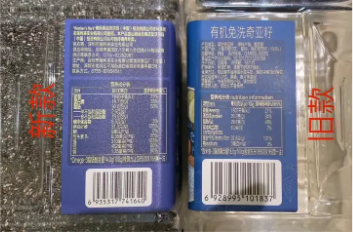
In response to the above problem, the "BUG" column asked Sam's official for verification, and the customer service responded: "Thank you for your attention to our products. Your feedback will be recorded for you. Thank you for your support."
According to relevant people familiar with Sam's supply chain, Sina Technology revealed that Sam's minimum gross profit margin requirements for products are now more clear and strictly enforced, such as more than 20% for branded products and 15% to 20% for MM products. This is not an entirely new requirement, but enforcement may be stronger.
After analyzing the above-mentioned problems such as the decline in the quality of paper towels and the change of milk into "yoghurt", he bluntly said that Sam's prices are too low and manufacturers have no profit, and the quality of products may be reduced. As for the concept of Sam's secretly changing products, the core reason for lowering quality is the transmission of supply chain cost pressure. Sam uses its huge purchasing volume to continuously exert price reduction pressure on suppliers. Suppliers face difficulties when price reductions result in suppliers’ profits being too low or even unprofitable.
In this case, in order to maintain cooperation with Sam and retain admission to other important channels, suppliers did not dare to withdraw directly or significantly increase prices. As a result, some suppliers may choose to "cut corners" and secretly lower the quality of raw materials, reduce weight, thickness, change processes, etc., without changing the product name or appearance design, in order to reduce costs and maintain meager profits.
This is the so-called "stealing the concept of changing goods and reducing quality."
He believes that Sam usually does not proactively mention such changes in quality. This may be due to lack of awareness, internal quality inspection standards have not been updated or are not strictly enforced; or it may be acquiescing between cost pressure and maintaining a low-price image. (Luo Ning)