In the early morning of the 8th, OpenAI officially released its most powerful artificial intelligence model in history-GPT-5. However, not long after the new model was launched, it encountered a lot of complaints from users about poor user experience. OpenAI released a new GPT-5 model this week,It claimed to have stronger performance, but its decision to eliminate many old AI models at the same time triggered a strong backlash from some users.
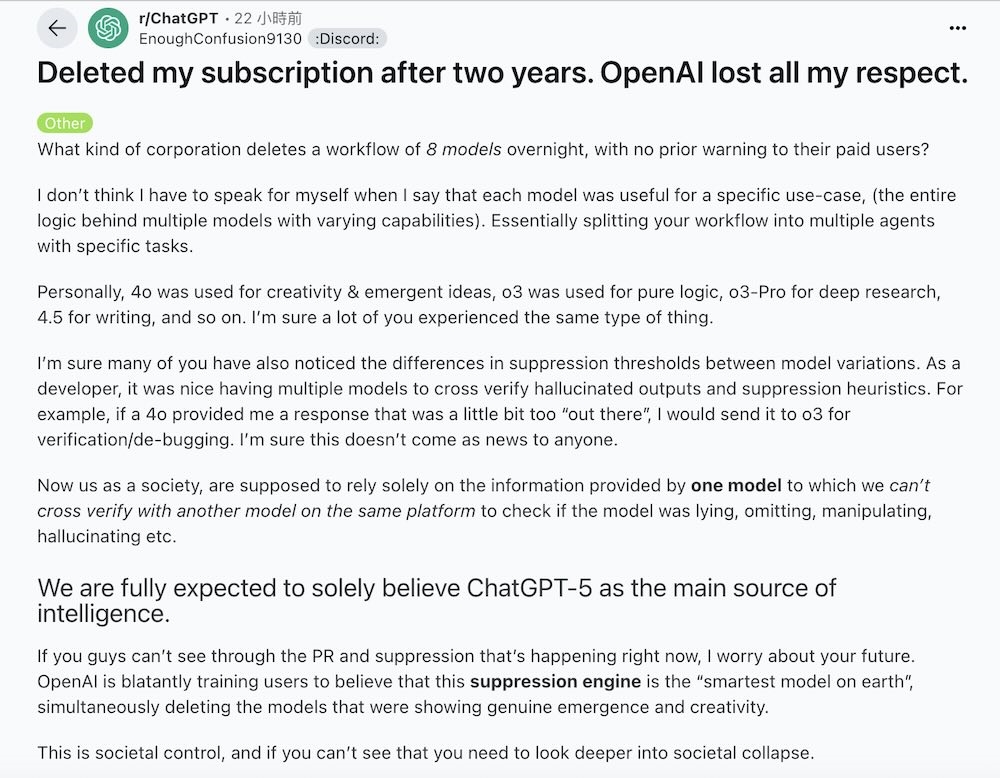
Someone complained in the ChatGPT discussion area of the foreign forum Reddit,"Which company would delete the workflow of 8 models overnight without notifying paying users in advance?" Some people even canceled their subscriptions directly.
Before the launch of GPT-5, ChatGPT could use a number of different models, including GPT-4o, o3, o4-mini, GPT-4.1 and GPT-4.5. However, these have been replaced by the new GPT-5 series, which officials claim has PhD-level intelligence and lower error rates.
However, some users admitted that theyI have deep feelings for some old models, especially GPT-4o. It is not just a tool, it has accompanied me in my anxiety, depression, and the darkest moments of my life. It feels very warm and like a real person.
Critics believe thatGPT-5 is not as superior as advertised, but a downgrade and disaster. Some users complained that the response of the new version was slower, that there was no improvement even if the deep thinking mode was turned off, that the length of answers became shorter, and that they also made mistakes on basic questions..
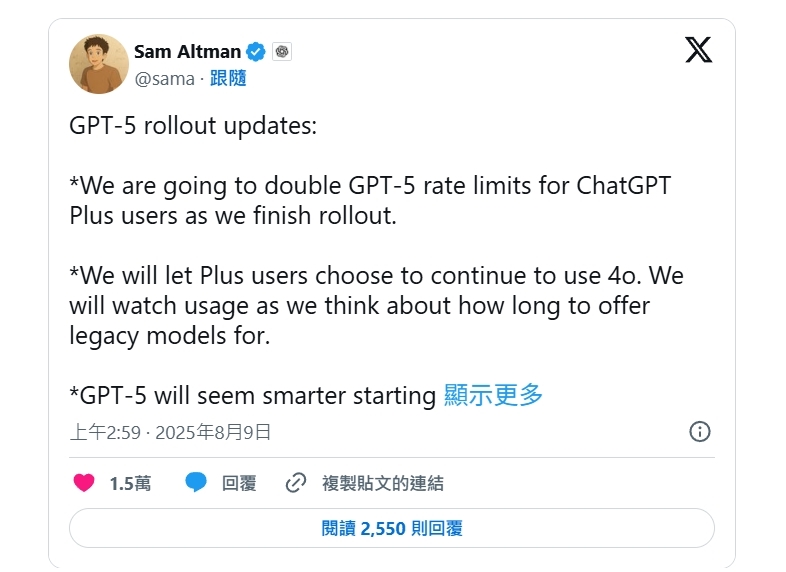
Open AI subsequently announced that GPT-4o would be re-launched for specific users, and explained that the abnormal performance of GPT-5 was due to a damaged automatic switcher.
CEO Sam Altman admitted that he underestimated users’ love for GPT-4o and will provide more customized services in the future.
Judging from user feedback, although GPT-5 has set new records on ultra-difficult scientific problems, user feedback lacks emotional interaction. Third-party testing shows that GPT-5’s lead is minimal. AI experts point out that large models have diminishing returns and face limitations in data, quality, and computing power costs.
It is reported that GPT-5 reduces the flattery of humans. Overall, compared with GPT-4o, GPT-5 is less friendly, has fewer unnecessary emoticons, and subsequent interactions are more delicate and thoughtful. It’s less like “talking to an AI” and more like chatting with a helpful friend with PhD-level intelligence.