A federally funded study led by Brown University biologists shows that the diets of various large herbivores are more diverse and complex than scientists previously understood. For generations, scientists and students have divided animals into categories based on their diet: carnivores eat meat, herbivores eat flowering plants, conifers, and shrubs, and herbivores eat mostly grass.
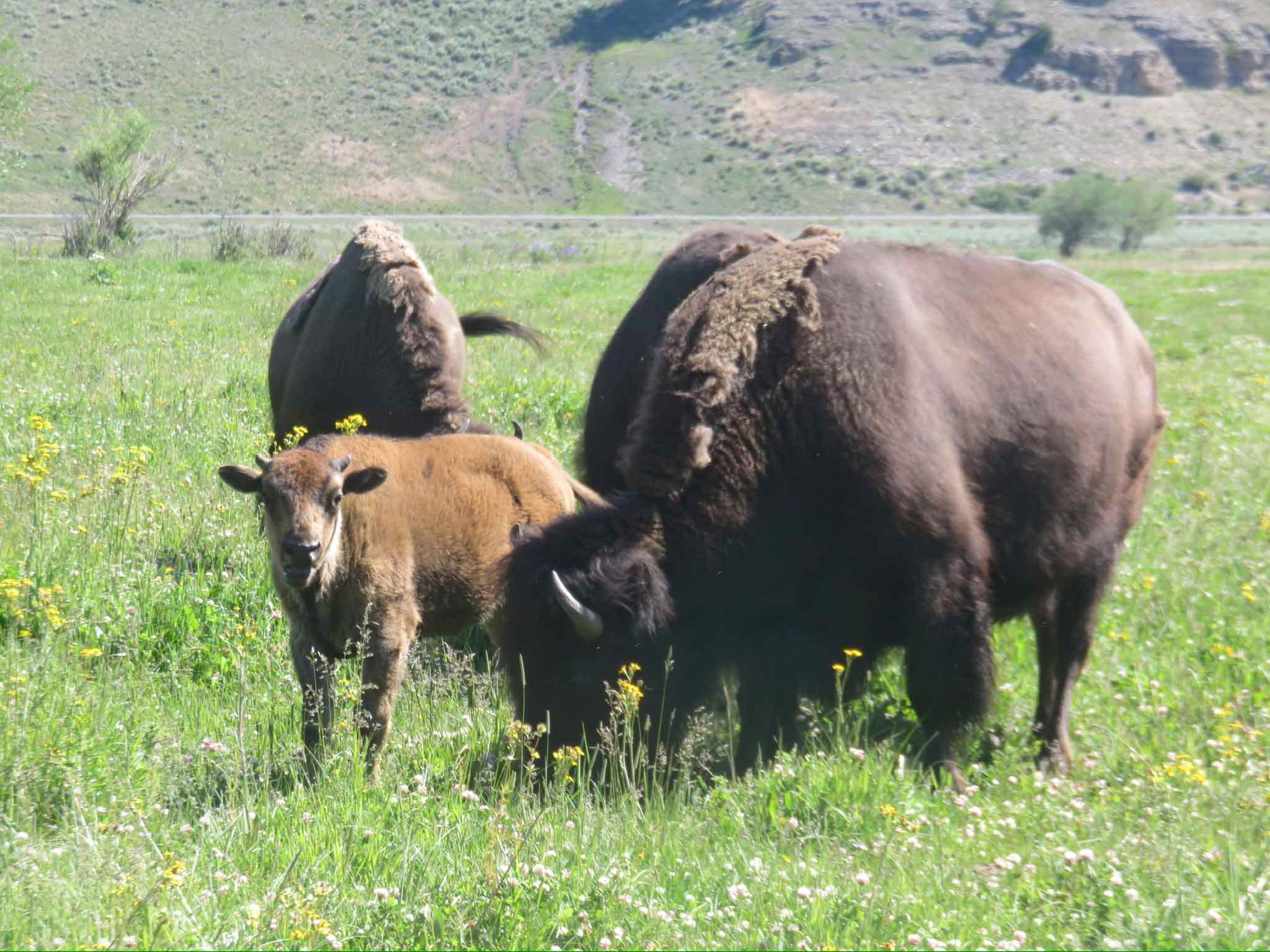
A herd of bison grazes on grass in Yellowstone National Park in summer. Photo credit: Hannah Hoff.
However, a new federally funded study led by Brown University biologists in collaboration with Yellowstone National Park scientists shows that herbivores often eat a much wider variety of plants than previously recognized, depending on the conditions they face.
The study, published in the Proceedings of the National Academy of Sciences, found that the long-standing method of classifying grasses based on their proportion of herbivore diets oversimplified reality. Tyler Kartzinel, an associate professor of ecology, evolution and organismal biology at Brown University and a co-author of the study, explained that this classification system may ignore important differences in the diets of individuals within the same species, as well as similarities that may arise between different species.
"This prompted biologists to think about whether we are seeing patterns in nature that reinforce our idea of what animals should be doing, rather than what they are actually doing," Katzner said. "This is strong evidence that, in Yellowstone, we put animals into the same classification box as all members of a species, without taking into account differences in dietary behavior within species or — perhaps more importantly — some of the similarities between species."
Katzner notes that such studies can provide valuable insights into predicting how wildlife will use resources in changing landscapes, especially in contexts where conservation methods are controversial.
"These findings are critical to understanding how so many large mammal species coexist in Yellowstone," Katzner said. "Our results suggest that maintaining plant diversity is a key condition for maintaining diversity in migratory wildlife."
For the past seven years, the research team has been studying how animals in Yellowstone find and select food. In a study published last year in the journal Royal Society Open Science, they focused on identifying the typical foraging patterns of each herbivore species in the park.
In the latest study, scientists again teamed up with Yellowstone researchers to monitor five large herbivores: pronghorn, bighorn sheep, black-tailed deer, elk and bison. They collected plant samples and feces from the tracking animals. At Brown University, researchers used DNA metabarcoding technology to analyze the samples to identify the specific plants they ate. The team also applied simple artificial intelligence methods to assess how many different dietary patterns exist in Yellowstone's fauna, and whether each species maintains its own unique diet.
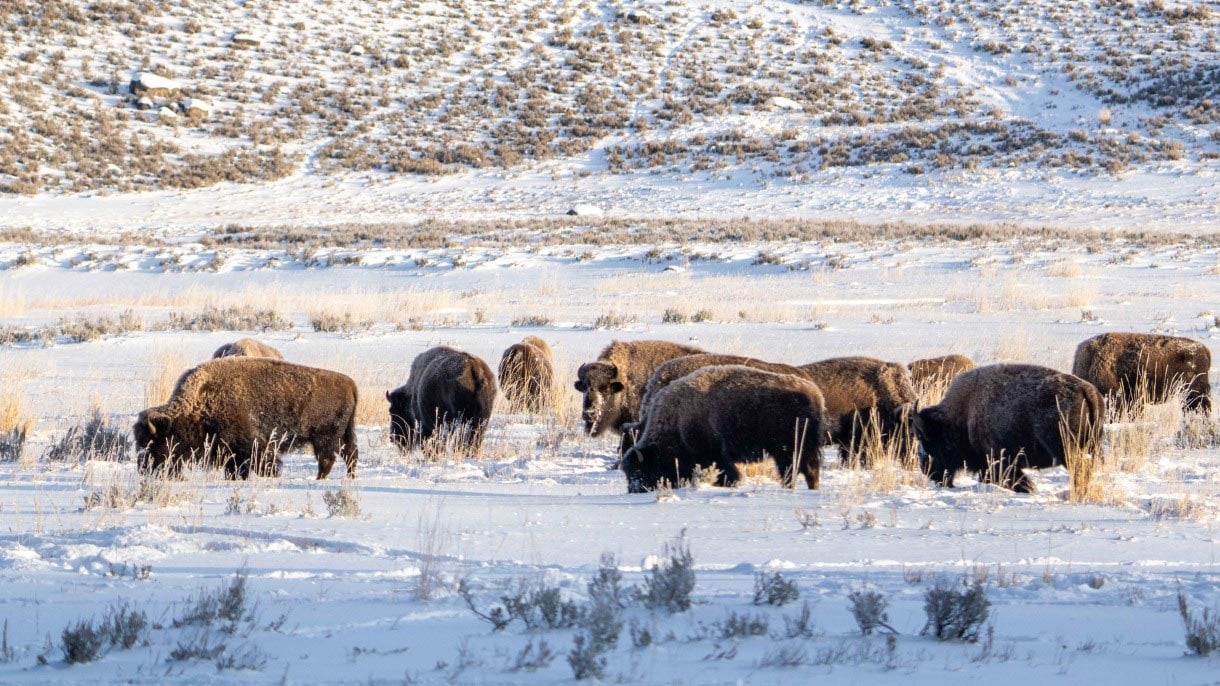
Researchers have found that winter bison continue to forage for grass even when frozen by snow. Photo credit: Hannah Hoff
Hannah Hoff, a doctoral student in ecology, evolution, and organismal biology at Brown University, shared her background in botany and data science. Hof was inspired to combine machine learning methods with genetic analysis to gain a deeper understanding of the feeding behavior of herbivores, inspired by a seminar by Sohini Ramachandran, a professor of biology and data science at Brown.
Research shows that dietary differences between species are not as pronounced as scientists expected. In fact, individuals of different species often share large portions of their diets, and the degree of similarity varies with location and season.
A key finding is that feeding patterns may be influenced more by available resources than by species characteristics. During the summer, a variety of animals tend to feed on the nutrient-rich wildflowers found in grassland habitats, while during the winter, many animals turn to a diet dominated by conifers and shrubs.
During the winter, bison in particular (but not exclusively) tend to continue foraging for grass and similar foods even if they are frozen by snow, while some smaller herbivores, such as black-tailed deer and pronghorn, tend to shift more dramatically to feeding on evergreen trees.
"It turns out that the right question is not, 'Does that species eat grass?'" Katzner said, "but, 'Is it eating grass now?'"
As a plant ecologist, Hof takes a plant-frontier approach to understanding this ecological community.
“People sometimes tend to think of vegetation as a static ‘habitat type’ rather than as a dynamic set of interacting species with their own unique ecological niches,” Hough said. "Our analysis of dietary groupings focused on distinguishing these plant species, which allowed us to explore how seasonality, nutrition and spatial distribution influence herbivore foraging - insights that may be obscured by broad dietary classifications."
Katzner said the discovery has lessons not only for scientists but also for iconoclastic animals.
"Imagine a herd of bison that are all supposed to be herbivores, but one or two of them like to eat like herbivores," Katzner said. "The traditional way scientists have told this story may have been to dismiss this difference as abnormal or unimportant. But findings like this show that dietary diversity is actually normal, and that we should be telling the story of the herbivorous bison, too."
Compiled from /scitechdaily