On Sunday morning, a truck carrying a lift was parked outside the Louvre. Four thieves used the ladder frame to break a window and sneak into the upper exhibition hall. They cut off the display cabinet and fled with the jewelry. The whole process took less than seven minutes. They left behind angle grinders, construction vests and lift trucks, and even discarded the most symbolic 1855 Eugenie crown (set with nearly 1,400 diamonds and 56 emeralds), which was found damaged.
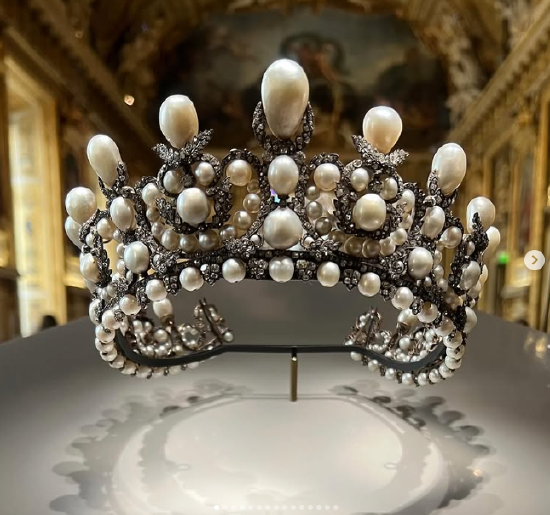
Empress Eugenie's pearl diadem is on display in the Apollo Gallery of the Louvre.
The story of the robbery: 7 minutes of "amateur daring" action
Former FBI art investigator Robert Wittman said: "This group of people was bold, but amateurish."
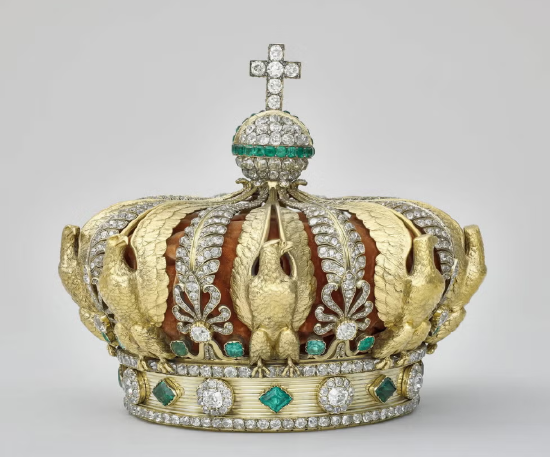
Empress Eugenie's crown.
Black Market Trail: The 'Invisible Bead Necklace' from Paris to Dubai
According to FBI data, the illegal art and jewelry trade amounts to billions of dollars annually. If thieves have no channels, they usually smuggle jewelry to the Middle East or Asia, where "underground cutters" recut large gems into small diamonds, or melt the gold inlays into gold ingots for resale.
Compared with famous paintings or watches, jewelry is easier to sell - "No one would hide a Picasso under the bed, but gold jewelry can be broken into pieces and sewn into a coat and taken abroad."
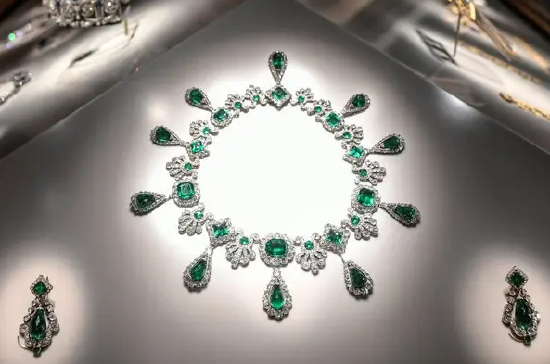
The stolen artifacts included a pair of emerald earrings and an emerald necklace belonging to Queen Marie-Louise.
Soaring gold prices and criminal motives
After the price of gold exceeded US$4,000 per ounce, gold jewelry thefts surged in Europe. According to data from the National Retail Federation, about 40% of jewelry thefts are related to organized crime. Some thieves use wigs and prosthetics to disguise themselves. The most famous "Pink Panther theft gang" has committed dozens of crimes around the world and stolen more than hundreds of millions of dollars.
The gray area of cultural heritage
Art tracking expert Chris Marinello said 19th-century jewelry lacked modern micro-engraved serial numbers, making it more likely to be stolen and resold. Even if jewelry cannot be auctioned legally, it can still be valued on the black market based on its material.
At the same time, Anthony Roman, a private detective with experience in art crimes, pointed out: "Thieves usually only get 10% of the market price, and they have to split the account with insiders in exchange for silence."
Legal loopholes and future preparedness
There is currently no unified tracking database for historical jewelry in the world. Experts call on countries to characterize the theft of cultural property as "cultural terrorism" in order to increase penalties.
Additionally, loopholes remain in the museum’s safeguards and visitor screening mechanisms. If the Louvre required visitors to show ID cards to enter the museum, "the queue would probably reach the Seine," Wittman joked.
The Louvre was temporarily closed due to the robbery, sending Paris into shock. The glittering imperial treasures may now be quietly being dismantled, melted, and reborn deep in the black market.