Several leading justices of the U.S. Supreme Court have cast doubt on the legality of Trump's tariff policy on many countries around the world. The final ruling may shake Trump's signature economic policies. During a debate hearing in Washington on Wednesday, three conservative justices questioned Trump's use of the International Emergency Economic Powers Act of 1977 (IEEPA) to impose tens of billions of dollars in tariffs every month.
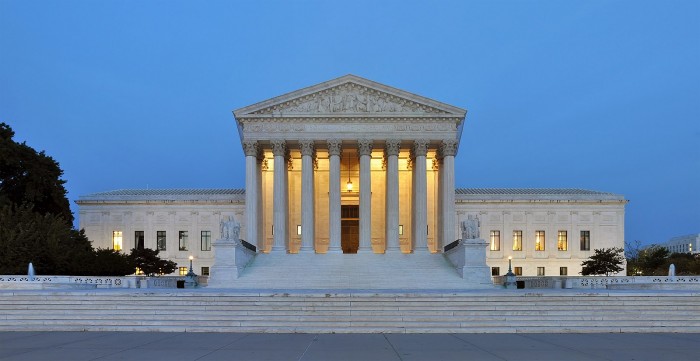
Chief Justice John Roberts said the tariffs were essentially "a tax on Americans that has historically been a core power of Congress." The two justices nominated by Trump, Neil Gorsuch and Amy Coney Barrett, also raised questioning questions, but the three of them also questioned the arguments of the opponents of the tariffs.
If the Supreme Court rules against Trump, it could force the federal government to refund more than $100 billion in tariffs, which would relieve U.S. importers of a major burden while also weakening one of the president's "universal weapons" against trading partners. More broadly, it would be the court's strongest pushback yet against Trump's claims that his powers extend far beyond those of his predecessors.
Given the ultra-fast process currently being adopted by the Supreme Court, a ruling could come as soon as the end of the year.
The case involves Trump's "Liberation Day" tariff plan launched on April 2. The United States imposed tariffs ranging from 10% to 50% on most imported goods. Trump said the measure was aimed at combating the country's long-standing trade deficit.
Permission question
Trump argued that his tariff actions were based on IEEPA. The law gives the president a range of tools to respond to national security, diplomatic or economic emergencies. Although IEEPA does not explicitly mention "imposing tariffs," it does include a provision that allows the president to "regulate" fiscal "imports" in response to the crisis.
Justice Barrett questioned whether such language was sufficient to give the president taxing authority.
Barrett asked D. John Saul, the Justice Department's chief trial attorney, "Can you point to other provisions of IEEPA, or any time in history, where the expression 'regulate imports' was used to confer the authority to impose tariffs?"
Gorsuch expressed alarm at the Trump administration's assertion that Congress has delegated constitutional authority to impose tariffs to the president.
“According to the government’s logic, why can’t Congress give all the power to regulate foreign trade—even the power to declare war—to the president?” Gorsuch asked Saul.
The Supreme Court is currently hearing three cases: two brought by small businesses and one brought by a coalition of 12 Democratic state attorneys general. In three previous federal district courts, judges have ruled that Trump's tariffs are illegal.
If Trump loses the case, administration officials say most of the tariffs could still be upheld through other, more complex legal tools. It’s worth noting that Trump’s tariffs on steel, aluminum and automobiles were imposed under another law, so the ruling in this case will not directly affect those tariffs.