Using "scarecrows" to drive away birds and other animals is definitely a human ingenuity that is low-cost, environmentally friendly, and very effective. But scientists believe that this kind of "wisdom" is not exclusive to humans, but also exists in other animals, including invertebrates - spiders. On November 6, 2025, Australian scientists published an article in the magazine "Ecology and Evolution" indicating that two small spiders that are good at making "scarecrow" decorations were discovered in nature.
They have a very strange behavior. They always spend a lot of energy and resources decorating their spider webs. "Straw spiders" (fake spiders similar to scarecrows) are the most complex and largest decorations among them:
Made from natural materials such as prey stumps, leaves and plant debris, it is shaped like a spider, with a body and limbs. The shapes are different, some limbs are stretched out, and some are drooped, placed in the center of the spider web. The size is often much larger than that of the spider maker, up to 10 times the original size.
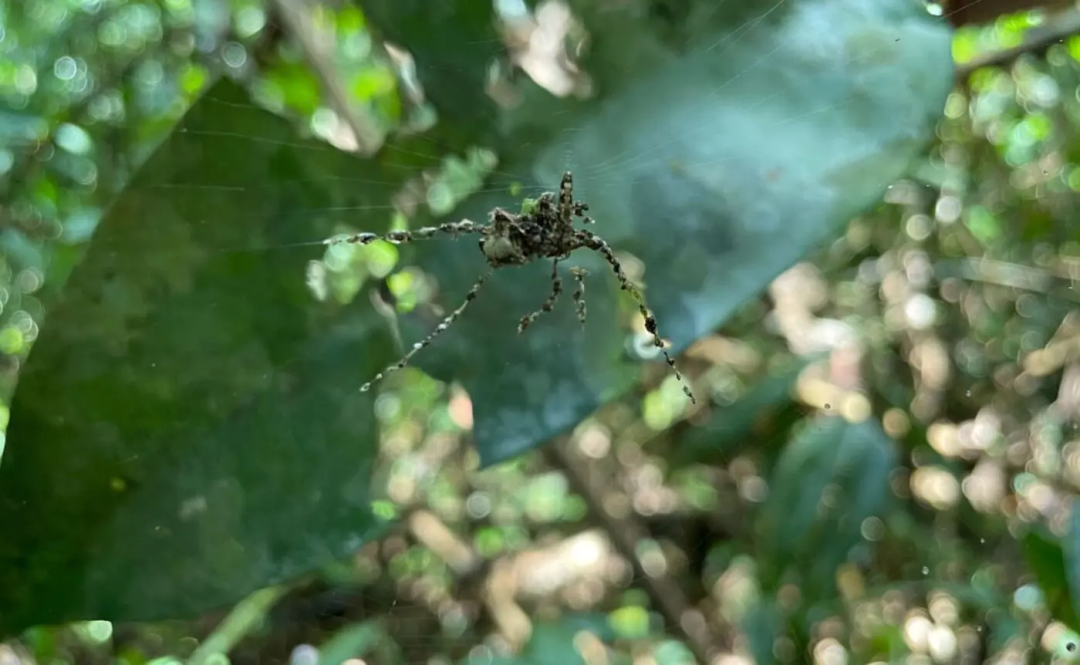
After years of observation, scientists have discovered that the manufacturing process of this kind of spider is quite advanced, and the "straw spider" created is so lifelike that even scientists can make mistakes.
This type of spider was first discovered in 2012, when a research team was exploring deep in the Peruvian Amazon rainforest.
The researcher accidentally discovered a "dead spider" trapped in a spider web. According to his description, the "dead spider" had a shriveled body, like an arthropod corpse covered with fungi. It was initially suspected that it was killed by fungi.
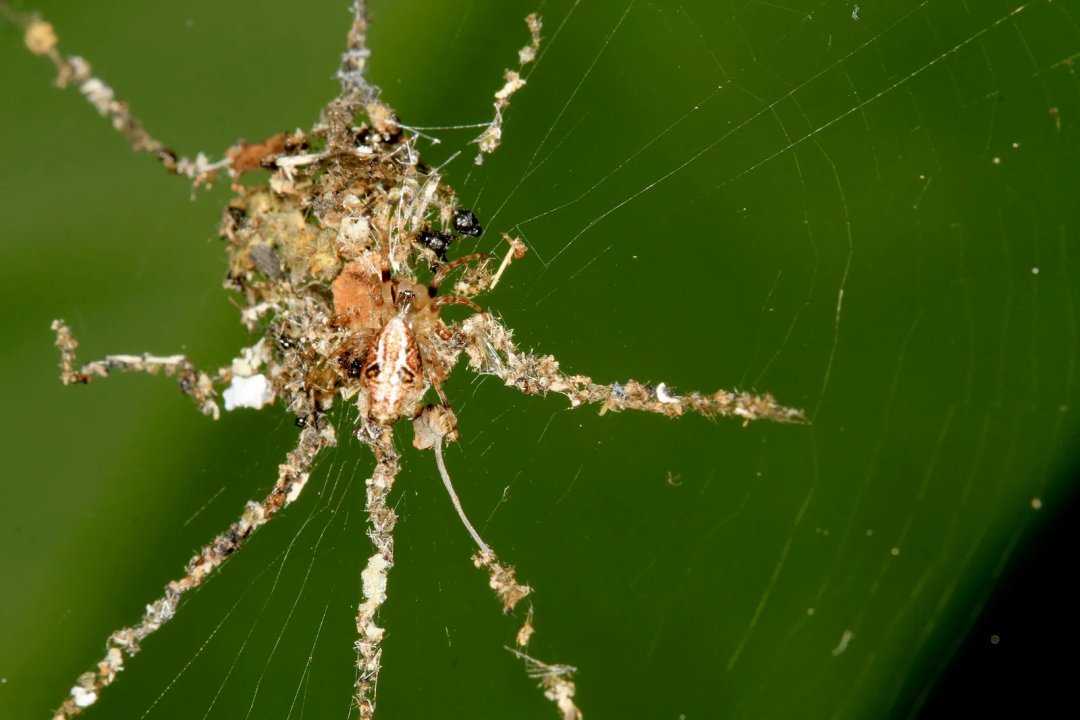
But within a few seconds, the "dead spider" suddenly moved. The researchers were startled. Looking along the shaking spider silk, they found that there was another small spider on the spider web, and it was it that shook the spider web.
Only then did I realize that the real owner of this spider web was this little spider, and that the huge "dead spider" was fake. Shaking the spider web was a way to make the "dead spider" more real.
Scientists were so interested in the spider's behavior that they studied it, and later similar spiders were discovered in tropical forests in the Philippines.
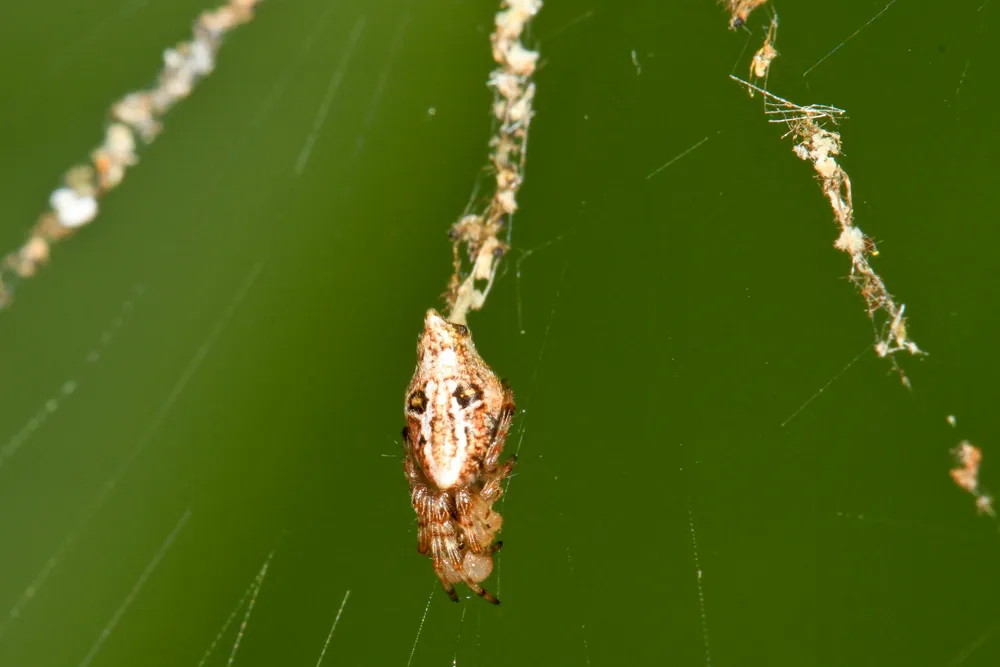
'Doppelgangers' that confuse predators
First of all, these two spiders belong to the genus Erythriidae and are relatively small in size.
Secondly, scientists discovered that it is not easy for these little spiders to build a huge straw spider. They spend most of their time collecting and chewing decorative debris.The main function of the straw spider is: a "doppelganger" used to confuse predators.
This is actually easy to understand. If such a large fake spider is placed in the center of the spider web, predators interested in it will target it. When the attack is launched, the real spider that has not been discovered will have a chance to escape.

Scientists have observed that real spiders usually hide in a certain part of the straw spider (mostly on the spider's legs), and some hide around the straw spider, with their heads facing the edge, so that they can escape at any time.
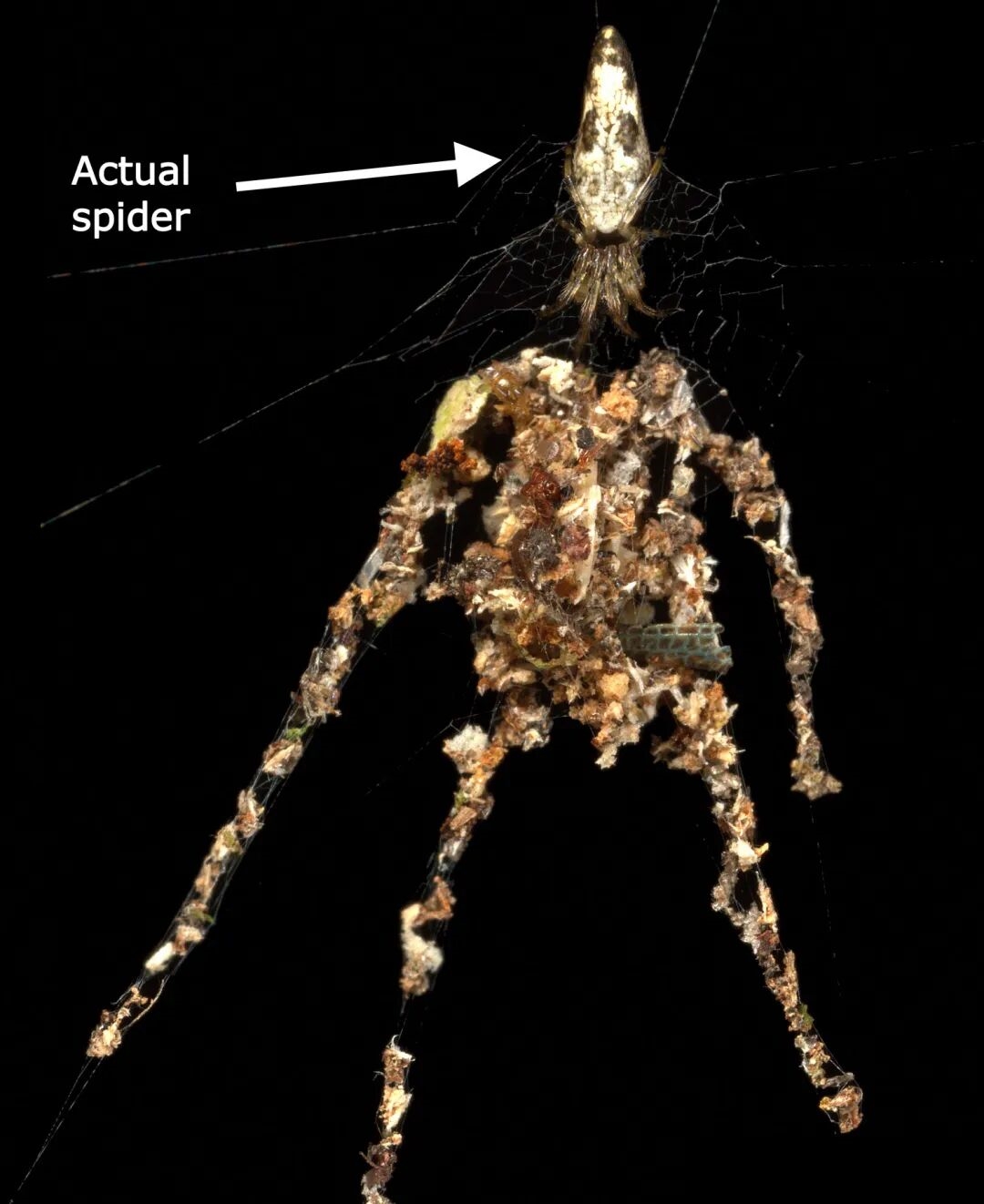
andSome predators don't like spiders that are too big, considering them risky.
For example, the damselfly likes to prey on spiders with a length of 3-6 mm. Once it finds that the size of the "straw spider" on the spider web exceeds its prey capacity, it will give up the prey, so that real spiders can also escape.
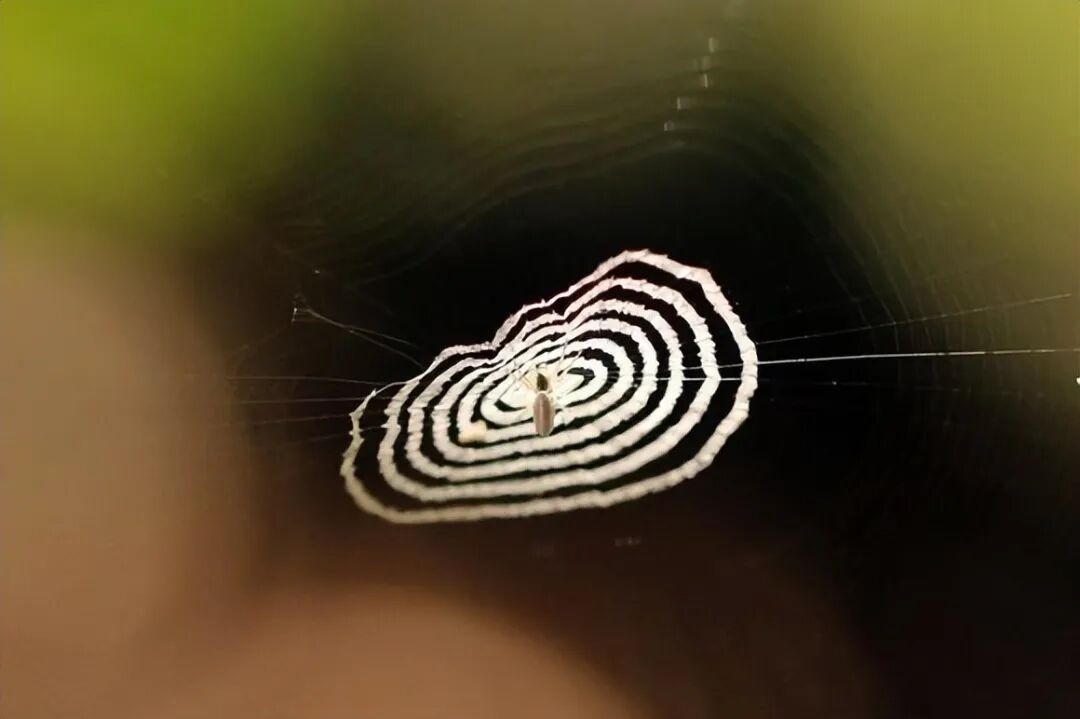
In addition, scientists believe that "straw spiders" have another explanation, which is to simulate bird droppings.
To us, the straw spider looks like a spider, but to some animals, its shape is more like irregularly shaped bird droppings. As one of the main predators of spiders, birds are unwilling to visit spider webs with bird droppings.
In general, the "straw spider" decoration in the eyes of scientists has many functions. It can not only imitate larger "spiders" to act as a deterrent, but it can also imitate items that predators don't like to "disgust" the predator and drive it away.
Either way, it indicates that all the effort put into making the fake spider is worth it, and it does bring a higher survival rate to the actual spider.
Caterpillar shells
at last
Speaking of tricks to confuse my opponents, I still have two treasure players who “press the bottom of the box”.
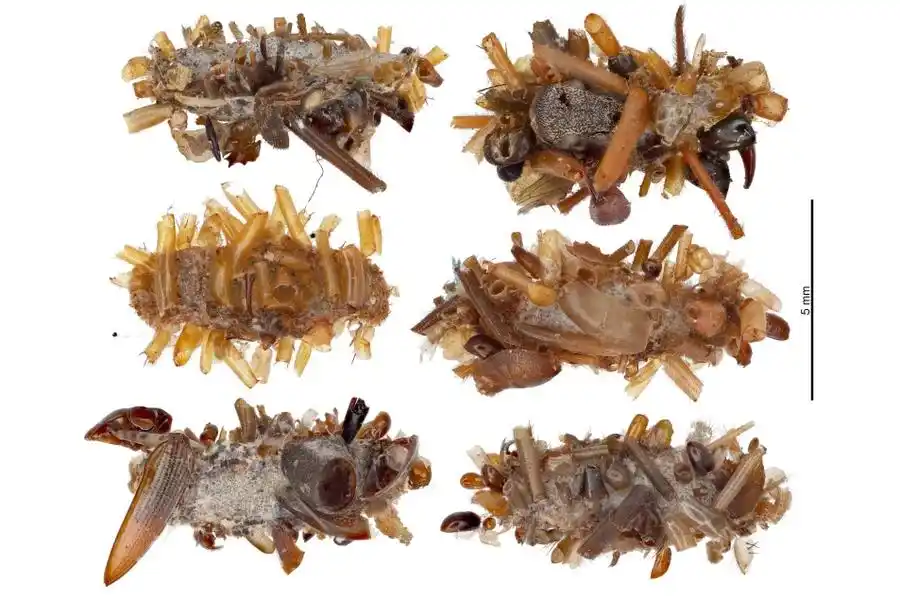
One is the caterpillar in the picture above, whose body is "covered" with corpse remains.
In order to safely eat spider food in the spider lair, it will collect a pile of spider food remains (Carcasses of other animals, preferably spider legs), and then stick these items to the body to make a shell enough to hide itself.
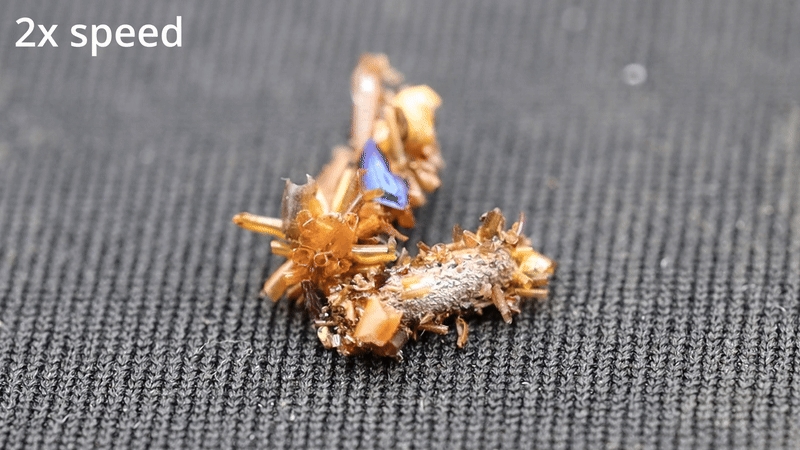
The caterpillar, which was originally soft and about 1 centimeter in length, is covered with this shell. As long as it doesn't move around, the spider can't tell it at all and thinks it is the leftover food left by itself.
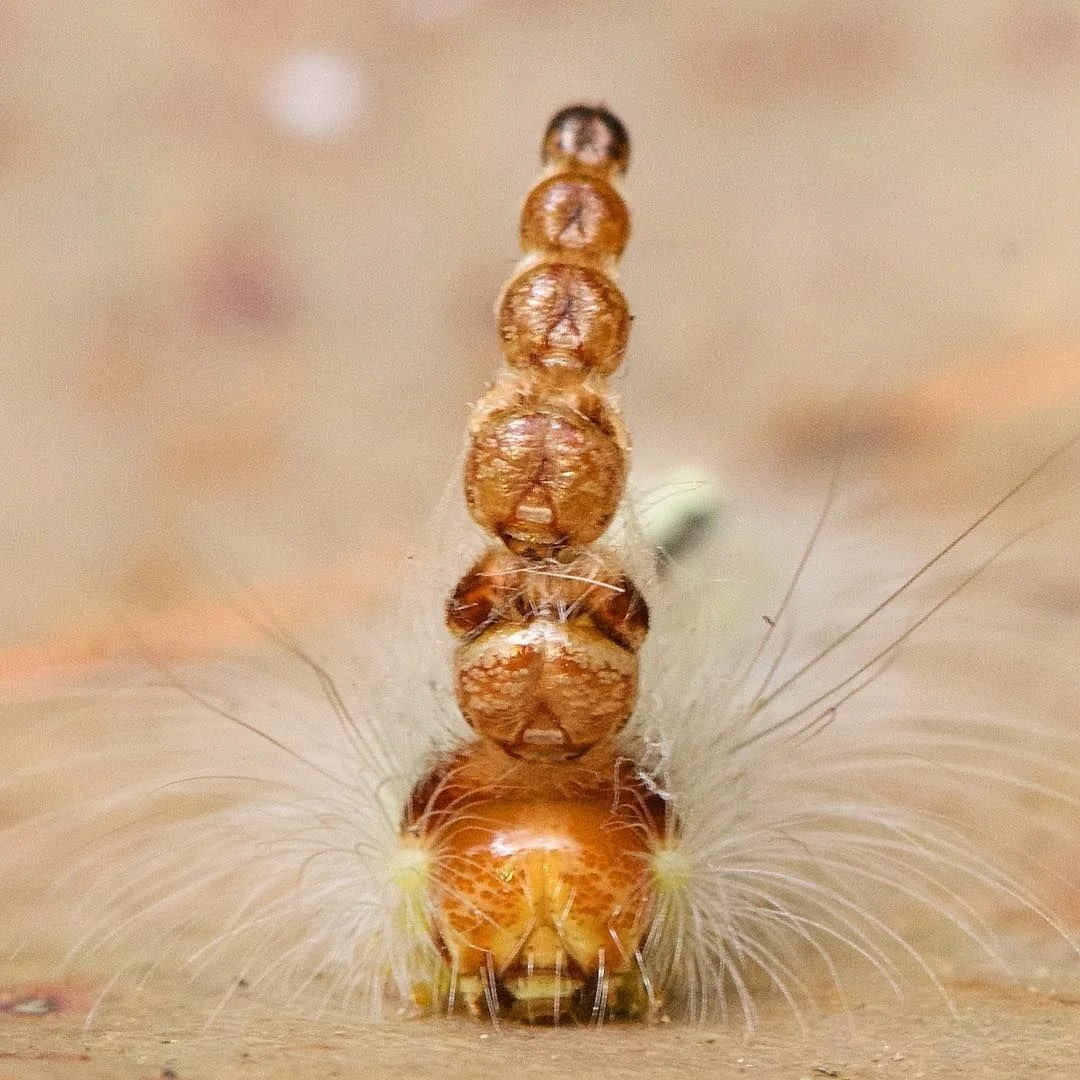
Another one is the caterpillar (Uraba lugens), known as the "Mad Hatter". Its larva has several "heads" on its head, just like a tall tower.
These "heads" are what's left after it sheds its skin. They are stacked one at a time. Only the bottom head is real, and the ones above are all empty shells.
The biggest advantage of it dressing itself up like this is that the predator can easily be confused and can't tell which is its real head, so the probability of survival is greatly improved.