TikTok, a social application that once focused on user-generated content, announced that it will launch a new option to adjust the quantity of AI-generated content (AIGC) on the "Recommended for You" page. Users can now decide how much AI-generated content they see in the recommendation stream. At the same time, TikTok has also introduced more intelligent AI content annotation technology.
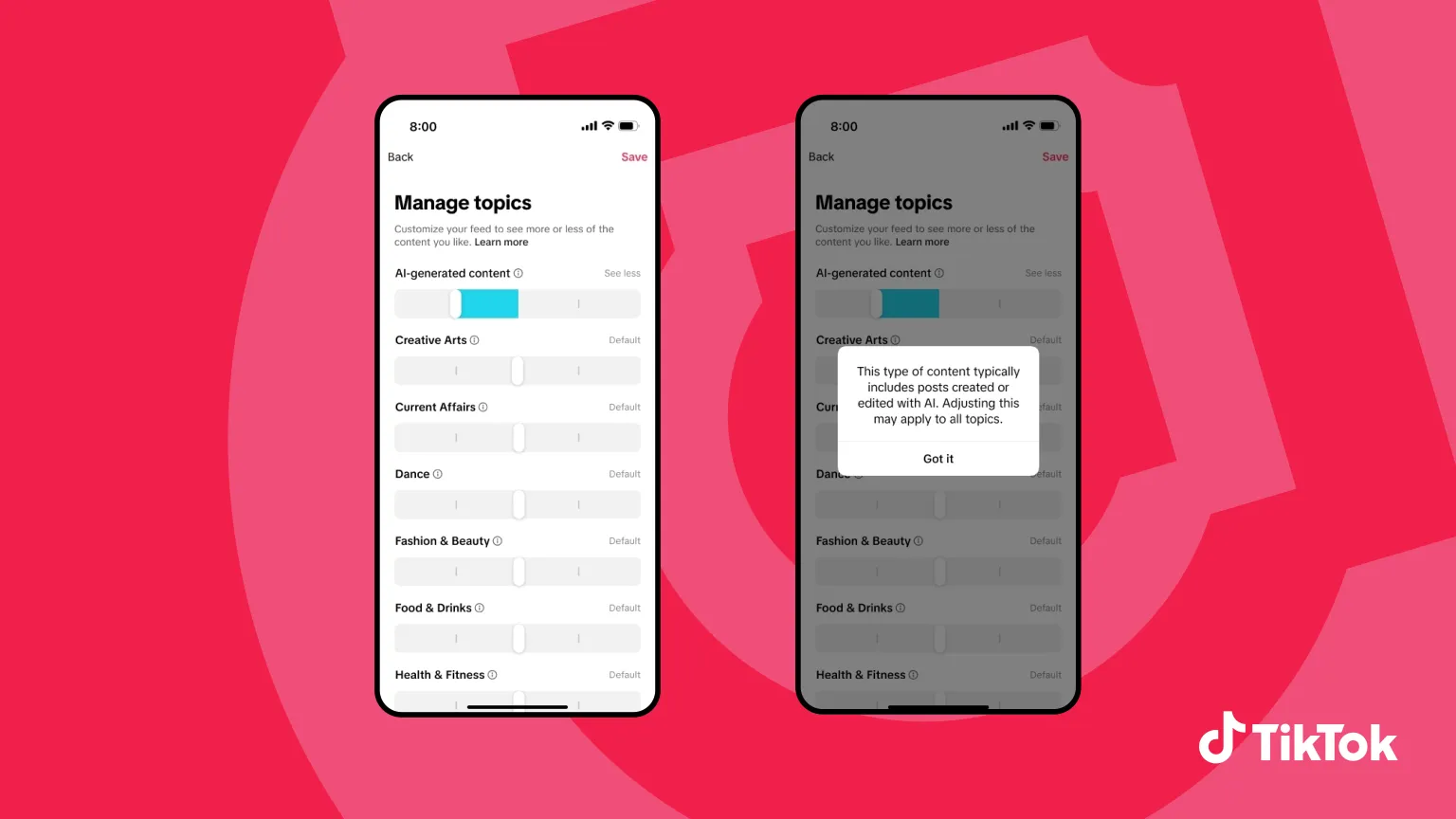
The new AIGC tuning feature is integrated into the in-app "Topic Management" tool. Through this tool, users can not only select content topics of interest, such as dance, sports, food, etc., but can now also adjust the frequency of personalized push for AI-generated content. TikTok officials stated that this setting is designed to help users enrich and optimize their content experience without completely deleting or replacing specific types of content.
In recent years, companies such as OpenAI and Meta have deployed AI content-related platforms. Meta launched a short video AI content recommendation stream called "Vibes" in September this year, and OpenAI also released the "Sora" platform, which focuses on generating and sharing AI short videos. Since the launch of Sora, a large number of realistic AI-generated videos have emerged on TikTok, and many users have also used AI tools to produce visual content on topics such as history and entertainment.
TikTok pointed out that with this new control, users who like AI content can see more relevant content, while users who want to reduce AI elements can also lower the push ratio accordingly. Users can select "Content Preferences" in the settings, enter the "Topic Management" interface, and adjust the push ratio of various topics such as AI-generated content through the slider bar. This feature will be rolled out to all users in the coming weeks.
In addition, in order to improve the accuracy of AI content annotation, TikTok is now testing an "invisible watermark" technology. TikTok has previously required creators to tag realistic AI-generated content and use the "content voucher" technology collaboratively developed by C2PA to embed AI content information into metadata. However, TikTok pointed out that once the content is re-uploaded or edited on other platforms, the relevant tags may be lost.
The "invisible watermark" is only recognized by TikTok and is difficult to remove externally. In the future, TikTok will embed this type of watermark in content generated by its AI tools (such as AI Editor Pro) and uploaded content using C2PA "content certificates" to add protection to AI content annotation. The platform will also continue to read C2PA metadata to ensure the continued validity of AI tags.
In order to strengthen AI literacy education, TikTok also announced the launch of a US$2 million AI learning fund for public welfare groups including Girls Who Code to produce and disseminate AI knowledge and safety education-related content.