Researchers from Australia's Deakin University and Monash University have developed a new fish freshness sensor based on a microneedle array, which is expected to provide an objective judgment of whether seafood is "fresh" in less than two minutes. This technology is aimed at home and catering scenarios and aims to provide fast and quantitative test results without the need for laboratory equipment.
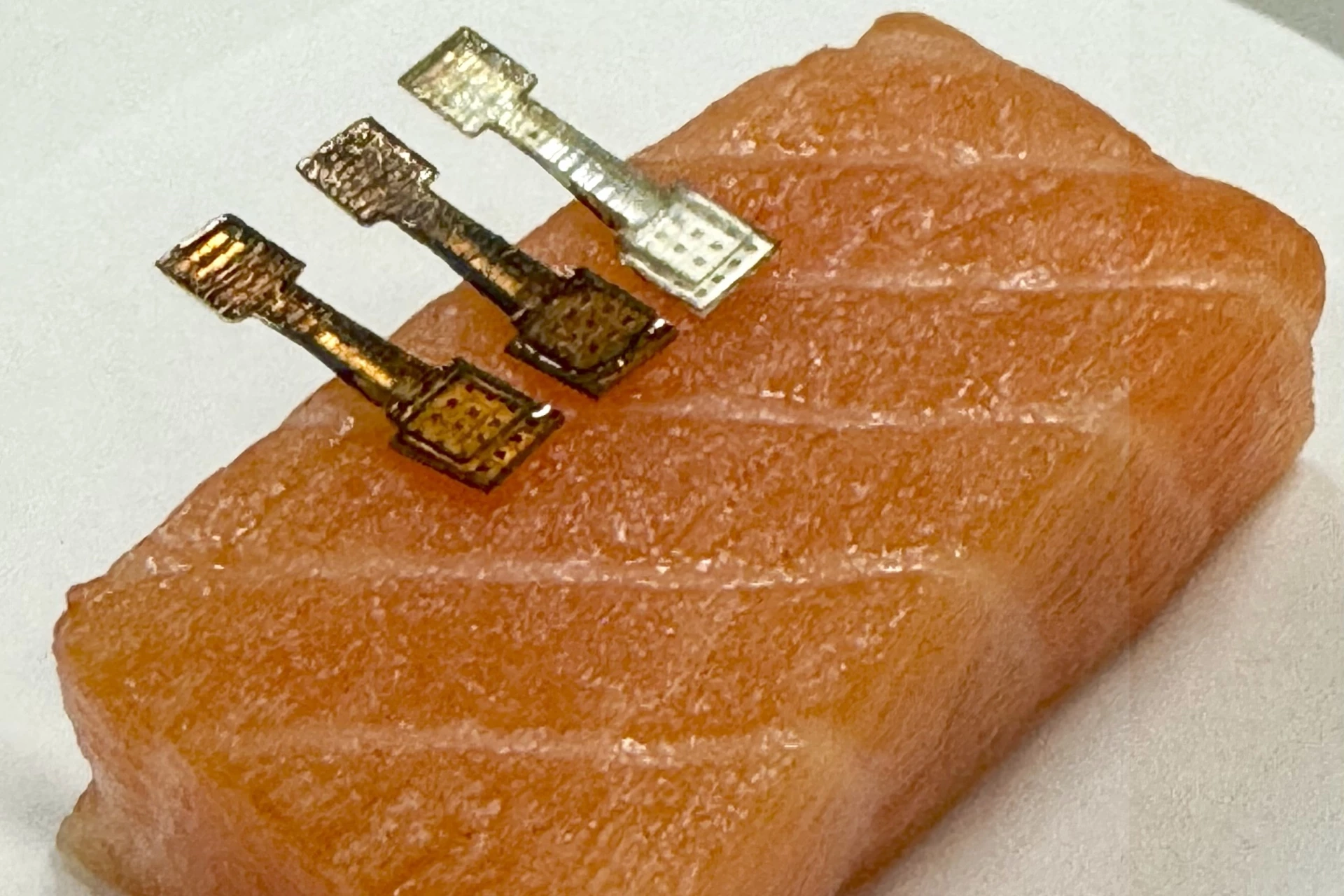
Studies have pointed out that once a fish dies, molecules such as nucleic acids in its muscle tissue begin to decompose, gradually producing a compound called hypoxanthine (HX). The concentration of HX will continue to increase with the time after death, so it is regarded as an important objective indicator for measuring the freshness of fish. However, traditional methods for detecting HX content usually rely on laboratory instruments. The process is time-consuming and complicated to operate, making it difficult to use on-site in ordinary kitchens or restaurants.
To solve this pain point, the scientific research team designed a small sensor that integrates a 4×4 microneedle array at one end. Each microneedle can be understood as an extremely small and sharp "cylindrical needle." Microneedle technology has previously been used for medical applications such as transdermal drug delivery, but this time they have been given a new role in fish testing.
In terms of specific structure, the surface of these microneedles is covered with gold nanoparticles and an enzyme called xanthine oxidase, which can catalyze the decomposition of HX in fish meat. When the sensor is pressed into the fish tissue, the enzyme reacts with HX, causing a change in the local electrochemical potential, and the sensor measures this change to output a quantitative reading related to freshness.
In the verification process, the researchers selected salmon samples, stored them at room temperature for up to 48 hours, and tested the sensor at different time points. The results showed that the device was able to detect HX concentrations as low as less than 500 parts per billion (ppb) in about 100 seconds, a level corresponding to fish meat that is still classified as "very fresh."
Further comparison showed that the readings given by the microneedle sensor were highly consistent with the results of commercially available laboratory-grade detection kits, indicating that it has high accuracy and practical potential. The team believes that this plug-and-play microneedle electrochemical detection solution is expected to provide a simple and fast quality control tool for seafood supply chains and terminal consumption scenarios.
Relevant research papers have been published in "ACS Sensors", a journal of the American Chemical Society, and were led by Nicolas Voelcker, Azadeh Nilghaz, Muamer Dervisevic and others. The American Chemical Society emphasized in its press release that this technology demonstrates a feasible way to use microneedle platforms for rapid food safety testing, and is expected to be expanded to the quality monitoring of other perishable foods in the future.