In the summer of 2022, French President Macron made a special trip to Crolle in the Isère department in southeastern France to stand up for an ambitious production expansion plan in front of flash lights. According to the plan announced at the time, STMicroelectronics, a French-Italian joint venture, and GlobalFoundries, an American chip foundry, will jointly invest 7.5 billion euros to expand the scale of local fabs, double production capacity, and rely on the EU-level "European Chip Act" to promote the re-industrialization of the European semiconductor industry.
In order to broker this "marriage", the French government also promised to provide 3 billion euros in subsidies, hoping to use public funds to leverage private capital and keep key manufacturing links in Europe.
Similar ambitions are playing out in Germany. In June 2023, the then German Chancellor Scholz announced in a high-profile manner that Germany would soon become "one of the largest semiconductor production bases in the world." On the same day, chip giant Intel disclosed that it would invest 30 billion euros in Magdeburg to build a large-scale manufacturing base named "Silicon Junction". It is regarded as one of Europe's symbolic projects to "catch up" with the United States and China in the geotech game.
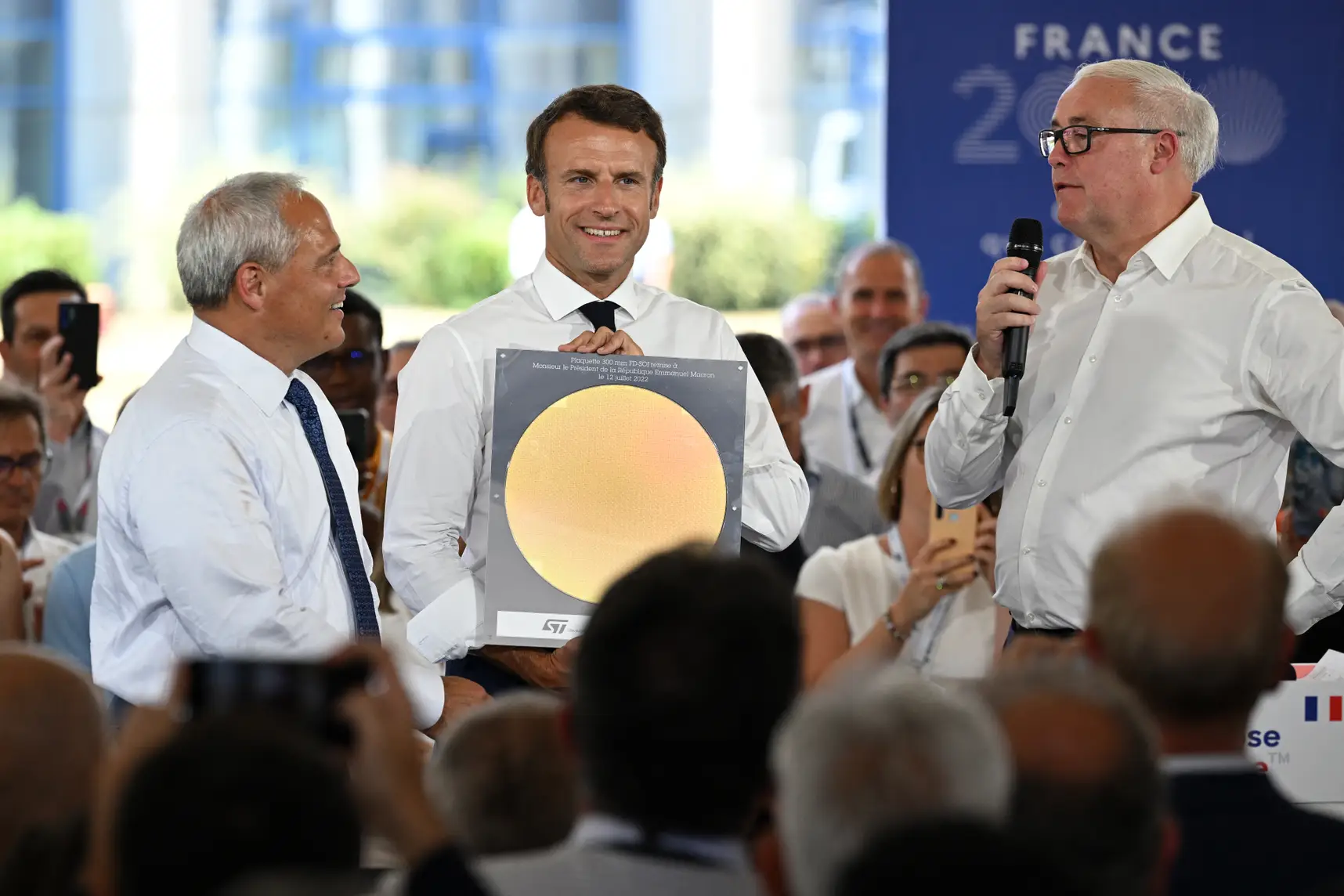
However, the once-famous press conference now only remains as a political memory. In the Croller project, GlobalFoundries has disappeared. Although huge subsidy commitments are still on the books, the overall expansion plan has stalled and it is difficult to advance as originally envisioned. In Magdeburg, Intel first had a back-and-forth with Germany over 10 billion euros of public funding support, and finally chose to "brake the brakes" and shift its focus back to the United States on the other side of the Atlantic, putting aside the European production bases that had originally had high hopes.
These reversals reflect the EU's structural dilemma in the semiconductor field: On the one hand, it hopes to reduce its dependence on US and Chinese supplies through the "Chip Act" and regain its place in the global industrial chain. On the other hand, it frequently encounters real resistance from corporate strategy adjustments, cost competition pressures and transnational subsidy wars in the implementation stage of specific projects. Investments that were originally packaged as "historical opportunities that cannot be missed" on the political stage now appear fragile in the face of capital's more actuarial return logic, and have also exposed Europe's shortcomings in technology accumulation, market scale, and policy implementation coordination.
Against the background that the world regards chips as the "oil of the 21st century", Europe is trying to reshape the industrial landscape through regulations, subsidies and symbolic factory projects, but the current trajectory is more like recording an "irreversible decline." From Croller to Magdeburg, from the rhetoric of the leaders of France and Germany to the reality of shrinking and shelving projects, the gap between Europe and the United States and China in semiconductor competition has not narrowed significantly. Instead, due to the passage of time and changes in corporate decision-making, there is a risk of being further left behind.