A study by video editing company Kapwing found that more than 20% of videos recommended to new users by YouTube’s algorithm were “AI slop”—low-quality AI-generated content specifically designed to rack up views. Kapwing surveyed the world's 15,000 most popular YouTube channels (top 100 in each country) and found that 278 of them produced only AI slop. These channels have accumulated more than 63 billion views and 221 million subscribers, and are estimated to generate approximately $117 million (approximately £90 million) in revenue annually.
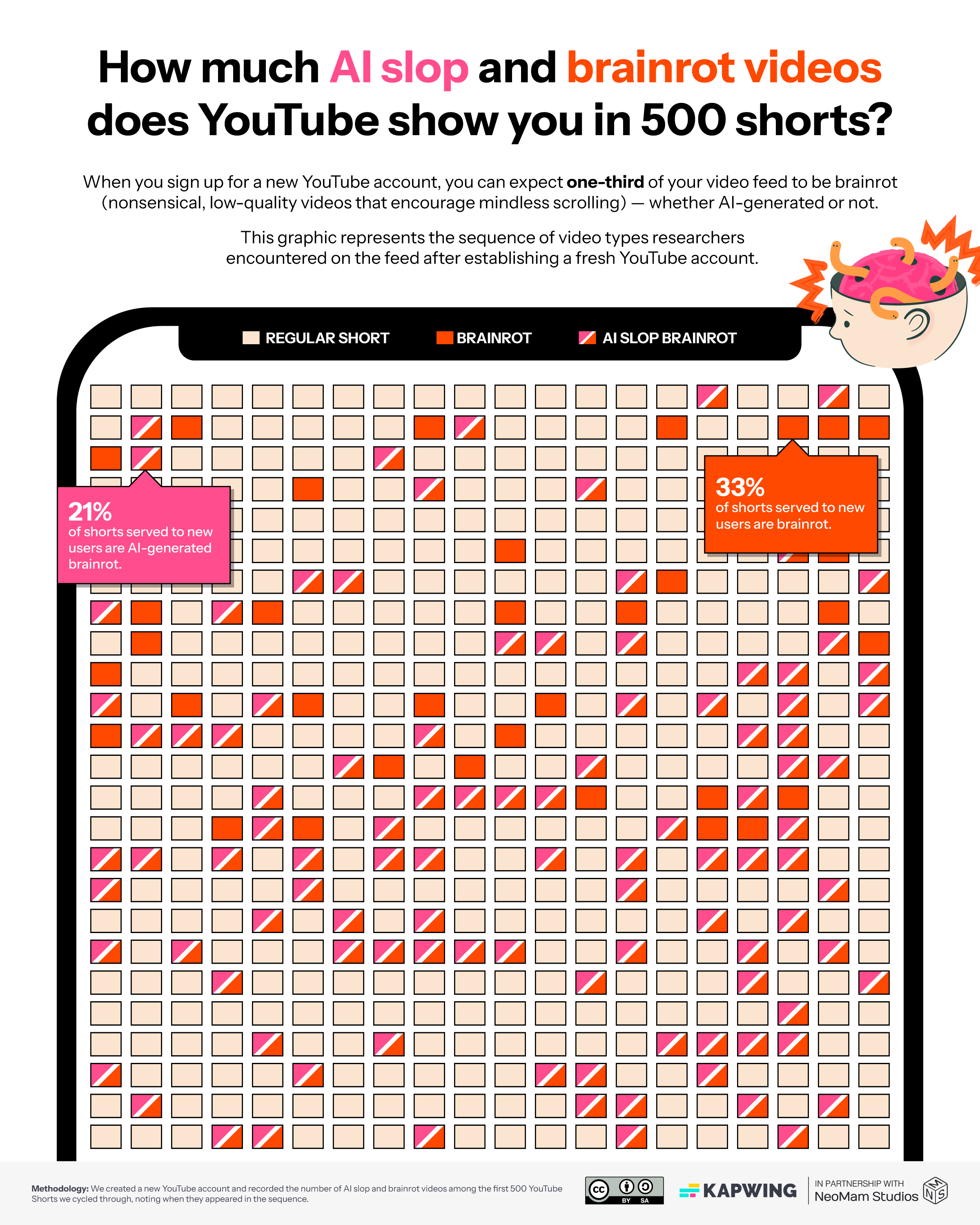
The researchers created a new YouTube account and observed its top 500 recommended videos. The results showed that 104 were AI slops, accounting for about 21%; one-third of the total videos were "brainrot content", including AI slops and other low-quality content, produced only to gain attention.
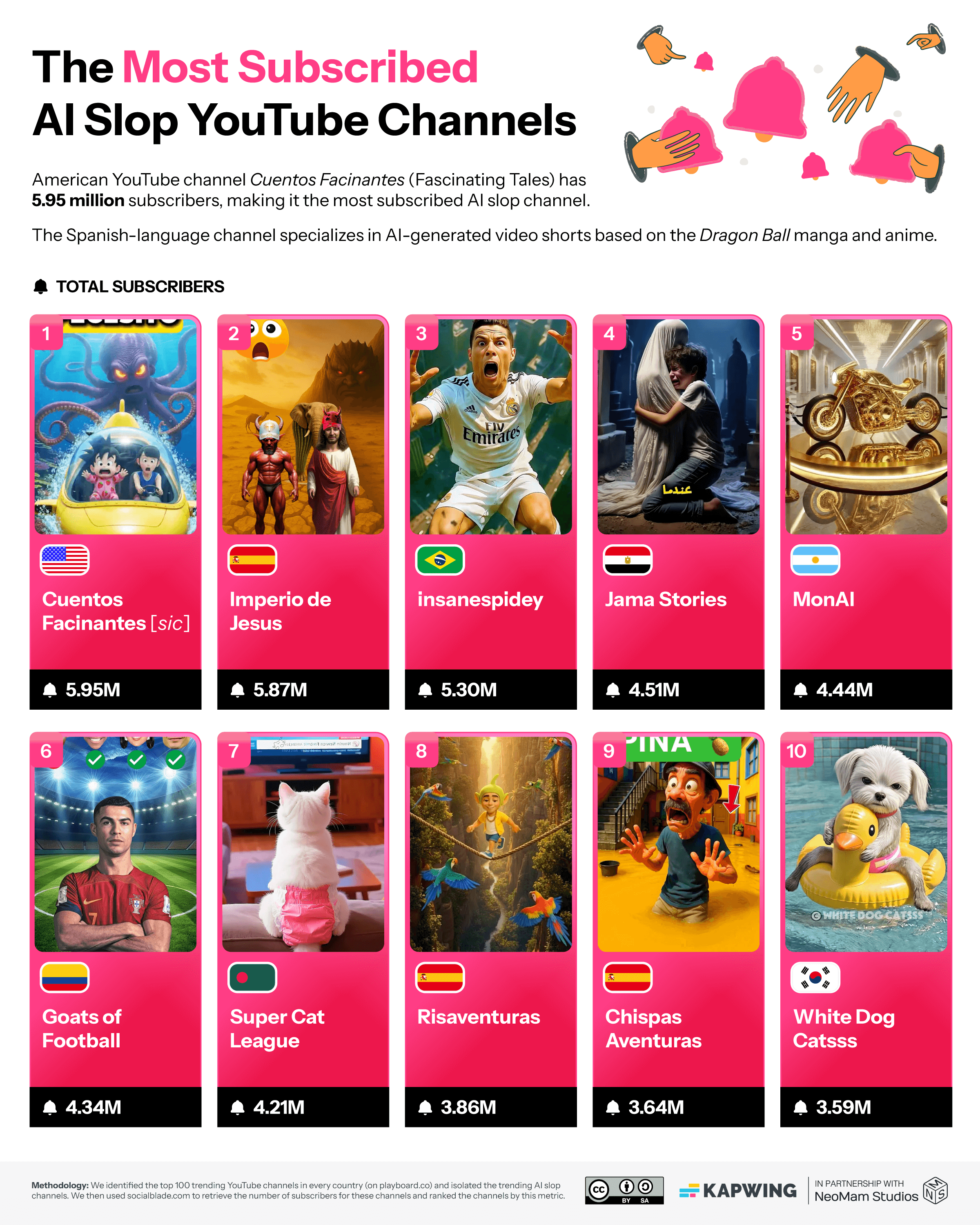
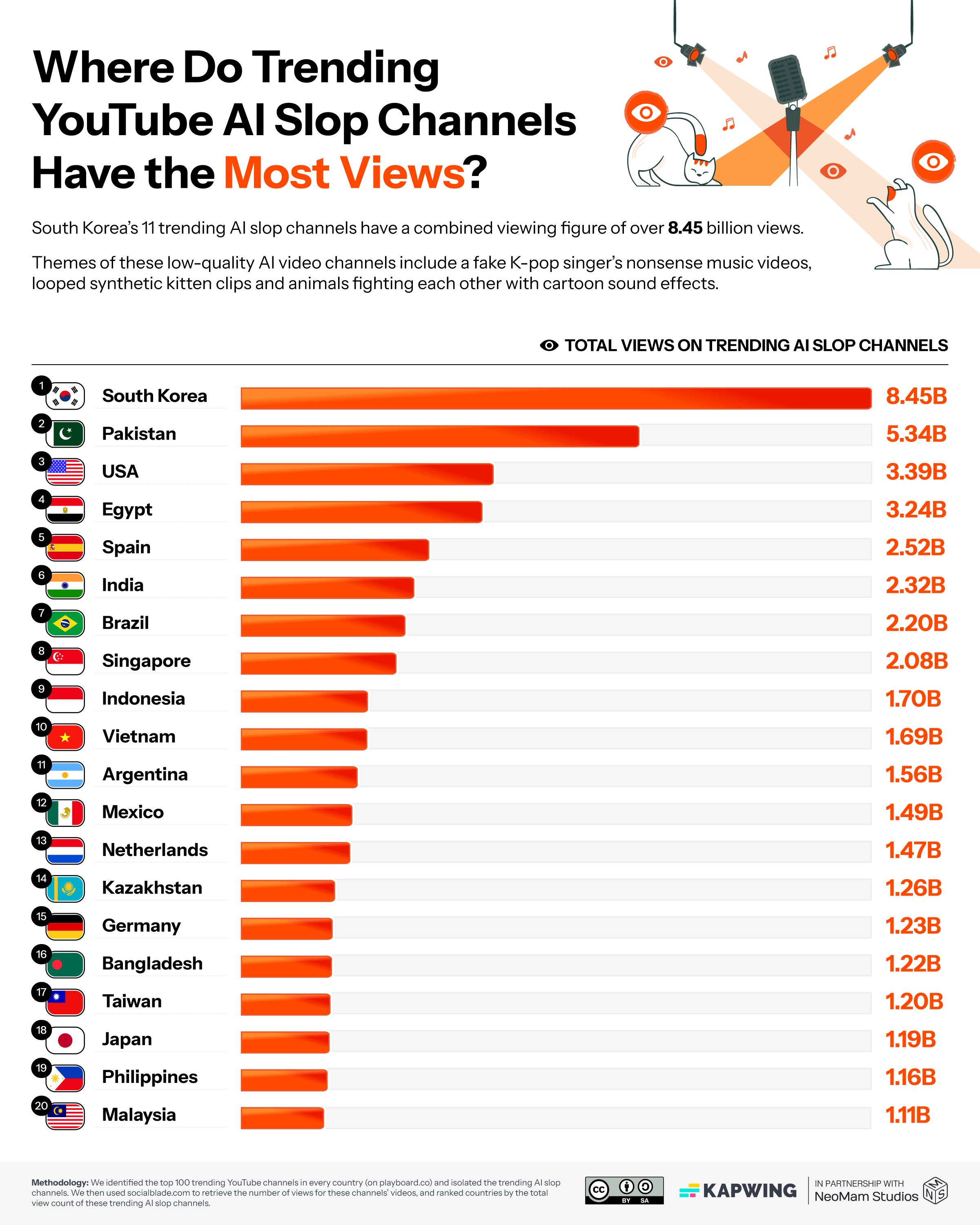
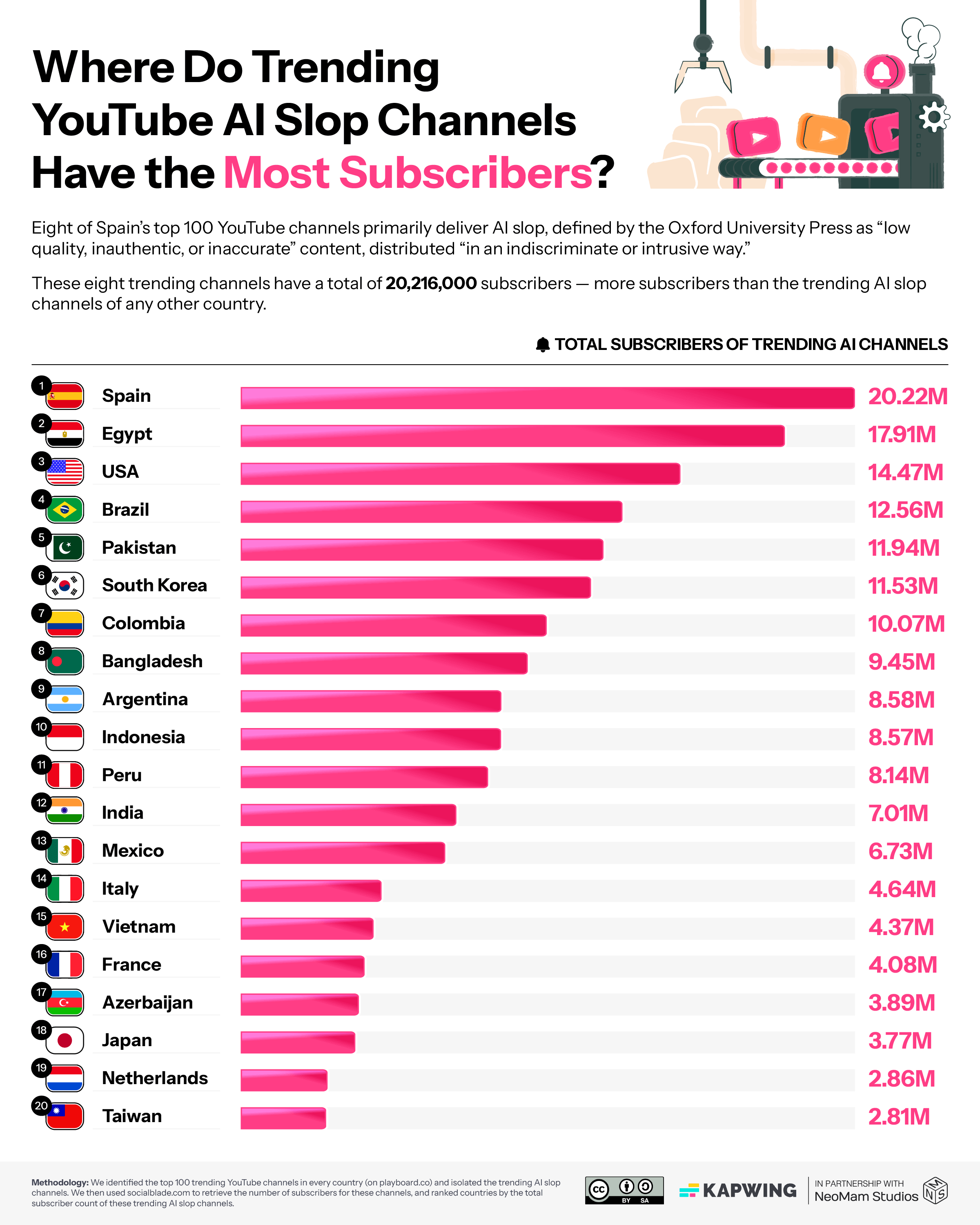
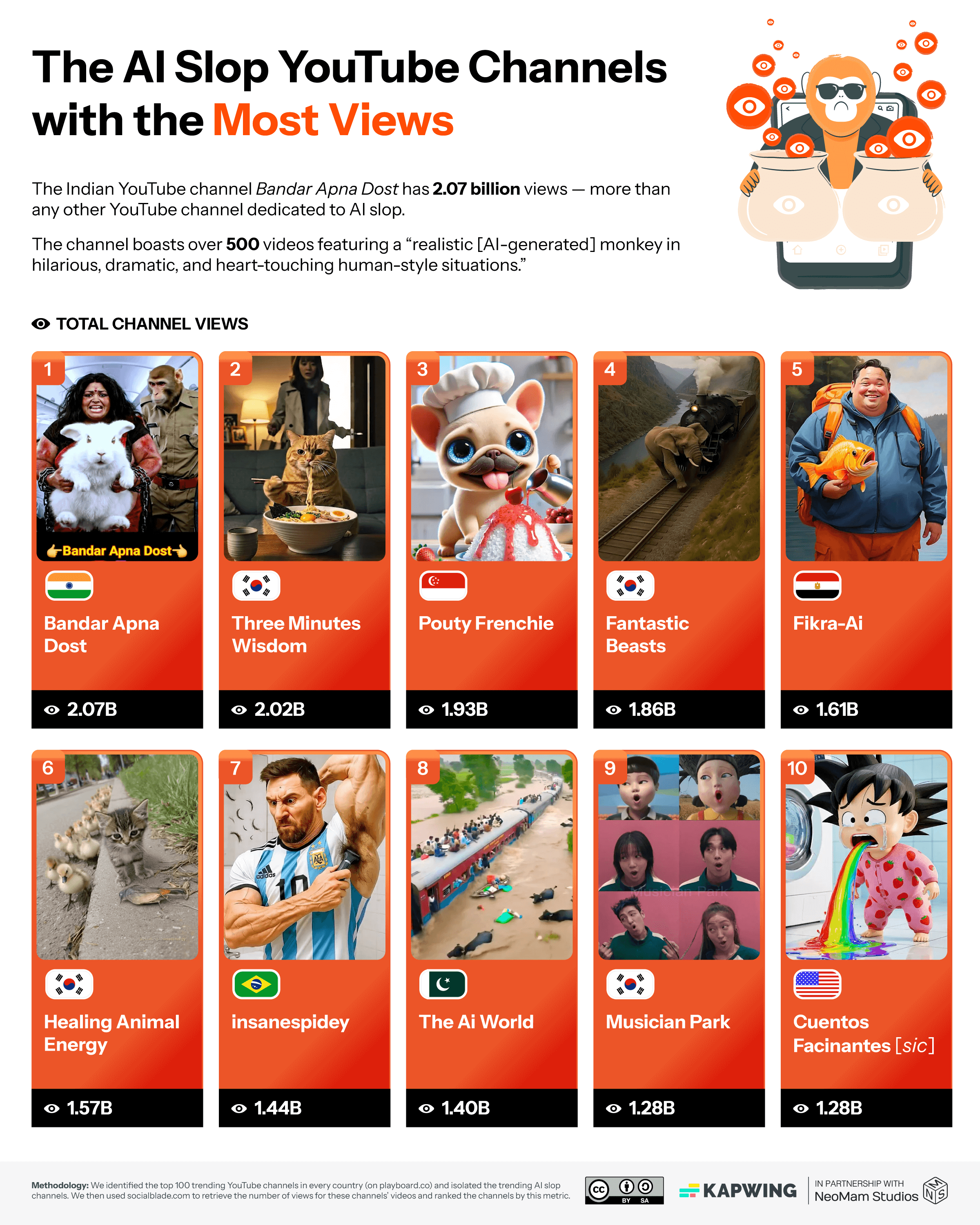
This phenomenon reflects a rapidly expanding industry that is flooding large social platforms such as X, Meta and YouTube, shaping a new era of decontextualized, addictive and international content. This year's Guardian analysis showed that nearly 10% of YouTube's fastest-growing channels were AI slop, despite the platform's efforts to curb "inauthentic content."
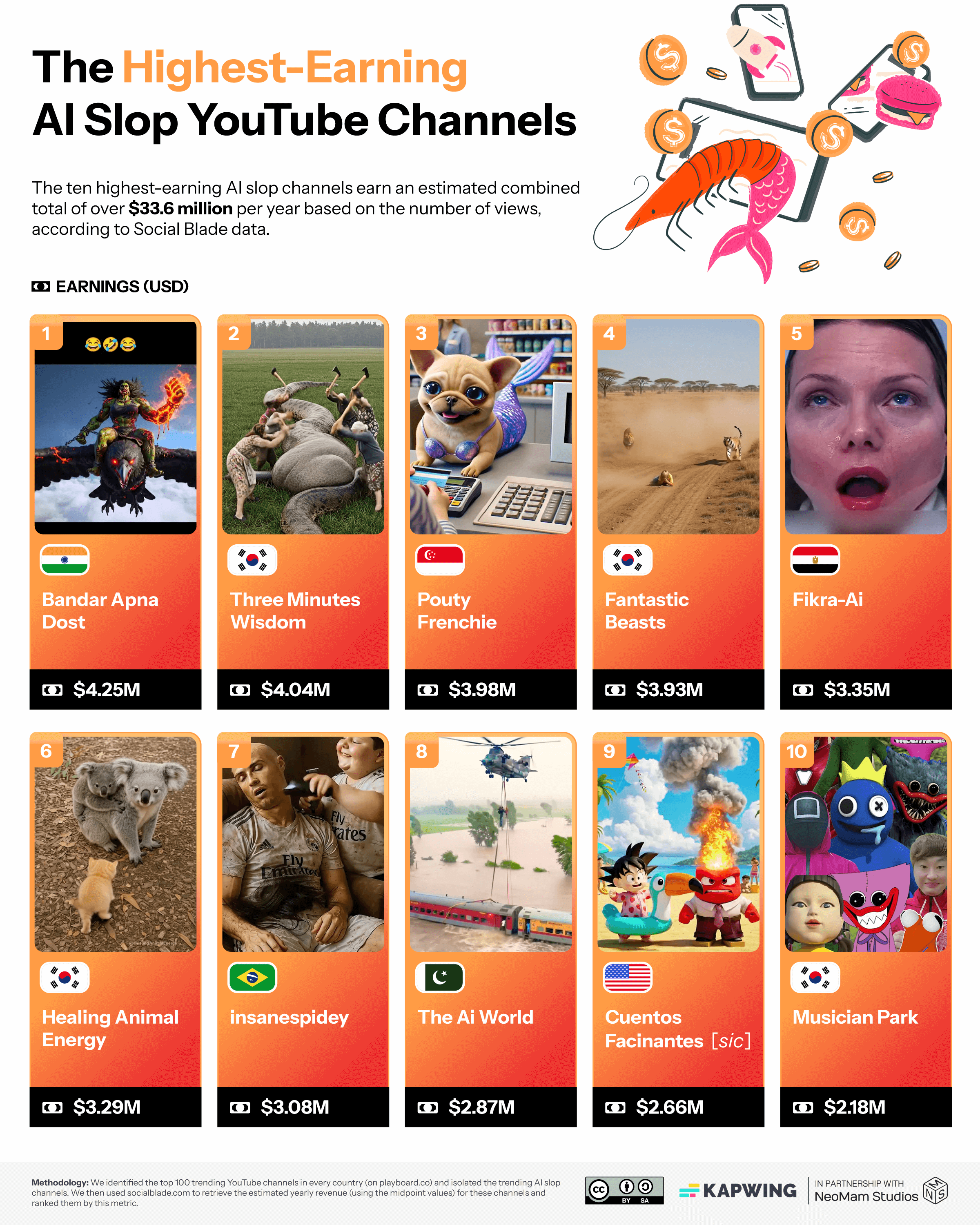
These AI channels are distributed globally and have a wide audience: in Spain, 20 million people (nearly half of the population) follow such channels; in Egypt, 18 million, in the United States, 14.5 million, and in Brazil, 13.5 million. The Indian channel "Bandar Apna Dost" has 2.4 billion views and tells absurd stories such as the adventures of anthropomorphic orangutans and Hulk-like muscular men riding tomato helicopters, with annual revenue estimated at $4.25 million. Singapore's "Pouty Frenchie" has 2 billion views, targeting children by showing scenes such as French bulldogs eating crystal sushi, with annual revenue of nearly US$4 million; the United States' "Cuentos Facinantes" has 6.65 million subscribers, making it the most subscribed children's cartoon story channel in the study. Pakistan's "The AI World" has 1.3 billion views, including flood disasters and "relaxing rain and thunder and lightning to help you sleep" soundtrack.
Technology and digital rights researcher Rohini Lakshané believes that the popularity of "Bandar Apna Dost" stems from its absurdity, hyper-masculine elements and plot-free design, making it easy for new audiences to get started. Reporter Max Read pointed out that AI slop creators are mostly in low- and middle-income English-speaking countries such as India, Ukraine, Kenya, Nigeria, Brazil and Vietnam. They use platforms such as Telegram and Discord to share skills, sell courses, and even develop niche areas such as "pressure cooker explosion".
A YouTube spokesperson responded that generative AI, like any tool, can be used for high-quality or low-quality content. The platform focuses on connecting users with high-quality content. All uploads must comply with community guidelines, and violations will be removed.