On December 26, 2025, an anonymous revelation on Maimai broke the calm of the cross-border e-commerce industry: "Anker Innovation has laid off large-scale layoffs, with a proportion of nearly 30%, and employees have completed the resignation procedures and signed." As soon as the news came out, it quickly caused shock in the industry.
Although Anker Innovation officials immediately denied that "the situation is not true", the market's doubts have not dissipated - just two weeks before the news broke, this company, regarded as "China's consumer electronics overseas benchmark", had just submitted a listing application to the Hong Kong Stock Exchange, trying to break through the "A+H" dual platform financing; and Its third-quarter financial report has already shown weakness: revenue growth fell to 19.88%, the lowest since the first quarter of 2023, non-net profit fell 2.92% year-on-year for the first time in the sixth quarter, and net cash flow from operating activities plummeted to -865 million yuan, a year-on-year plunge of 152.38%.
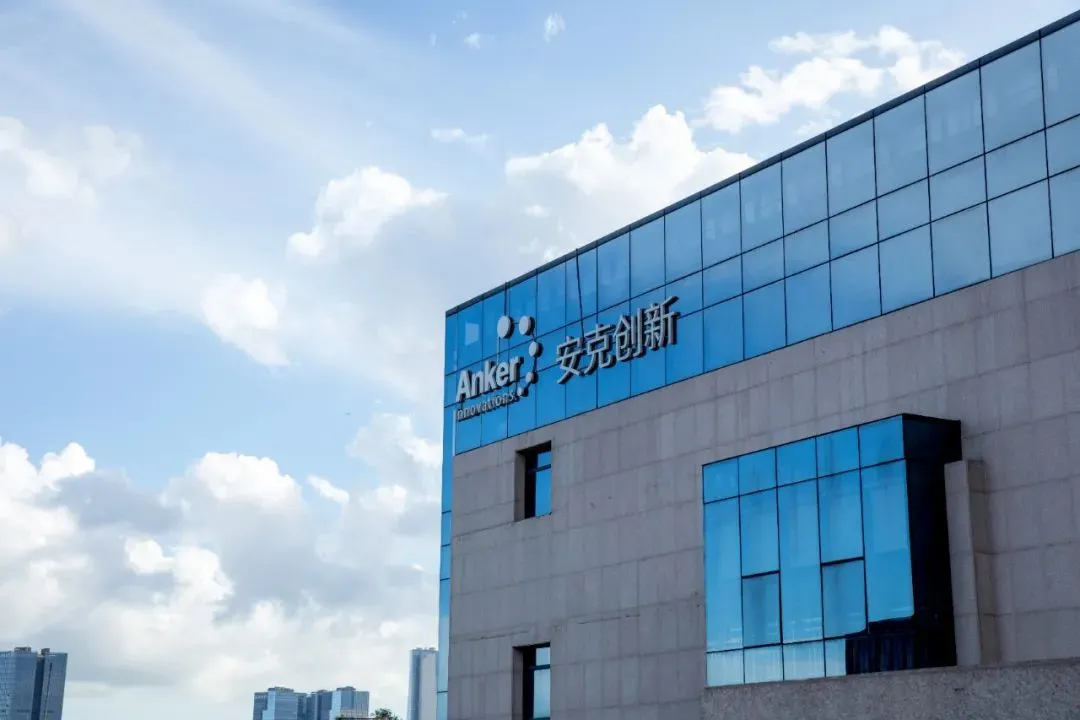
From a small cross-border seller when it was founded in 2011 to an industry giant with revenue exceeding 24.7 billion yuan in 2024, Anker Innovation has spent more than ten years writing the "myth of wealth creation" for China's consumer electronics overseas. The "Shallow Ocean Strategy" proposed by its founder Yang Meng, which avoids the core categories monopolized by giants and focuses on small and medium-sized market segments for saturation attacks, once became a textbook case in the cross-border e-commerce industry. But now, a series of problems such as rumors of layoffs, declining profits, product recalls, and strategic swings have erupted, putting this star company in unprecedented trouble.
Anker Innovation’s dilemma is by no means an isolated case. Since 2025, the cross-border e-commerce industry has ushered in the "coldest winter": Amazon's traffic costs have doubled, US tariff policies have tightened, and the growth rate of the global consumer electronics market has slowed to a low range of 2.8%-6%. At the same time, the rise of local competing products such as Greenlink Technology and Baseus has accelerated, encircling Anke in the domestic market; overseas markets are also facing ecological squeeze from original brands such as Apple and Samsung. Amid internal and external troubles, Anker Innovation’s rumors of layoffs are more like a microcosm of the collective transformation pains of Chinese consumer electronics companies going overseas.
The double stranglehold between cross-border e-commerce and consumer electronics
Anker's innovation dilemma first stems from drastic changes in the external environment. As a cross-border enterprise that relies on overseas markets for 96% of its revenue, its fate is deeply tied to the cycles of the global consumer electronics market and cross-border e-commerce industry. In 2025, these two tracks will enter the adjustment period at the same time, forming a "double stranglehold" on Anker Innovation.
The global consumer electronics market has already returned to rationality after experiencing explosive growth during the epidemic. According to predictions from authoritative organizations, the global consumer electronics market will only remain between US$1.12 and US$1.42 trillion in 2025, with an annual growth rate of less than 6%, which is far lower than the double-digit growth rate during the epidemic. This slowdown in growth is not a short-term fluctuation, but the inevitable result of the industry entering a mature stage.
For Anker Innovation, this change directly impacts its core business. Anker's main business is consumer electronic accessories such as charging equipment, power banks, and audio equipment. The demand for such products is highly dependent on the sales of terminal equipment such as smartphones and laptops. However, global smartphone shipments will only grow by 6.4% in 2024, and the growth momentum is concentrated in high-end innovative models such as AI phones and folding screens. Sales of traditional mid- to low-end models continue to shrink. Although the PC market has recovered, its growth rate is still moderate. Consumer replacement cycles have been extended from 2-3 years to 4-5 years, and the demand for accessories updates has naturally dropped significantly.
What's even more fatal is that the competitive landscape of the accessories market is reversing. In the past, Anker had an advantage in the third-party accessories market by virtue of its "high-end" positioning, but now mobile phone original brands are accelerating to harvest this market. Brands such as Huawei, Xiaomi, and OPPO rely on their terminal ecological advantages to use accessories such as chargers and power banks as "ecological extensions". Through bundled sales and cost-effective advantages, they continue to squeeze the space of third-party brands. Data shows that the current share of original brands in the charger retail market has reached 41%, exceeding the combined share of third-party brands such as Anker and Lulian (38.6%).
In overseas markets where Anker once had an advantage, pressure is also spreading. Q3 2025 global TWS headset shipment data shows that Anker shipped 700,000 units, a year-on-year increase of 95%, but its market share is only 7%, far lower than leading brands such as Apple and Samsung. In its core power bank category, its leading position in overseas markets has also been challenged. Previously, Anker's power bank share on the Amazon platform was as high as 38%, but as brands such as Greenlink and Baseus accelerate their overseas deployment, this advantage is being diluted.
If the slowdown in the consumer electronics market is a "slow knife cutting the flesh", then the drastic changes in the cross-border e-commerce industry are a "blow in the face". Since 2025, the cross-border e-commerce industry has entered a "cold winter period", and disruptive changes have occurred in the three core links of traffic, compliance, and logistics, directly eroding Anker Innovation's profit margins.
The surge in traffic costs is the first to bear the brunt. As Anker's core sales channel, the traffic logic of the Amazon platform has fundamentally changed. The proportion of natural traffic dropped from 40% to 15%, and sellers had to rely on paid advertising to obtain orders. The cost of a single click on the US website soared from US$1.2 to US$2.8. During major promotions such as "Black Friday", there was even a strange phenomenon of "investing 500,000 yuan in advertising fees, but the profit dropped by 10%." Anker Innovation's sales and distribution expenses in the first three quarters of 2025 increased by 30.1% year-on-year to 4.699 billion yuan, far exceeding the revenue growth rate of 19.88% in the same period. The pressure on traffic costs is evident.
The surge in compliance costs has further squeezed profits. In 2025, the United States will cancel its tax-free policy for packages under $800, and the customs tax costs of cross-border companies such as Anker will increase significantly. What’s even more stringent is that the U.S. tax department requires sellers who collect payments through personal accounts to pay a 25% personal income tax in 2024. This is undoubtedly a huge expense for cross-border companies that rely on multiple channels for collection. Anker Innovation also admitted in its prospectus that rising compliance costs have become an important factor affecting profitability.
The turbulence in the logistics chain has exacerbated operational difficulties. Although shipping costs will decrease in 2025, the actual logistics cost pressure of enterprises has not been relieved due to contract lag. What's more serious is that the customs clearance mode has been changed from T86 to formal customs declaration, the customs clearance time has been extended from 2-3 days to 7-15 days, and the inspection rate has also increased significantly. This not only results in a loss of delivery time, but also incurs additional customs clearance fees, deposits and other expenses, further eroding profits.
On the channel side, Anker Innovation is also facing transformation pressure. In the past, third-party platforms such as Amazon were Anker's core growth engine, but now the growth rate of platform channels has slowed down, and independent stations and offline channels have become new growth points. In the first half of 2025, Anker Innovation's independent stations and offline market revenue growth rates were 42.64% and 43.6% respectively, far exceeding the 27.51% growth rate of the Amazon channel. However, channel transformation requires long-term investment, and it is difficult to make up for the weak growth of platform channels in the short term. On the contrary, it will increase operating costs.
The intensification of geopolitical risks has made Anke Innovation’s overseas layout even worse. Uncertainty over U.S. trade policies toward Chinese goods continues to increase, with potential tariff threats hanging over our heads like the Sword of Damocles. In order to avoid risks, Anker Innovation has accelerated the "CN+2" supply chain layout, planning to increase Vietnam's production capacity to 50% of exports to the United States, while increasing investment in the European market. In the first half of 2025, European market revenue will increase by 66.96% year-on-year, far exceeding the 23.2% growth rate of the North American market.
But supply chain shifts are far from easy. The Vietnam factory that was put into production in 2022 will have a capacity utilization rate of only 65% in 2024 due to insufficient local workers' skills and imperfect supply chain facilities. Some orders have to be transferred back to Shenzhen for production, which directly leads to a 20% increase in additional logistics costs. This dilemma of "seemingly transferring, but actually increasing costs" is a common problem faced by many Chinese cross-border enterprises.
To make matters worse, the instability of the supply chain has also triggered a product quality crisis. In 2025, Anker Innovation suffered a large-scale recall of power banks, with a total of 565,000 products recalled. The total number of recalls worldwide exceeded 2.38 million units, directly causing economic losses of 432 million to 557 million yuan. A subsequent investigation found that the root of the problem was that the core supplier Ampreis changed the raw materials without authorization in some batches of cells, causing the separator insulation to fail. This incident not only exposed the loopholes in Anker's supply chain management, but also seriously damaged its brand reputation accumulated over the years - Japan's Yamada Electric removed all Anker mobile power supplies from the shelves, and the negative review rate of the Anker brand on Amazon in the United States soared sharply.
From "Champion of the Shallow Sea" to "Lost in the Deep Sea"
The deterioration of the external environment was the trigger for Anker's troubles, but the real root lies in the strategic confusion within the company. From proposing the "shallow ocean strategy" in 2020 to become the industry benchmark, to later blindly expanding and venturing into the "deep ocean", Anker Innovation's strategic swings not only wasted a lot of resources, but also weakened its core competitiveness, eventually falling into a vicious cycle of "high investment, low output".
The rise of Anker Innovation is inseparable from the precise positioning of the "shallow sea strategy". In 2020, founder Yang Meng proposed: Avoid the "deep sea" super categories monopolized by giants such as Apple and Samsung, and focus on small and medium-sized categories with annual sales of less than US$50 billion that can be fully invested with a team of three to five hundred people. The core logic of this strategy is "differentiated competition" - forming advantages through technological innovation and brand building in market segments ignored by giants.
Initially, this strategy was a huge success. Anker focuses on charging products. It is the first in the world to apply gallium nitride technology to the field of consumer charging. It has launched the GaN Prime series of products with an efficiency of up to 93%, and has established a high-end brand image with its technological advantages. In categories such as power banks and chargers, Anker has quickly become the world's leading independent brand, with revenue reaching 24.71 billion yuan in 2024, a year-on-year increase of 41.14%.
But behind the success, the seeds of strategic deviation have been sown. As its performance grew, Anker began to expand, transforming its "Shallow Ocean Strategy" into "multi-category expansion" and expanding its product line to up to 27 categories, including home security, headphones, projections, sweeping robots, lawn mowing robots, electric bicycles, etc. This radical expansion completely deviates from the original intention of the "Shallow Ocean Strategy" - many new categories not only require huge investments, but also do not match Anker's core technical capabilities.
In 2022, Anker Innovation suffered a "systemic failure" and had to shut down 10 product teams, including lawn mowing robots and handheld cleaning equipment. Yang Meng admitted afterwards that the root cause of this failure was the "mismatch between talents and positions" - a large number of talents in key positions did not have the corresponding capabilities, resulting in low team morale and low efficiency. This "first expansion and then contraction" toss-up not only wastes a lot of R&D and operational resources, but also disrupts the development rhythm of the company.
If multi-category expansion is a "tactical mistake", then rashly entering "deep sea" fields such as robotics and AI is a "strategic misjudgment" by Anker Innovation. After 2023, Anker will shift its strategic focus to the robot business, formulating a "three-step" strategy from two-dimensional movement to three-dimensional interaction, trying to transform from a "global digital accessories merchant" to a "global home smart infrastructure platform provider."
But this transformation was fraught with contradictions from the beginning. The fields of robotics and AI are industries with high technical barriers, long R&D cycles, and huge investments, which is completely opposite to the logic of "Shallow Sea Quick Fight" that Anker is good at. Yang Meng himself admitted: "Nowadays, most embodied intelligence companies are founded by professors, scholars or R&D executives. Their technology is very good, and our technology needs to start again."
Facts have proved that this transformation is completely beyond the boundaries of Anke's capabilities. In March 2025, Liu Fang, the head of Anker's embodied intelligence project, resigned, and Beijing's embodied intelligence team was disbanded; in April, Wang Zhiyu, the former head of Anker's 3D printer, left to start a business, and the team of nearly 30 people all came from Anker. The loss of key talents directly declares the failure of this strategy.
What's more serious is that the radical new business layout consumes a lot of core resources. In the first three quarters of 2025, Anker Innovation's R&D expenses increased by 38.8% year-on-year to 1.946 billion yuan, with R&D investment accounting for nearly 10%. However, these investments have not been transformed into effective competitiveness - core charging product innovation has been weak, and new business has made no progress, ultimately falling into the embarrassing situation of "losing both ends". Compared with competing product Lulian Technology, its third quarter report for 2025 showed that its non-net profit growth rate was as high as 71.1%, while Anker's growth rate was 2.92% year-on-year. The difference in strategic choices is directly reflected in performance.
Strategic confusion is also reflected in brand management and market layout. Anker Innovation once owned multiple independent brands such as Anker, eufy, soundcore, and Nebula, trying to cover different market segments. However, the multi-brand strategy resulted in scattered resources and insufficient synergy. After 2023, the company had to tighten its brand matrix, cut off independent brands such as Nebula, and focus on the three main brands. However, the best opportunity for brand building has been missed at this time.
What’s even more fatal is that Anker’s layout in domestic and foreign markets is seriously unbalanced. As a Chinese company, Anker's domestic revenue accounts for only 4%, and 96% of its revenue relies on overseas markets; while competing product Lulian Technology's domestic sales account for 40%, and its market layout is more balanced. This strategy of "focusing on overseas and ignoring domestic" caused Anker to miss out on the huge domestic consumer market of 1.4 billion people. In the domestic online power bank market, data from June 2024 to May 2025 shows that Romas ranked first with a share of 13.3%, Baseus ranked second (6%), and Anker ranked third with only a share of 5.8%, which is in sharp contrast to its leading position in overseas markets.
It’s not that Anker doesn’t want to expand into the domestic market, but it’s stuck in a “high-end positioning dilemma.” Yang Meng once said that if the product does not have significant innovation that is 3-5 times better than others, it will not forcefully enter the domestic market. However, in mature categories such as power banks and power banks, it is extremely difficult to achieve this kind of "intergenerational difference" innovation, which has made it difficult for Anker to break through in the domestic market. On the other hand, Lulian Technology has risen rapidly in the domestic market with its more user-friendly pricing and products that better meet the needs of domestic users. In July 2025, JD.com platform sales increased by 303% year-on-year, and its market share continued to increase.
The fatal contradiction between high salary and low efficiency
Behind the loss of strategy is the disorder in Anker’s innovative organizational management. In the past few years, Anker has experienced rapid personnel expansion, forming a deformed structure of "high salary, high investment, and low efficiency." When the external market growth slowed down and profits came under pressure, the disadvantages of this structure were infinitely magnified, and eventually layoffs had to be adopted to "stop the bleeding."
Anker Innovation's staff size has expanded dramatically in just a few years. From 3,532 people at the end of 2021, to 5,034 people at the end of 2024, to 5,638 people at the end of June 2025, the number of employees has increased by more than 50%. Along with the expansion of personnel, salary costs have also increased - in 2024, the company's employee salary payable will reach 2.213 billion yuan, an increase of more than 500 million yuan compared with 2023.
What deserves more attention is the proliferation of "highly paid employees." In 2024, Anker's employees with an annual salary of more than one million will reach 775, an increase of 281 from 494 in 2023, accounting for nearly 15% of the total number of employees. The per capita annual salary of R&D personnel is approximately 535,000 yuan, and the per capita salary of the core team is as high as 659,000 yuan, which is much higher than the industry average of 400,000 yuan. Although this "everyone is a millionaire" salary structure helps attract talents, it also imposes a heavy cost burden on the company.
The crux of the problem is that high salaries have not brought about corresponding improvements in efficiency. In the first three quarters of 2025, Anker Innovation's R&D personnel accounted for as high as 53.08%, but the output ratio of R&D investment continued to decline. Taking TWS headsets as an example, Anker's R&D investment far exceeds the industry average, but its market share in 2025Q3 is only 7%, which is far lower than expected. In the field of charging products, technological leadership is gradually being lost - Huawei has launched a 50W car magnetic charger, which can provide stable output in extreme environments; Samsung has taken advantage of the industrial chain to "molecularly adapt" wireless chargers to Galaxy series devices, and Anker's gallium nitride technology is no longer scarce.
As its personnel expanded, Anke’s organizational structure also became increasingly bloated. The company adopts a three-tier management structure of "head office level - business division level - product line level". Too many levels lead to inefficient decision-making and high communication costs. From 2022 to 2023, the company has replaced more than half of its first-level department heads, and frequent executive changes have further exacerbated organizational turmoil.
What's more serious is that the change in organizational culture failed to reverse the situation of "overstaffing". After the crisis in 2022, Anker changed its values from "reasoning/pursuing excellence" to "first-classity/pursuing perfection/mutual growth", and implemented an incentive mechanism of "7:3 distribution between workers and shareholders", promising to distribute 70% of profits to workers. In 2025, the average employee income will increase by about 20%, but performance growth has not kept pace - non-net profit in the third quarter fell by 2.92% year-on-year, and there is an inversion phenomenon in which "salary growth is faster than profit growth".
The management issues of grassroots employees cannot be ignored either. According to people familiar with the matter, more than 50% of Anker's grassroots employees are outsourced personnel, which the company calls "partners." These personnel are not within the scope of dividend benefits and face frequent layoffs. This structure of "high salaries for core positions and temporary workers for grassroots positions" is not conducive to team stability, but also affects product quality and execution. The recall of power banks in 2025 is not unrelated to the instability of grassroots quality control personnel.
Although Anker Innovation officially denied the rumors of "layoffs of 30%", judging from multiple signs, the company is indeed undergoing large-scale personnel adjustments. According to anonymous sources on Maimai, the adjustment will last from Christmas to January 2026, with outsourced personnel and some management positions most affected. Although the core R&D team is relatively stable, some personnel have also been optimized.
The core logic of this adjustment is to shift from "extensive growth" to "refined contraction." With revenue growth slowing and cash flow negative, cost control has become Anker's top priority. In the first three quarters of 2025, the company's net cash flow from operating activities was -865 million yuan, while employee compensation payable was as high as 2.213 billion yuan. Reducing salary costs through personnel optimization has become an inevitable choice.
At the same time, business contraction has also led to personnel redundancy. In 2022, the company cut its 27 product lines to 17, and in 2025 it disbanded its embodied intelligence and 3D printing teams. Relevant personnel will inevitably face relocation or resignation. Although Anker has previously digested some redundant personnel through internal transfers and other methods, as performance pressure continues to increase, direct layoffs have become a more efficient way to "stop bleeding".
It is worth noting that Anker’s layoffs are not an isolated case. Since 2025, the cross-border e-commerce industry as a whole has entered a period of adjustment, and many companies are controlling costs through personnel optimization. But for Anke, this adjustment is more like a "late correction" - if it could stick to the "shallow sea strategy" in the early years and avoid blind expansion and bloated organization, it might not have reached this point today.
The transformation pains of China’s consumer electronics going overseas
The dilemma of Anker Innovation is not an isolated incident of one company, but a microcosm of the collective transformation pains of Chinese consumer electronics companies going overseas. In the past decade, Chinese consumer electronics companies have rapidly emerged in the global market with their supply chain advantages and cost-effectiveness. However, as the global trade pattern is restructured and market competition intensifies, the old models of "low price for volume" and "platform dependence" have expired, and the industry is entering a new stage of "branding, refinement, and globalization." Anke’s experience has provided three important revelations for the industry.
Anker's lessons prove that for consumer electronics companies going overseas, "strategic focus" is far more important than "diversified expansion." In the current market environment, enterprises have limited resources. Only by focusing on their core areas of expertise can they establish real barriers to competition. On the other hand, Prudential Innovation, a cross-border enterprise also born in Shenzhen, focused on the smart cleaning category in the German market, deeply understood the needs of local users, and launched products that fit the scene. It achieved "big sales" in less than 3 months after it was launched on the TikTok Shop German site, ranking among the top three on the platform list for many weeks in a row.
For Anke, the top priority is to return to the original intention of the "Shallow Ocean Strategy", cut off businesses that do not match its core capabilities, and refocus resources on advantageous categories such as charging and energy storage. In 2025, the first-day sales of the Anker SOLIX Solarbank 3 Pro balcony energy storage product launched by Anker will be five times that of last year. This is a sign that there is still growth potential by focusing on core categories.
Anker's predicament also exposed the risks of "single channel dependence" and "imbalanced market layout". In the context of channel changes in the cross-border e-commerce industry, companies must get rid of their reliance on single platforms such as Amazon and build a diversified channel system of "independent stations + offline channels + multi-platforms". At the same time, the domestic market is a strategic hinterland that cannot be ignored. Enterprises should balance the layout of domestic and foreign markets to reduce geopolitical risks.
Data shows that from 2025 to 2029, the compound annual growth rates of the e-commerce markets in Europe, Southeast Asia, and Latin America will be 7.95%, 8.79%, and 9.43% respectively. These emerging markets are becoming new growth points for cross-border e-commerce. Anker has realized this. In the first half of 2025, the revenue growth rate of the European market will far exceed that of North America. However, to achieve a truly diversified market layout, it needs to further increase its investment in emerging markets, while optimizing its domestic market strategy and narrowing the gap with competing products such as Lulian.
During the period of rapid industry growth, companies can achieve growth through scale expansion, but after entering the adjustment period, "efficiency first" becomes the key to survival. Anker's "high salary, low efficiency" model is no longer sustainable. The company must reconstruct its organizational structure, optimize its personnel structure, and improve per capita output efficiency. At the same time, supply chain management and quality control must be strengthened to avoid brand crises caused by supply chain problems.
In addition, companies should actively embrace new technologies to improve operational efficiency. Currently, AI technology has been applied in many aspects of cross-border e-commerce, including product development, product selection, and advertising. Anker Innovation has also applied AI technology to three major product areas, but to truly unleash the value of AI, it is necessary to deeply integrate technology with business rather than just stay on the surface.
Conclusion
Anker Innovation's layoff rumors mark the official end of the "golden era" of China's consumer electronics overseas. In the past, companies could rise rapidly by relying on supply chain advantages and platform traffic dividends; in the future, only companies with core technologies, strong brands, diversified channels and efficient organizations can gain a foothold in the global market.
For Anker Innovation, the current predicament is both a challenge and an opportunity for transformation. If we can learn from the experience, return to strategic focus, optimize organizational efficiency, and rebuild brand credibility, we may be able to get out of the predicament and once again become the benchmark for China's consumer electronics going overseas. But this requires time and determination, and it also requires giving up the "scale complex" and accepting the slow pace of "high-quality growth."
For the entire industry, Anke’s experience is a profound warning. In the context of increasing global economic uncertainty and restructuring of trade patterns, Chinese consumer electronics companies going overseas must abandon illusions, face challenges head-on, and achieve the transformation from "Made in China" to "Intelligent Made in China" through technological innovation, brand upgrades, channel diversification and organizational optimization. Only in this way can we occupy a place in the new global competitive landscape.
The story of Anker's innovation continues, and its transformation path will also provide reference for more Chinese overseas companies. Although the golden age has ended, an era of transformation that pays more attention to value and tests capabilities has begun. For Chinese consumer electronics companies, this may be a more difficult journey, but it is also the only way to long-term success.
Produced by I Fallsea Hu Zhizhi