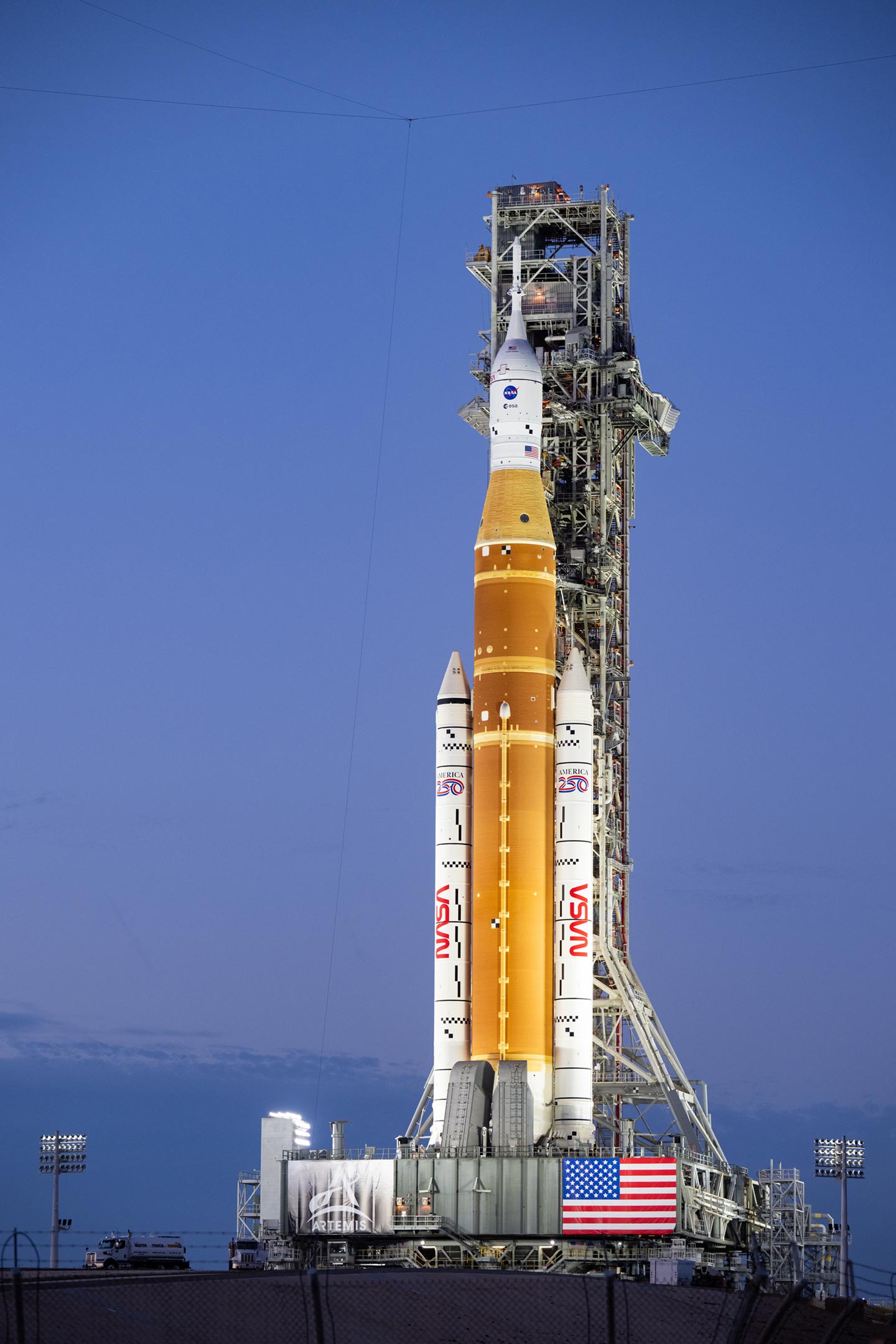
The second manned mission of NASA's Artemis program has taken a critical step: Artemis II, equipped with the Space Launch System (SLS) rocket and the Orion spacecraft, has been successfully transferred to launch pad 39B at the Kennedy Space Center in Florida, marking the beginning of the final round of comprehensive testing before launch, paving the way for humans to orbit the moon again and eventually return to the lunar surface.
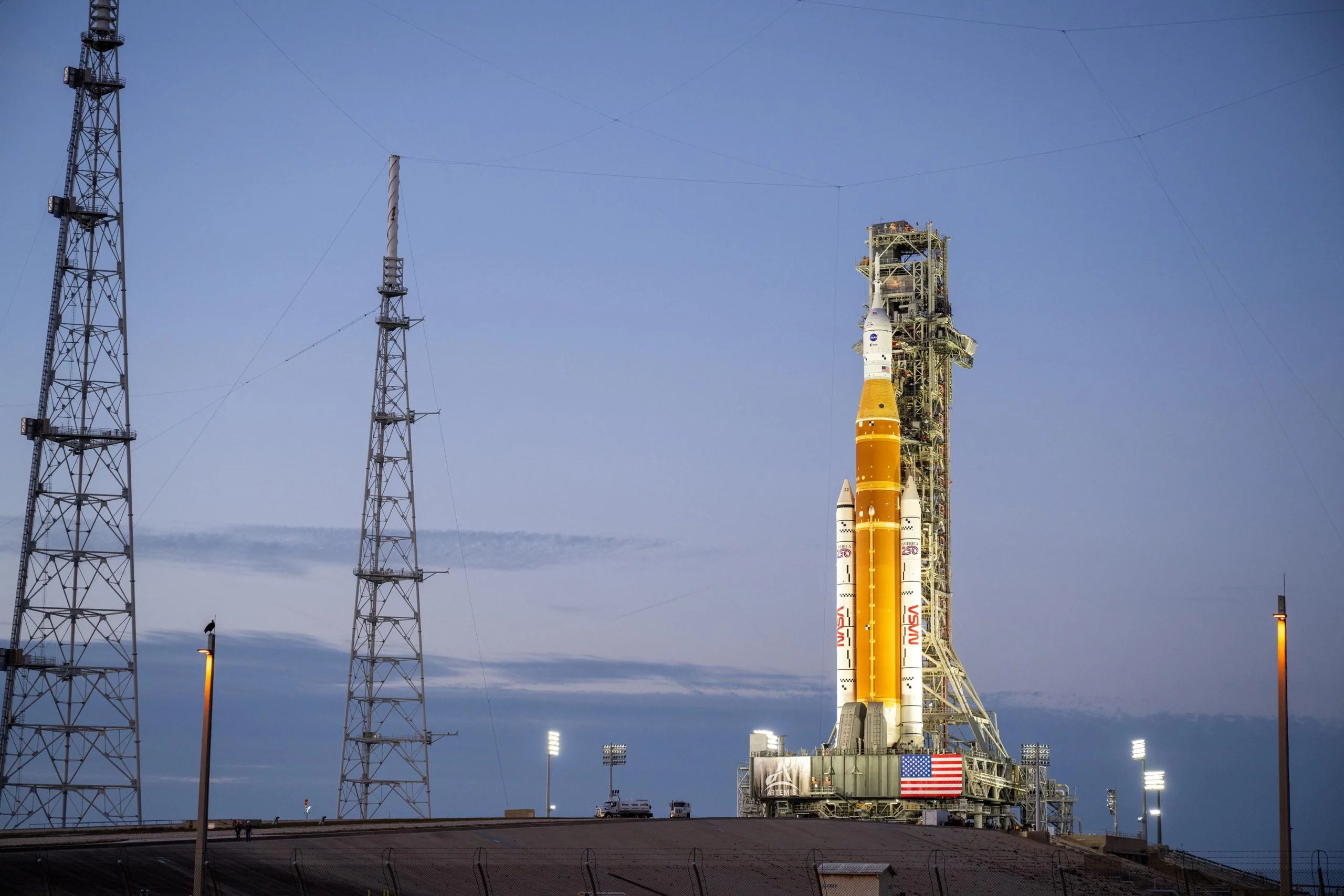
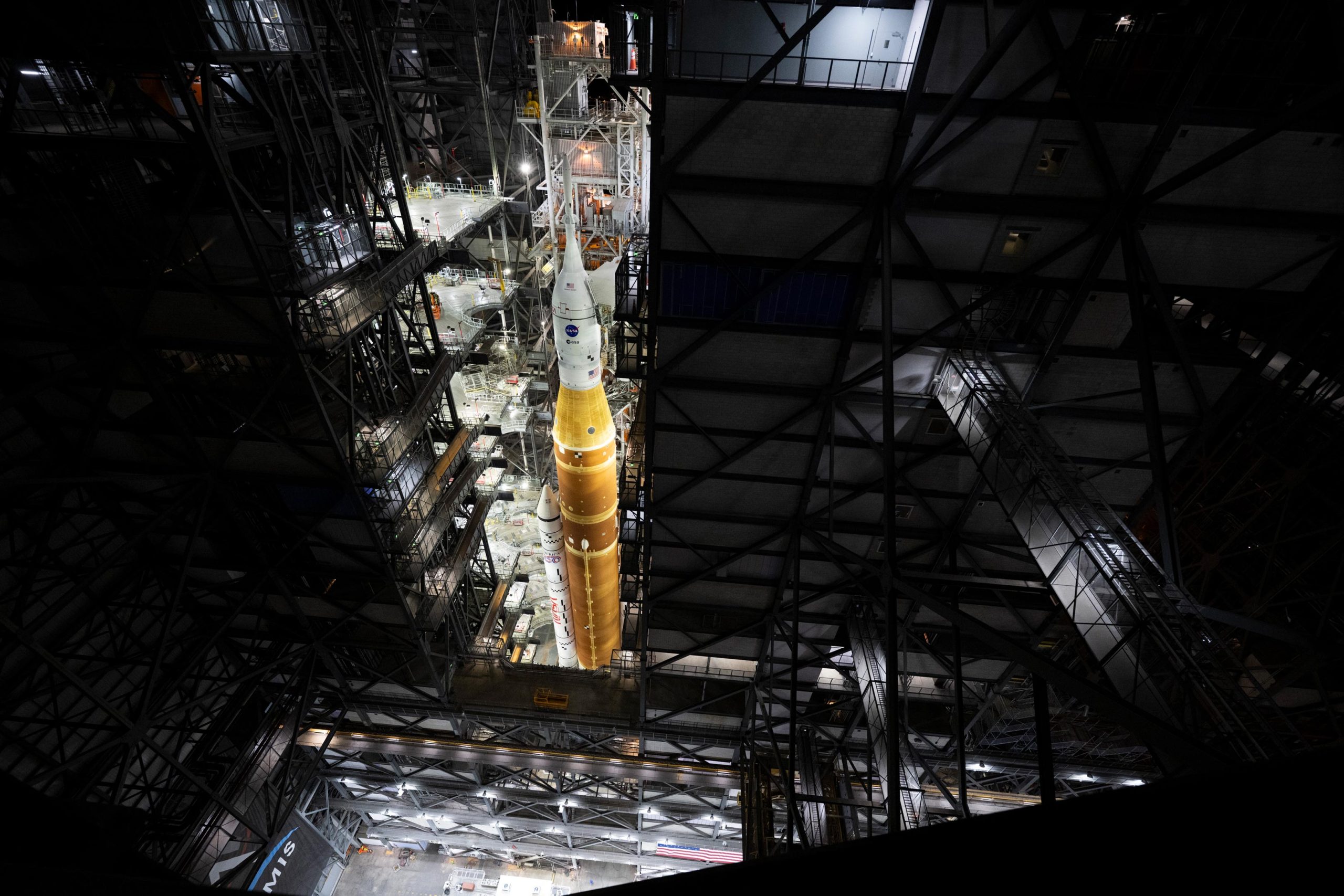
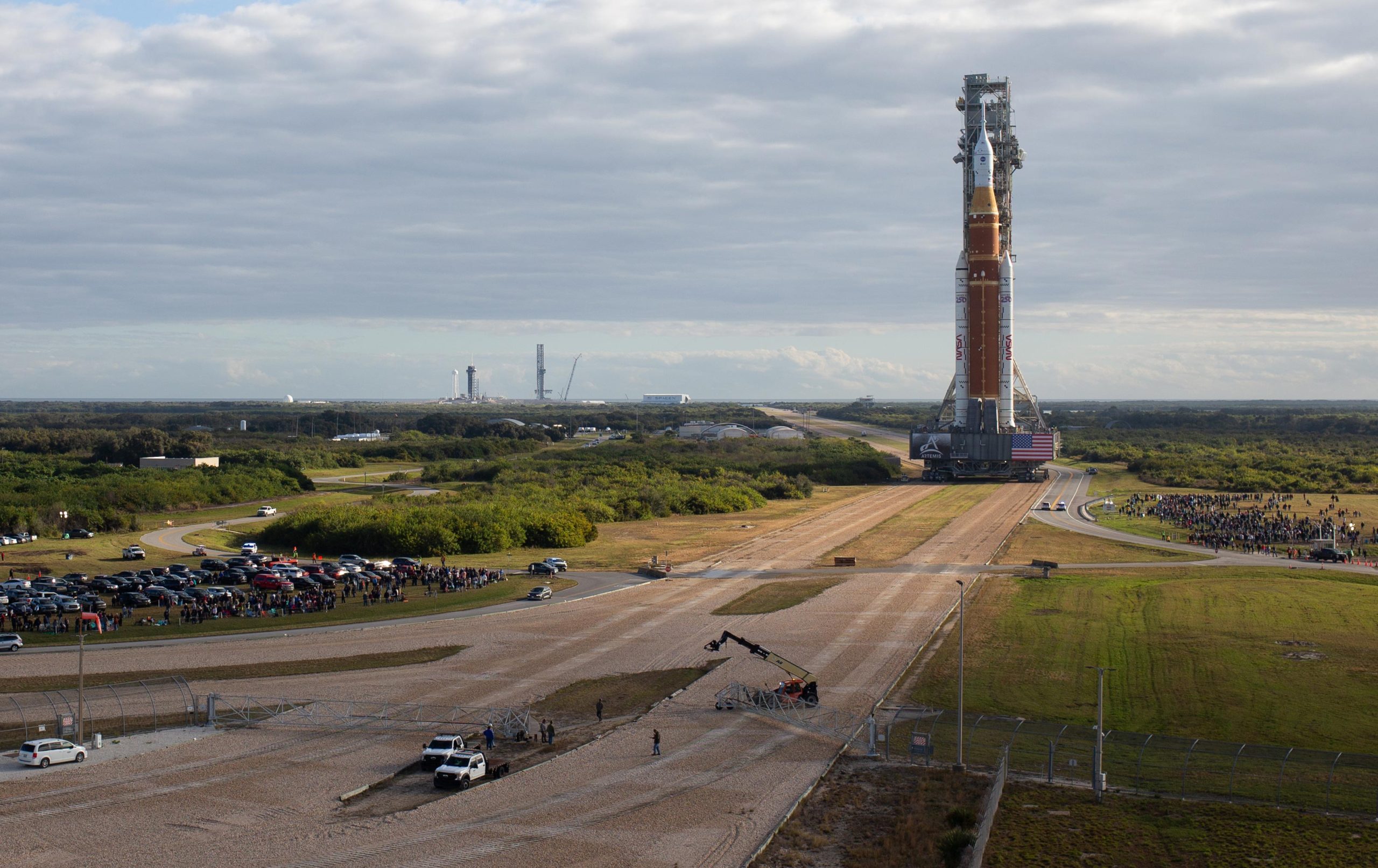
At 18:42 local time on January 17, the fully assembled SLS rocket and Orion spacecraft departed from the Kennedy Space Center Assembly Building (VAB) and began to "rollout" to Launch Pad 39B. This section of about 4 miles (about 6.4 kilometers) is carried out by NASA's "Crawler Transporter 2". Its top speed is only about 0.82 miles per hour, so the huge lunar rocket drives steadily to the launch site at an extremely slow speed. The entire transfer took nearly 12 hours and was completed late that night.
After the rocket exited the high cabin gate of the final assembly building, the fleet stopped briefly as planned to allow the ground team to reposition the "crew access arm" - a movable bridge that provides astronauts and near-cabin support personnel with access to the Orion spacecraft on launch day. After completing this critical adjustment, SLS and Orion continued to slowly head to the launch pad, and were finally outlined clearly by the lighting of the 39B launch area in the night, becoming the latest "landmark" above the Kennedy Space Center.
In the next few days, engineers and technicians will conduct a "wet dress rehearsal" around Artemis II. This is a full-scale exercise that is highly close to the actual launch day process and is planned to be conducted no later than February 2. At that time, the team will fill the rocket propellant tank with low-temperature liquid propellant (i.e., cryogenic oxidizer and fuel), and conduct a complete rehearsal of each stage of the countdown, including command issuance and system response at key time nodes. After the drill, they will also practice safely emptying the propellant, a process that is critical to dealing with abnormal situations during future official launches.
NASA stated that it does not rule out conducting more than one wet rehearsal as necessary to ensure that the entire launch system reaches predetermined reliability standards. If it is revealed during the test that further rectification or in-depth inspection is required that cannot be completed on-site, the SLS rocket and Orion spacecraft may be transferred back to the final assembly building for additional inspection and adjustment, and then returned to the launch pad to enter the actual launch preparation stage.
Artemis II will be the program's first manned test flight, with a crew of three NASA astronauts—Reid Wiseman, Victor Glover, and Christina Koch—and a Canadian Space Agency (CSA) astronaut, Jeremy Hansen. According to the current concept, the mission will last about 10 days, during which the spacecraft will carry four astronauts to fly by and orbit the moon, complete a series of orbit and flight control verifications, and then return to Earth.
This flight is regarded as another key milestone on the road to restarting manned exploration of deep space in the United States. Based on the verification of Artemis I's unmanned flight around the moon, Artemis II will comprehensively test the system performance and safety of SLS and Orion in the manned state. In the future, follow-up missions of the Artemis program will strive to achieve human landing on the lunar surface again, and establish long-term and sustainable human residence and scientific research activity capabilities on the lunar surface and its orbit, so as to accumulate experience and technical foundation for eventually sending American astronauts to Mars.
Compiled from /ScitechDaily