Some scientific experiments advance extremely slowly, with data gathering like a trickle, and the truth emerging bit by bit in the sticky time. Recognized as the "longest running laboratory experiment" in the world, it is just such a scientific trial about patience and time. It has been running continuously for nearly a hundred years and is still slowly "ticking" forward.
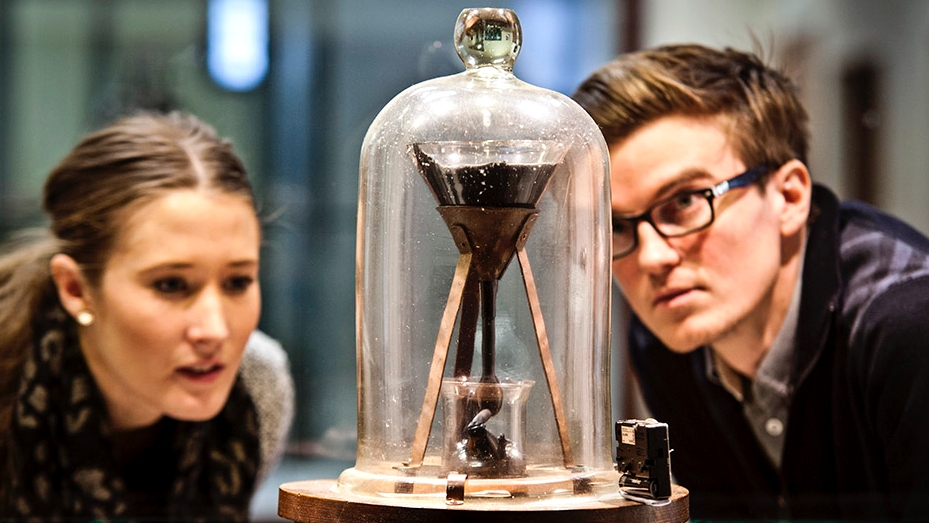
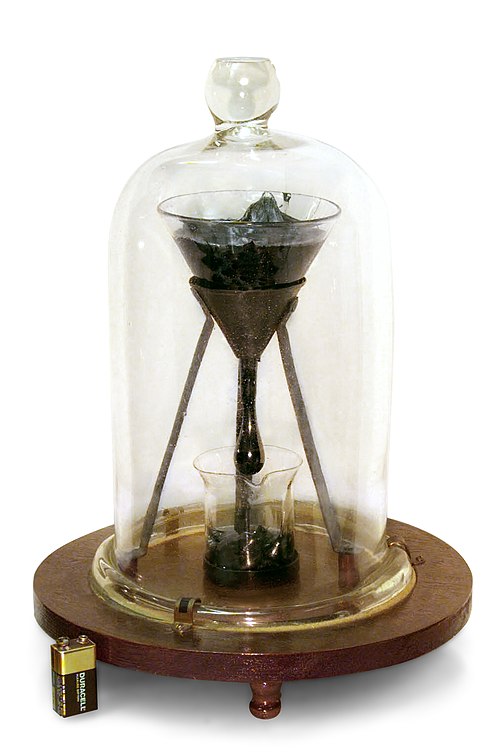
Known as the "Asphalt Drop Experiment," the long-term experiment began in 1927 by Thomas Parnell, a physicist at the University of Queensland in Australia. At that time, he filled a closed funnel with asphalt, a fluid considered to be the "thickest" in the world. Derived from tar and once widely used to waterproof wooden boats, this substance is a liquid that appears solid at room temperature but is actually extremely viscous. The original intention of the experiment is to let the public understand the abstract concept of "viscosity" in fluid mechanics through visual display.
Three years later, in 1930, Parnell cut the thin neck at the bottom of the funnel like a ribbon, officially announcing the start of the experiment. To the naked eye, the black asphalt in the funnel seems to be motionless, but from a physical perspective, its mobility is only "astonishingly slow": at room temperature, the viscosity of asphalt is about 100 billion times that of water. Because of this, the asphalt slowly accumulates into drops at the mouth of the funnel, stretches downward little by little, and finally falls off and falls into the beaker below.
On such an extremely slow scale, time is forced to be stretched out to be measured in years. After the experiment was launched, it took eight years for the first drop of asphalt to finally fall into the beaker. Since then, the dripping rhythm has remained roughly at a frequency of "one drop every approximately eight years." In the 1980s, after air conditioning was installed in the laboratory building, the ambient temperature stabilized, the asphalt became more viscous, and the dripping rate further slowed down.
As of today, 96 years have passed since the funnel was opened, and only nine actual drops of asphalt have been recorded in the entire experiment, with the most recent drop appearing in 2014. The research team predicts that the tenth drop should appear sometime in the 2020s, but so far they are still waiting. Interestingly, despite countless followers around the world, not one of the nine drops was directly seen "live" in front of people's eyes.
In order not to miss key moments, the experiment has already been connected to the camera system and broadcast live through the Internet. However, technical means have not changed the drama of this "slow motion of the century": either equipment failure or signal interruption, every real dripping moment quietly slipped away in various "accidents". In 2000, a thunderstorm caused the live broadcast signal to be interrupted, and the physicist John Mainstone guarding the experiment missed the opportunity to witness the dripping with his own eyes.
After Parnell's death, Mainstone took over as the second permanent keeper of the Asphalt Drip Experiment in 1961 and continued to care for the installation for 52 years. Unfortunately, he never saw even a drop of asphalt finally fall off from the mouth of the funnel. Shortly after his death in 2013, the next drop of asphalt slowly fell in April 2014. This missed opportunity also added a touch of sentimentality to the experiment.
Currently, the third guardian of the experiment is Andrew White, professor of physics at the University of Queensland, who continues to stand by the device, waiting for the much-anticipated "tenth drop." Under the watchful eyes of him and the global audience, the project, recognized by Guinness World Records as "the world's longest-running laboratory experiment," continues. In the long history of scientific research, nine drops of asphalt may seem insignificant, but from a time scale perspective, this experiment has actually just begun.
For modern science, this seemingly "doing nothing" experiment is not only an extreme demonstration of the viscosity properties of matter, but also a symbol of the scientific spirit: it reminds people that true scientific exploration often requires patience and perseverance across generations. At a time when time is generally compressed, this nearly century-old drop experiment silently records the constant laws of the physical world at an almost imperceptible speed, and also records the curiosity of generations of scientists and the public.