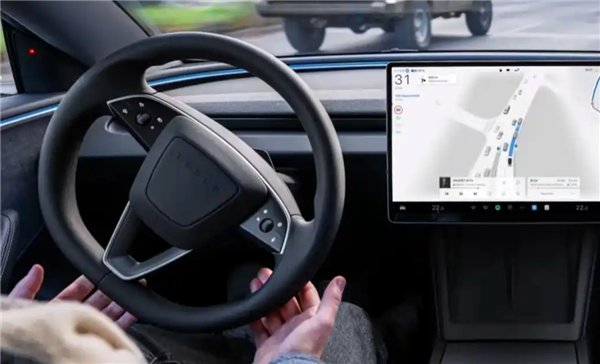
Whether autonomous driving routes use pure vision or require radar has been debated. Most of the current solutions are fused sensing, which is to superimpose data collected by various radars (laser, millimeter wave, ultrasonic) and cameras. The only exception is Tesla, which relies entirely on cameras.
Recently, former Waymo CEO John Krafcik launched a fierce attack on Tesla’s FSD pure vision solution.He said he had severe visual defects like "severe myopia" and could not even pass the DMV vision test.
At the same time, he criticized Tesla's removal of radar and refusal to adopt lidar as "handcuffing AI" and severely limiting the perception capabilities of the autonomous driving system.
Krafcik pointed out the hardware limitations of Tesla’s pure vision solution:
Tesla is equipped with only seven 5-megapixel cameras, and only one standard focal length. The rest are all wide-angle lenses, and the pixels are used dispersedly. The equivalent visual clarity is only 20/60 or 20/80 (normal vision is 20/20), which is equivalent to severe myopia and cannot clearly identify distant objects.
“This kind of visual ability cannot even pass the vision test of the ordinary DMV, let alone meet the safety requirements of autonomous driving.” Krafcik said bluntly.
At the same time, he also said that the performance of purely visual systems drops significantly in bad weather, insufficient light, and complex road conditions. Therefore, FSD's removal of radar and refusal to adopt lidar is tantamount to handcuffing the AI system and depriving it of its key ability to perceive the world.
The reason why Tesla abandons radar and insists on pure vision isThis is because Musk believes that multi-sensor data is prone to "fighting", leading to hesitant system decisions and increasing risks., and Tesla has the world's largest autonomous driving data pool, which can continue to improve the performance of pure visual systems through AI algorithms.