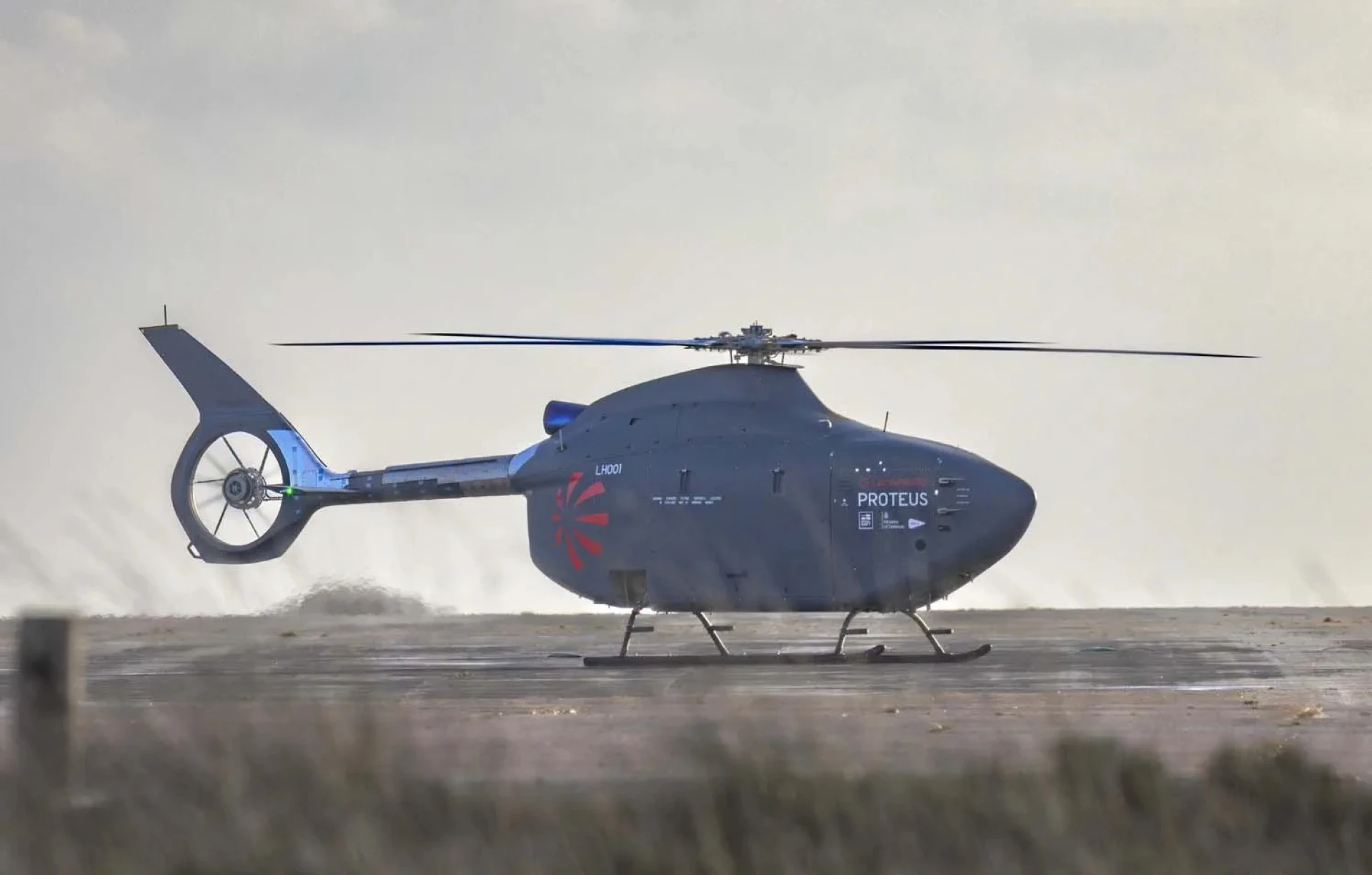
The British Royal Navy recently announced that the full-scale autonomous helicopter "Proteus" developed by Leonardo Company completed its first flight on January 16, marking a key step for the British Army in building a hybrid manned and unmanned aviation force. This first flight was also included as an important milestone in the Royal Navy's "Hybrid Air Wing" and "Atlantic Bastion" anti-submarine strategies.
Against the background of changes in the geopolitical situation and global armament rearrangement, militaries of various countries are accelerating the introduction of drones and various autonomous systems as a powerful supplement to traditional manned equipment. The British "Strategic Defense Review" released in 2025 clearly stated that the Royal Navy will transform into a "high-low mix" force structure, that is, a future fleet composed of traditional manned ships, submarines and aviation platforms and a variety of unmanned systems.
The "Atlantic Fortress" program is a key component of this transformation and aims to build a new maritime and underwater combat system. Under this concept, traditional anti-submarine capabilities will be greatly enhanced by a large number of unmanned "hunters" distributed on the surface, underwater and in the air, forming a digital detection and target indication network covering the Atlantic, North Sea and Arctic regions to continuously track various submarine activities.
"Proteus" is one of the core platforms in this system. It was developed by Leonardo in Yeovil, Somerset, UK, and is based on the company's AW09 helicopter platform. The helicopter is a full-size configuration with a maximum take-off weight of approximately 3 tons, can carry a payload of approximately 1 ton, has a top speed of approximately 140 knots (approximately 161 mph, 260 km/h), and has an endurance of up to 5 hours.
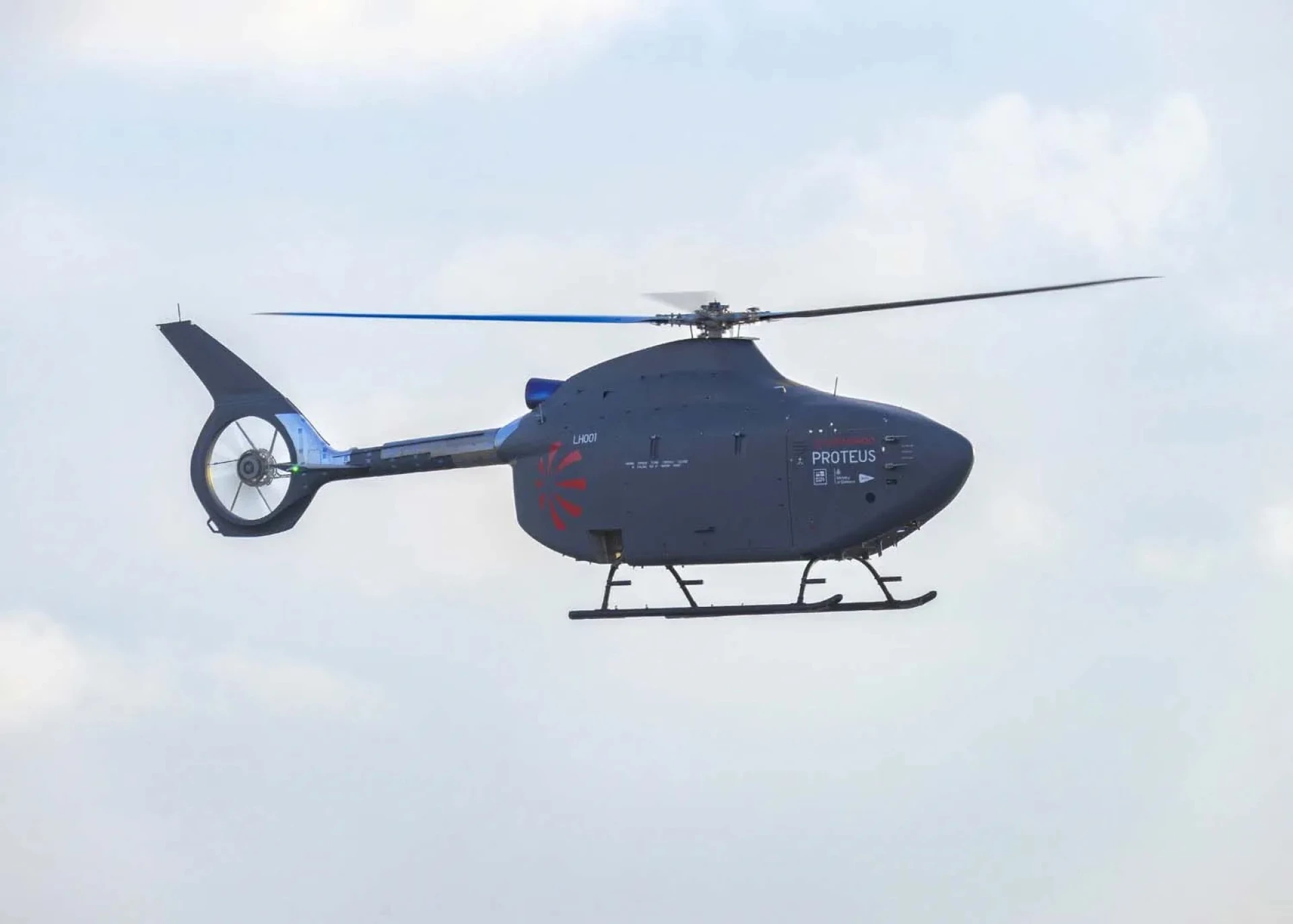
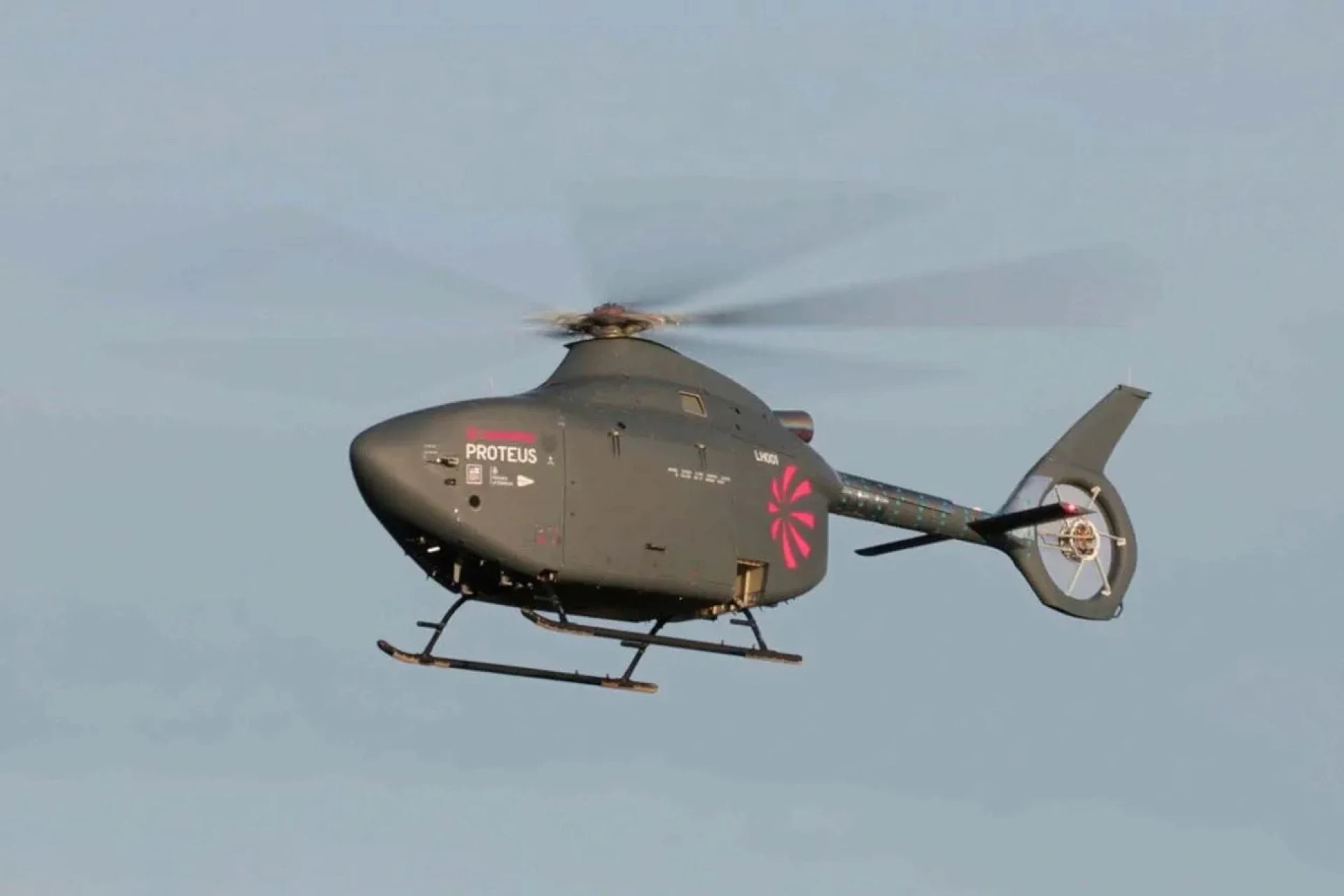
According to the plan, the "Proteus" will serve as a "force multiplier" for manned aircraft, operating in conjunction with the Royal Navy's existing "Merlin" and "Wildcat" helicopters and F-35B "Lightning II" fighter jets, expanding overall combat capabilities without risking pilots or consuming more expensive platforms. Its primary mission is anti-submarine warfare, and it will also undertake "boring and heavy" tasks such as logistical supplies, such as transporting rations and materials.
"Proteus" is equipped with a modular mission module that can be loaded with sonobuoy delivery devices, maritime search radars, and various electronic reconnaissance and communication equipment as needed to meet the needs of diverse maritime missions. At present, the aircraft mainly relies on its internal software system to achieve a high degree of autonomous decision-making, rather than a remote-controlled drone in the traditional sense. In the future, as testing and research and development progress, its level of autonomy is expected to be further improved, and the appearance design may also undergo significant changes as the technology matures.
Commodore Steve Bolton, deputy director of the Royal Navy's Future Aviation Program, said that the successful first flight of "Proteus" is an important step in the Royal Navy's vision of transforming its maritime aviation power and a strong demonstration of its commitment to investment in autonomous systems. He pointed out that this milestone reflects the UK’s intention to maintain technological and operational advantages in complex operational environments and aims to enhance the Royal Navy’s combat effectiveness in dealing with evolving maritime threats through innovation.