Nex Computer, headquartered in Los Angeles, announced the launch of a smartphone called NexPhone. This device focuses on "one machine, multiple uses" and claims to be able to run Android, Linux Debian and Windows 11 (ARM version) on the same hardware. It is trying to regain the "unfinished ambition of Windows Phone" and introduce an operating experience closer to the PC for the mobile terminal.
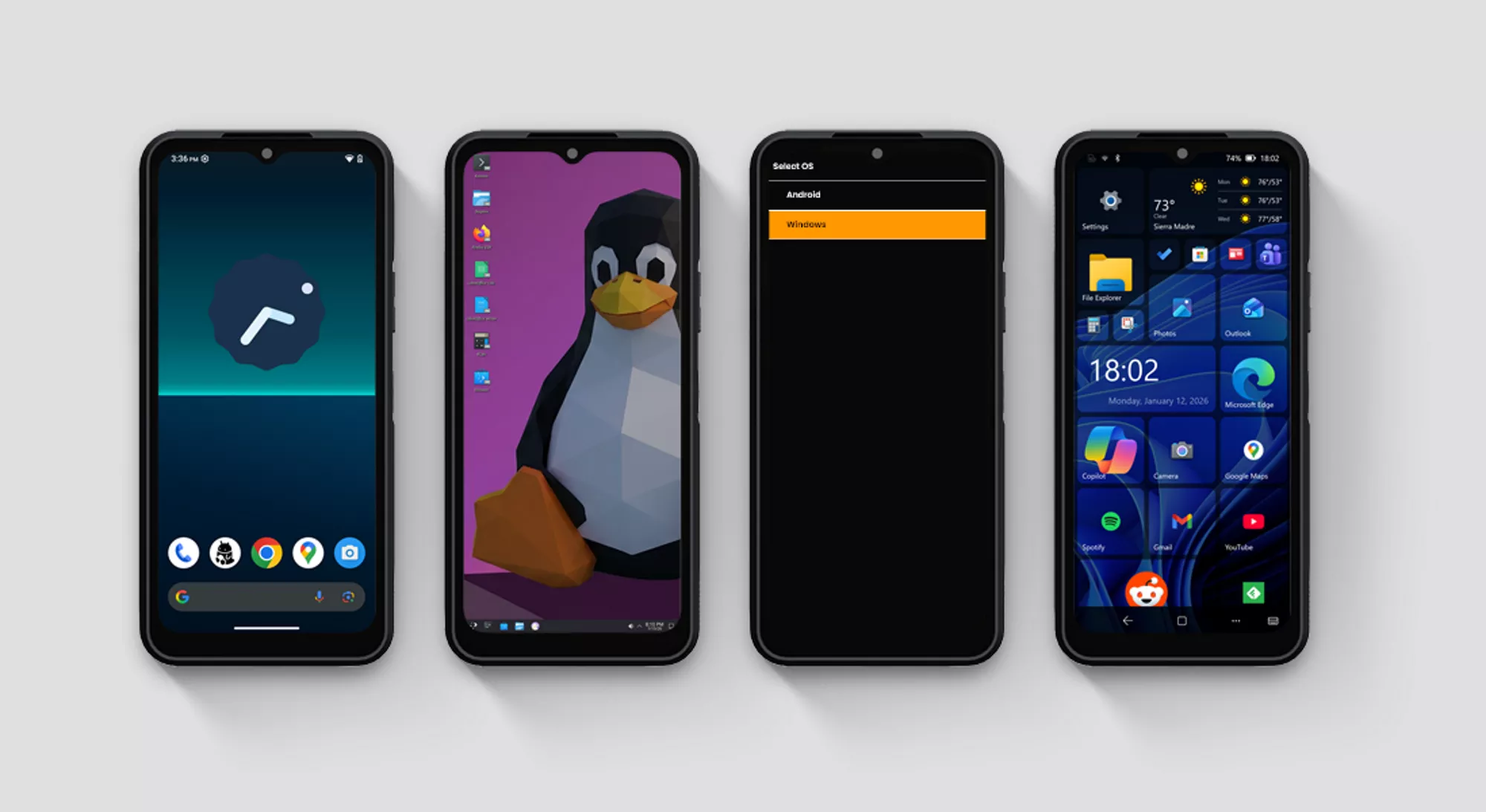
Emre Kosmaz, founder and CEO of Nex Company, said that the original intention of NexPhone is to allow a mobile phone to function as an everyday Android device and to transform into a Linux machine and Windows PC when needed, thus covering almost all major computing platforms. Technically, it's essentially a standard Android 16 phone, but with the added ability to run Linux on demand and dual-boot Windows.
The concept of NexPhone can be traced back to 2012, and the Nex team has been working on it for 14 years. The latest version adopts a more "durable" solid design in appearance. Its core hardware includes Qualcomm QCM6490 SoC, 12GB of memory and up to 256GB of storage. It is equipped with a 6.58-inch, 120Hz refresh rate display and supports microSD expansion, 5G connection, wireless charging and video output. The main camera is a 64-megapixel lens using a Sony IMX787 sensor.
Nex Company has also set a relatively pragmatic market positioning for this product: NexPhone is not intended to completely replace the current Android flagship, but is more suitable as a highly productive second device or backup machine. Driven by solutions such as Samsung DeX, desktop-level experiences are becoming more and more common on smartphones, and Android 16 continues to expand support for desktop environments, providing system-level soil for forms like NexPhone.
In terms of specific usage, NexPhone supports all three operating systems to run directly on the mobile phone screen. Nex developers have also specially designed a "Windows Phone style" interface for Windows 11 to reduce the operating burden of traditional desktop interfaces on small screens. However, officials emphasized that the real advantage of NexPhone lies in the "desktop-like" experience provided by an external monitor and keyboard and mouse. This is also a continuation and upgrade of Nex's past product line.
Prior to this, Nex has launched multiple generations of NexDock lapdock products. This is a 14-inch "empty notebook" that can be turned into a complete computer form by connecting to an Android phone. It is regarded as a relatively low-cost mobile phone expansion solution. Kosmaz said that NexPhone is the "next stage" in this idea, providing more flexible choices for different user scenarios by integrating multi-system capabilities directly into the phone itself.
Kosmaz said frankly that the NexPhone is the device he has wanted to carry with him for the past 14 years - a product that can be a Linux machine, a Windows PC, and an everyday Android phone at the same time, without compromising on the concept. He believes that pre-ordering the NexPhone itself sends a clear signal to the industry: making "mobile phone as PC" the new standard.
Currently, interested users can pre-order the NexPhone by paying a $200 deposit. The shipment is expected to be in the third quarter of this year. Each unit will come with a USB-C hub when it is officially shipped. The entire unit is expected to sell for $550, not including shipping and taxes.