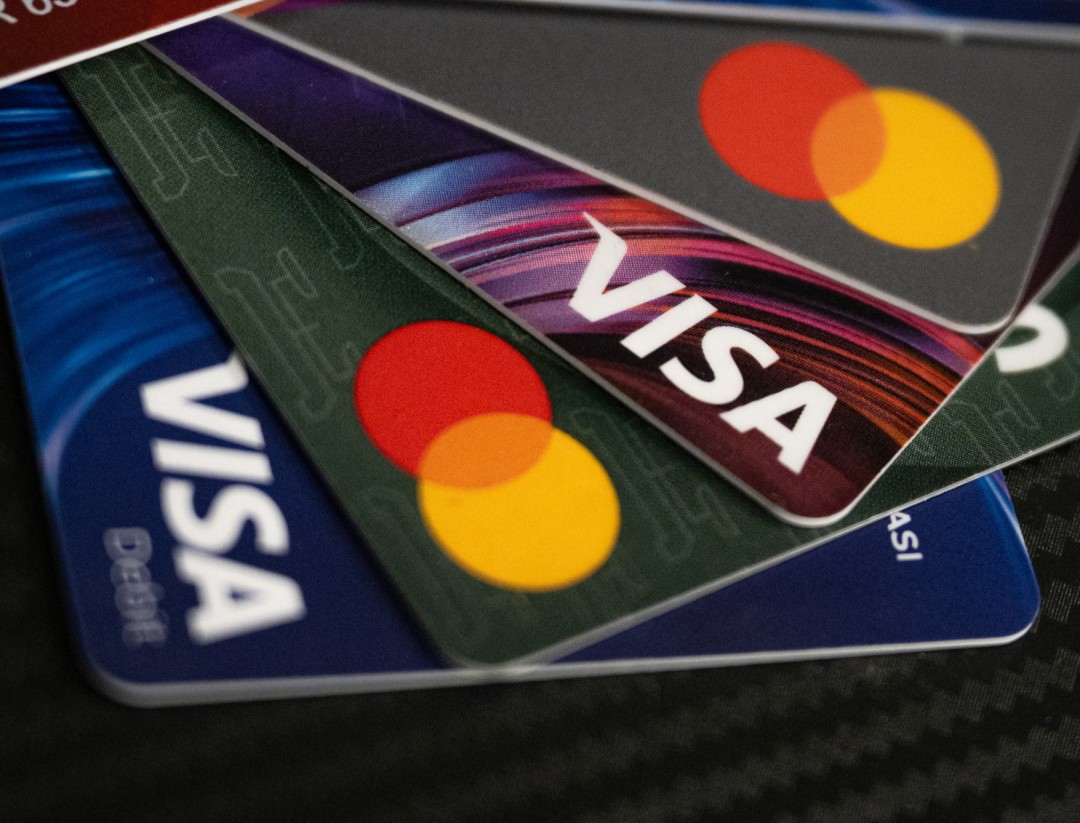
The head of a European banking union said Europe "urgently" needs to reduce its reliance on US payment giants such as Visa and Mastercard. Officials have warned that the companies' market dominance could be "weaponized" should transatlantic relations sour. "We rely heavily on international payment solutions," said Martina Weimert, CEO of the European Payments Initiative (EPI), a group of 16 European banks and financial services companies.
"Yes, we have good domestic assets, such as our payment card system... but we don't have any cross-border solutions."
"If we believe independence is vital and it is clear to everyone that it is only a matter of time... we must act urgently," she said.
According to ECB data, Visa and Mastercard accounted for nearly two-thirds of bank card transactions in the euro zone in 2022, with 13 member states having no local alternatives to U.S. providers. Even in countries where domestic payment systems exist, usage is declining.
As the use of cash declines, European officials are increasingly concerned that the influence of U.S. payment companies could be used as a tool in the event of a serious breakdown in relations.
It's one of several key areas where officials worry the EU is becoming too reliant on U.S. companies. Belgium’s cybersecurity chief recently warned that Europe has “lost the internet” due to the dominance of U.S. tech giants.
Mario Draghi, the former president of the European Central Bank, warned in a recent speech: "Deep integration brings dependence, which can be abused when partners are no longer allies. Interdependence, once seen as a source of mutual restraint, has now become a source of pressure and control."
EPI members include BNP Paribas and Deutsche Bank. The organization launched a European Apple Pay alternative called Wero in 2024. The digital payment system currently claims to have 48.5 million users in Belgium, France and Germany, and plans to expand to online and offline store payments by 2027.
Weimert said that banks and merchants as a whole are "aware" of the need to establish a European cross-border payment network, but in the current "geopolitical context" the issue is "becoming a mainstream topic."
The ECB said that past private sector projects - including EPI's early plans to launch a competitive bank card system - "have shown difficulties in scaling up", and a spokesperson noted that the parties involved "difficult to agree on unified standards".
The European Central Bank is promoting the "Digital Euro" project, a public sector-led initiative to digitize payments within the euro area to enhance the EU's monetary sovereignty.
Piero Cipollone, the European Central Bank executive member responsible for the project, stressed its importance last week: "As European citizens, we want to avoid Europe's over-reliance on payment systems that are not under our control."
The project has divided European political circles and some banking institutions have lobbied against it, arguing it would undermine private sector efforts. The outcome of the European Parliament vote later this year is likely to be close.
According to the plan, when the European Central Bank begins to issue digital euros in 2029, euro area merchants will be required to accept digital euro payments online and offline, and its underlying infrastructure will also be opened to the private sector for the development of related applications.
Aurore Lalucq, chairman of the European Parliament’s Economic Committee and a supporter of the project, said that the digital euro can “provide a basic platform on which, after integration, it is possible to create a system equivalent to the European version of Visa or Mastercard.”
But Weimert warned that a digital euro could come too late if geopolitical tensions worsen.
“The problem with a digital euro is that it’s still a few years away, maybe after President Trump’s term,” she said. “So I think we’re a little bit short on time.”