In order to deal with the increasingly serious threat of maritime drone attacks, the U.S. Defense Advanced Research Projects Agency (DARPA) officially announced a cooperation with Raytheon to jointly promote a defense project called "Pulling Guard". The project aims to develop a towed platform that follows commercial ships to provide commercial and logistics vessels that lack self-defense capabilities with the ability to detect and counter drone attacks.
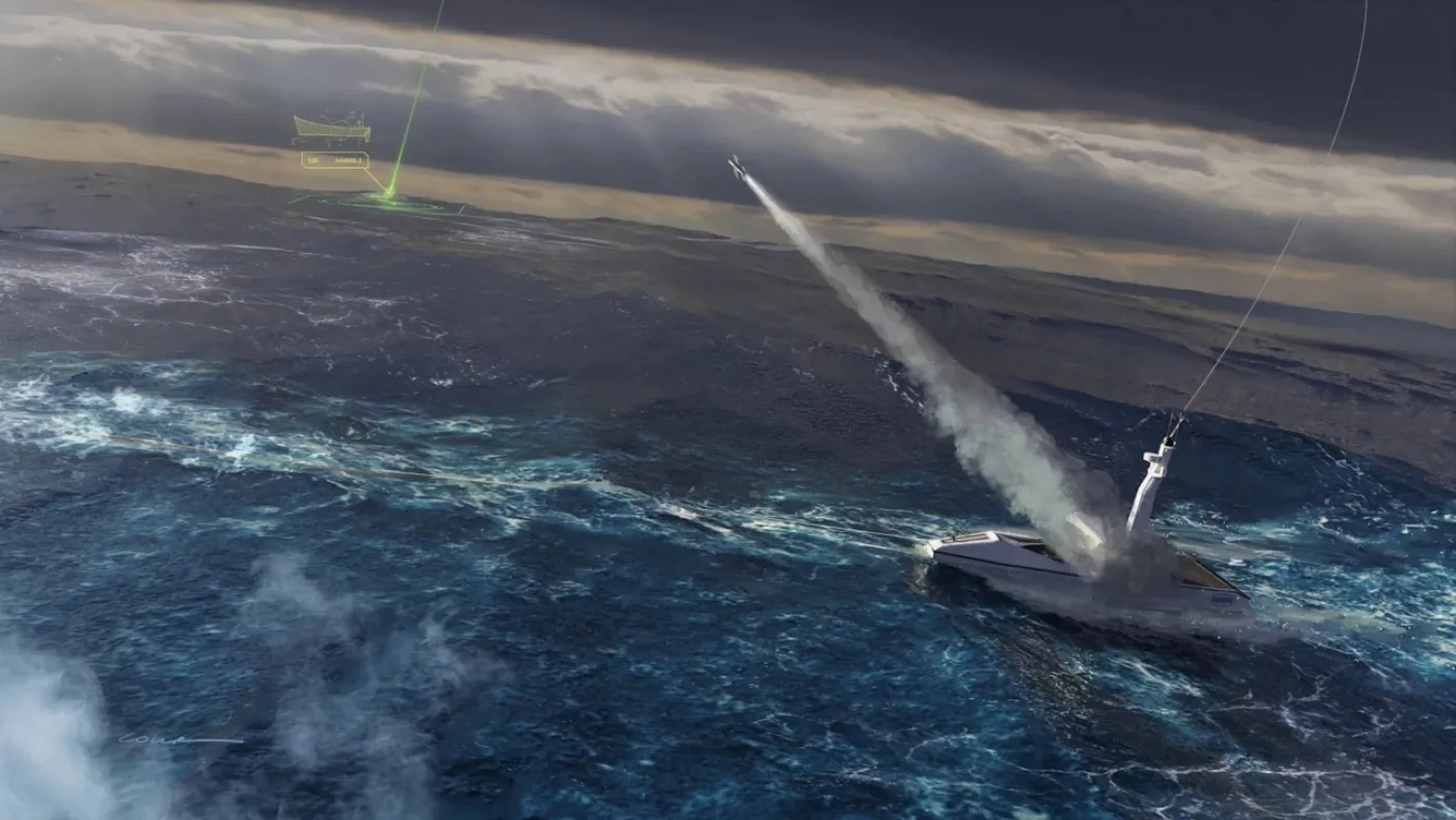
In recent years, the safety environment facing the global shipping industry has changed significantly. In the Black Sea, due to Ukraine's frequent use of air and sea drones to interfere with Russian shipping, passing merchant ships were forced to sail close to the southern coast of Türkiye to avoid getting caught in the crossfire zone. Similar drone threats have spread to the Red Sea, Strait of Hormuz and even the Baltic Sea. Faced with this challenge, the escort capabilities of the navies of various countries appear to be stretched thin and unable to provide comprehensive protection for every merchant ship. Directly arming commercial ships or installing sensor suites on them not only faces legal and political obstacles, but also huge difficulties in modification costs and scheduling. The resulting route detours and delays have caused global shipping costs and insurance premiums to soar.
To address this pain point, the "Towed Guardian" concept proposed by DARPA provides an innovative solution that does not require modification of the commercial ship itself. The system consists of a semi-automated towed platform that is deployed in the water behind the host vessel. The core components of the system include a tethered drone and a suite of high-performance electro-optical/infrared (EO/IR) sensors. As a "watchtower" launched into the air, the tethered drone uses its advantage of high-altitude vision and sensor data to accurately identify potential threats.
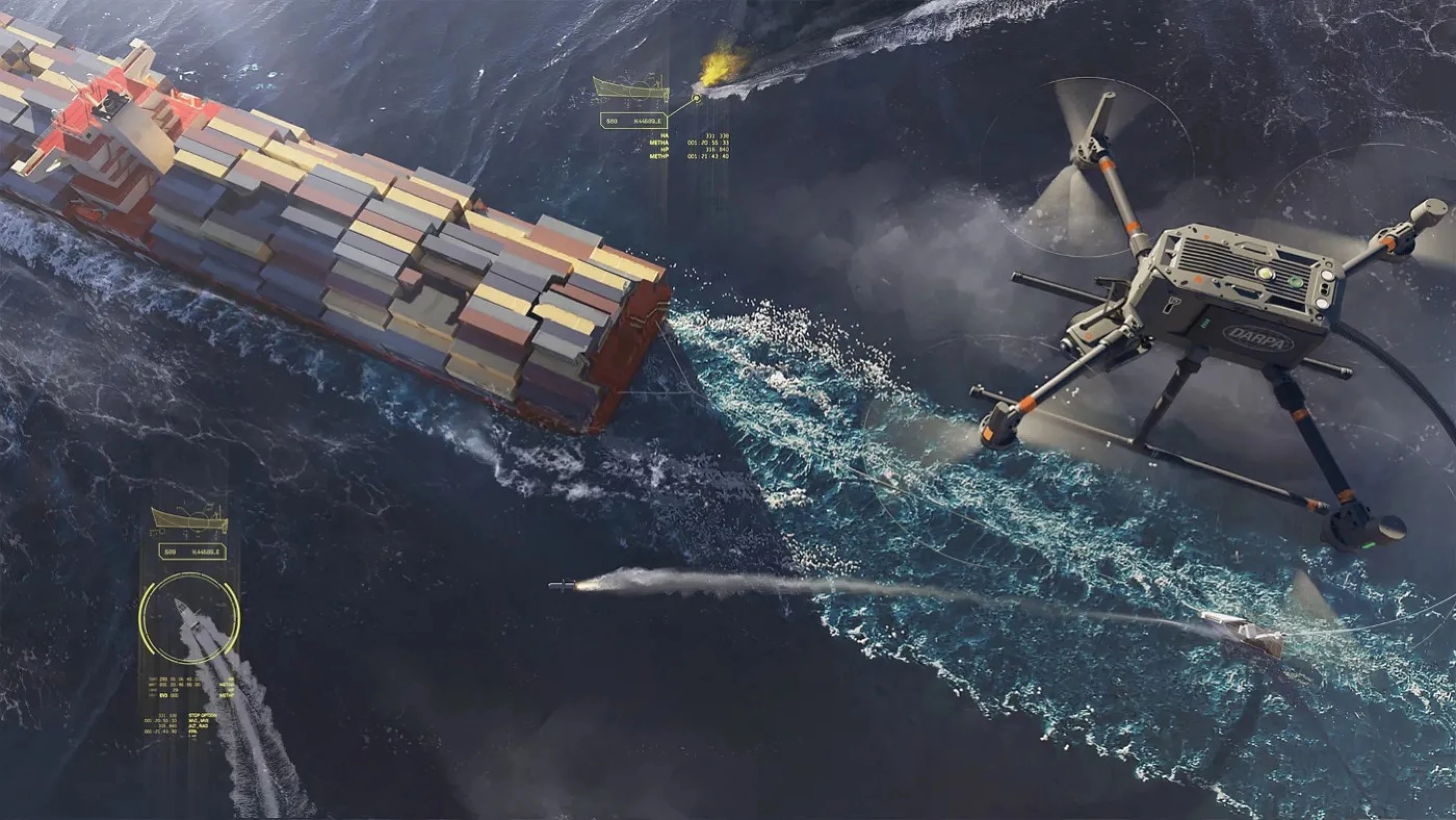
In terms of operation mode, the system is not completely autonomous, but adopts a "human-in-the-loop" control method. A remote operator can monitor multiple Tow Guard units simultaneously and have the final say on launching an attack. Although DARPA has not yet clearly disclosed the specific type of countermeasure weapons, the system is expected to have the ability to resist network interference and may be equipped with electronic warfare systems, directed energy weapons or interceptor missiles.
Currently, the Tow Defender project is in the first of two key development phases. Over the next 18 months, the R&D team will focus on platform development, sensor integration and optimizing system software through simulated engagements. The subsequent second phase will enter the live-fire test phase, when a full-process interception demonstration including combat launchers will be carried out. Colin Whelan, president of Raytheon's advanced technology division, said that the project will integrate its mature technologies in the fields of command and control and high-performance sensing to provide a scalable and cost-effective safety solution for commercial shipping in high-risk areas such as the Red Sea.