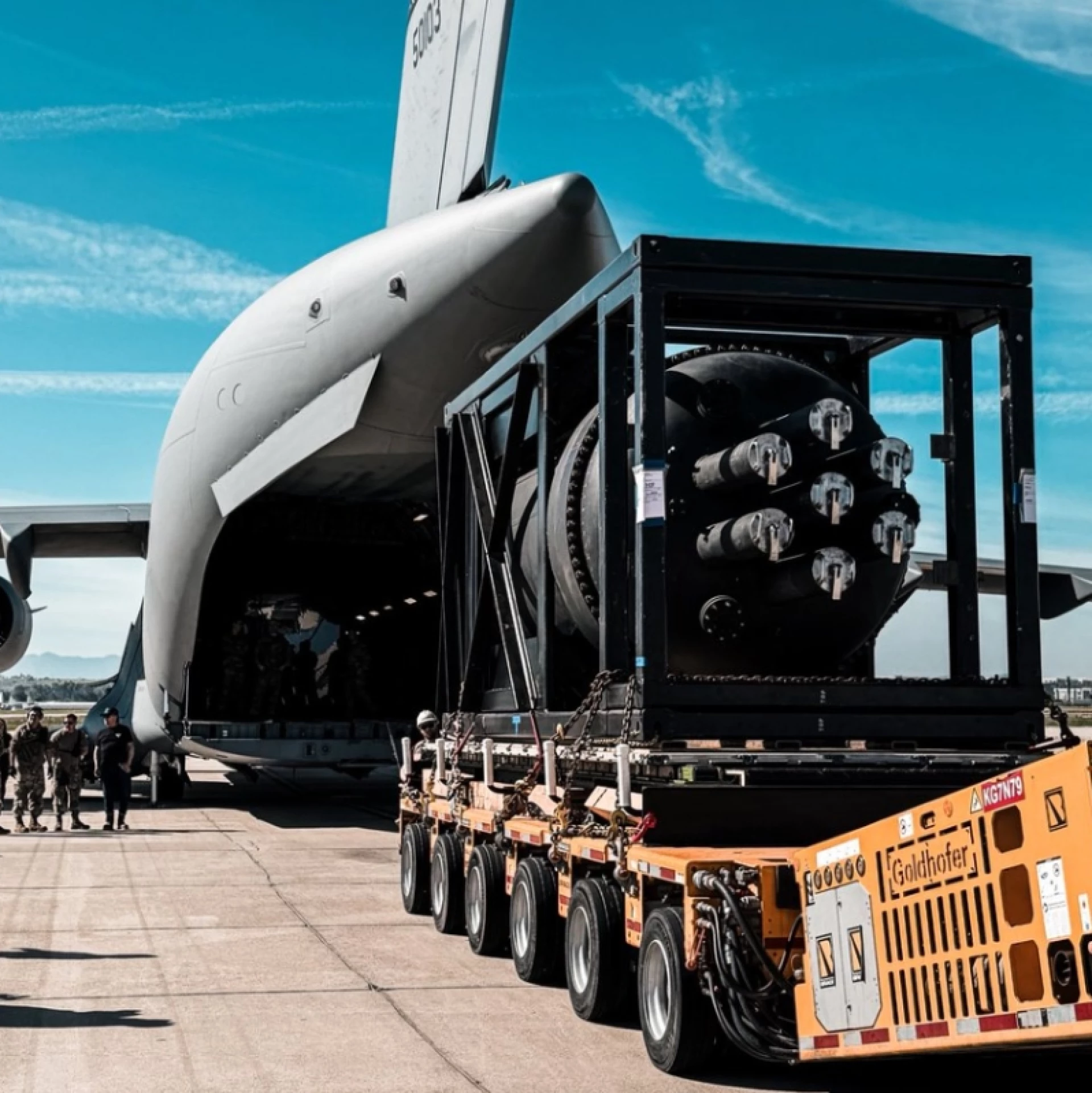
The U.S. Department of Defense recently announced that in an operation called a "world's first", the U.S. military used a C-17 Globemaster III large transport aircraft to airlift a complete 5-megawatt nuclear reactor from March Air Force Reserve Base in California to Hill Air Force Base in Utah, ready for assembly and operation.
This operation is part of the "Janus Program", and the exercise is codenamed "Operation Windlord". It was implemented on February 15, 2026. A total of three C-17 transport aircraft were dispatched to split a next-generation Ward250 micro nuclear reactor that had not yet been fueled into eight modules and loaded them in containers or skids to achieve rapid deployment.
This exercise was conducted by the 62nd Airlift Wing of the U.S. Air Force. The wing is currently the only airlift unit of the U.S. military certified to routinely transport U.S. nuclear weapons. It is responsible for ensuring safety and confidentiality during the transportation process. The focus of the exercise is to prove that nuclear reactors can be treated as "rolling equipment" like other large equipment and can be quickly airlifted to remote areas as long as they have runway conditions of about 3,500 feet (about 1,000 meters). Once at its destination, the reactor can be reassembled on site, refueled and commissioned in a very short time. In accordance with the requirements of Presidential Executive Order 14301, Ward 250 for this transportation is expected to be officially launched before July 4, 2026. The article pointed out that although there have been attempts to transport nuclear reactors by air in history, this is the first time that a complete reactor has been transported to military and industrial practical application scenarios in a repeatable, commercial-first logistics chain, rather than a one-time scientific experiment.
The United States emphasized that the purpose of this operation was not only to demonstrate that a small reactor can be installed, airlifted, reassembled and ignited, but more importantly, to respond to the growing demand for reliable power by the US military in remote and conventional bases. Currently, some bases, especially in remote areas such as Alaska, are highly dependent on long, expensive and complex supply links for fuel and power supplies. At the same time, the aging and declining reliability of the domestic power grid in the United States, coupled with policy requirements at the state and federal levels to continuously increase the proportion of wind energy and solar energy, make it more difficult to obtain stable power during severe weather.
To address this challenge, Project Janus aims to develop the ability to rapidly deploy nuclear reactors to meet the power needs of military operations and disaster relief. The United States believes that this will help ensure that various bases can maintain normal operation in extreme environments and public infrastructure interruptions, while promoting the maturity of relevant technologies and processes, thereby creating conditions for the revitalization of the U.S. nuclear energy industry.
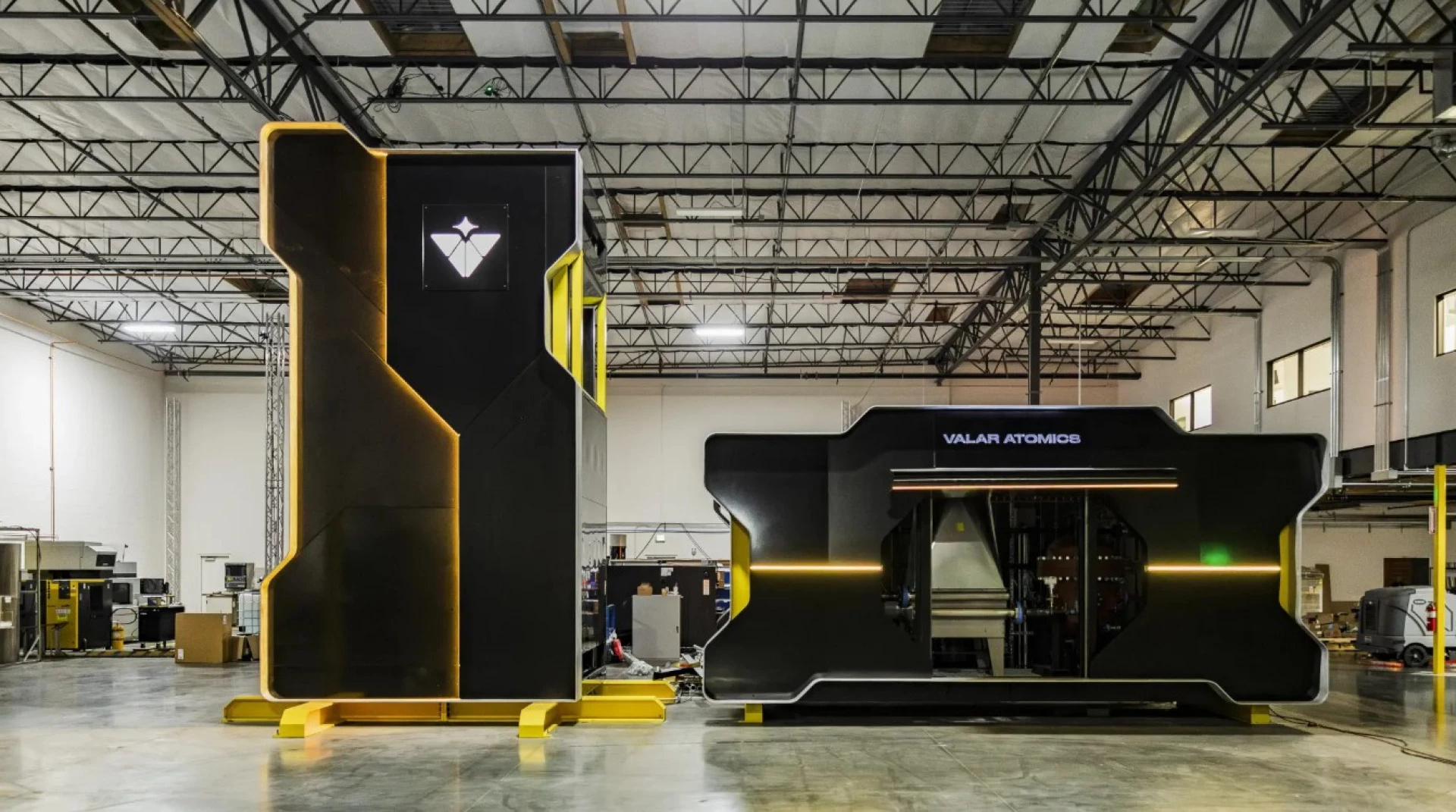
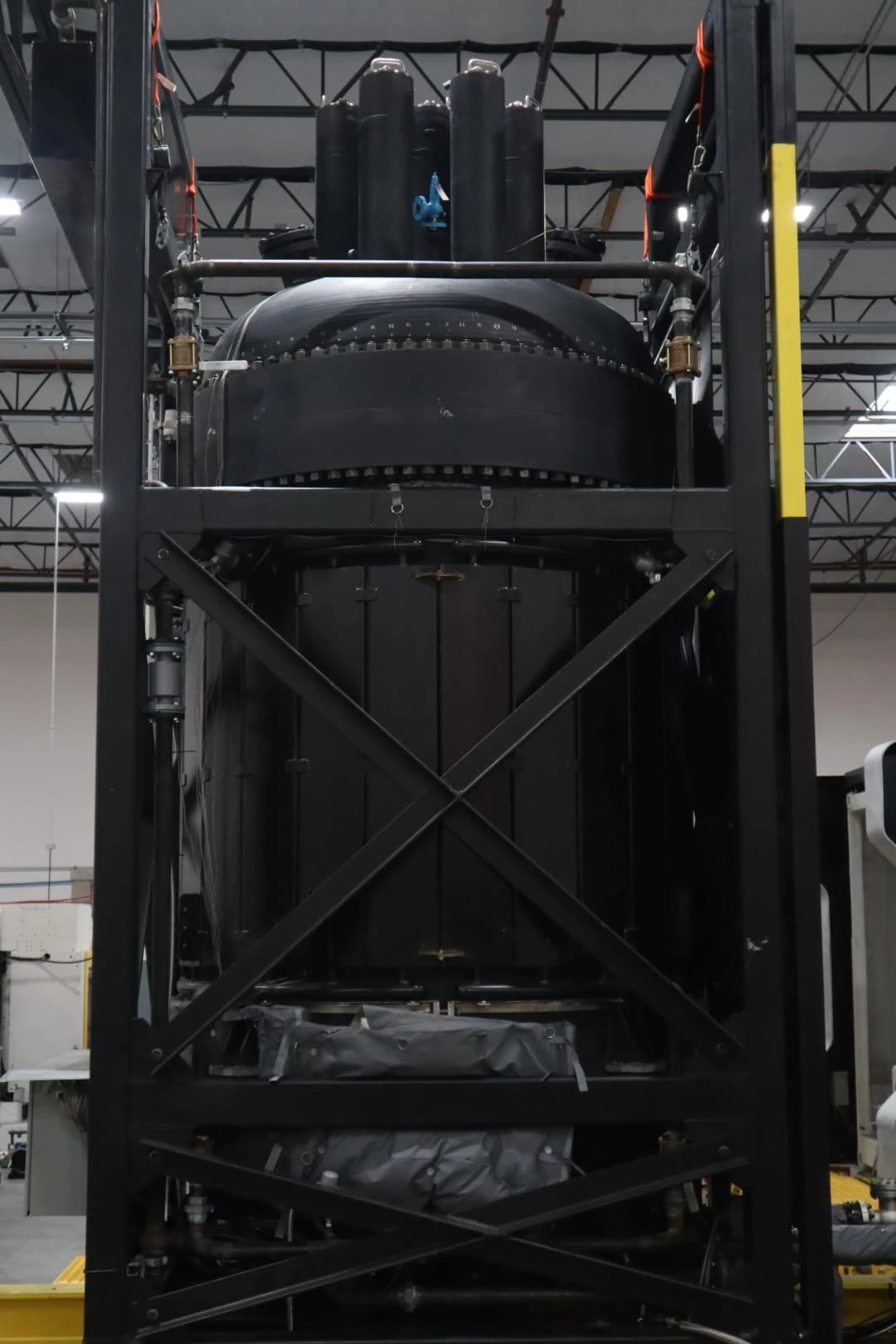
The Ward250 that was airlifted this time was developed by Valar Atomics. It is a high-temperature gas-cooled reactor (HTGR) type and uses tri-structural isotope coated particles (TRISO) nuclear fuel. TRISO fuel is based on high-concentration low-enriched uranium (HALEU), which is enriched between 5% and 20%. It is then coated with multiple layers of carbon and ceramic materials to form seed-sized fuel particles, which are then pressed into round pebbles. The pebbles are fed into the reactor core through a hopper and are cooled by helium while the nuclear chain reaction proceeds, maintaining the operating temperature at about 750 degrees Celsius (1,382 degrees Fahrenheit). It is generally believed in the engineering community that this type of design is well suited to a modular approach, allowing it to be mass-produced in factories and then transported to on-site assembly. At the same time, the nuclear reaction process of this type of reactor has self-stabilizing characteristics, the cooling process is mainly passive, and the system itself has a high safety margin.
"Today marks the beginning of what we are calling 'America's Second Manhattan Project,'" Valar Atomics said in an earlier statement. Unlike the original Manhattan Project, which focused on national defense, this plan aims to apply atomic energy to civilian power production, artificial intelligence infrastructure, and industrial revitalization. The company noted that this mission requires the same dedication, urgency and innovation that the United States has demonstrated in the greatest technology projects in history. The report also stated that the system complies with the U.S. Army’s special regulatory requirements for the safe operation of domestic military bases.
According to reports, the U.S. government believes that through projects such as the "Janus Plan" and the Ward250 microreactor, it is expected to gradually establish a future-oriented military and civilian nuclear energy system: it can not only meet the independent power supply needs of front lines and remote areas, but also play a role in domestic disaster relief, critical infrastructure support, and the upgrading of high-energy-consuming industries. This landmark action of "airlifting nuclear power plants" is seen as an important step in the United States' attempt to reshape its strategic position in nuclear energy.