South Korea's two major technology giants, Samsung Electronics and SK Hynix, announced that they will jointly promote an unprecedented expansion plan in the next ten years, covering key areas such as wafer manufacturing, AI data centers and memory production. The total investment is expected to be as high as 1,350 trillion won, approximately US$870 billion. This action aims to accelerate South Korea's voice in the global semiconductor and artificial intelligence industry chain and face the pressure from competitors such as TSMC and Intel.
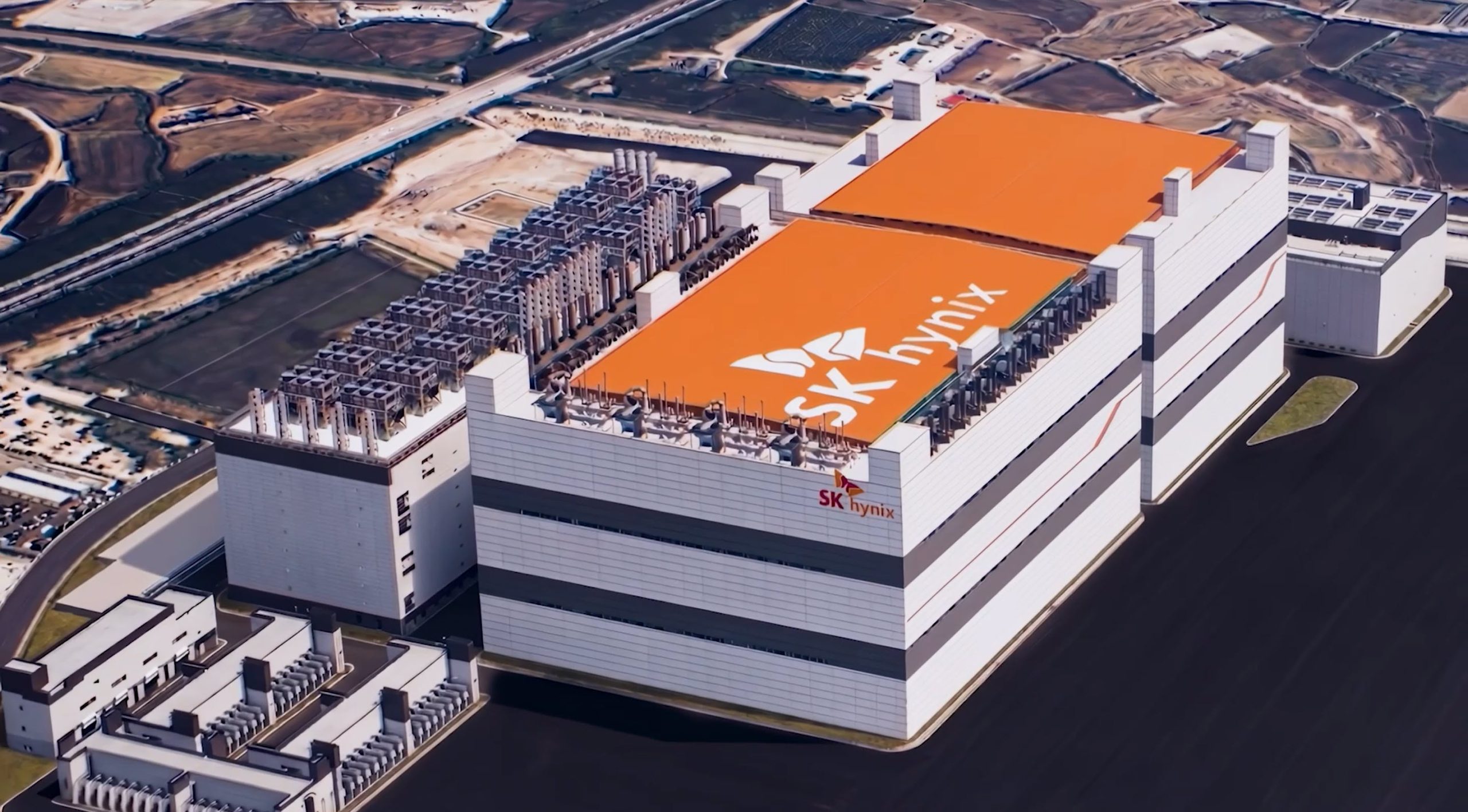
According to public information, this production expansion plan is led by the Korean government and is regarded as the largest investment project in the history of the Korean semiconductor industry. The common goal of the government and enterprises is to double memory production capacity within five years, significantly expand memory chip factories such as DRAM and NAND Flash, and inject new production capacity into the current tight supply and demand situation in the global memory market.
In terms of the overall investment structure, Samsung Electronics and SK Hynix’s capital investment will cover multiple key links, including building new advanced wafer fabs, building new AI data centers, and expanding battery and display panel manufacturing plants, while simultaneously increasing semiconductor manufacturing equipment capabilities. Related equipment categories include EUV lithography, etching equipment, photomask, CMP (chemical mechanical polishing) and deposition equipment, etc. The goal is to comprehensively strengthen South Korea's local semiconductor production system starting from upstream process capabilities.
In terms of specific division of labor, SK Hynix plans to invest approximately 400 trillion won in the Cheongju production base to expand existing factories and build new production lines. At the same time, the southwestern region of South Korea will also receive approximately 100 trillion won in financial support to build a new semiconductor production cluster and further create a regional scale effect. At the local level, Chungcheong Province (including Chungcheong South and North Chungcheong Province) will also participate in financial investment and is expected to contribute approximately 100 trillion won to build a national semiconductor manufacturing hub.
According to the ten-year roadmap jointly formulated by both parties and the government, Samsung and SK Hynix plan to build 4 to 5 new-generation advanced wafer fabs in the northern and southern regions of Chungcheong, all of which are "state-of-the-art factories" for cutting-edge processes and high-bandwidth memory. In the original plan, relevant factories and supporting facilities would not be put into production until after 2040. Now, after full acceleration, the new target time point has been advanced to around 2033, shortening the time by nearly ten years, highlighting South Korea's sense of urgency and determination under the pressure of global computing power competition and memory market pressure.
The South Korean government emphasized in its explanation that this expansion is not only a simple increase in production capacity, but also a strategic layout centered on AI computing power, memory supply and supply chain security. As the demand for computing power and memory from AI accelerators continues to soar, key components such as DRAM and NAND have been in short supply for a long time. South Korea hopes to position itself as a core hub for global AI and memory supply through this round of "unprecedented" investment.
Market analysts believe that the joint production expansion of Samsung and SK Hynix will have a profound impact on the global memory industry structure and may put substantial pressure on memory manufacturers in Taiwan and other regions. The large-scale expansion of DRAM and NAND production capacity by Korean manufacturers is expected to curb excessive price increases in the medium to long term, but it will also intensify competition, prompting companies in other regions to raise their alert levels and re-evaluate capital expenditure plans.
For South Korea, this investment totaling more than 1,350 trillion won is not only an industrial upgrading project, but also a key battle for dominance in next-generation computing and AI technology. With the government's strong promotion and the active cooperation of enterprises, South Korea's semiconductor industry is using this expansion plan to try to transform from an "important global player" to a "leading global force" and gain a more favorable strategic position in the competition with TSMC and Intel.