Chance Glasco, co-founder of "Call of Duty" and former Infinity Ward core developer, recently posted on social media that after the founding team of Infinity Ward left to form Respawn Entertainment, the parent company Activision exerted "very embarrassing pressure" on the studio in the early planning meeting, hoping that the next "Call of Duty" would have "Iran's invasion of Israel" as the core plot, but this proposal was ultimately resented by most developers and shelved.
Glasco recalls that many front-line developers were “disgusted” by the idea because the request felt more like propaganda with clear political intent than regular creative guidance. According to reports, he has now left the project team and is working as a consultant in the industry. This speech was made in response to the heated discussion about the Trump administration’s use of game footage to produce foreign military propaganda videos.
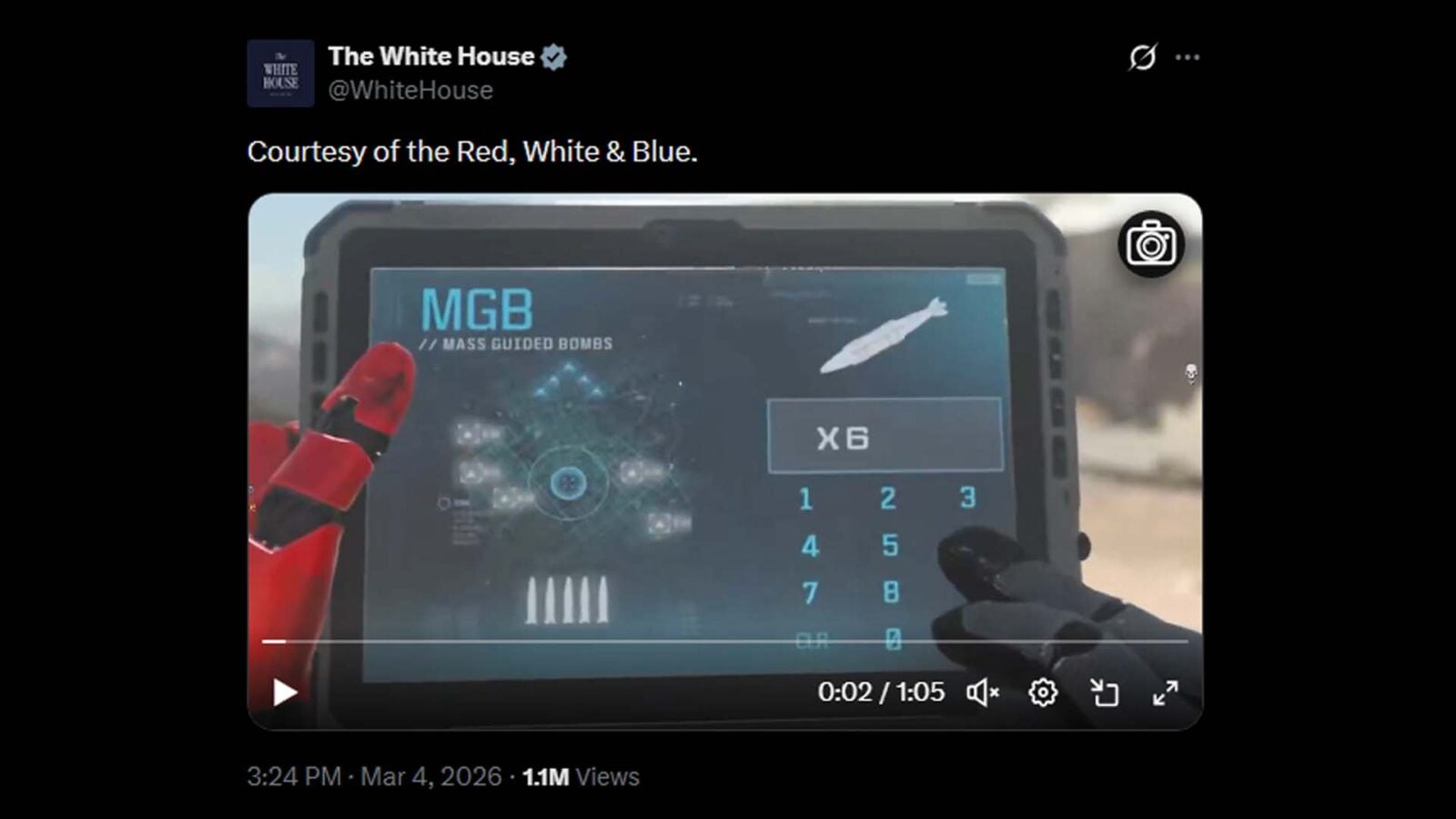
Recently, the White House directly embedded the "nuclear bomb kill streak reward" game screen in "Call of Duty" in a video promoting a military strike against Iran, which triggered a controversy that further blurred the boundaries between the game and real-life war narratives. Many industry insiders, including Glasco, pointed out that the Trump administration has repeatedly used video games and game characters for policy propaganda, from using the image of Master Chief in "Halo" as a "platform" for Immigration and Customs Enforcement to citing "Pokémon" in immigration enforcement information. These practices all reflect the authorities' conscious use of entertainment media to shape the public's perception of major issues such as war and immigration.
Glasco further explained in a follow-up speech that Activision emphasized in internal communications that the setting of the conflict between Iran and Israel was realistically "relevant", and that successive U.S. governments have long maintained a high-pressure stance on Iran policy, which made him even more convinced that entertainment products are being intentionally included in the toolbox of public opinion mobilization and policy propaganda. On social media, some netizens questioned why the "Call of Duty" series had previously depicted highly controversial plots such as the London terrorist attack and mercenaries fighting against Mexican drug cartels. Only the "Iran attacking Israel" script was "unacceptable" to the development team. In response, Glasco responded that the problem is not whether the subject matter itself is sensitive, but that there are real political forces behind it that are "willing to use entertainment to influence public positions." The war narrative against Iran has always occupied an important position in the agenda of multiple US administrations, which is different in nature from other fictional situations.
He also revealed that the original intention of the early generations of "Call of Duty" was not to simply treat war as a refreshing entertainment, but to try to emphasize the cruelty and destructiveness of war. Some mission designs also provide players with an "exit" option to weaken moral conflicts. For example, in the controversial "No Russian" level in "Modern Warfare 2", players can choose to skip the entire mission or avoid firing on civilians during the execution, thereby retaining a certain amount of moral space at the system level. Glasco mentioned that the content of the level was leaked before its official release, which directly caused him to lose his Russian passport qualification. Years later, he is still unsure whether he is still banned from entering Russia, showing that the line between game narrative and real-life political consequences is far more fragile than many players imagine.
At a more macro level, Glasco believes that when the government begins to frequently borrow game images, characters and even narrative frameworks to package external actions or internal affairs issues, it is easy for the public to downplay the perception of real-life death and destruction in the stimulating audio-visual experience. The current tensions surrounding the Iran issue and long-standing policy pressures make it difficult for the setting of the "Iran-Israel War" to be simply regarded as a fiction once it enters mainstream entertainment works, and is more likely to be interpreted as a "warm-up" for future military operations. Behind this discussion triggered by a social media update, the line between the game industry and real politics that is constantly being touched or even crossed is once again becoming the focus of public opinion scrutiny.