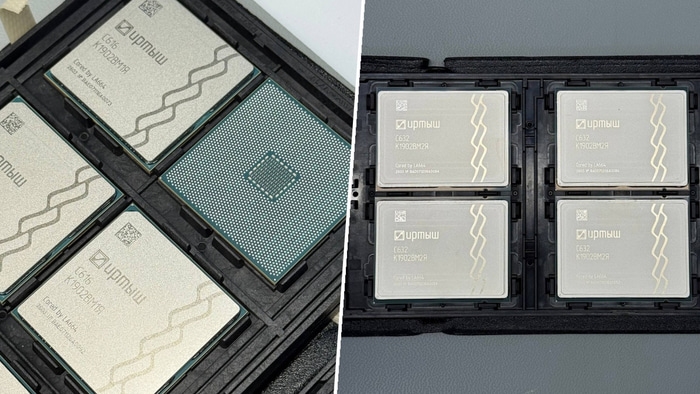
Recently, Russian microelectronics company Tramplin Electronics announced thatThe first batch of samples of the Irtysh (Irtysh) series processors developed based on China's LoongArch instruction set architecture have been obtained.
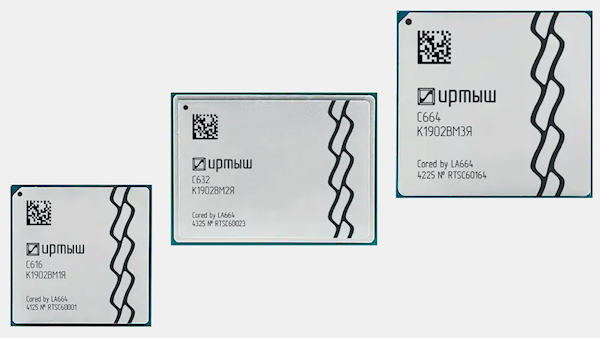
This CPU is specially built for independent data centers and high-performance computing scenarios.It has become the core solution for Russia to break through the sanctions and blockade of Intel and AMD x86 architecture.
The first batch of samples released this time include two models, the 16-core Irtysh C616 and the 32-core Irtysh C632. A 64-core C664 version is also planned in the product catalog.
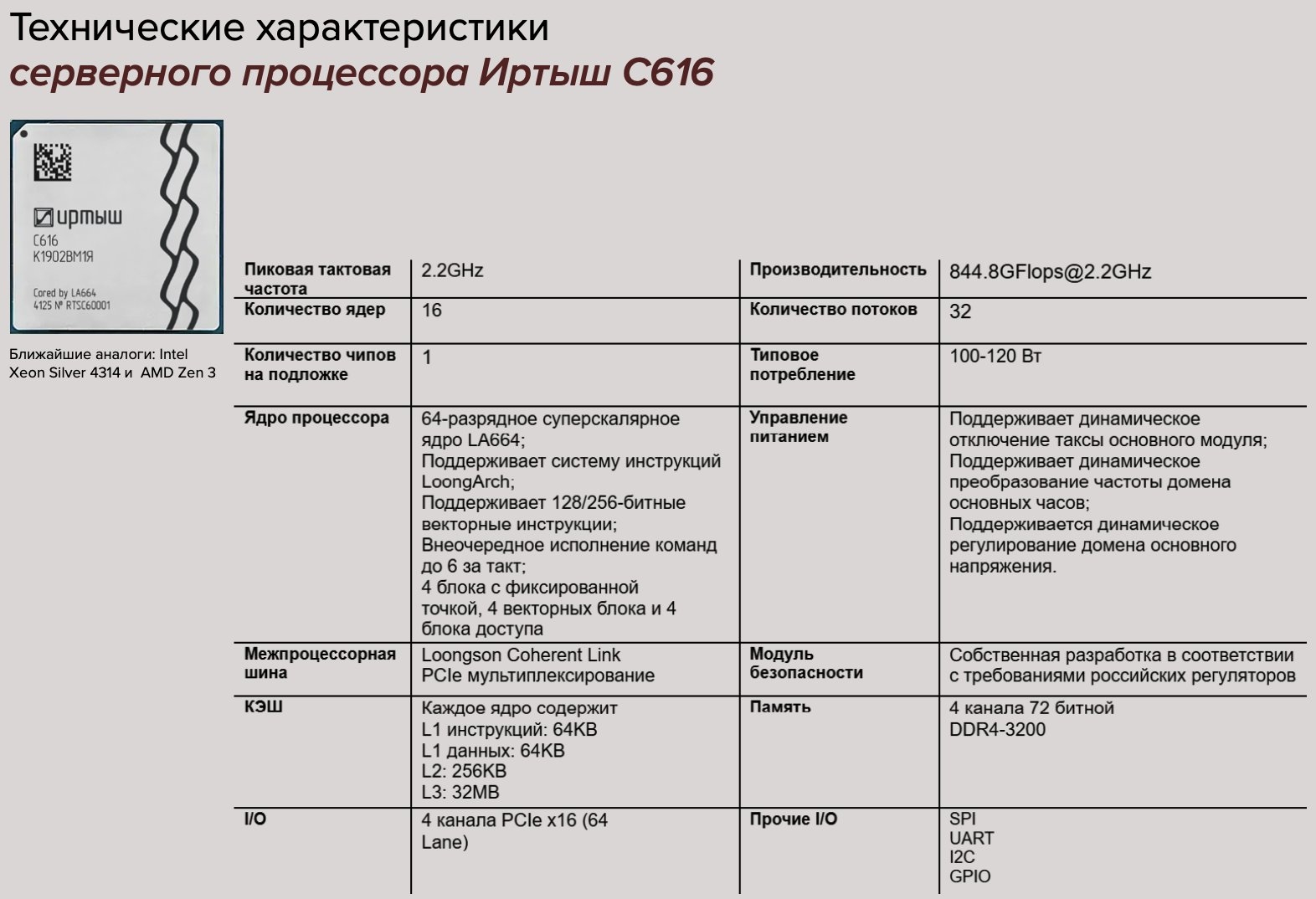
The entire series is based on the LoongArch LA664 core, adopts a six-issue, out-of-order execution pipeline micro-architecture, supports multi-threading technology, and supports 128-bit LSX and 256-bit LASX vector extension instructions.
In terms of specific parameters, 1The 6-core model is clocked at 2.2GHz, equipped with 32MB L3 cache, supports four-channel DDR4-3200 memory, has a peak floating-point performance of 844.8 GFLOPS, and a TDP of 100-120W;
The 32-core model is clocked at 2.1GHz, equipped with 64MB L3 cache, supports eight-channel DDR4-3200 memory, has a peak floating point performance of 1612.8 GFLOPS, and a TDP of 180-200W.
According to officials, the performance of this series of processors can benchmark Intel's previous generation Xeon processors, and is competitive at the same level as AMD Zen3 and Intel Ice Lake series products.
In October 2025, Springboard Electronics completed the introduction of Loongson architecture technology. After signing a formal authorization agreement, it not only obtained core technology authorizations such as the LA664 core, DDR4 memory, and PCIe 4.0 physical layer, but also obtained the independent development and modification rights of the Dragon architecture.
Russia stated, the Irtysh processor is equipped with a self-developed security module and is fully assembled and produced in Russia, enabling stable mass production and uninterrupted supply., the shipment target in the first year after mass production is set at 30,000 units. In early 2026, many Russian companies will launch supporting complete machines, and the local mainstream operating systems have been adapted.
Against the backdrop of continued Western sanctions, Russian companies are unable to legally obtain high-performance x86 processors from Intel and AMD. This processor, based on China's independent Controllable Dragon architecture, has become the core path for Russia to achieve computing independence.