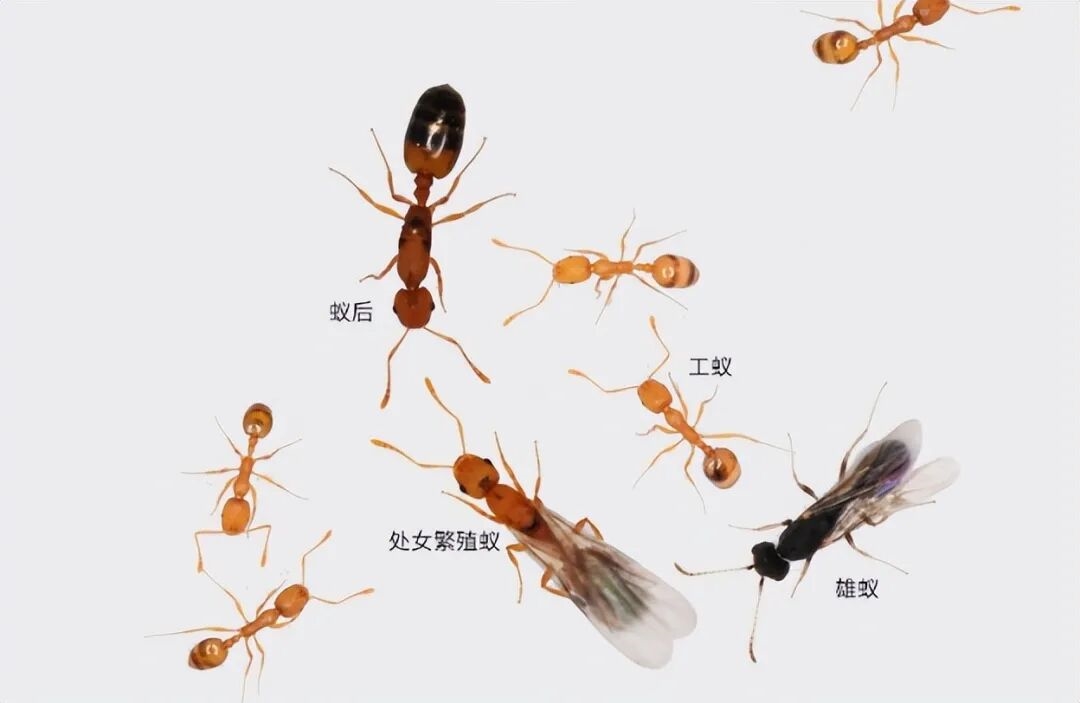
Ants are typical social creatures with clear division of labor, strict hierarchy, and their own set of life rules. To put it simply, in an ant colony, the queen is responsible for laying eggs. The male ants will die soon after mating. The largest number of female worker ants are responsible for foraging and caring for the young ants. Some species also have soldier ants for protection.
In an ant colony, the queen is the "king". She retains the sperm of male ants and uses them selectively. The fertilized eggs develop into female worker ants or queens; the unfertilized eggs develop into short-lived male ants.
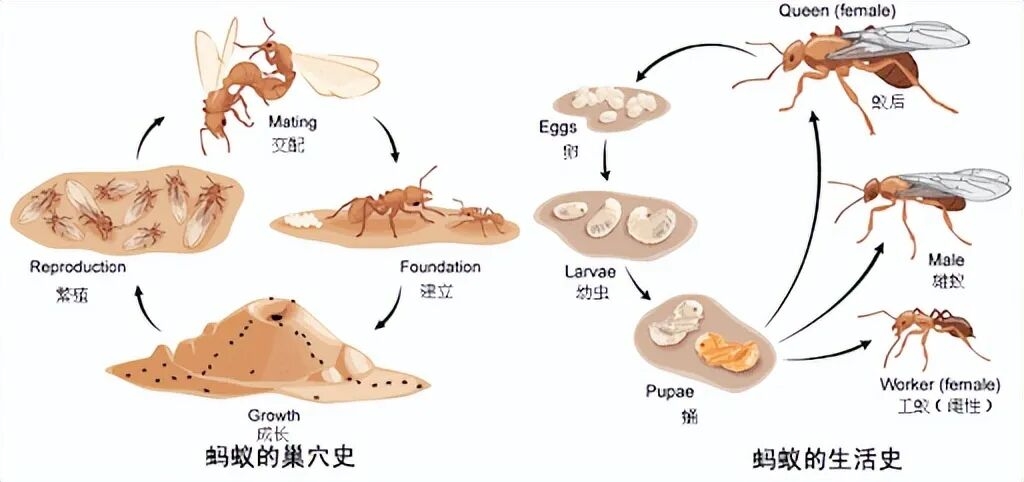
This is how most ant species operate, and there are some that do not follow the routine, but relatively few.
For example, a small number of ants can "give birth" to an ant colony through parthenogenesis without the help of male ants. Some ants do not like to struggle on their own and are good at "dove occupying magpie nests" and breeding offspring through parasitism.
However, in the ant world, these two types of ants are not the most exaggerated.
Some time ago, scientists discovered a more extreme and rare ant species in the forests of Japan, which has the characteristics of "self-cloning" and "parasitism".
All ants are queens, with no workers or males. It is believed to be the first known ant species composed entirely of queens. Reproduction relies on parthenogenesis, and daily life is achieved by "enslaving" worker ants of other species, commonly known as "service outsourcing."
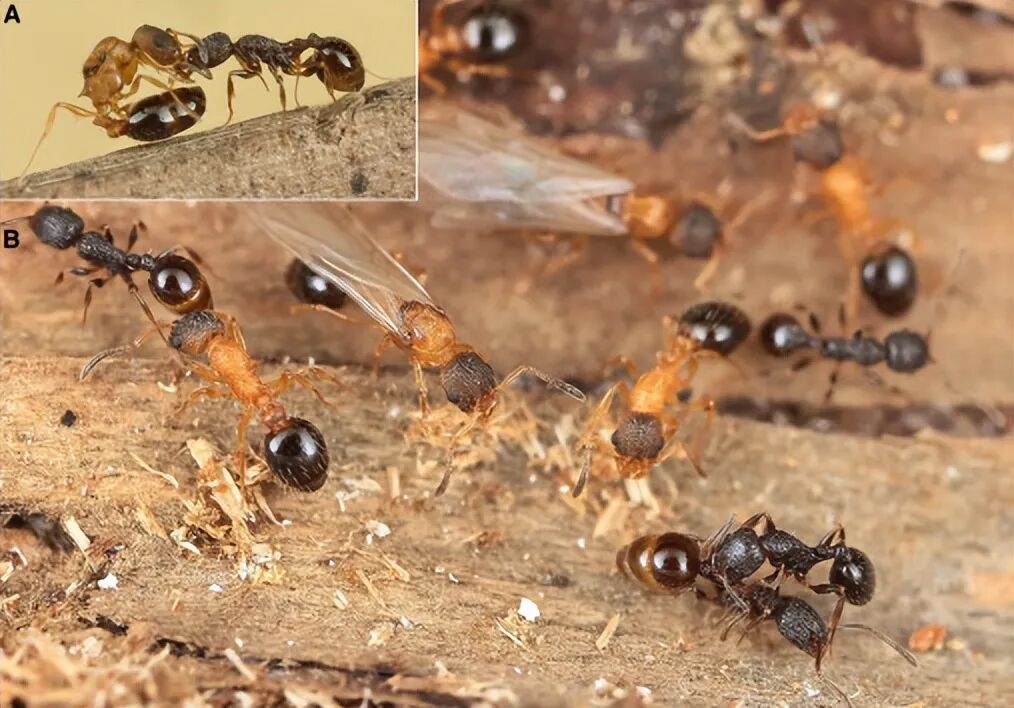
△ The light color is the host queen (also the one with wings), and the dark color is the host
All members will get parasitic ants from now on
This ant comes from Japan and its scientific name is Temnothorax kinomurai. It is currently only found in nine locations in Japan.
Scientists have been studying this ant for more than 40 years, and its properties as a parasitic ant have been known before.
Their favorite is to "seize" the nest of a closely related species, Temnothorax makora. The relationship between the two is host and host.
A young host queen will sneak into the host nest and then launch an attack. The main target of the attack is the host's queen, and by the way, she will also deal with the "loyal protector" worker ants in the host nest.
In individual cases of parasitism observed, the host ants will also initiate a "chemical strategy."
Hiding and secretly spraying chemicals on the host queen, the worker ants in the host nest will mistakenly think that their queen is an "invading bad ant" and kill her.
When the fighting within the other ant colony is over, the host queen ant will show up to enjoy the results and be regarded as the "new queen".
The surviving host worker ants begin to take care of the offspring of the invading queen. They work hard to forage, defend the nest and feed the young ants, but they will never know that they are raising the offspring of other ants.
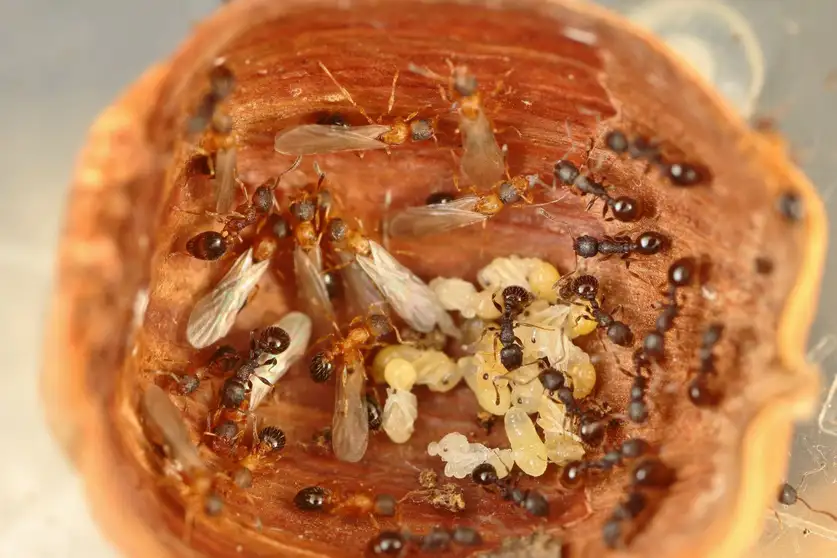
In addition, scientists also discovered that this kind of parasitic ant not only does not need the care of its own worker ants, but also completely abandons the male ants.
In this study, the research team collected a total of six ant colonies that had been successfully parasitized (the queens were exotic Temnothorax kinomurai ants) and placed them in artificial nests in the laboratory to raise.
The results showed that there were no traces of use of the reproductive organs of the parasitic queens in the six ant colonies, proving that they were not fertilized, but they still gave birth to offspring, and the 43 newly born young ants were all queens after inspection.
After these 43 young ants mature and undergo parasitism and reproduction, their offspring will also be queen ants.
As a result, the initial conclusion was drawn, and the research results were published in "Current Biology" on February 23, 2026.
at last
In short, the survival strategy of this kind of ant is to rely on its own ability to copy a batch of offspring just like itself (parthenogenesis), and then these offspring spread out, grab other people's hills, become the "king" of other people's hills, and then make the people on other people's hills willing to pay for themselves (parasitism).
It sounds like a storyline that only appears on TV, but now it actually happens in the animal world, which is quite interesting.
But don’t rush to praise it for now. In the eyes of scientists, this ant’s survival strategy is still “too extreme and too fragile.”
Because they are parasitic, they are all queens. They are born "princesses" and cannot do chores. They are completely dependent on the care and protection of the host worker ants. Their independence is too poor. If the host ants they like to parasitize become extinct, they will also perish.