An Australian scientific research team recently announced that they have for the first time made a quantum battery prototype that can complete the entire process of "charge-energy storage-discharge" through the laws of quantum mechanics. It is considered an important milestone from theoretical conception to actual device. This achievement was completed under the leadership of James Quach, a physicist at CSIRO, Australia's national scientific research institution, and was published in the journal "Light: Science & Applications". It is called a "proof-of-concept" nanoscale power supply unit by the research team, marking the transition of quantum batteries from paper models to real devices.
Unlike traditional batteries, which are more difficult to charge quickly as they get larger, this quantum battery takes advantage of the so-called "collective effect": the synergy between multiple quantum units allows the system to achieve faster charging when the number of units increases. This seemingly counter-intuitive mechanism was theoretically proposed a decade ago and has now been experimentally confirmed at the hardware level for the first time.
Previously, Quachi's team has proven in early work that quantum units can share energy in a "collective manner", but how to effectively take out the energy after it is stored has always been a key problem towards practicality. The new device solves this problem in terms of structural design and achieves controllable re-release of stored quantum state energy, laying a technical foundation for subsequent applications.
In this experiment, the quantum battery uses lasers for wireless charging, and it only takes femtoseconds to complete the full state - that is, a time of one quadrillionth of a second. More importantly, it can maintain stored energy in nanoseconds, and its storage time is about six orders of magnitude longer than the charging time; according to the researcher's analogy, if this ratio is enlarged to the macro scale, it is equivalent to a battery that charges for one minute and can maintain its power for several years.
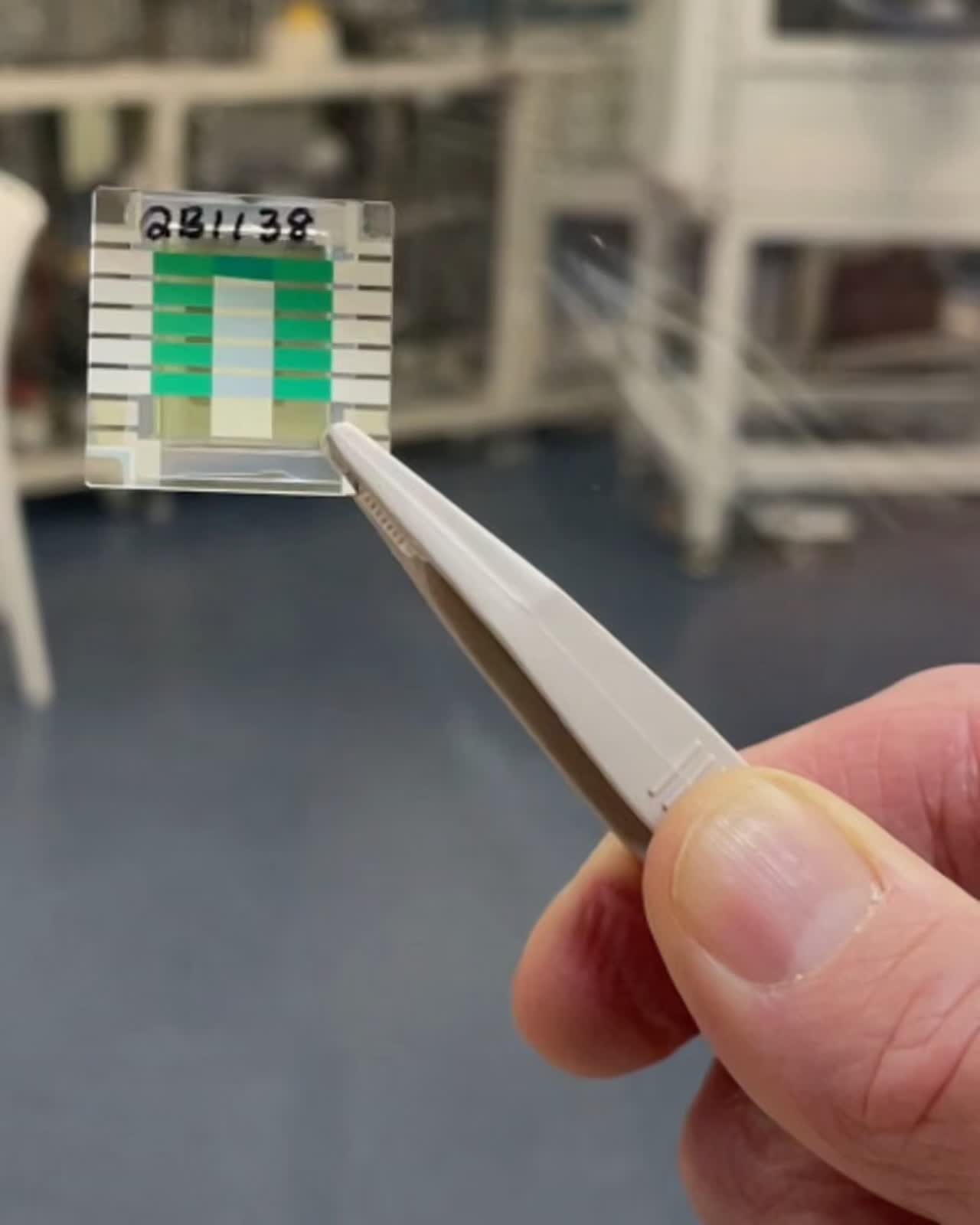
Currently, the prototype device has a capacity of only a few billion electron volts, far from enough to power any real-life electronic device. Kuach said that the current core task is to continue to extend the time that energy can be retained in quantum batteries in order to achieve stable energy supply in practical scenarios such as communication electronics. To maintain quantum coherence in energy over a long enough time scale is a prerequisite for engineering.
Industry experts believe that the most promising application of quantum batteries in the short term is not to directly replace traditional lithium batteries, but to take the lead in serving cutting-edge devices such as quantum computers. Since quantum computing systems are extremely sensitive to the accuracy and disturbance of energy supply, a power supply that can deliver energy in a "coherent" manner is expected to significantly reduce noise and improve system stability.
Andrew White, head of the Quantum Technology Laboratory at the University of Queensland in Australia, who was not involved in the project, commented in an interview with the media that this result "very beautifully shows that the quantum battery is no longer just an idea, but has become an operational prototype." He believes that this enables quantum batteries to move from abstract theoretical discussions to the stage of sustainable optimization and engineering amplification.
From a longer-term perspective, this experiment demonstrates the possibility of a new class of ultra-high-speed charging devices, which may in the future power advanced electronic systems such as high-performance processors, or even enable long-distance wireless charging of mobile devices. Kuach envisions that when future drones or vehicles perform tasks, they can replenish energy through quantum-controlled light sources during movement. Their internal quantum batteries will be wirelessly "lit" while running, thus breaking through the limitations of traditional power sources in the speed and method of energy replenishment.