Astronomers recently reported that one of the largest stars in the known universe, WOH G64, has undergone surprising changes and may be approaching a violent supernova explosion. This star was originally a red supergiant, but has now been found to have evolved into an extremely rare yellow supergiant stage, which is considered a critical transition period for massive stars before they collapse.
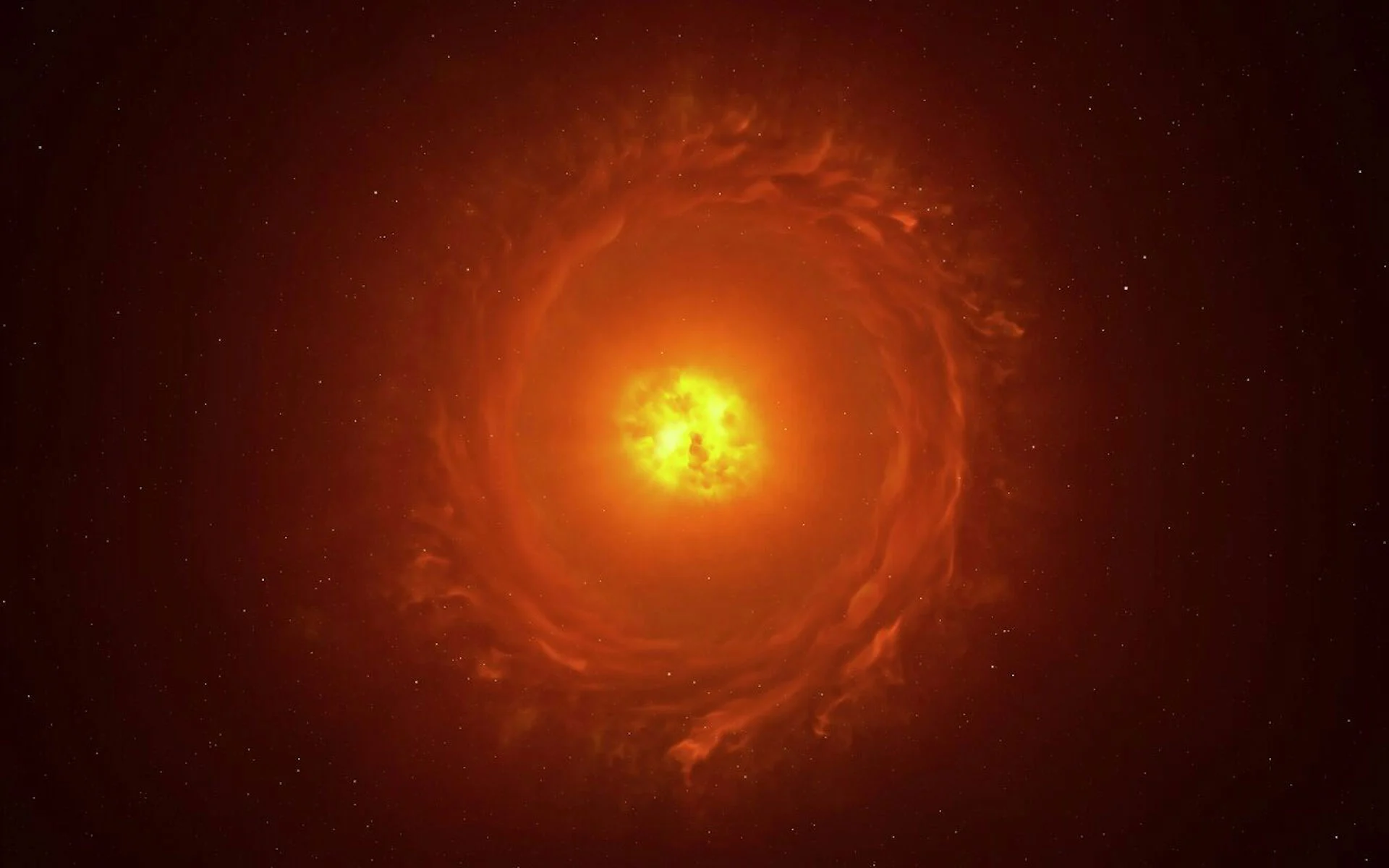
The new research, led by Gonzalo Muñoz-Sanchez of the National Observatory of Athens, was published in Nature Astronomy. Observational data show that WOH G64 is actively ejecting outer material, and at the same time it is shrinking and heating up. The scientific research team believes that humans may be witnessing a brief and critical stage of evolution before a massive star reaches its end.
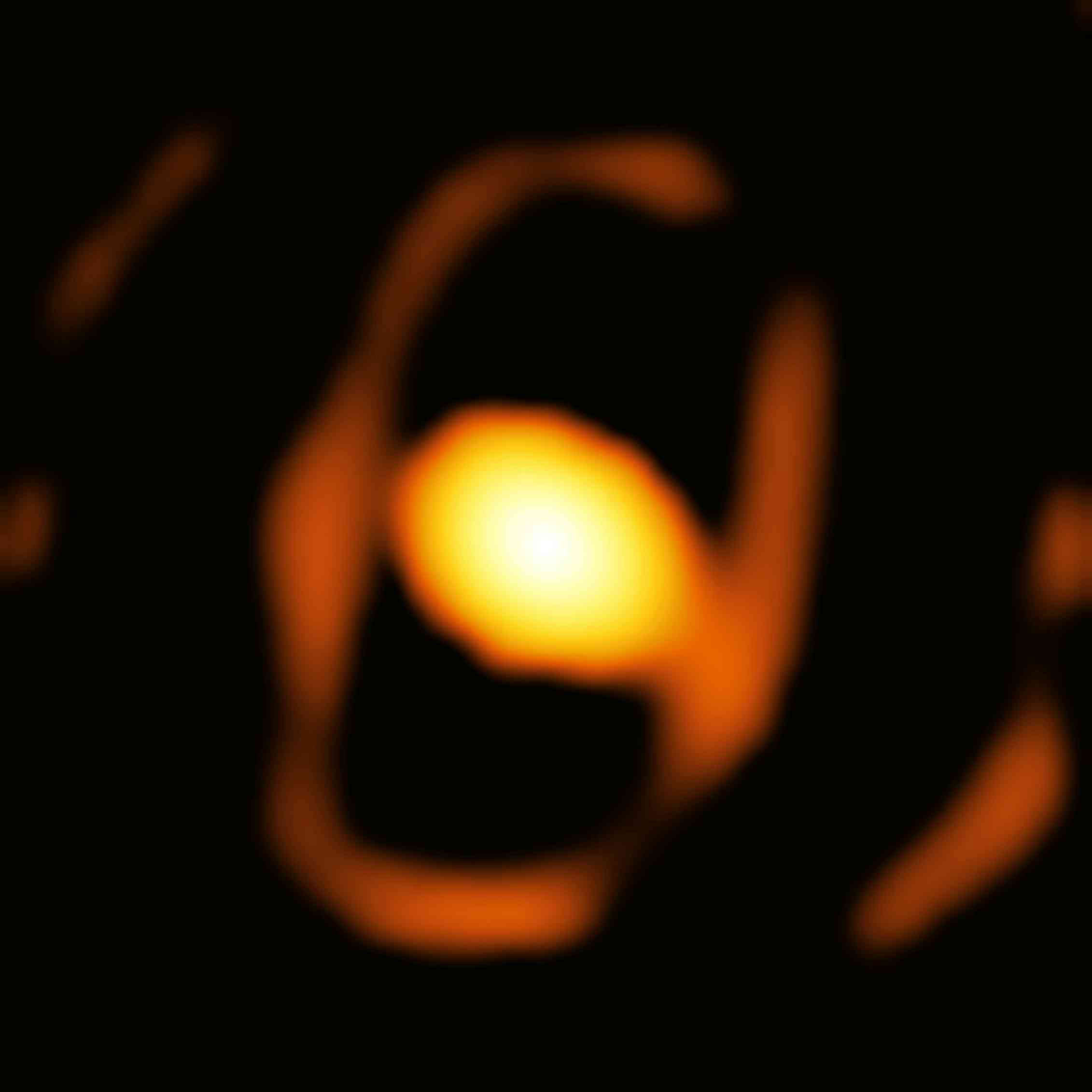
Discovered in the 1970s, WOH G64 is an anomalous object in the Large Magellanic Cloud, a companion galaxy orbiting the Milky Way. Follow-up studies showed that it is not only extremely bright, but also extremely large, with a radius exceeding 1,500 times that of the sun, making it one of the largest known stars. In 2024, astronomers used the European Southern Observatory's Very Large Telescope Interferometer to take detailed images of a star outside the Milky Way for the first time, clearly showing a thick and massive dust shell surrounding WOH G64, further confirming that it is losing mass violently.
WOH G64 is still "young" from a stellar evolution perspective, with an estimated age of less than 5 million years. By comparison, our Sun is about 4.6 billion years old and follows a long lifespan path of "slow water", while giant stars like WOH G64 are "born big, burn fast, and die young." WOH G64 was born from a huge cloud of gas and dust, which collapsed under the influence of gravity and ignited nuclear fusion in its core. It was initially dominated by hydrogen fusion like the sun, and then expanded and switched to burning helium, entering the red supergiant stage.
Not all supergiants evolve into yellow supergiants, the "extreme version" of supergiants. Theoretical research points out that only extremely massive stars will evolve into the yellow supergiant stage during the rapid transition from hydrogen burning to helium burning. During this transition, stars will violently eject outer material and their cores will shrink sharply. Once they enter the yellow supergiant stage, the outcome is almost certain - they will end in a dazzling supernova explosion in a relatively short period of time.
The new study focused on signs of mutation in WOH G64 around 2014. The research team proposed that a significant portion of the original red supergiant surface was ejected during this period. One of the reasons for this violent event may be the interaction of companion stars: By analyzing the spectrum of WOH G64, the author confirmed that it has a companion star. The complex gravity and material exchange within the binary star system may have triggered a large-scale eruption in the outer layer.
However, scientific researchers also proposed another, more drastic possibility: WOH G64 is "warming up" towards a supernova explosion. For such a massive star, explosion is an inevitable outcome, but exactly when the "countdown" will end has always been a difficult problem in astrophysics. One theoretical scenario holds that the currently observed transition corresponds to the "superstellar wind" stage before a supernova, in which the interior of the star generates strong pulsations due to the violent consumption of fuel in a short period of time, blowing away the outer material on a large scale.
For stars, the lifespan is often tens of millions or even tens of billions of years. It is extremely rare for humans to capture and record such a dramatic evolution process in just a few decades or even less. What's more, WOH G64 is located outside the Milky Way, which makes this observation more scientific and ornamental. Scientists say that if we are lucky enough, humans are expected to witness the death moment of WOH G64 in our lifetime - a spectacular supernova explosion across the galaxy, which will not only light up the starry sky, but is also expected to provide a key piece of the puzzle for studying the life and death evolution of massive stars.