The Los Angeles Unified School District (LAUSD) Board of Education voted Tuesday to adopt a resolution that would limit student use of laptops and tablets in classrooms and encourage teachers to use more paper-and-pencil work, making it the first large public school district in the nation to take enforcement action on the issue.
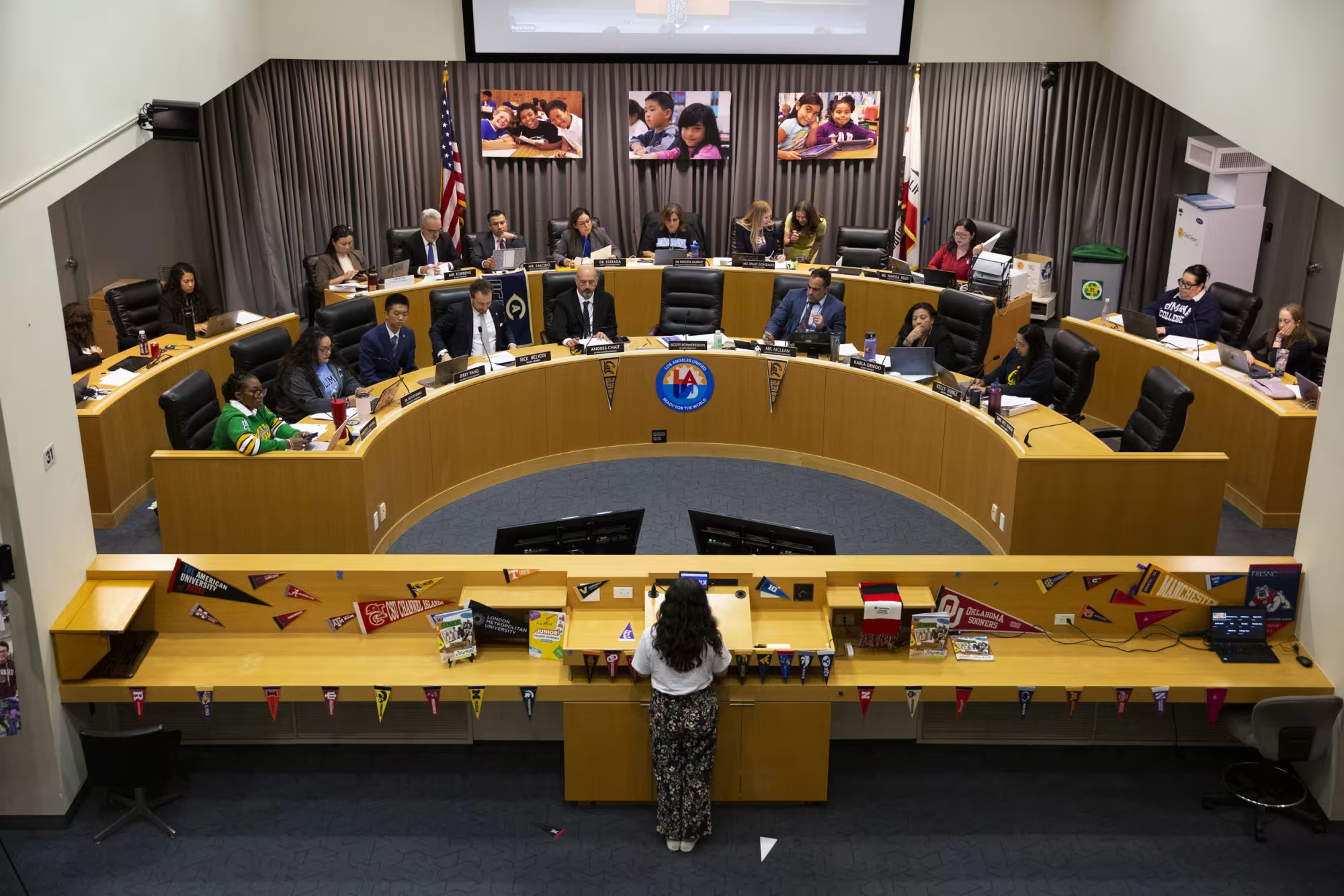
The resolution, passed at a public meeting with 6 votes in favor, 0 against, and one person recused, requires the school district to develop specific screen time policies for different grades and subjects, prohibit the use of electronic devices in school for students in first grade and below, and clarify the procedures for parents to apply for "exiting the use of campus electronic devices" for their children. It also requires an audit of existing education technology contracts. School district Board of Education member Nick Melvoin, the sponsor of the resolution, said that as one of the largest school districts in the country, Los Angeles has a responsibility to "draw the line" on how to "recalibrate" the use of technology in schools and promote relevant discussions in society.
This policy shift stems from months of sustained pressure from parents. A group of parents spontaneously formed the "Schools Beyond Screens" organization. They spoke at Board of Education meetings, made their voices heard on social media, and through school district forums and private meetings with management and committee members, reflected on the many problems that arise after their children are required to use school-issued Chromebooks and iPads every day. Parents have previously told the media that their children's grades have declined significantly due to distractions in class such as playing video games, watching YouTube videos, and browsing social media and online forums. Some teachers have also complained that some junior high schools set aside one day a week for students to focus on completing online math and reading tests, disrupting normal teaching of other courses such as physical education, music, and science.
“This is a historic reform and we hope it will have a ripple effect across the country very quickly,” said Anya Meksin, a mother of two and deputy director of Schools Beyond Screens. She said that the organization already has about 2,000 members in Los Angeles, and believes that this marks an important "cultural shift" in the way the school treats technology.
According to the resolution, the school district must submit a detailed screen time policy to the Board of Education in June this year, with plans to formally implement it in the 2026-2027 school year. Relevant policies require that primary and junior high school students significantly restrict the use of electronic devices during lunch and recess, and prohibit students from actively searching for and watching YouTube videos and other content.
The resolution is seen as a significant "U-turn" on education technology issues for the nation's second-largest school district. In the past few years, the Los Angeles School District has continued to increase its investment in educational technology (ed tech), and previous Superintendent Alberto Carvalho was an active promoter in this direction. However, in February this year, Carvalho was suspended after the FBI raided his home and office in Los Angeles. The investigation reportedly pointed to a company that had received a $3 million contract from the school district to develop an artificial intelligence chatbot for the school district to serve students, but the final product was said to be barely functional. Through his lawyer, Carvalho has denied wrongdoing and has not yet been charged.
At several Board of Education meetings last fall, Carvalho publicly responded to parent complaints about “too much screen time,” calling the concerns a “privileged reaction to newly informed information” and insisting that providing students with devices is an educational equity measure. He said at the time that there was indeed a problem of "digital tool addiction" in the United States, but "schools are not the cause, not even the main reason" and emphasized that parental responsibility is an important part of this problem. The district still defended the use of Chromebooks and iPads in the classroom in a statement this week, saying the devices play a positive role in improving instruction and that administrators have directed schools to focus on "how technology meaningfully supports learning, not just the amount of time it is used." The statement also stated that providing devices to all students is a "core strategy" to achieve educational equity, helping to narrow the gaps caused by differences in income, geography, ability and family resources, so that all students can participate in "modern learning."
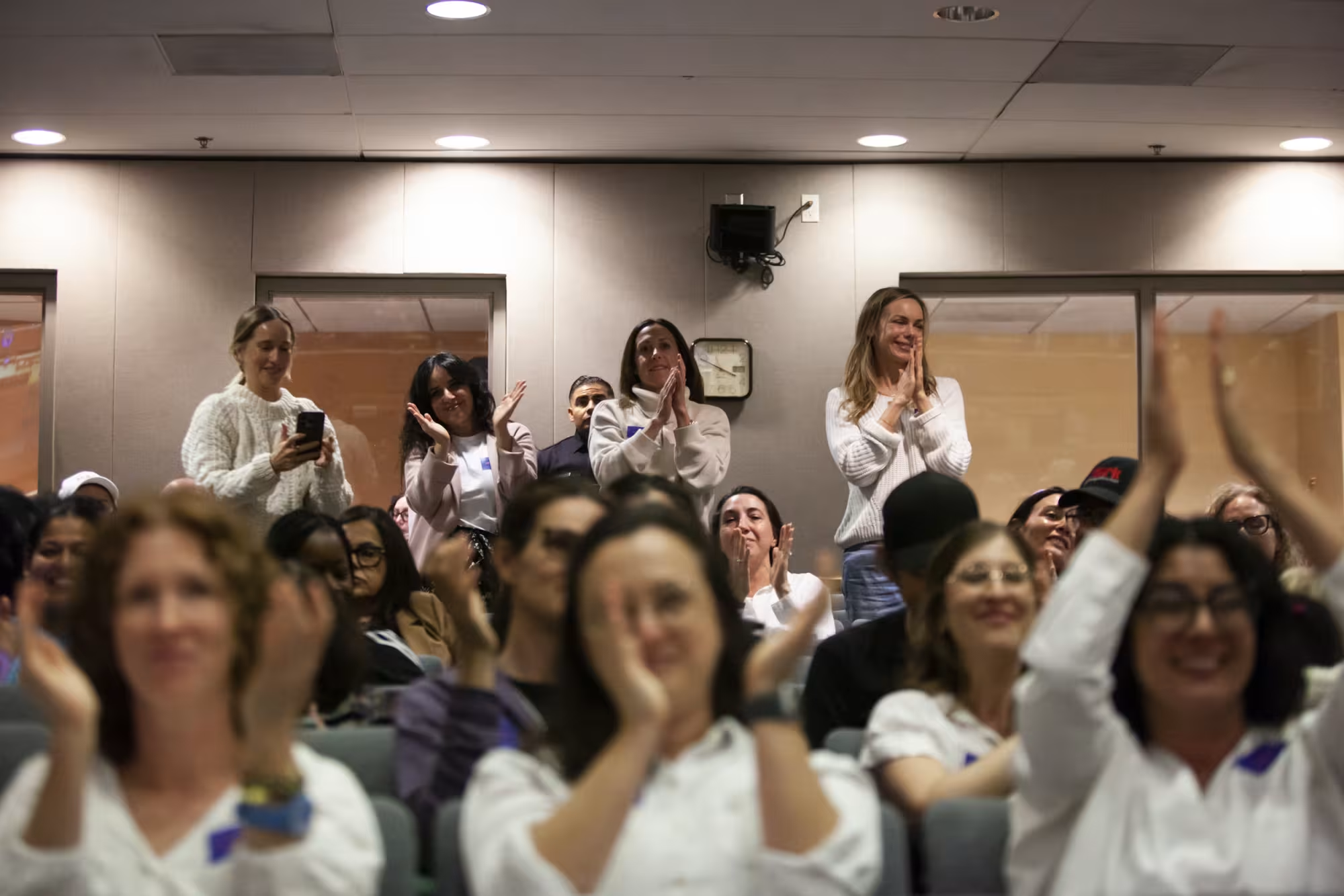
During Tuesday's Board of Education meeting, acting Superintendent Andres Chait spoke favorably of the resolution. About forty parents attended the event, many of them wearing stickers with the slogan "School Beyond the Screen" and holding small placards with words such as "Teachers are more important than technology" and "Relationship = Results". When the voting results were announced, the venue burst into warm applause.
As schools across the country implement bans on cell phones, a grassroots movement driven by parents has emerged across the United States in recent months calling for classrooms to be less reliant on technology. Organized parent unions have emerged in various places, demanding that school districts tighten the "one person per student" policy, and this practice of equipping every student with a laptop or tablet is now common in most schools. Some parents are demanding that their children be allowed to complete classwork without using electronic devices at all; a review conducted by the media found that at least 16 state legislatures have proposed bills related to limiting screen time or Internet use in schools this year.
Outside of Los Angeles, some smaller school districts — including Beverly Hills, Calif., Bend, Ore., and Burke County, N.C. — have passed similar policies to push classroom work back to “analog” formats such as paper and pencil. But Los Angeles is the first major city school district to gain national prominence in a wave of parent backlash over excessive screen time.
Melvoin and Board of Education member Tanya Ortiz-Franklin, who co-sponsored the motion, said they decided to push for the resolution after meeting with members of the Parent Alliance for Schools Beyond Screens and seeing firsthand the sight of children in kindergarten classrooms looking down at iPads and teenagers in high school hunched over Chromebooks. “Let’s model to young people that adults are learning too and will adjust the rules and norms that impact their learning as needed,” Ortiz-Franklin said in an interview.
According to the resolution, the Los Angeles Unified School District administration will evaluate relevant policies every year and issue questionnaires to students, parents and staff to investigate the effectiveness of their implementation. School districts must also establish a system to record the amount of time students use electronic devices and certain software on campus, and regularly report the data to parents.