This year's blockbuster version of the open source GNU Compiler Collection (GCC), GCC 16, has entered the final release sprint. As the first stable version of this branch, GCC 16.1 is expected to be officially launched in the next few weeks and will continue to play one of the most important compilers in the Linux and open source ecosystem.
learn more:
https://gcc.gnu.org/pipermail/gcc/2026-April/247980.html
Jakub Jelinek, a member of the GCC release engineering team from Red Hat, recently announced that all remaining P1 level regression issues (the highest priority defects) in GCC 16 have been cleared, and the release branch releases/gcc-16 of GCC 16 has been created in the Git repository. This means that the development work has officially shifted to further testing and final-stage fixes of the branch code. At the same time, the trunk has started the next version cycle. GCC 17.0.0 is now open for development in Git.
By convention, the main major version of the GNU compiler collection is usually released between April and May each year. This year's GCC 16.1 will also follow this rhythm and release a stable version after completing additional testing of the branch code and possible last-minute fixes. Phoronix stated that it will provide relevant performance test benchmark results after the official release of GCC 16.
As an important update this year, GCC 16 brings a number of improvements to language features and hardware platforms. One of the most notable is the addition of front-end support for the Algol 68 programming language, allowing this long-established language to be compiled directly through the GCC tool chain. In addition, GCC 16 sets the C++20 standard as the default standard, providing modern C++ developers with a language environment that is more in line with current practices.
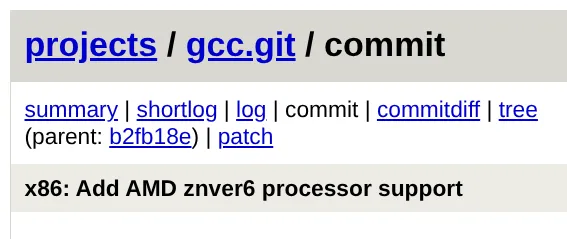
In terms of processor support, GCC 16 adds preliminary support for the AMD Zen 6 architecture, and the corresponding target model is "znver6", laying the foundation for the optimization of future Zen 6-based processors in the open source software ecosystem. For Intel platforms, GCC 16 has prepared AVX10.2 and APX instruction set support for the upcoming Intel Nova Lake processors, and also added target support for Intel Wildcat Lake.
In addition to architectural features, GCC 16 also makes adjustments to toolchain performance and configuration. The new version increases the default number of LTO (link-time optimization) partitions to better adapt to the current processors with increasing number of multi-cores, and is expected to bring better parallel optimization effects in large-scale engineering compilation scenarios. At the same time, for the ARM64 platform, the function multi-versioning feature is no longer marked as an experimental feature, which means that this feature has entered a mature and usable stage in the ARM64 ecosystem.
In the embedded world, GCC 16 adds support for the Picolibc embedded C library, providing new standard library options for developers of resource-constrained devices and embedded systems. In addition to the above highlights, GCC 16 also includes a large number of performance optimizations and detailed improvements throughout the compiler stack, further solidifying its status as the mainstream compilation infrastructure in the open source world.
With the establishment of the GCC 16 release branch and the start of the GCC 17 development cycle, the evolution of the GNU compiler collection remains compact and stable. In the next few weeks, as the official version of GCC 16.1 is released, the industry and community will also conduct various benchmark tests to more intuitively test the actual performance of this version in terms of performance and new hardware support.