AT&T, T-Mobile and Verizon, the three major mobile operators in the United States, announced a landmark cooperation to form a joint company for satellite direct-to-device (D2D) services. They plan to use satellite networks to eliminate signal blind spots within the continental United States. This means that Apple’s iPhone’s networking capabilities will be truly “network-available” nationwide for the first time.
According to information released by the three parties, this newly established joint venture will conduct unified planning and investment around satellite direct connection technology, focusing on covering remote and rural areas that have been "uncovered" or "undercovered" for a long time in the past, so that supported models including iPhone can obtain a more continuous and stable connection experience through satellite. Some industry analysts pointed out that T-Mobile is currently cooperating with Starlink in the D2D field, while AT&T and Verizon have joined hands with AST SpaceMobile respectively. By forming an alliance, the three major operators are "holding their ground" to a certain extent to prevent future satellite service providers from directly providing mobile connections to end users, thereby weakening the role of traditional operators.
Verizon CEO said in a press release that this cooperation is not just about "filling in the blank spaces on the map," but also about building a more elastic and resilient digital infrastructure to adapt to the changing communication needs of users in any location and in any scenario. For ordinary users, the alliance of the three operators means that in areas that have been difficult to cover in the past, such as wilderness, highways, and mountainous areas, it will become a reality to rely on satellite direct connection technology to keep the network available, and the networking experience of iPhone and other devices will be closer to "senseless switching, seamless coverage."
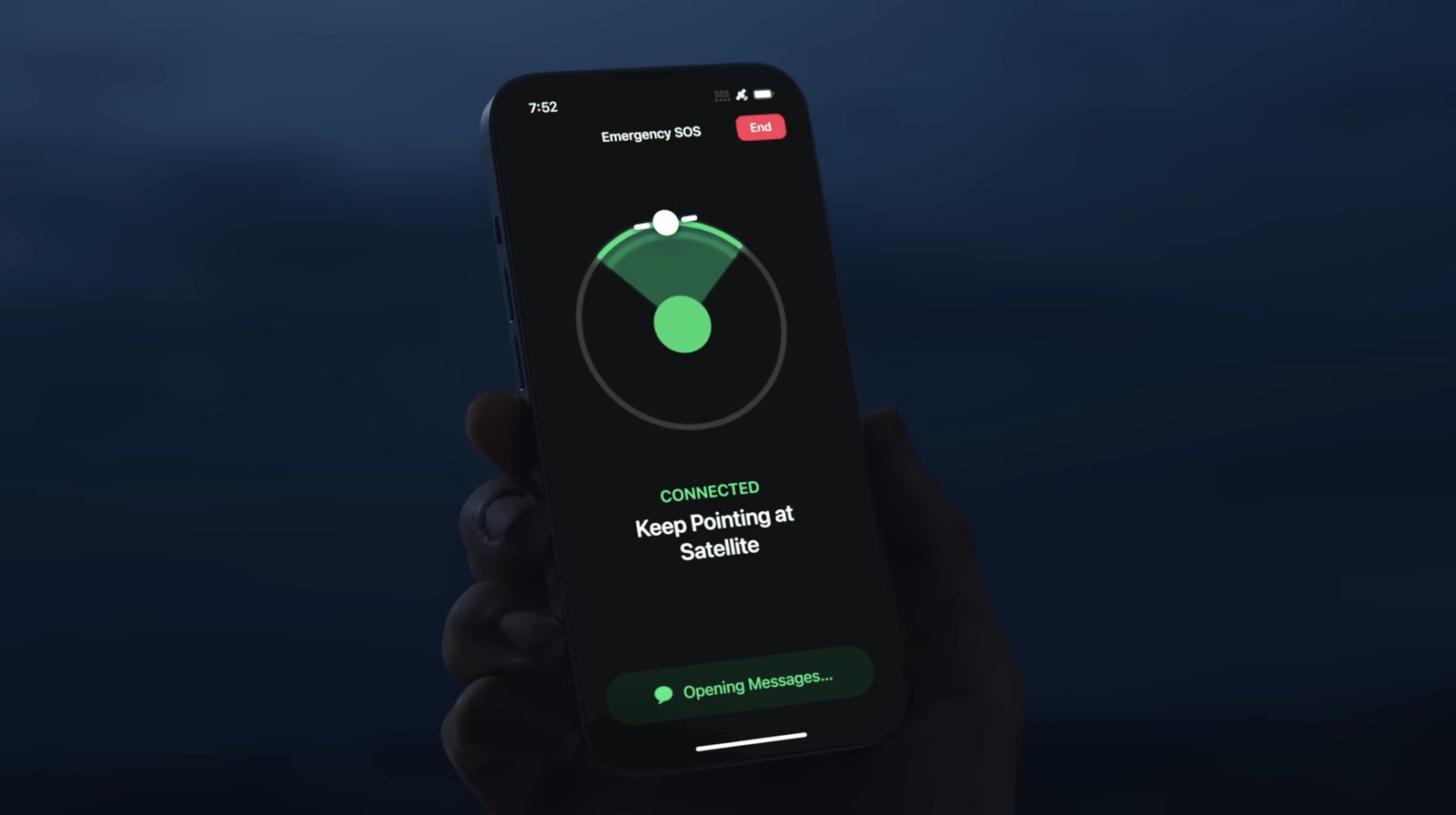
Currently, Apple has partnered with Globalstar to provide satellite "Emergency SOS" and roadside assistance services on iPhone 14 and later models, as well as Apple Watch Ultra 3, allowing users to send information and share their location to emergency services even when there is no cellular or Wi-Fi coverage. Through Globalstar's low-orbit satellite constellation, Apple devices can also use the "Find My" function to update and share location information in offline environments, and conduct limited messaging communication with personal contacts and first responders. It is worth noting that Amazon is currently acquiring Globalstar, a complete set of low-orbit satellite constellation assets, which is also regarded by some observers as another reshaping of the future satellite communications landscape.
While operators are increasing their focus on D2D, Apple itself also plans to significantly expand the satellite capabilities of the iPhone: on the one hand, it will deeply integrate satellite navigation and connections into Apple Maps, so that the map can use satellites to provide more reliable positioning and routing services in weak or disconnected network environments; on the other hand, it will upgrade the "Message" application to allow users to send rich media communication content such as RCS not only through traditional text messages, but also through satellites. In order to improve the practicality of use scenarios, Apple also plans to modify the hardware so that devices can still maintain connections with satellites as much as possible in environments such as indoors that lack direct line of sight to satellites, and introduce 5G Non-Terrestrial Network (NTN) technology so that ground base stations can extend their coverage with the help of satellites.
In addition to system-level functions for ordinary users, Apple is also preparing to open a dedicated API to allow third-party developers to natively integrate satellite connectivity capabilities in their applications, thereby spawning more new application scenarios that rely on satellite networks, such as emergency command, outdoor adventure collaboration, remote IoT monitoring, etc. In the context of the three major operators jointly promoting D2D satellite networks, this means that in the future, an iPhone will have stronger network redundancy capabilities in most areas of the United States: when the traditional cellular network is unavailable, the satellite network will become a truly available "second channel" and no longer just stay in the limited form of "emergency help."