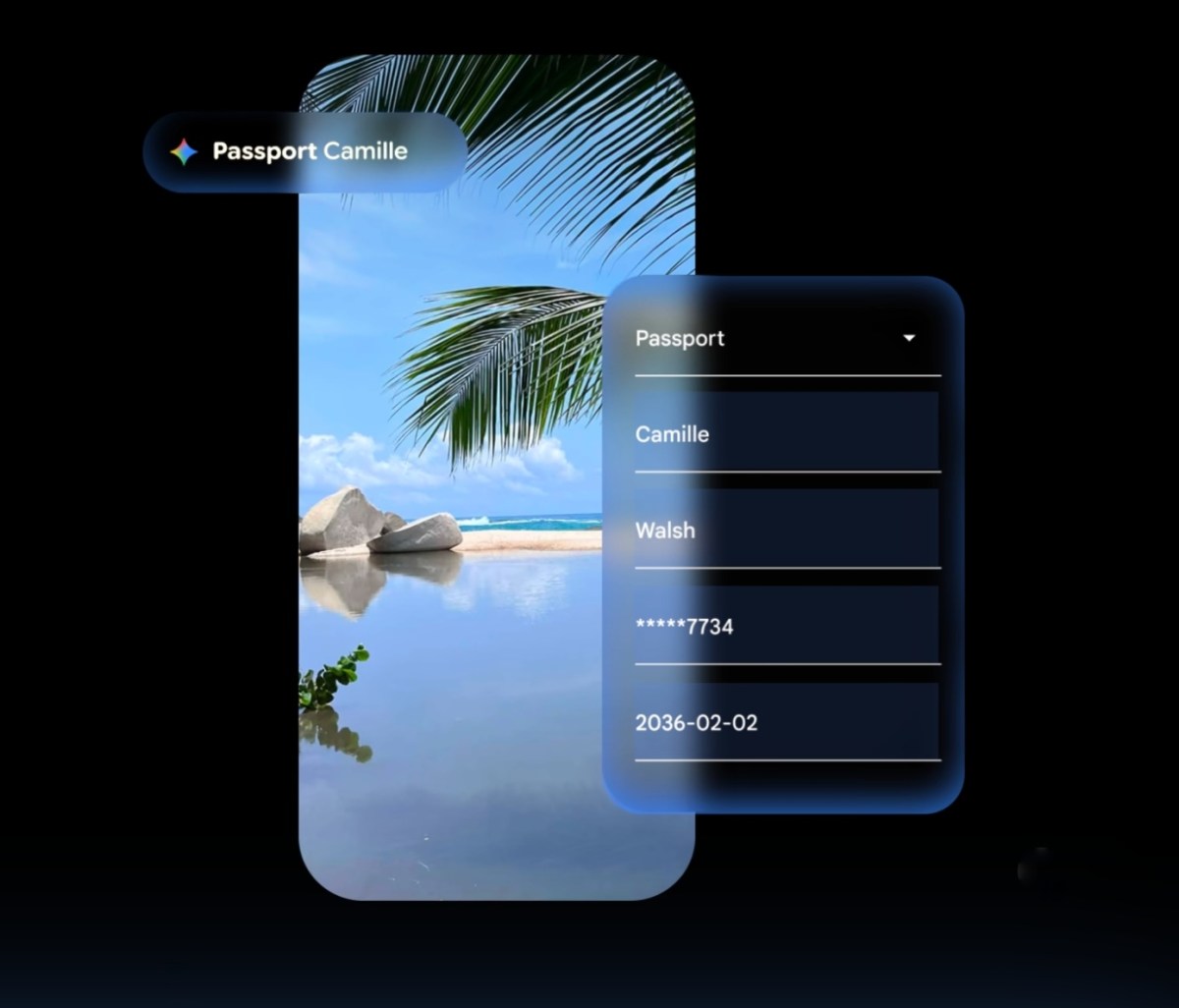
Recently, Google officially released a new Gemini Intelligence feature suite, emphasizing that this is not a simple rebranding, but a set of advanced AI capabilities for the Android platform. According to reports, Gemini Intelligence can autonomously perform multi-step tasks in the complete background, including automatically retrieving, organizing and transforming information between different applications and websites, and interacting on behalf of users. In addition, Gboard will introduce a component called "Rambler" in the future, allowing users to freely use various mantras, modal particles, and even mixed in multiple languages when typing, and the system can still understand and process them intelligently.
Despite its powerful features, Gemini Intelligence won't be available on all Android devices anytime soon. Current public information shows that it is expected to first land on Samsung’s upcoming Galaxy Z Fold8 and Galaxy Z Flip8 folding screen models, and Google has also confirmed that the Galaxy S26 series and Pixel 10 series will get this feature this summer. This also basically locks in the first batch of supported models to be concentrated on the latest generation of high-end flagship product lines.
In a footnote on the official Android.com website, Google describes Gemini Intelligence as a high-end feature "only for Android devices with the most advanced capabilities and specifications" and gives quite demanding hardware and platform requirements. The most notable of these is that the device must be equipped with at least 12GB of running memory, which means that the model running Gemini locally is extremely resource intensive. At the same time, the device also needs to support AICore, a service provided by the Android system layer that opens AI capabilities based on the local Gemini Nano model to applications.
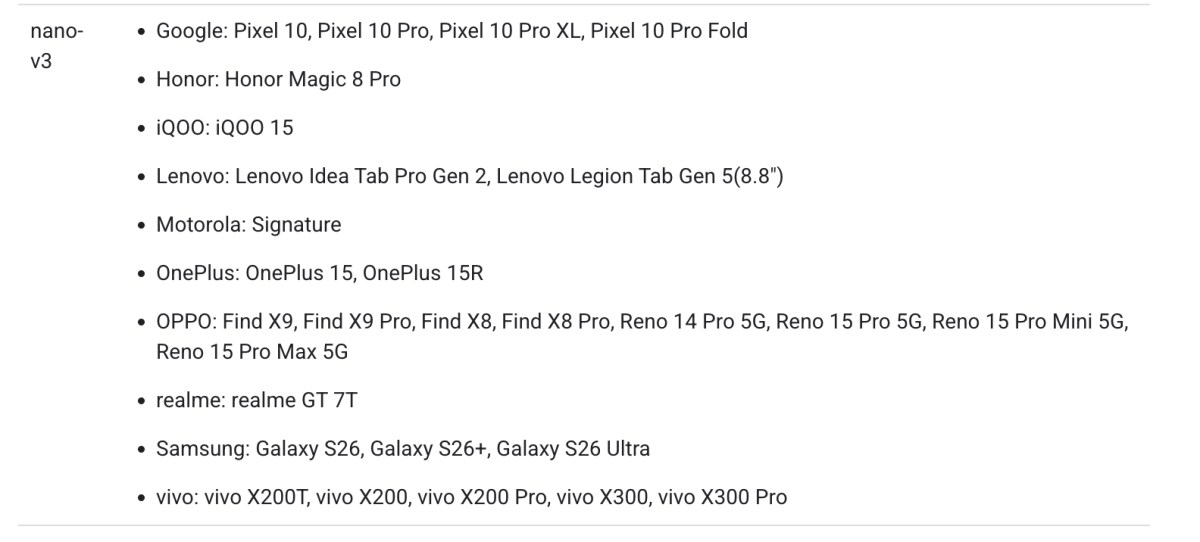
Gemini Intelligence explicitly requires devices to run Gemini Nano v3 or higher, and the number of devices that meet this requirement is still very limited. In addition to the hard hardware threshold, Google also lists a series of additional conditions that seem to be more "qualification certification." For example, the chip needs to be a "qualified flagship SoC," the device needs to pass launch quality testing on the A17+ platform, and maintain quality metrics such as low crash rates in actual use.
In terms of software life cycle, devices supporting Gemini Intelligence need to commit to at least 5 major system version upgrades and 6 years of quarterly security updates. In addition, devices must support Android Virtualization Framework (AVF) as well as pKVM (Protected Kernel-based Virtual Machine) to meet security isolation and virtualization requirements. Google also vaguely mentioned some "latest media performance" requirements in the document, such as spatial audio, low-light environment performance, HDR capabilities, and the need for games to meet standards such as annual GGI and driver updates.
Under such multiple thresholds, the number of Android models that can truly enter this "extremely exclusive club" is bound to be very limited. Interestingly, a previous spec leak about the Pixel 11 series revealed that some non-Pro models may be available with only 8GB of RAM. If Google insists on the bottom line of 12GB of memory, then these mid-range Pixel 11s may not be able to experience its latest Gemini Intelligence function, which has also caused a lot of questions and discussions in the market.