Google is completely reshaping the search experience of its products, and YouTube is no exception. YouTube announced the introduction of an artificial intelligence conversational search function called "Ask YouTube" in the platform's search bar, aiming to provide users with a more complex and natural search method.
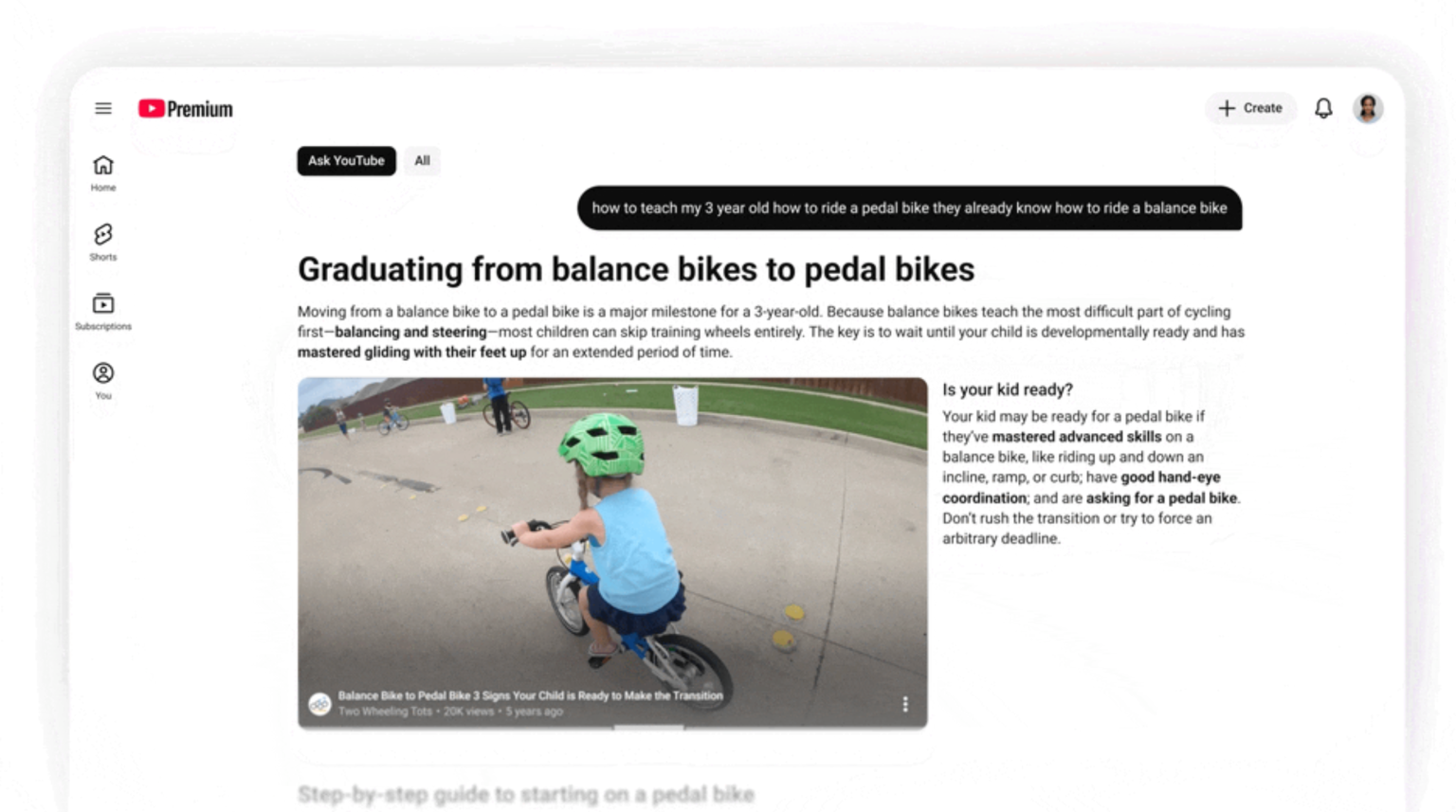
According to YouTube, users can make more complex search requests through "Ask YouTube", such as how to teach children to ride a bicycle, reviews of cozy casual games suitable for playing before going to bed, etc. The system will not only match from a large amount of content, but also support questioning-style continuous dialogue to continuously refine the search results. When generating answers, the feature combines long-form and short video content on the YouTube platform to give an aggregated response. Currently, this feature is first available to paid YouTube Premium users on the desktop in the United States. Users can experience it through the "New Feature Trial" entrance provided by YouTube.
In addition to the search upgrade, YouTube also announced that it will integrate Google’s latest AI video model Gemini Omni in the Shorts Remix and YouTube Create applications. Officials said that through Gemini Omni's "secondary hybrid editing", users can create more easily based on other people's content and achieve a more coherent narrative. The model will take on more behind-the-scenes work in understanding the user's creative intentions and making complex video and audio adjustments. YouTube said in a press release that this approach provides users with "a more consistent and meaningful storytelling experience" for their secondary creations on the platform.
In contrast, when companies such as Meta and OpenAI promote AI-generated short video products, market feedback is not always positive. Sora, OpenAI’s previously launched AI-generated short video social app where users could post and share AI-generated clips, has ceased operations. The report pointed out that unlike these more "frontal hard push" product paths, YouTube's current integration method of Gemini Omni is more "backend support" in terms of interface and interaction, and does not place the AI function too conspicuously at the forefront.

In terms of content safety and creator rights, YouTube also announced that it will expand the coverage of its "Portrait Similarity Detection" tool and make the tool available to creators over 18 years old. This tool is designed to help creators identify if they have been “deepfake” or misrepresented by others in AI-generated videos. If a creator finds AI content that is highly similar to their own likeness and is misleading or suspected of infringement, they can submit a request through this tool and ask the platform to remove the relevant video. However, since this function is still in the further promotion stage, its actual recognition effect and execution strength remain to be seen.
Overall, from the conversational search of "Ask YouTube" to the creation of Shorts driven by Gemini Omni, to the expansion of anti-deepfake tools, YouTube is trying to simultaneously introduce generative AI in search experience, creation tools and security mechanisms to find a new balance between content ecological upgrades and user trust.