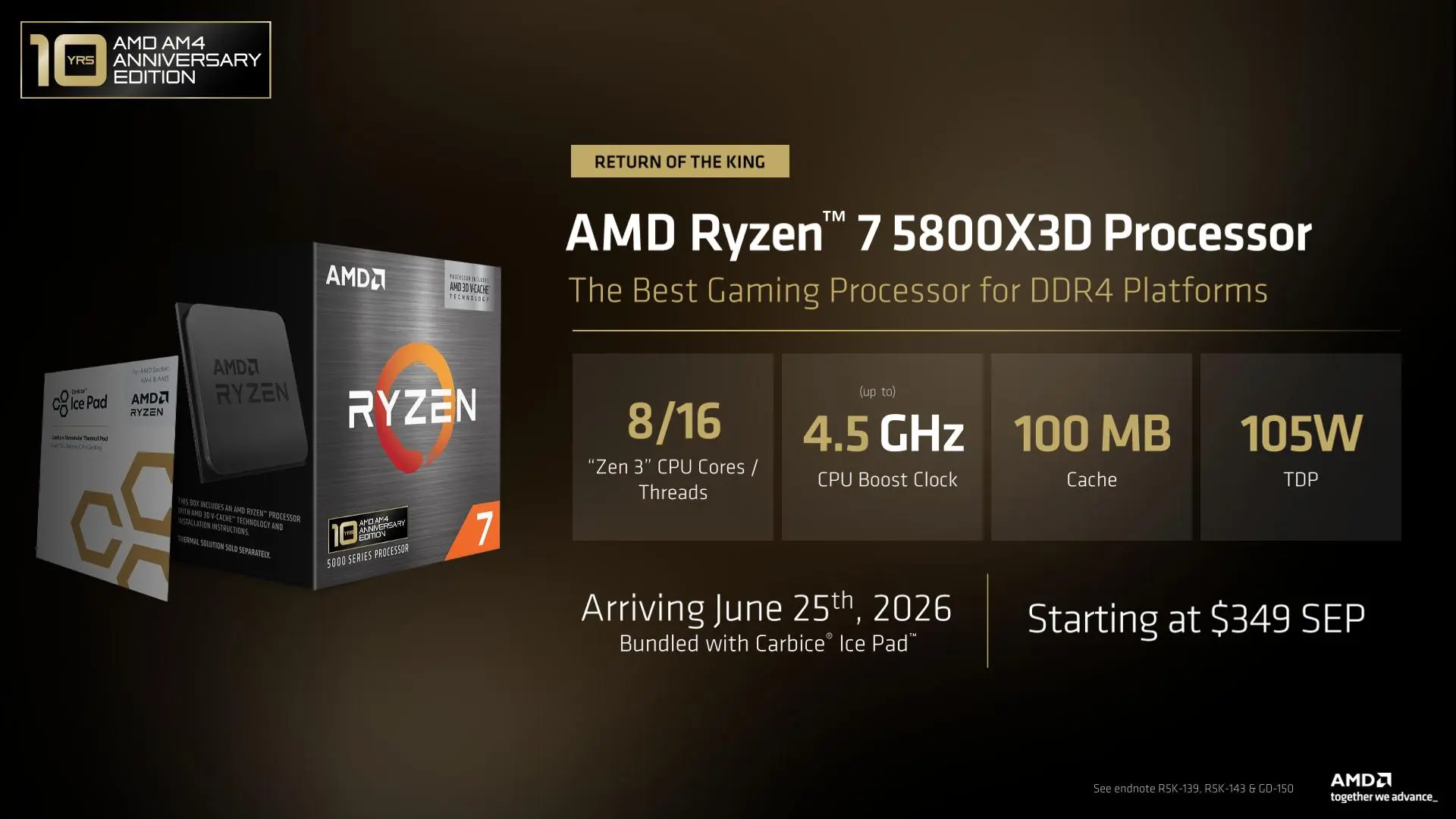
At the Computex 2026 conference in Taipei, AMD announced the launch of two new 3D V-Cache game processors for desktop platforms, the Ryzen 7 5800X3D 10th Anniversary Edition supporting the AM4 interface, and the Ryzen 7 7700X3D for the AM5 interface, further enriching its X3D series product line. The company has just brought the 9965X3D and 9755X3D to professional office and workstation users, and now it is once again turning its focus back to the gamer market.
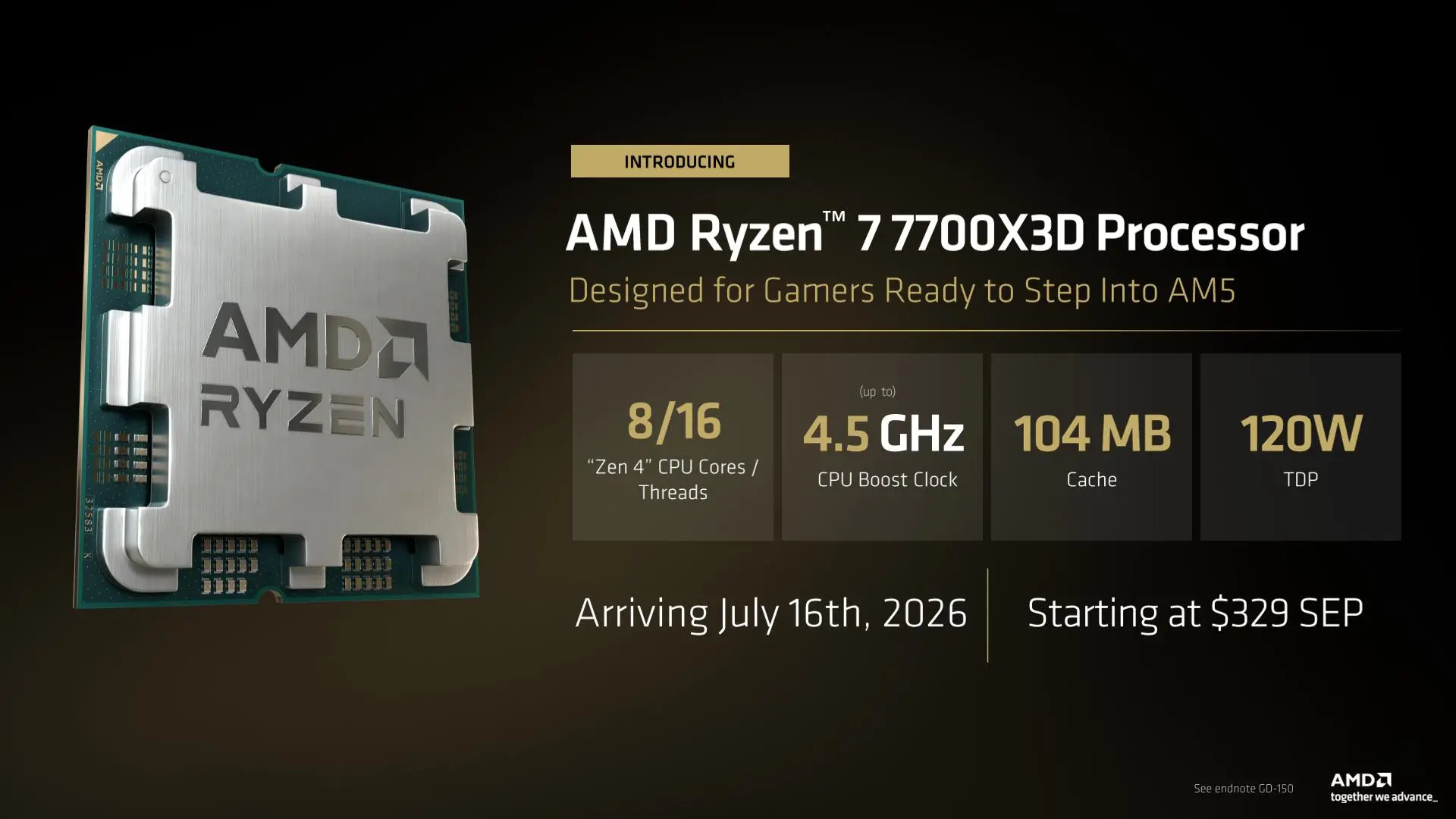
Ryzen 7 7700X3D belongs to the Ryzen 7000 (Raphael) series based on the Zen 4 microarchitecture. It is an 8-core, 16-thread desktop processor, positioned under the Ryzen 7 7800X3D, which has been widely popular among gamers. In terms of specifications, the two are consistent in core, cache and 3D V-Cache stacking methods. The main difference is reflected in the frequency: the 7800X3D has a base frequency of 4.2GHz and a maximum acceleration of 5.0GHz, while the 7700X3D has a base frequency of 4.0GHz and a maximum acceleration frequency of 4.5GHz. The default TDP is 120W.
Officially provided parameters show that the 7700X3D is still equipped with a 96MB large-capacity third-level cache (L3), paired with a 512KB first-level cache (L1) and an 8MB second-level cache (L2). It uses TSMC’s 5nm FinFET process core and 6nm I/O chip, and continues to use the AM5 slot platform. In terms of memory, the processor supports dual-channel DDR5 with a maximum capacity of 128GB. In the configuration of 2 single-sided memories (2×1R) and 2 double-sided memories (2×2R), the official nominal support is up to DDR5-5200. In the configuration of 4 single/double-sided memories (4×1R, 4×2R), it is DDR5-3600.
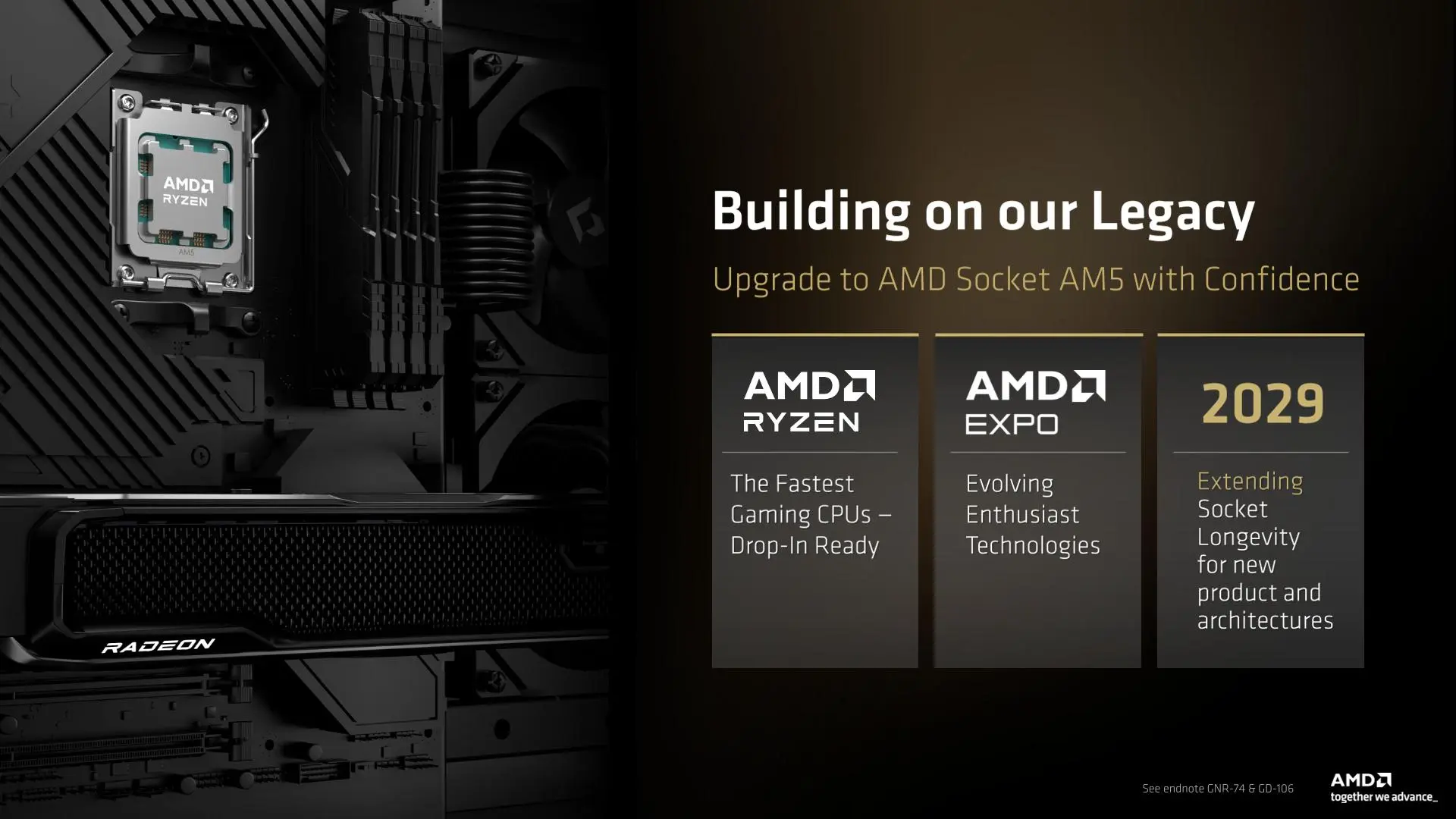
AMD emphasized that although pairing Ryzen processors with high-frequency, low-timing DDR5 memory is still a recommended solution to improve performance, for X3D processors equipped with 3D V-Cache, thanks to the large-capacity third-level cache stacked on the package, the local data hit rate is significantly improved. Even if the memory frequency is not the limit, it can still achieve excellent performance in game scenarios. Previously, AMD also specially launched EXPO ULL (ultra-low latency) technology to further optimize DDR5 memory latency performance on the Ryzen platform.
Another new product, the Ryzen 7 5800X3D 10th Anniversary Edition, is AMD’s tribute to the tenth anniversary of the AM4 socket. Although the 5800X3D debuted less than a decade ago (originally in 2022), the longevity of the AM4 socket's lifespan since its launch is extremely rare on a desktop platform, in stark contrast to rival Intel's tendency to maintain a socket generation standard for only two to four years. Leveraging AM4's long lifespan, users can gain continued performance improvements by upgrading the processor without replacing the entire platform.
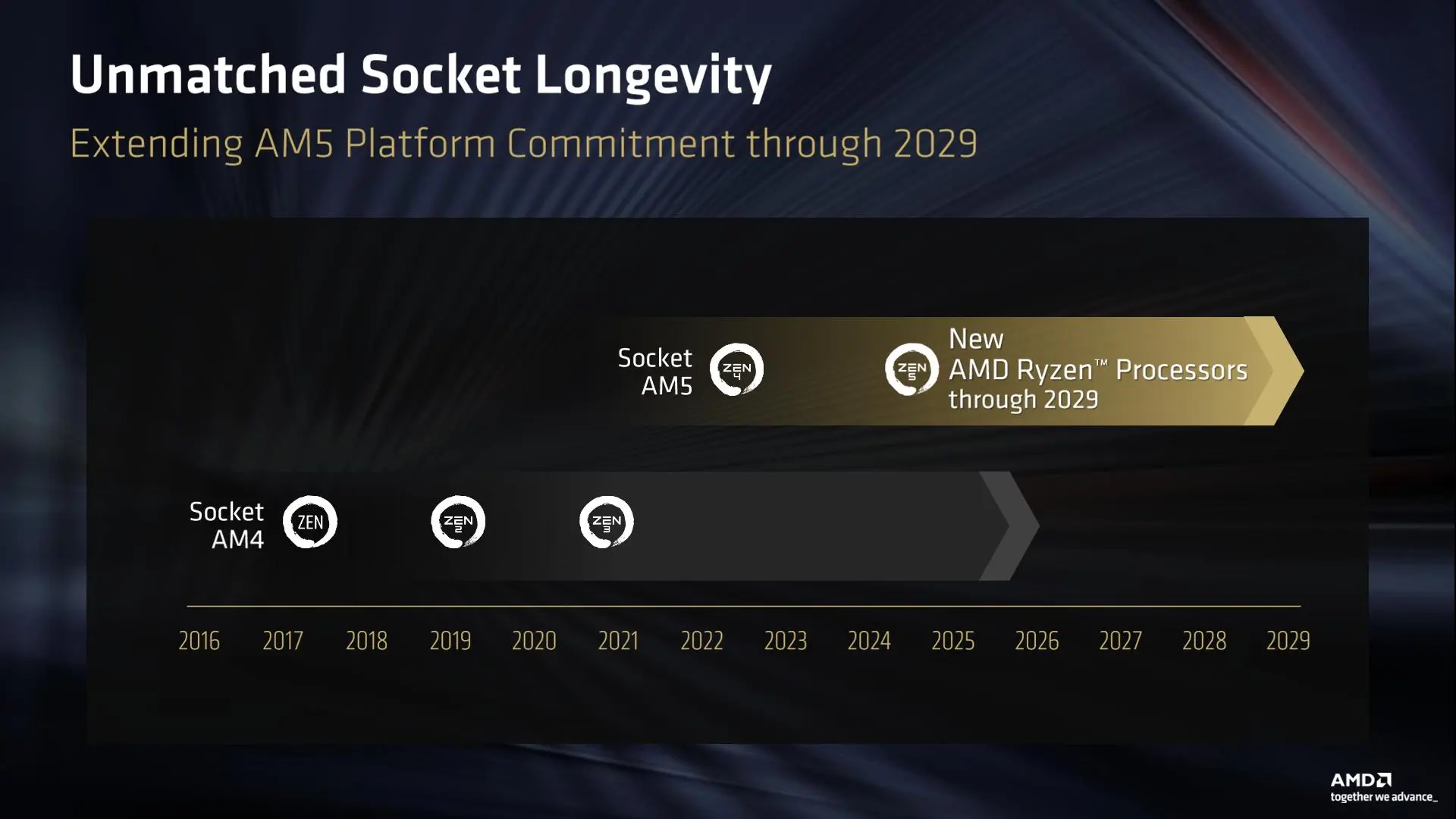
On the AM4 platform, AMD has previously launched Ryzen 7 5700X3D, Ryzen 5 5500X3D and other new products with 3D V-Cache to extend the competitiveness of the entire platform. The Ryzen 7 5800X3D 10th Anniversary Edition unveiled this time is exactly the same as the original version in terms of specifications. It is still an 8-core 16-thread design, equipped with the same size cache and the same frequency setting. Therefore, the performance is expected to be the same as the original version, which is more reflected in the commemorative significance in packaging and market positioning.
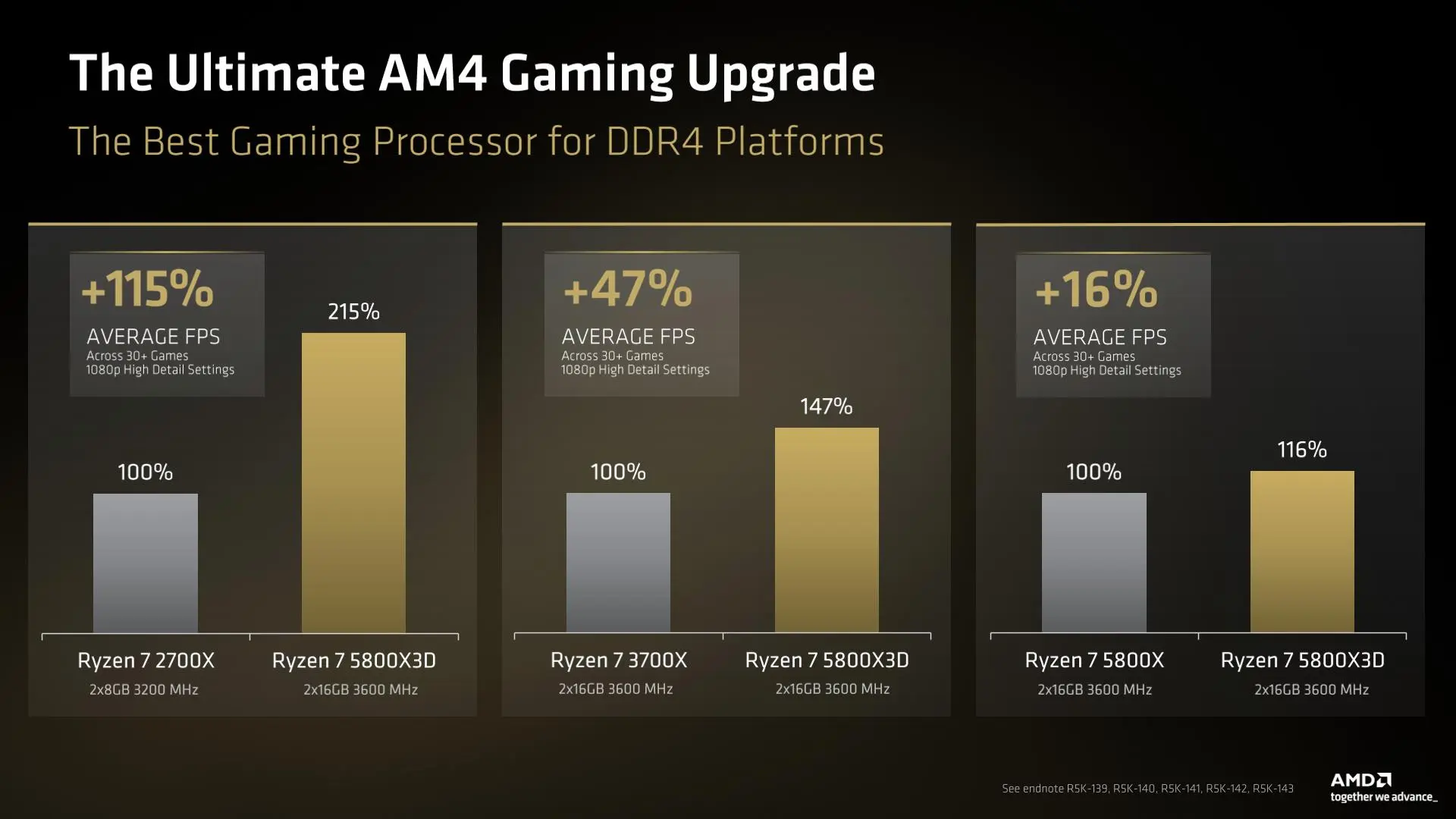
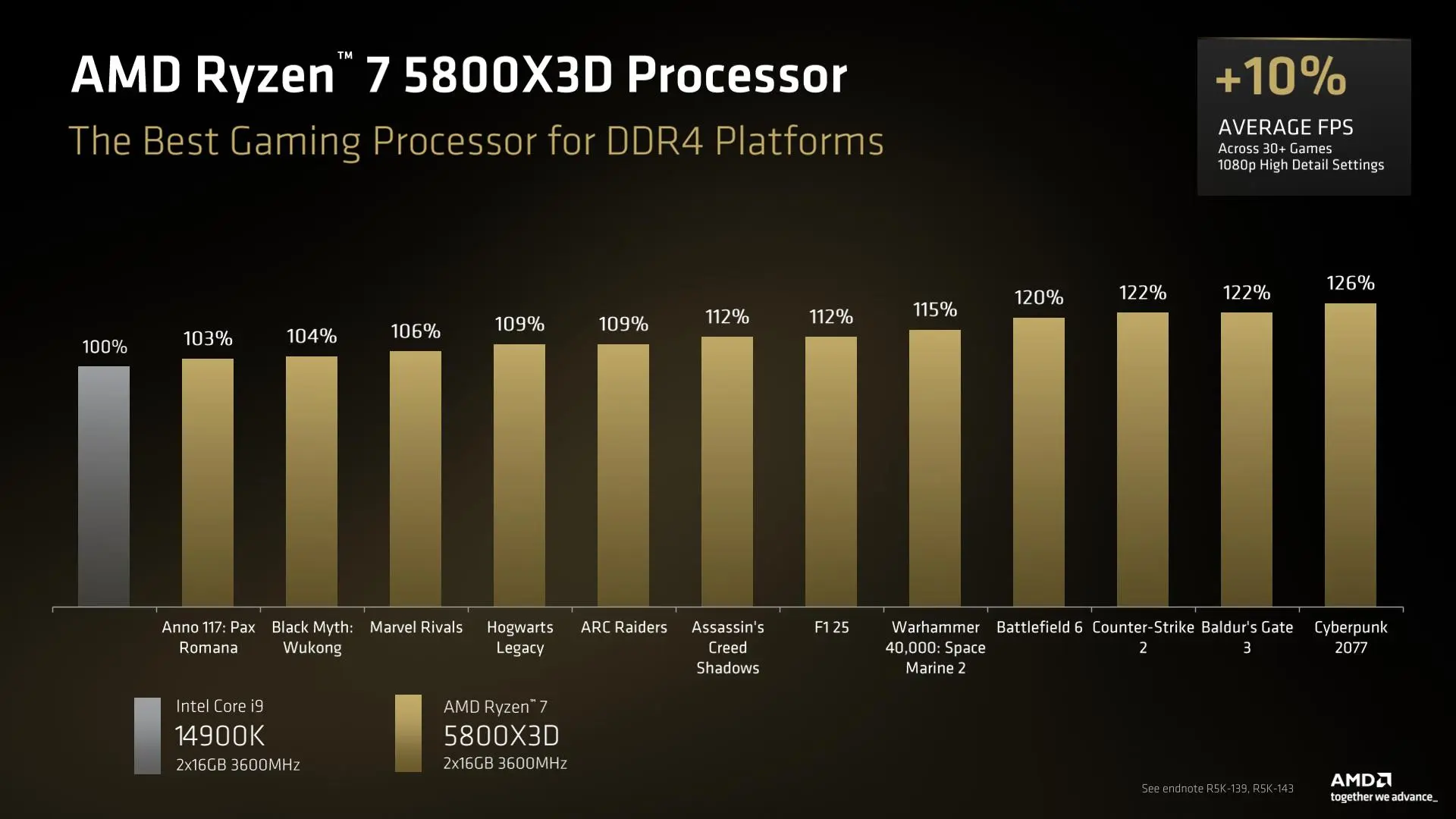
At the press conference, AMD also demonstrated the performance data of the 5800X3D compared to multiple generations of Ryzen processors and Intel platforms. Among them, the official selected Ryzen 7 2700X (Zen+), 3700X (Zen 2) and 5800X (Zen 3) without 3D V-Cache as a comparison, showing that under loads such as games, the additional third-level cache brought by 3D V-Cache can bring significant performance advantages. In addition, AMD also announced comparison data with Intel Core i9-14900K. Both tests used DDR4-3600 memory configurations. However, it should be pointed out that the Raptor Lake generation Intel 14900K also supports higher frequency DDR5 memory. When building the actual platform, memory selection and configuration will still have a considerable impact on the overall performance.
In terms of pricing, AMD has made a much-discussed arrangement: the suggested e-commerce selling price (SEP) of the Ryzen 7 7700X3D, which is more advanced and targeted at the new generation AM5 platform, is US$329, which is lower than the 5800X3D 10th Anniversary Edition of the AM4 platform, which is officially priced at US$349. This means that, as long as the budget is close, for users who are preparing to install a new or significantly upgrade the platform, the AM5 solution is very attractive in terms of price and forward-looking, and for users who hold a mature AM4 platform and want to tap into the platform margin without replacing the motherboard, they can get a high-end game processor with still strong performance through the 5800X3D 10th Anniversary Edition.
In terms of launch time, AMD said that the Ryzen 7 5800X3D 10th Anniversary Edition will be available in retail channels from June 25, 2026, while the Ryzen 7 7700X3D is scheduled to hit the market on July 16 of the same year.