In the context of Nvidia basically withdrawing from the Chinese market due to regulatory and geopolitical factors, Huawei has captured about 60% of China's local AI chip market share, but this advantage comes more from the absence of competitors than from technological differences. Facing the global market, Huawei's AI chips currently lack sufficient differentiation and have limited penetration. How to form a "long board" in technology has become a top priority. The latest news shows that Huawei is trying to create new competitiveness for its own AI chips by accelerating the adoption of next-generation glass substrate technology and thereby rewrite the existing landscape.
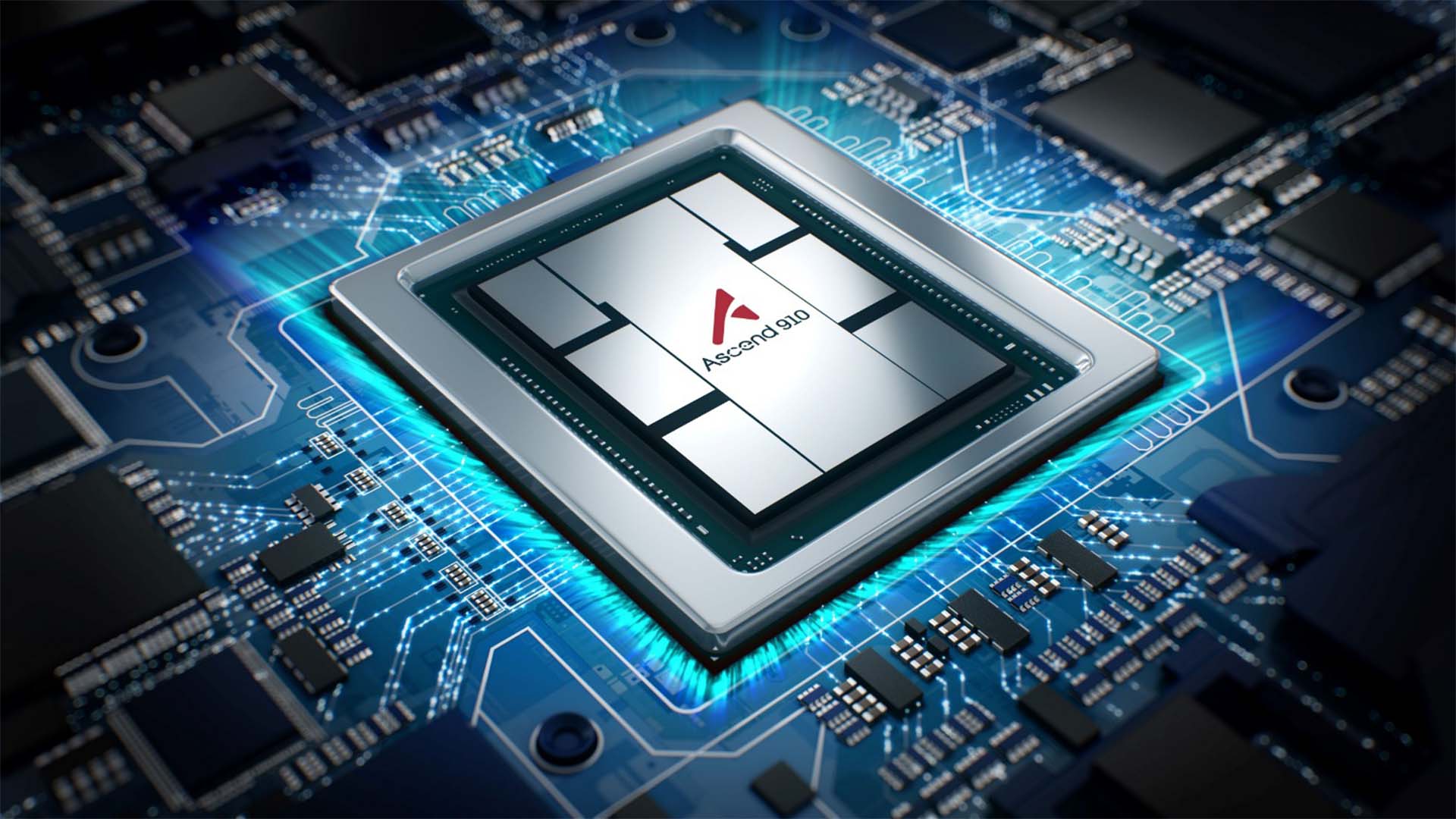
According to Korean media ETNews, Huawei has cooperated with the domestic supply chain to plan a roadmap for mass production of glass substrates, with the goal of achieving large-scale mass production in 2027. Supply chain companies participating in this plan include local manufacturers such as BOE and Visionox. At the same time, Huawei will also import some key materials from Korean suppliers to ensure process maturity and supply stability. If this timetable proceeds smoothly, Huawei will be about a year ahead of its Korean rivals such as Samsung at the glass substrate mass production node - the latter is not expected to start a similar mass production process until 2028.
From a technical perspective, the introduction of glass substrates is expected to become the main differentiation point for Huawei's AI chips. Compared with traditional organic packaging substrates, glass substrates have extremely high flatness, which is conducive to achieving higher-density three-dimensional stacked packaging. At the same time, they are less likely to warp under high-temperature processes, thereby improving yield rates. In addition, the insulating properties of the glass material itself help reduce current leakage, improve power consumption performance, and support higher data transmission rates, bringing stronger computing power support to large-scale parameter models.
In the reality of long-term limitations of EUV lithography machines, Huawei apparently regards glass substrates as an economical solution to "detour improvement" and makes up for process disadvantages through advanced packaging and substrate innovation. By improving computing power density and energy efficiency, Huawei hopes that its AI chips will have more competitive performance indicators in high-load scenarios such as training and inference of large language models. Once advantages are formed at the packaging and system levels, combined with cost control strategies, Huawei will have the opportunity to expand its presence in the data center and cloud service markets outside of China.
However, even if the technical roadmap is clear, Huawei's overseas expansion will still face a series of practical obstacles such as U.S. sanctions. Trade controls may restrict Huawei's direct sales in some key markets and may also affect the depth of its cooperation with overseas supply chains and customers. In order to break through these constraints, Huawei is believed to adopt a more aggressive pricing strategy to attract AI customers who are highly sensitive to energy consumption and TCO to try its solutions with higher computing power density, lower power consumption and competitive overall costs.
While global data centers are currently expanding their AI computing power, they are also paying more and more attention to the issue of energy consumption, and are actively looking for hardware and packaging forms that can reduce power consumption with the same computing power. The market has shown a tendency to migrate to new module forms such as SOCAMM2, which integrate higher-speed and lower-power LPDDR5X DRAM chips to reduce overall energy consumption and increase bandwidth. Against this industrial background, if Huawei can use glass substrates to further improve energy efficiency and bandwidth, its solution will have the opportunity to meet the data center's demand for both "high performance and low power consumption."
Overall, Huawei's existing advantage in China's AI chip market is based on its status as a substitute rather than its absolute technological leadership. The international market is still dominated by Nvidia. By betting on advanced packaging routes such as glass substrates, Huawei is trying to find a new approach in a process-constrained environment, exchanging packaging and system design innovations for performance and energy efficiency advantages. At present, there is still some time before its planned mass production node of glass substrates in 2027. Whether the industrial chain can be ready as scheduled and whether the sanctions environment is eased will determine whether this differentiated path can truly bring Huawei a comeback opportunity.