Microsoft released a new generation of topological quantum chip Majorana 2. The company announced last year that it had made a key breakthrough in its first topological quantum processor Majorana 1, but the relevant claims immediately triggered doubts and debates in the physics community. The Majorana 2 unveiled this time is regarded as the next stage of the roadmap. Microsoft said it has made major upgrades in both the material system and device structure to improve the stability and lifespan of qubits.
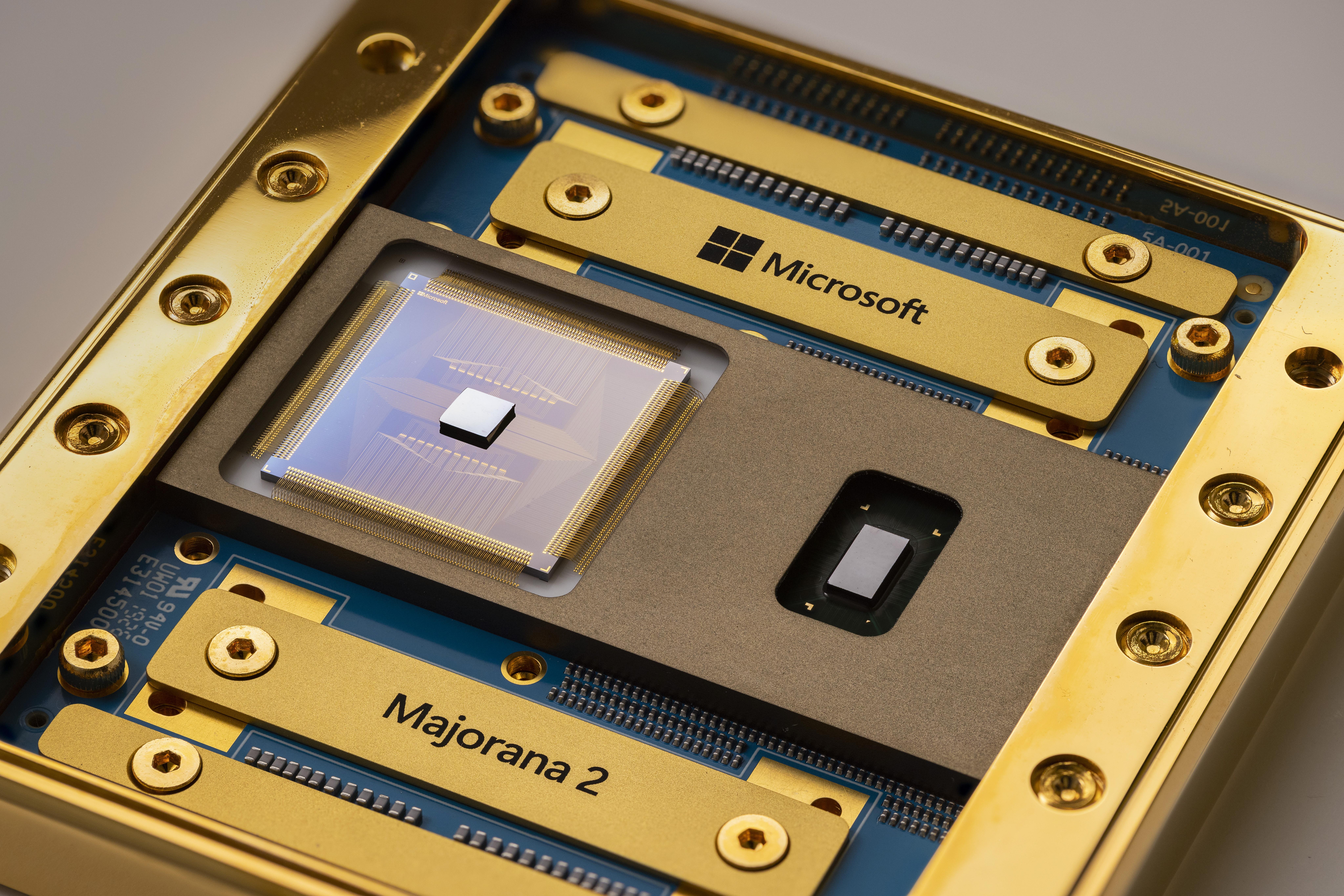
The basic information unit in quantum computing is a qubit, which is similar to a binary bit in a classical computer, but can be in multiple superposition states at the same time. In theory, it can greatly improve the efficiency of certain types of computing tasks. Microsoft said that the reliability of the qubits in Majorana 2 has been improved by about 1,000 times compared with the previous generation. This indicator is considered one of the key thresholds towards scalable and practical quantum computing.
Chetan Nayak, technical fellow and corporate vice president of Microsoft's Quantum Hardware Division, said that in order to create Majorana 2, the team reconstructed the material stack used in Majorana 1 with the goal of obtaining a more stable topological phase in the device. In the new generation of chips, the aluminum superconducting material used in Majorana 1 was replaced by lead, and the semiconductor active area was upgraded to a combination of indium arsenide and indium arsenide antimonide to improve overall quantum performance.
After the material system was updated, qubit lifetime became one of the key data displayed by Microsoft. On the aluminum-based Majorana 1 chip, the qubit lifetime ranges from only 1 to 12 milliseconds; on Majorana 2, the qubit lifetime is stretched to more than 20 seconds, improving stability by more than 1,000 times. Microsoft said some qubits even last longer than a minute, which the company considers to be enough to support the next stage of advancement toward "practical quantum computing."
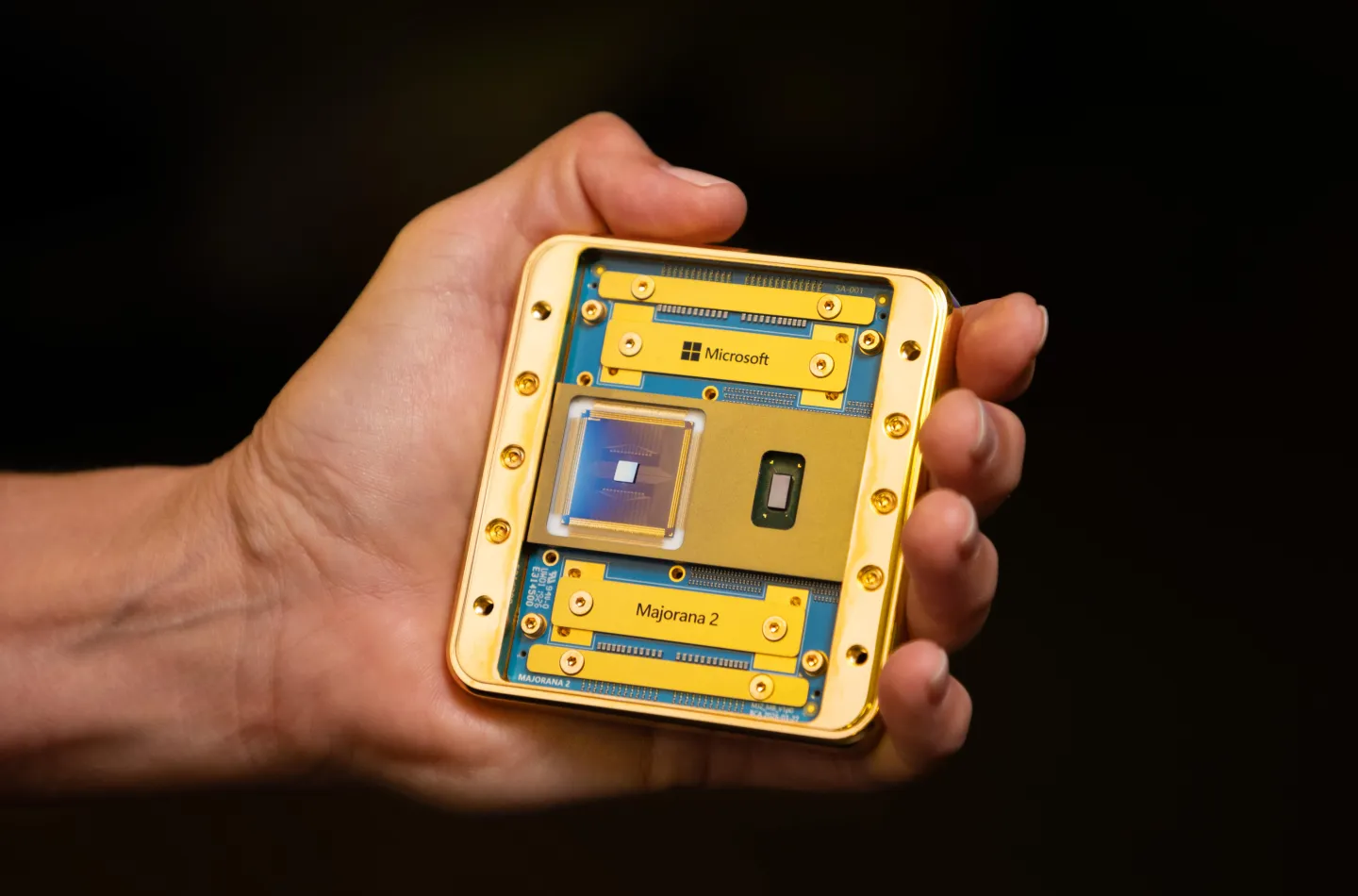
Nayak said that based on this series of "rapid progress", Microsoft is accelerating the overall roadmap for scalable, practical quantum computers and "cutting the target timeline in half." The company currently plans to implement a fault-tolerant prototype quantum computer based on topological qubits by 2029, hoping to overcome some complex problems that are beyond the reach of traditional computers in fields such as chemistry, materials, and climate.
It is worth noting that Microsoft has also opened up the Discovery application used internally during the development of the Majorana chip to the outside world for the first time. According to the official introduction, this tool is used to introduce "agent-style" workflow in scientific research and development projects to assist processes such as material design, parameter search, and experimental planning. Currently, Discovery is open to researchers on GitHub, and users can access it through their GitHub Copilot account and integrate it into their own scientific research workflows.