An NVIDIA GeForce RTX 3050 Ti desktop graphics card that has never been officially released has recently been exposed on the Internet, confirming that this "only exists on the notebook side" model actually had a desktop version of the engineering sample card leaked during the Ampere era.
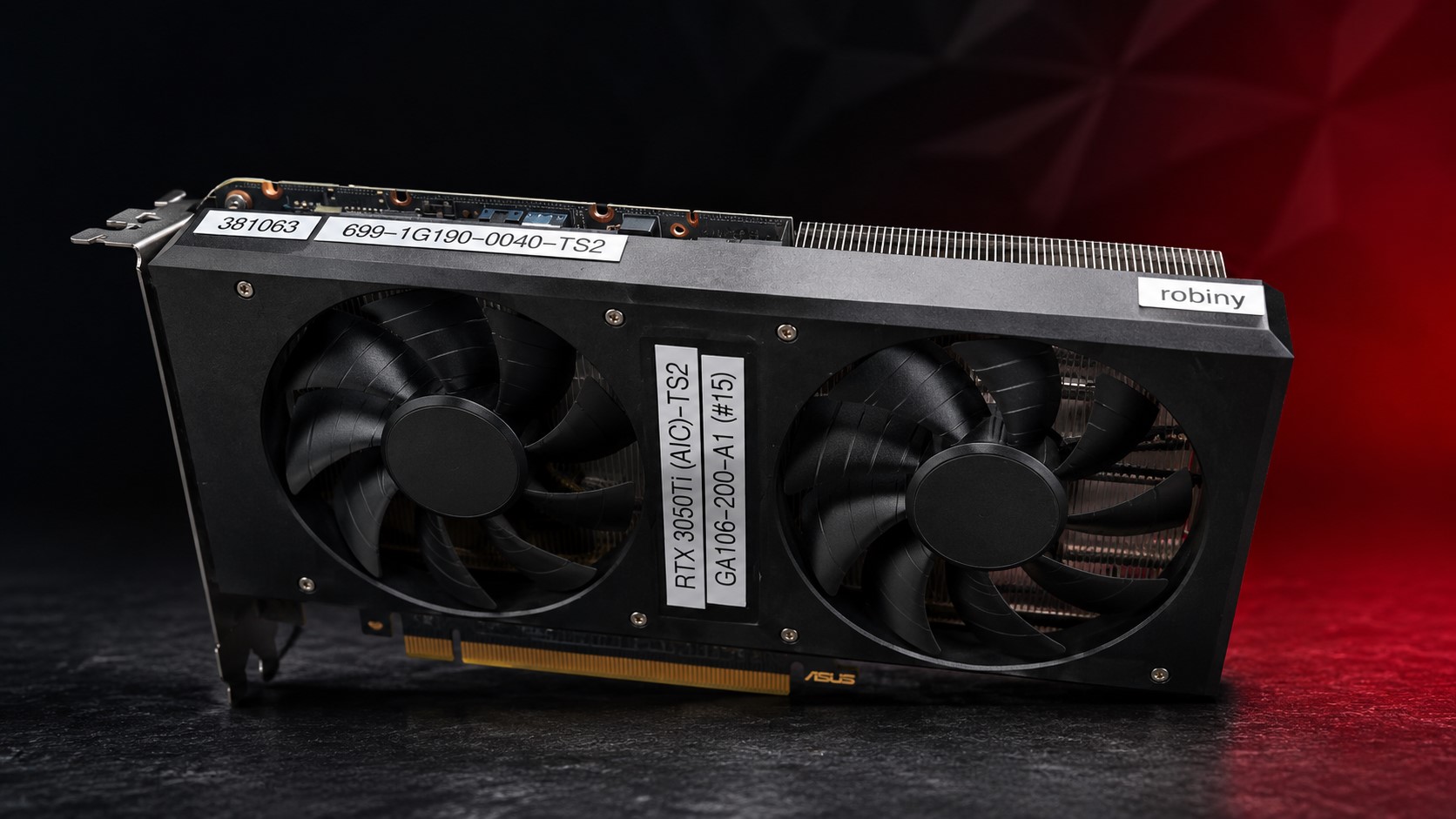
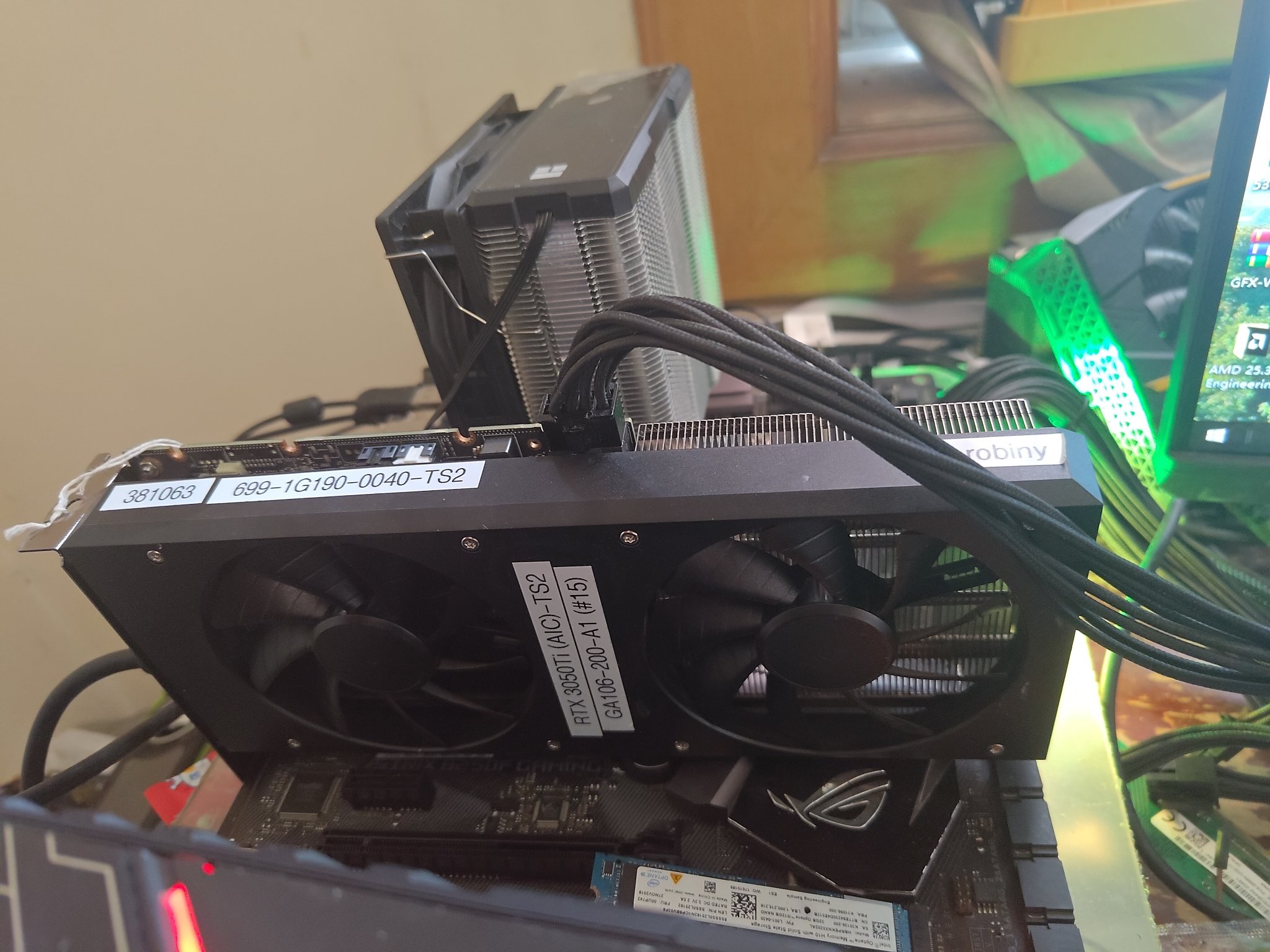
The pictures provided by the exposer @GOKForFree show that this card adopts a dual-fan, dual-slot design, is powered by a single 8-pin power supply interface, and is installed on the ASUS motherboard. The card body has no brand painting and only has a label indicating the specifications. It was revealed that the card comes from a manufacturer called “Robiny”, but this brand had little visibility in the field of graphics cards before.
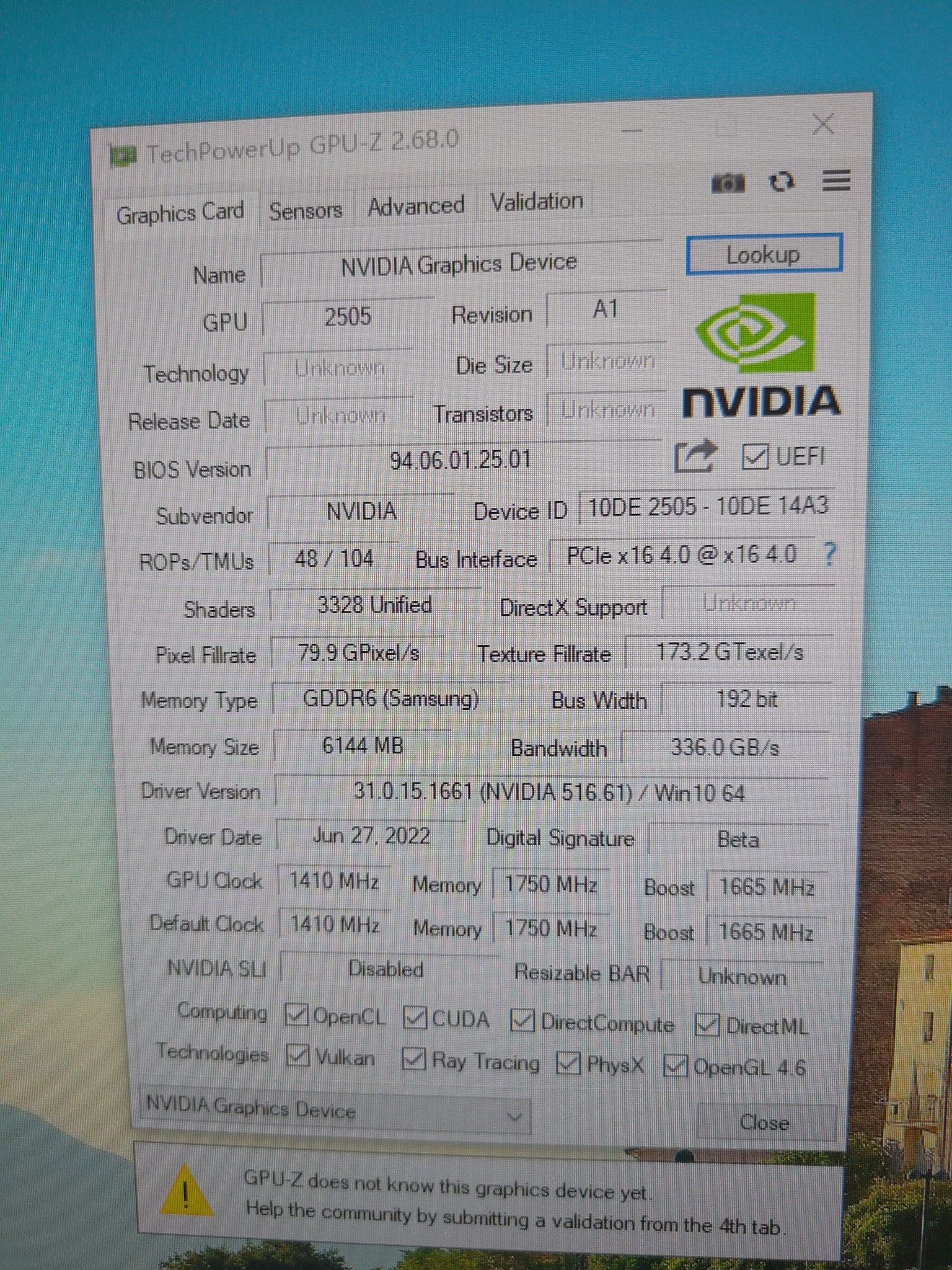
Judging from the label and GPU-Z screenshots, this RTX 3050 Ti desktop GPU is equipped with a GA106-200-A1 core. It uses the same generation of GA106 core as the existing GeForce RTX 3060, but it is a cropped version. The number of CUDA cores is 3328, which is about 7% less than the RTX 3060. The video memory part is equipped with 6GB GDDR6, with a 192-bit bit width, bringing about 336GB/s of video memory bandwidth, which is slightly lower than the RTX 3060 configuration. The report pointed out that the default base frequency of the card is 1410MHz, and the acceleration frequency can reach 1665MHz. However, these frequency information are not official parameters, so they still need to be treated with caution.
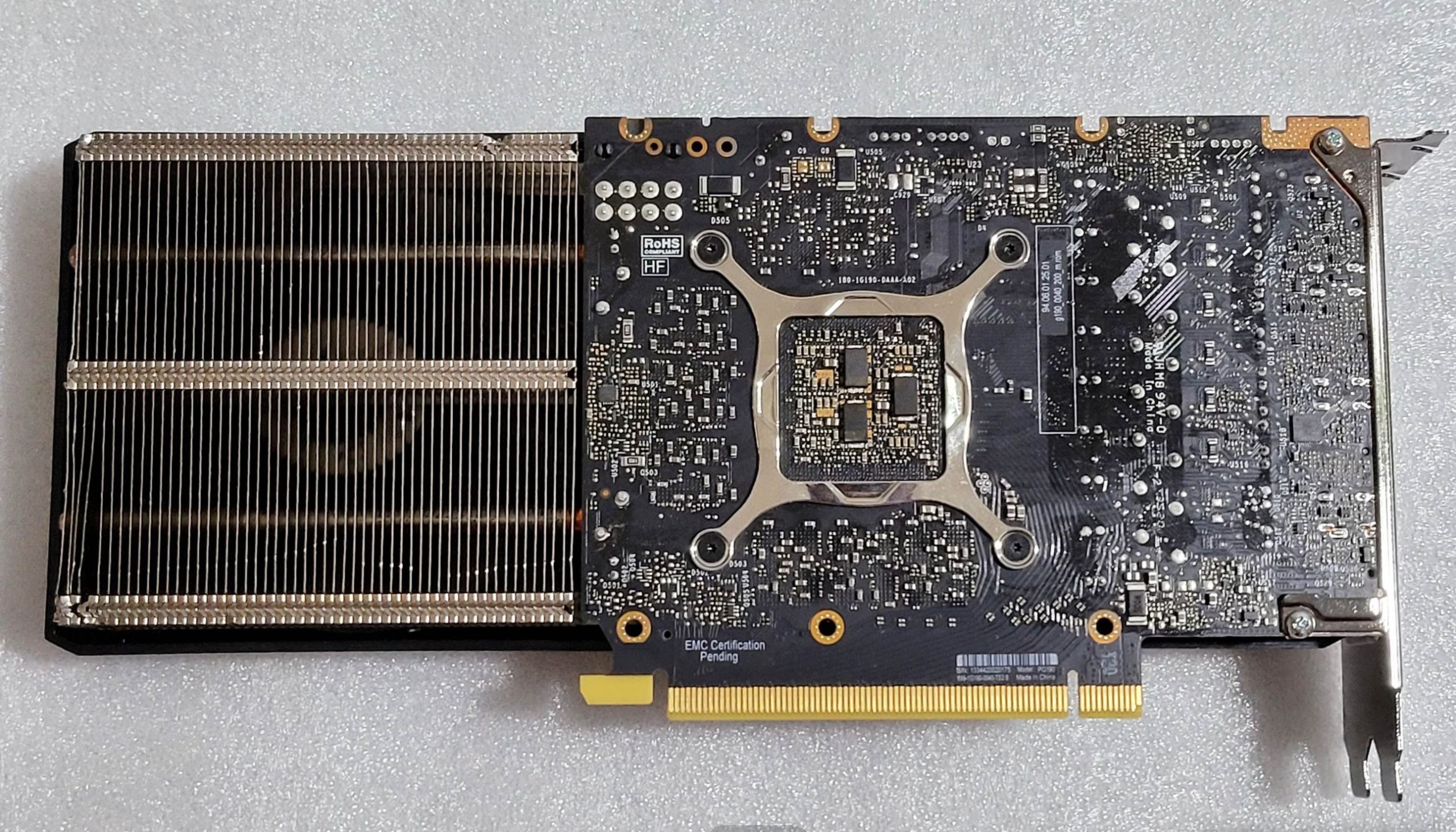
Based on the currently leaked specifications, this desktop version of the RTX 3050 Ti is closer to the RTX 3060 in terms of performance positioning than the currently sold RTX 3050. The desktop version of the RTX 3050 that has been launched uses a significantly cut GA106 core, while the notebook version of the RTX 3050 Ti is based on the smaller GA107 core and is only equipped with 4GB of GDDR6 video memory. Therefore, in theory, this 6GB, GA106 core desktop engineering sample card is significantly stronger than the mobile version of the RTX 3050 Ti in terms of computing power and bandwidth. However, the card's 6GB video memory capacity is already a bit tight in today's gaming and content creation scenarios, and there is currently no evidence that NVIDIA has ever planned a 12GB video memory version of the same series of desktop products.
Although NVIDIA has never officially released the RTX 3050 Ti model in the desktop market, this exposure at least proves that this model does have a desktop version in the product planning stage, but it ultimately stayed in the engineering sample card stage and was not launched for the retail market. NVIDIA has not responded to the strategic choice of entry-level graphics card product lines. The industry speculates that the reasons behind such unmass-produced models may be related to factors such as overlapping product line positioning, cost control, or changes in market demand.