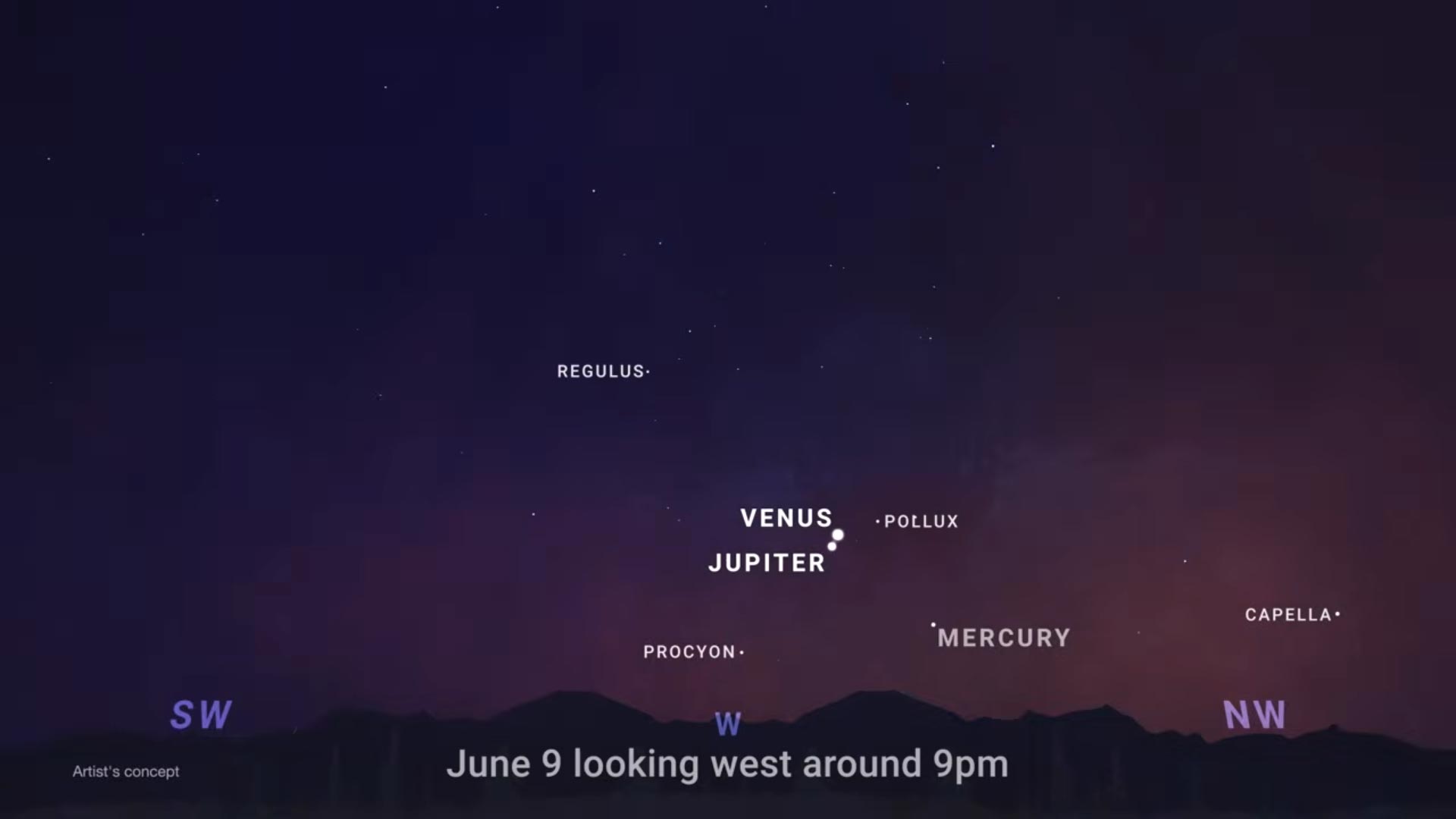
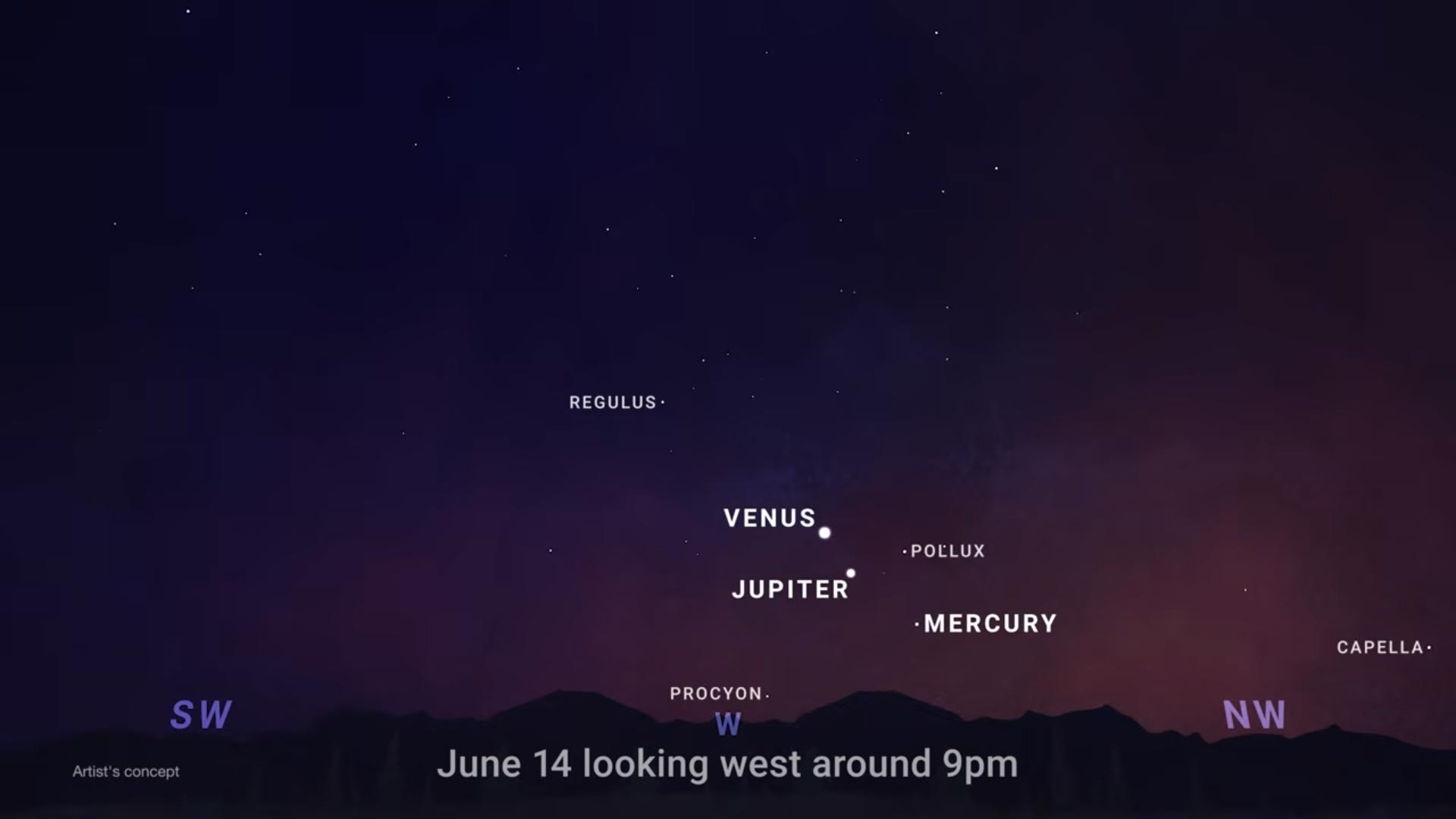
The celestial phenomena in June will be exciting. Venus will briefly "hide" behind the moon, planets will meet at close range, the summer solstice arrives, and deep sky objects return to the night sky, making this month a period not to be missed by stargazing enthusiasts. On June 9, Venus and Jupiter will stage a planetary conjunction in the western sky after sunset. The two brightest planets in the night sky will appear very close to each other. From June 11 to 15, Mercury will also join this evening sky, appearing together with Venus and Jupiter, forming a low-altitude "mini-parade of planets."
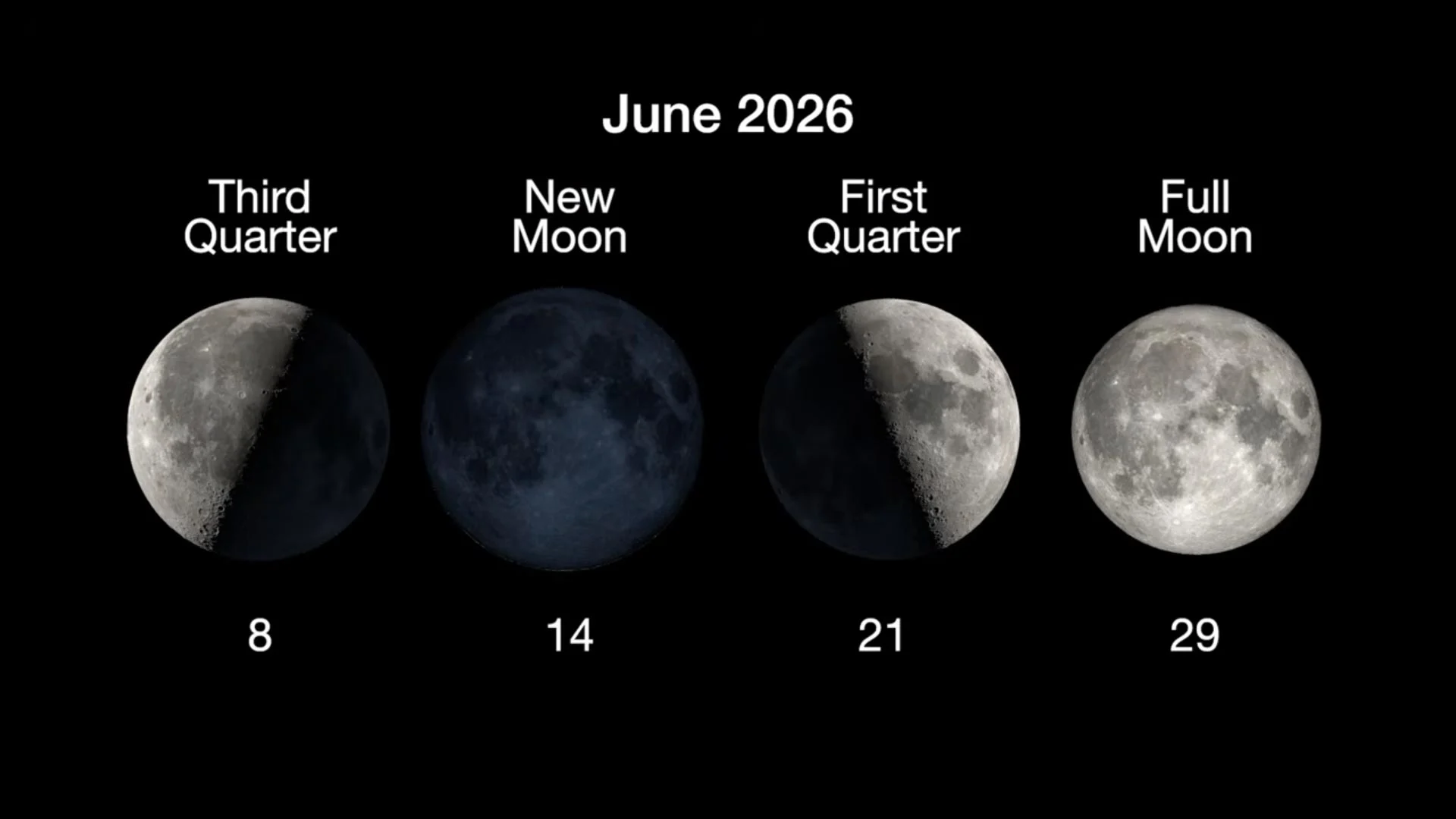
On June 17, observers in some areas will see the moon passing in front of Venus, forming a lunar occultation of Venus; on a suitable observation path, Venus will first be obscured by the moon and then reappear.
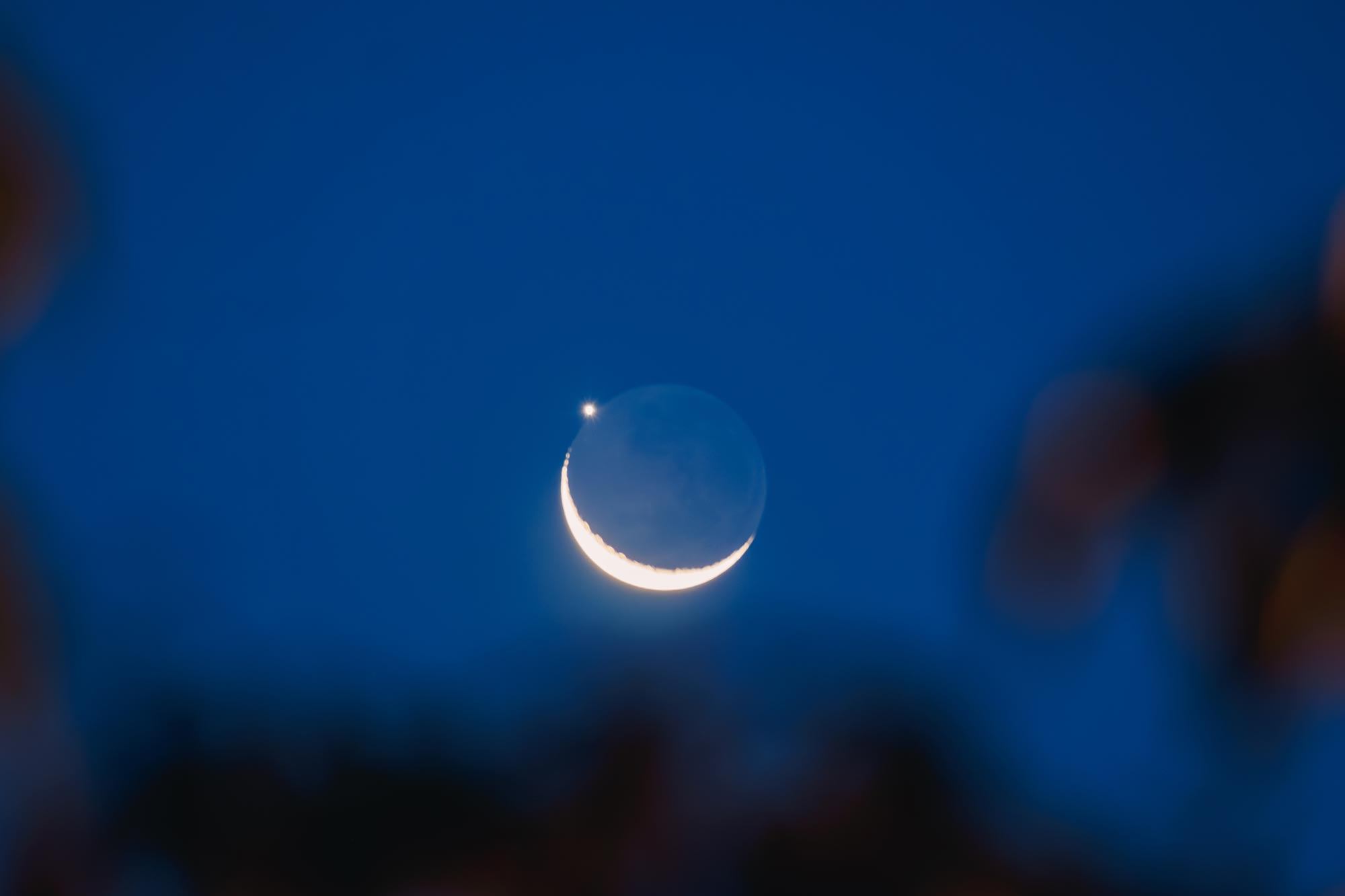
Observers in places such as the United States, Canada, Brazil, and Venezuela have the opportunity to see this process; and in areas that are not on a precise visible path, people may also see the moon and Venus very close.
On June 21, the Northern Hemisphere will usher in the summer solstice, marking the official start of summer in the astronomical sense.
At 1:24 a.m. Pacific time that day, the summer solstice will arrive on time, and the northern hemisphere will also usher in the day with the longest day and shortest night of the year.
However, the longest day usually does not necessarily coincide with the earliest sunrise or latest sunset. For example, the earliest sunrise in Los Angeles will be before the summer solstice, and the latest sunset will occur after the summer solstice.
As the night sky gradually darkens, the Summer Triangle will rise higher, and this area composed of Vega, Altair and Deneb will bring a number of popular deep-sky observation targets.
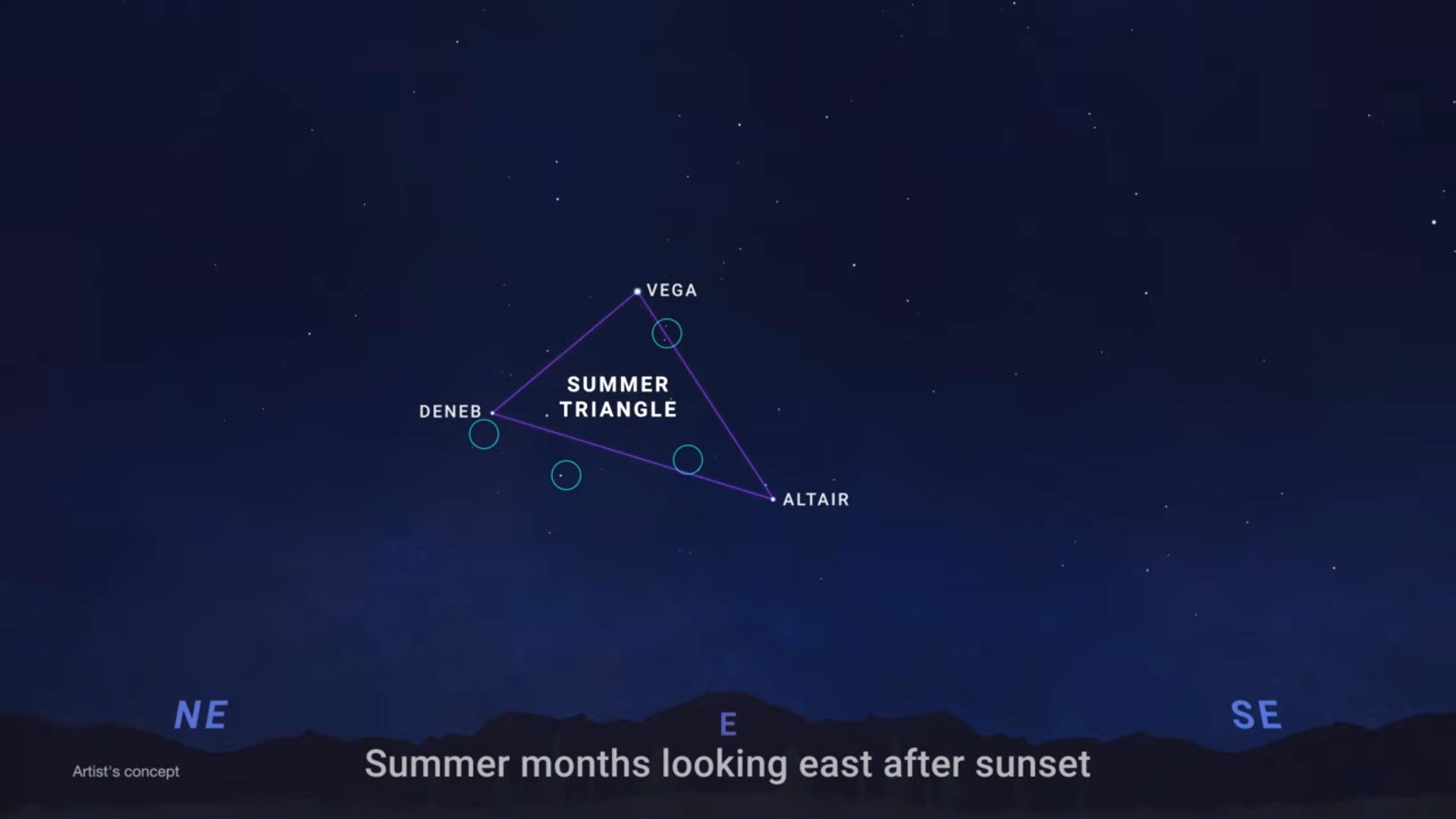
These include the Dumbbell Nebula, the Ring Nebula, the North America Nebula, the Veil Nebula, etc.; the Dumbbell Nebula, also known as Messier 27, is the first planetary nebula discovered by humans. These objects are not as bright as planets to the naked eye, but with the help of telescopes or long-exposure photography, they reveal spectacular details of interstellar gas, dying stars, and star-forming regions.
If you are trying to observe the lunar occultation of Venus or related celestial phenomena, do not use binoculars, telescopes or cameras to aim at the area near the sun. Unless you are equipped with compliant solar observation safety equipment, serious eye injuries may occur.