At this year's Taipei International Computer Show (Computex), a number of memory module manufacturers stated that the much-hyped claim that "CXMT (Changxin Memory) DDR5 is super cheap" is not true. Its actual purchase price is roughly at the same level as the three traditional DRAM suppliers such as Samsung, SK Hynix and Micron. Manufacturers emphasize that the so-called "cheap" is more of a market misunderstanding than a real price advantage.
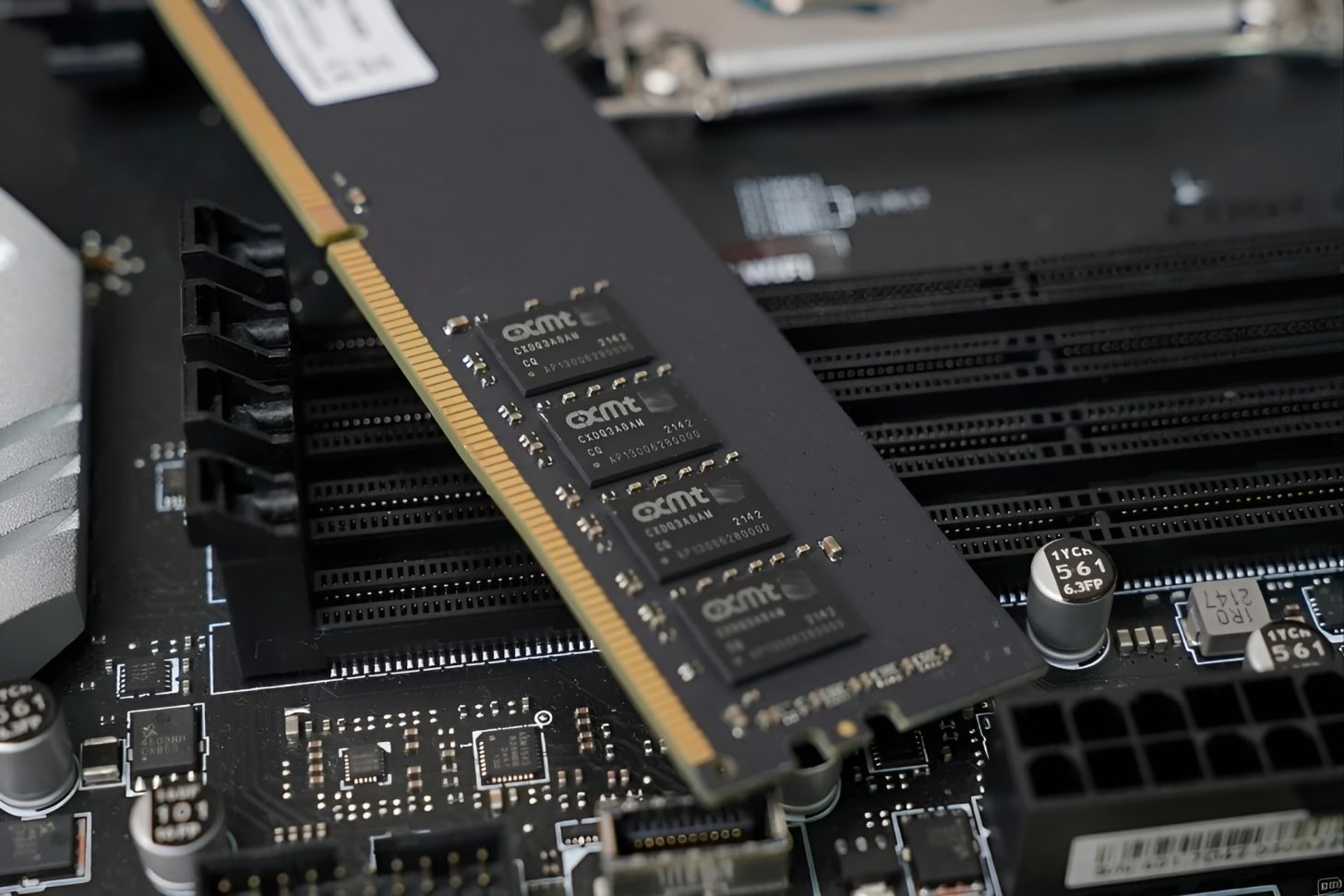
Changxin is regarded as a potential "firefighter" in the client market in the recent DRAM cycle. The company has invested heavily in new factories, plans to double its production capacity, and actively cooperates with global module manufacturers to provide its own DRAM chips to complete machine and memory brands. In an environment where consumer prices continue to rise, many voices believe that new suppliers from China are expected to alleviate the cost pressure faced by PC and DIY users with low prices. However, many memory manufacturers interviewed at the exhibition said that the supply price of Changxin DDR5 is not as low as expected, and is generally similar to that of mainstream international manufacturers.
Compared with traditional giants, Changxin’s real advantage is considered to be “availability” rather than “significantly cheaper”. Currently, manufacturers such as Samsung, SK Hynix and Micron have invested a large amount of production capacity in high-bandwidth memory (HBM) and high-value-added products for the artificial intelligence market (such as specific form of module solutions), which to a certain extent has compressed the conventional DRAM resources available for ordinary PCs and workstations. On the other hand, Changxin is temporarily unable to catch up with these high-end products in terms of process and technical roadmap. Its focus still remains on traditional DRAM, so it can release more standard DDR5 production capacity to the client market.
In terms of product performance, industry insiders believe that although Changxin DDR5 has made rapid progress, it is currently more suitable for entry-level and mainstream memory modules, rather than a flagship solution that pursues extreme overclocking or the highest specifications. The highest data rate of Changxin DDR5 that has been seen at this stage is about 8000 MT/s. At the same time, RDIMM products for servers and workstations have entered the mass production stage. However, in terms of higher-end and more complex modules such as CUDIMM, CQDIMM, MRDIMM and CSODIMM, the company still has a clear gap compared with international leaders, and it is still difficult to cover all high-performance and enterprise-level scenarios.
Several module manufacturers revealed that they are verifying the feasibility of using Changxin DDR5 in their own products, but these chips will currently only be arranged on entry-level or mainstream-level memory modules. Judging from the pace of introduction, new products will be given priority to the Chinese local market, and will be gradually introduced to the global channel system after higher quality grading and more mature yield performance. This means that in the short term, even if international consumers buy memory equipped with Changxin particles, most of them will focus on products with relatively affordable prices and satisfactory specifications.
In terms of business terms, Changxin shows higher flexibility than the three traditional manufacturers, which is one of the reasons why many module and complete machine manufacturers are willing to try. At present, some global DRAM giants require customers in contract supply to pay almost the full cost in advance if they want to lock in additional production capacity. Otherwise, not only may they not get additional orders, but they may also be subject to additional penalties in subsequent batches. In contrast, Changxin does not set similar stringent penalties in its supply agreement. This cooperation model of "same price, but less punitive terms and additional pressure" has attracted a number of memory brands and PC manufacturers who are evaluating diversified supply sources.
Overall, the market's previous expectation that "Changxin DDR5 will impact the world at a low price and comprehensively lower terminal memory prices" may not come true in a short time. Judging from current industry feedback, Changxin has not played a "diving card" on price, but has chosen to align with mainstream prices and expand its influence by stabilizing supply, focusing on the traditional DRAM market, and relatively loose business conditions. On the premise that high-end technology and product forms have not yet caught up, this strategy not only provides PC and module manufacturers with more negotiation and procurement options, but also adds a potential but still growing new player to the increasingly concentrated global memory industry.