San Francisco police are accustomed to calling up surveillance footage from surrounding stores or intersections when investigating burglaries. Now, they thought this case would be easier to solve because they had a self-driving car full of sensors, cameras and trip data. However, even so, there has been no progress in the case.
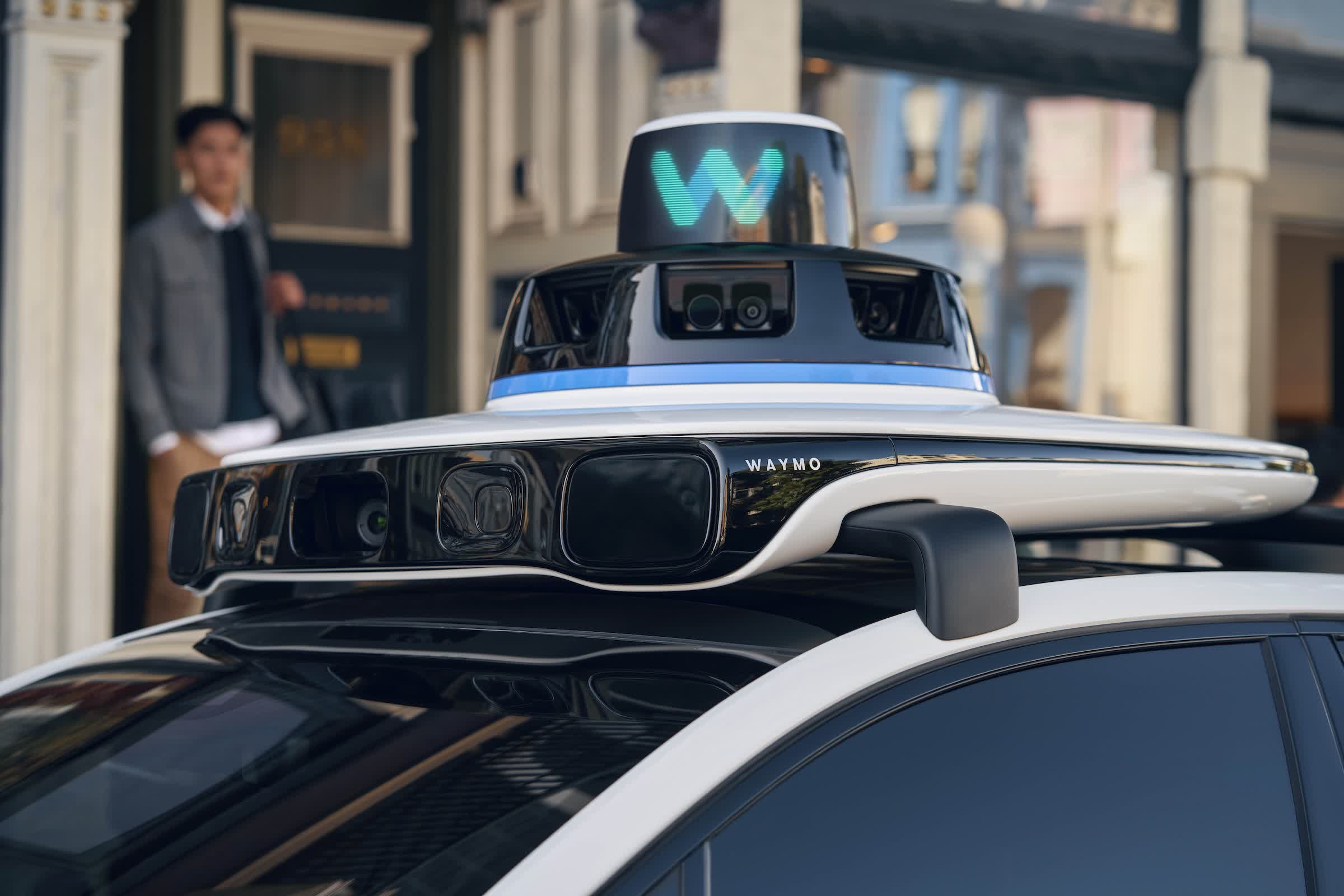
In January this year, a thief broke into the Hot 8 Yoga studio in the Marina District of San Francisco. The crime was carried out very quickly: surveillance footage showed the suspect entering the store, quickly taking away multiple items and leaving within minutes. Outside the store, a Waymo driverless taxi was waiting. The suspect got into the car and the vehicle drove away from the scene automatically. Nearly six months have passed, and the police have still not identified a suspect, nor have they announced any valid suspects.
The theft was notable not because of the value of the items stolen - mainly sportswear - but because of the technical background involved. Waymo's latest Jaguar model is equipped with 29 cameras, which can provide a 360-degree panoramic view, and each trip is bound to a specific user account. For the investigators, this originally seemed to be a relatively "easy to solve" case. Detective Tim Faye, who was in charge of the case, said in an interview with the San Francisco Chronicle that he initially thought it would be easier to solve the case with the help of Waymo vehicles, but that was not the case, and the digital clues quickly "ended up."
Police subsequently applied for a search warrant, requesting information related to the trip, including account details and in-car video. However, the account itself provided no valuable clues. Just like traditional online ride-hailing services, accounts on such platforms can be registered and used by stealing payment information or disposable mobile phone numbers, making it difficult to trace the true identity.
Even more problematic is the lack and limitations of video evidence. By the time police formally obtained a search warrant in April, Waymo had no longer saved the in-car video of the incident. External camera footage is still available, but it also has limitations: Faces captured outside the car have been automatically blurred by the system, which is part of the company's overall privacy protection measures. Faye said that the suspect chose to use Waymo to commit the crime itself is extremely unusual, and what is even more disappointing is that the internal video ultimately failed to help the police identify the suspect.
Waymo has not publicly disclosed the specific length of time it keeps its in-car video data, and declined to comment on the details of the case. The company emphasizes that it will review the legality of the request made by law enforcement agencies and narrow the scope of the request when necessary to protect passenger privacy. Waymo also said it won't use facial recognition or other biometrics.
In recent years, law enforcement has increasingly used connected vehicles as a means of collecting evidence. Taking Tesla as an example, activities around the vehicle may be recorded by cameras, and these images have been used as evidence in multiple investigations. In some cases, police will even tow away vehicles deemed "potential evidence carriers" to prevent records from being overwritten or deleted. However, this Waymo case shows that when privacy protection mechanisms and data retention policies come into play, this evidence collection approach also faces natural boundaries.
Currently, fully autonomous ride-hailing services are still being piloted in only a few cities, so similar cases are rare. A similar incident occurred in Los Angeles last year. A suspect also boarded a Waymo after a robbery, but the police successfully stopped the vehicle by turning on their police lights and were able to control the situation in time. By contrast, the outcome of the San Francisco case appears to be unresolved.
For the yoga studio involved, the incident is now more of an "anecdote" than a real disaster. Store manager Farah Issa said that from the surveillance footage she saw, the amount of the theft was not large. "I thought it was pretty funny," she said. "He just stole a bunch of men's shorts."
While the crime itself is not serious, the incident highlights a broader problem: When self-driving systems are designed to collect a 360-degree view around a vehicle around the clock, but when that data is subsequently filtered, anonymized, or no longer retained, it may actually provide very few clues to an investigation.