According to a well-known whistleblower, Apple's first MacBook equipped with a touch screen is now "100% confirmed" to be in preparation, triggering great attention in the industry to this new form of Mac. The news came from a whistleblower code-named "Snapa Digital" who is often active on Chinese social platforms. He said that the source of the news came from internal channels in the supply chain. This person has been relatively accurate in breaking news about new Apple products in the past, and his statement corroborates recent reports.
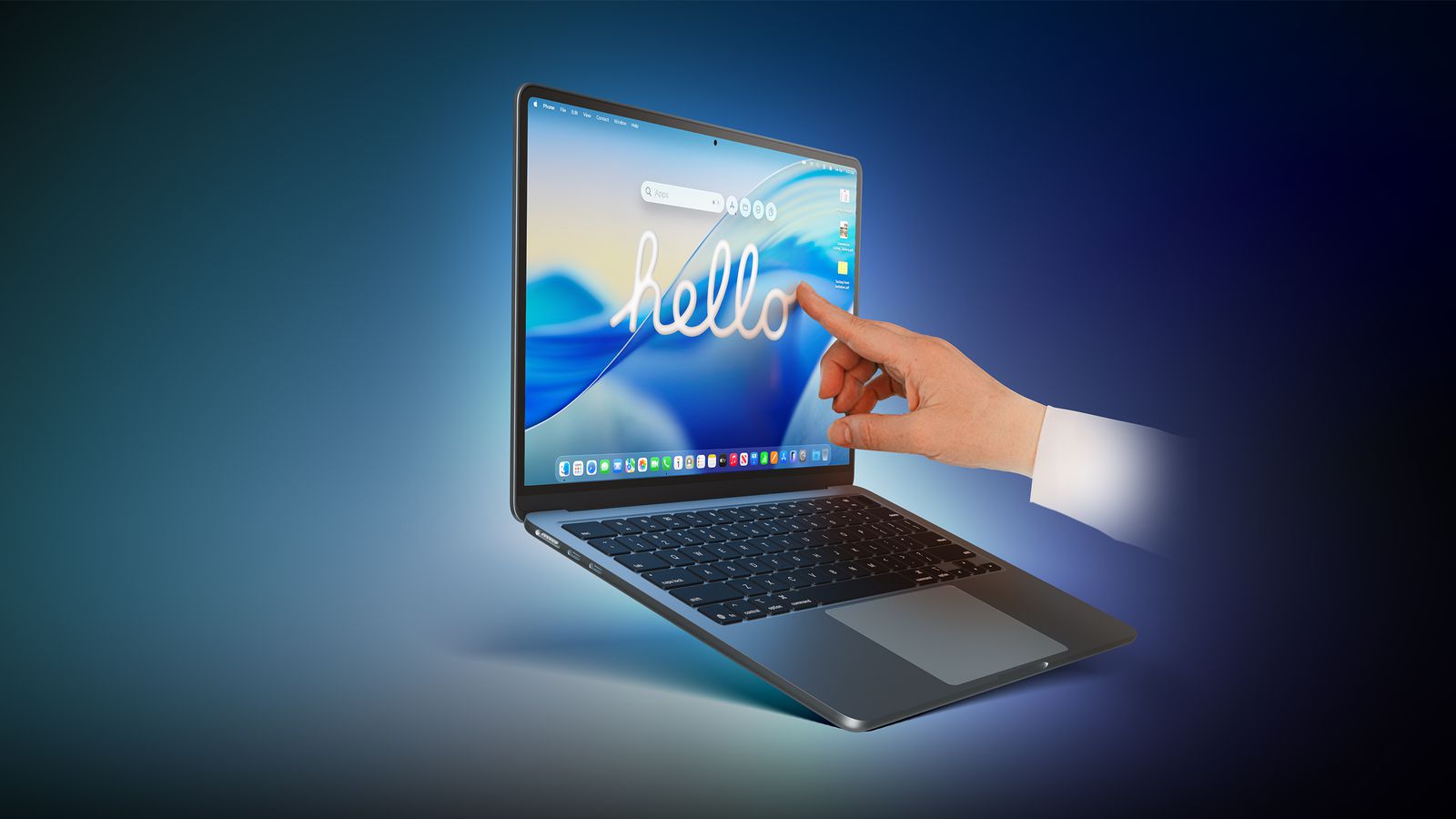
Rumors about Apple developing a touchscreen MacBook have been circulating for several years. As early as January 2023, Bloomberg reporter Mark Gurman reported that Apple planned to launch a MacBook Pro equipped with an OLED display as the first touch-screen Mac product. The initial internal target release time was 2025, but this timetable did not ultimately materialize. As time goes by, reports about touch-enabled MacBooks become more frequent and the wording becomes more certain.
In September 2025, analyst Ming-Chi Kuo said that Apple’s first MacBook Pro equipped with an OLED touch screen is expected to enter mass production in 2026. Gurman has since reiterated many times that the next-generation 14-inch and 16-inch MacBook Pro models will add touch functionality and are expected to be launched between late 2026 and early 2027. Affected by the global shortage of memory chip supply, it is generally believed that the launch time is more likely to be delayed to 2027.
It is widely expected that touch support will be just one of the important upgrades to the new generation of high-end MacBook Pro series. Other rumored major changes include: equipped with M6 Pro and M6 Max chips, the use of OLED display, the elimination of bangs and a design similar to "Smart Island", and a slimmer body. Reports also indicate that this generation of products may use a new “MacBook Ultra” brand name to differentiate it from the existing MacBook product line.
At the same time, macOS 27 “Golden Gate” also begins to pave the way for touch interaction at the system level. In this version, Apple has upgraded the Sidecar function, allowing users to directly tap and operate macOS interface elements on the iPad screen with their fingers when extending or mirroring the Mac desktop through iPad, making the overall system more "touch-friendly." This is also seen as one of the signals that Apple is preparing software for future touch-screen Macs.
However, Apple seems to be cautious internally about the positioning of touch-enabled Macs. According to Gurman, Apple will not build the new MacBook Pro or MacBook Ultra into a "touch-centric" device like the iPad, but will instead follow a "touch-friendly, not touch-first" strategy. In other words, Apple will allow users to freely choose to use touch operations or indirect input with a trackpad and mouse in the same interface and workflow. The two will be functionally equivalent and interchangeable.
It is worth noting that the arrival of touch-screen Macs will represent a major shift in Apple's product philosophy. As early as 2010, Apple co-founder Steve Jobs publicly opposed the use of vertical touch screens on traditional computers, believing that "the touch surface should not be vertical" and that users raising their hands to touch the screen for a long time will cause obvious "arm fatigue." More than a decade later, in 2021, John Ternus, then Apple's senior vice president of hardware engineering and now Apple's CEO successor, also emphasized that the Mac was a product "completely optimized for indirect input," and the company did not see a strong reason to change this thinking at the time.
Against this background, multiple sources now point to the fact that the touch-screen MacBook project is "certain", indicating that Apple's internal views on this direction have changed significantly. With the maturity of OLED display technology, the gradual popularity of hybrid notebook products in the market, and the adjustment of macOS itself at the interaction level, it is generally believed that Apple is redefining the boundary between Mac and iPad. As for whether the first touch-screen MacBook will eventually debut as MacBook Pro or MacBook Ultra, as well as the specific hardware specifications and launch time, Apple still needs to officially announce it in the next one to two years.