SK hynix announced that it has sent samples of its new generation HBM4E high-bandwidth video memory products to major customers, with a single memory capacity of up to 48GB and a data transfer rate of up to 16Gbps, designed to meet the rapidly growing market demand for artificial intelligence chips.
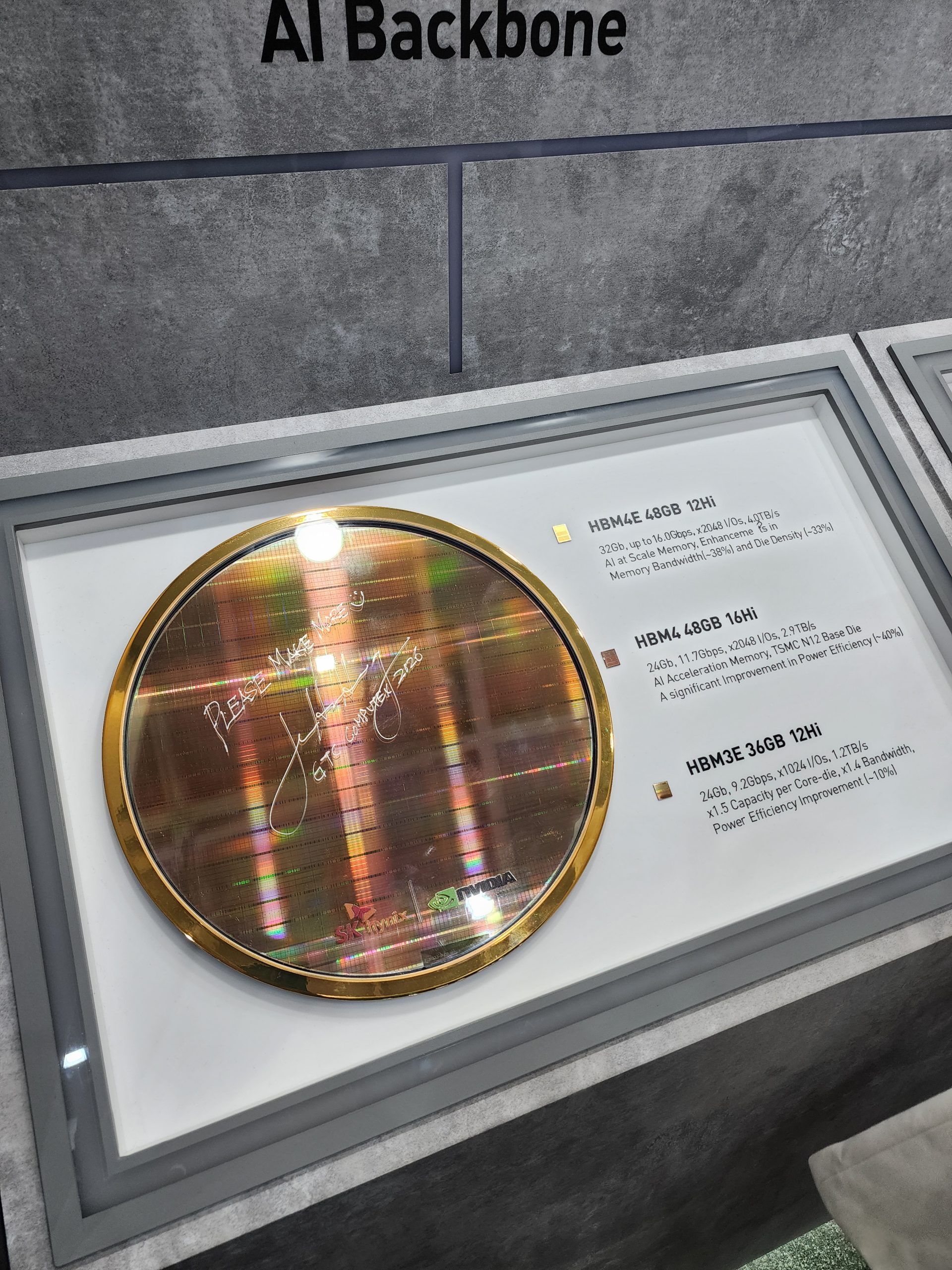
Driven by generative AI and large models, the demand for high-bandwidth memory in global data centers has increased dramatically, forcing DRAM manufacturers to accelerate the development of new-generation products. SK hynix is competing with rival Samsung in terms of sample delivery time for HBM4E, hoping to be the first to provide partners with solutions for the next generation AI data center platform. Reports indicate that these HBM4Es will be mainly targeted at high-end AI acceleration platforms including NVIDIA Rubin Ultra and AMD Instinct MI500, which are regarded as important revenue engines for the future AI server market.
According to reports, SK hynix previewed this generation of HBM4E at Computex 2026 this year, showing key specifications such as up to 48GB, 12-layer stacked packaging, and a single-pin maximum 16Gbps rate. Compared with the previous generation of products, HBM4E has significantly improved performance and energy efficiency, aiming to further alleviate the memory bandwidth bottleneck during AI training and inference. At the same time, Samsung also demonstrated its HBM4E and subsequent HBM5 technology routes during the exhibition, and proposed to improve the stability of high-bandwidth displays in extremely high power consumption scenarios through new heat dissipation path designs such as HPB (Heat Path Block).
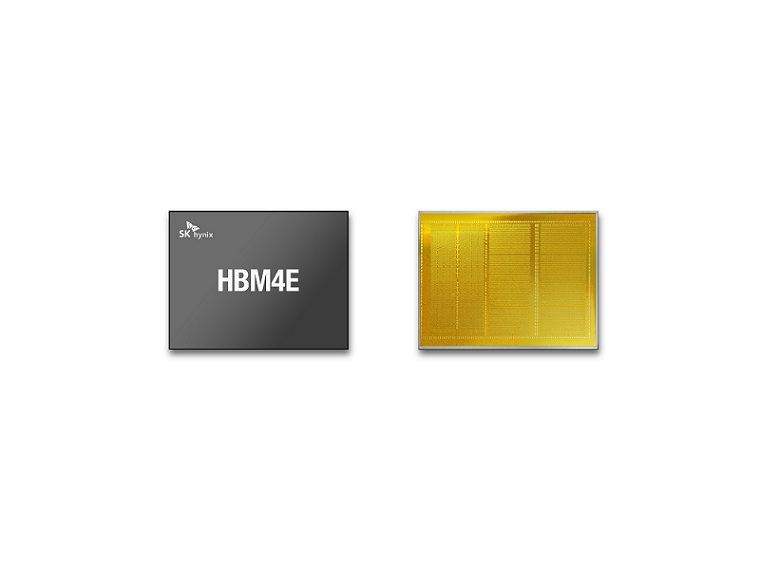
According to the comparison data given in the article, at the 48GB capacity level, HBM4E uses a 12-Hi stacking structure, while the peak specification of HBM4 corresponds to 16-Hi and HBM3E is 12-Hi. The new generation of products has improved both in terms of stacking density and efficiency: in the 48GB 12-Hi solution, the stacking density of a single chip has been increased by approximately 1.5 times, and bandwidth efficiency has also been significantly improved. The table shows that HBM4E achieves higher per-pin bandwidth and overall bandwidth targets while maintaining a 1.2V operating voltage to meet the needs of heavier AI workloads.
SK hynix said in a press release that it has delivered 12-layer stacked HBM4E samples to key customers as planned, benefiting from its experience in high-bandwidth memory development and mass production. The company emphasized that it will work closely with partners to ensure mass production of HBM4E at the appropriate time point to comply with the pace of AI infrastructure upgrades. According to official information, this generation of products can achieve a data processing speed of 16Gbps per pin, and the overall power consumption efficiency is more than 20% higher than the previous generation, which helps to improve the effective computing power per unit power consumption during AI training and inference.
In terms of interface and circuit design, HBM4E reduces data transmission delays through the latest generation interface specifications and optimized internal architecture, while ensuring stable operation in extremely high-bandwidth environments. For cloud AI data centers and large-scale high-performance computing systems, this means that higher-density and higher-speed AI accelerator card deployments can be carried under the same cabinet and cooling conditions, thereby increasing the overall computing power density.
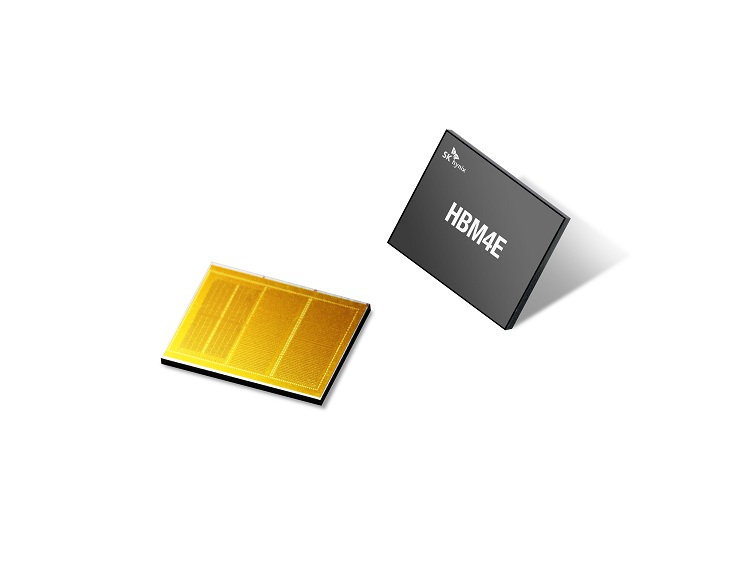
In terms of packaging technology, SK hynix introduced Advanced MR-MUF technology for HBM4E, enabling it to achieve 48GB capacity in a 12-layer stack structure while taking into account the stability of the packaging structure. According to the official introduction, compared with the previous generation HBM4, HBM4E has improved heat resistance by about 17%, which is crucial for AI nodes that continue to operate under high load and helps maintain the long-term reliability of graphics memory chips in higher temperature environments. Combined with higher thermal tolerance and more compact stacking design, the new product is more suitable for the current trend of increasingly dense AI server system design.
SK hynix has previously accumulated rich experience in the mass production and supply of HBM3, HBM3E and HBM4, providing customized and optimized high-bandwidth storage solutions to a number of cloud service providers and GPU manufacturers. The company stated that it will continue to support the construction of next-generation AI infrastructure through HBM4E on this basis, and work with industry chain partners to alleviate the common memory bandwidth bottleneck problem in AI systems. In the context of the intensifying global generative AI "computing power arms race", HBM4E is regarded as one of the key underlying technologies for the competition of AI-specific chips and data center platforms in the next few years.