Using geophysical technology, Australian researchers have for the first time systematically "peeped" into the underground life world of the critically endangered northern hairy-nosed wombat. They found that this endangered marsupial builds complex cave networks under different soil conditions. At the same time, a female was confirmed to be pregnant with cubs in an ex-situ protected population, bringing new hope to the conservation of this species.
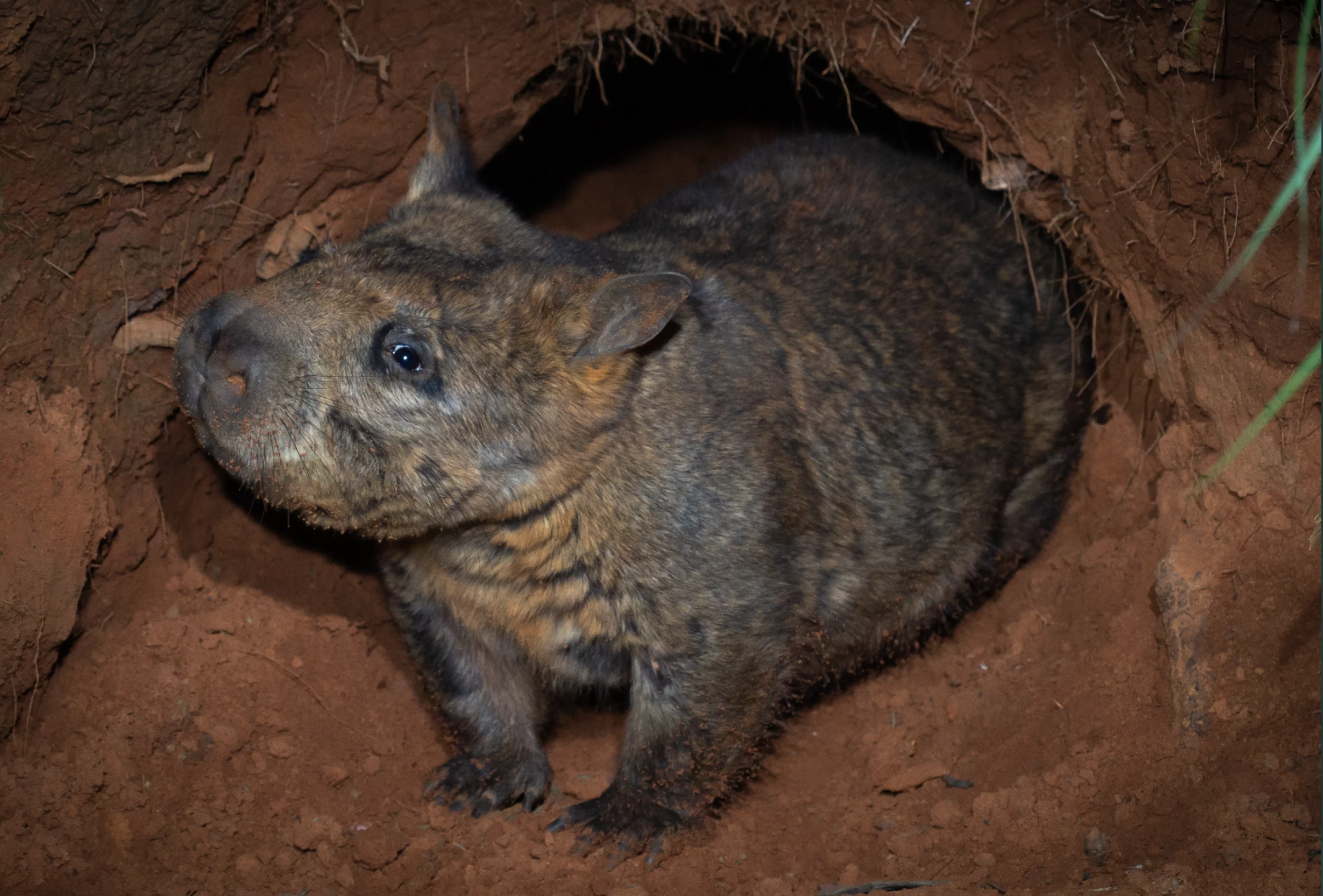
The research was conducted in partnership with the Australian Wildlife Conservancy (AWC), The Wombat Foundation (TWF) and the Queensland Department of Environment, Tourism, Technology and Innovation, and took place in the Richard Underwood Nature Refuge (RUNF) in Queensland. As early as nearly three years ago, the research team deployed ground-penetrating radar equipment here to image the underground cave structure of the northern hairy-nosed wombat (scientific name: Lasiorhinus krefftii) without interference, and to conduct comparative analysis with data previously obtained in Epping Forest National Park (EFNP).
The researchers found that caves in the RUNF area are shallower overall, in contrast to the deeper, more vertically extending caves in the EFNP, and that this difference is closely related to the local soil structure. The sandy loam in the RUNF area has high structural stability near the surface, allowing wombats to build a stable burrow network at shallower locations; in contrast, EFNP is dominated by loose sand, forcing wombats to dig deeper to ensure that the burrows do not collapse. However, the two groups showed a high degree of consistency in the complexity, branching and overall size of the caves, indicating that this wombat attaches more importance to the size and function of the cave in terms of "architectural specifications" rather than strictly relying on a specific soil.
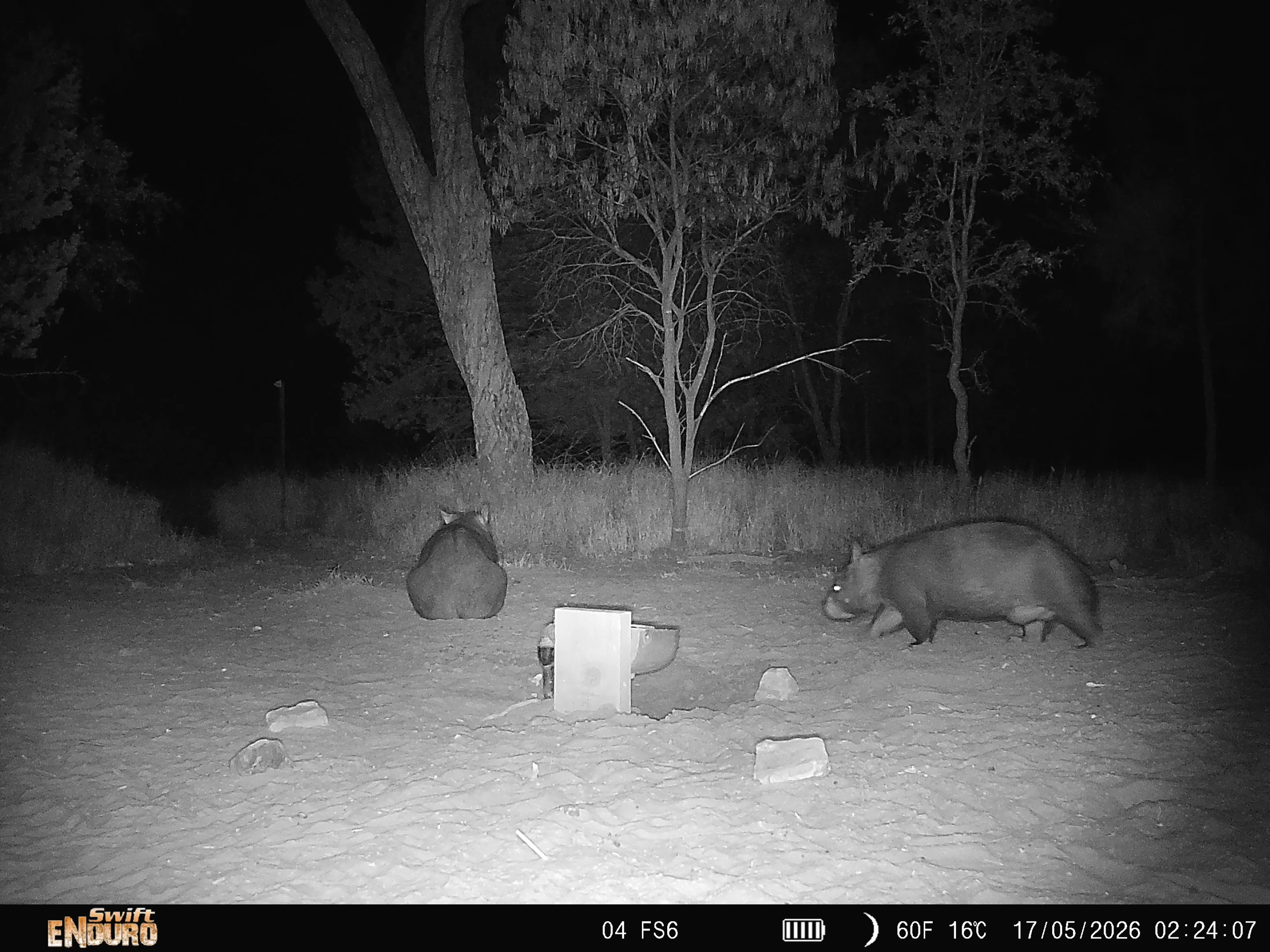
This discovery breaks the traditional understanding of the soil preferences of northern hairy-nosed wombats in the conservation community, and is considered to be of great significance to species recovery and ex-situ reintroduction strategies. Previously, scientific research and conservation plans were mainly based on the remaining wild populations of EFNP, inferring that this species can only build suitable burrows on a few specific soil types, thus greatly limiting the selection of potential ex-situ reintroduction sites. New radar data combined with evidence of the species' historical pre-European distribution show that northern hairy-nosed wombats are capable of constructing fully functional burrow systems in a wider range of soil conditions, meaning the range of candidate habitats available for establishing new populations will expand significantly in the future.
The research team stated that based on the existing three habitats, they will continue to identify a fourth location suitable for the northern hairy-nosed wombat population. A new understanding of soil conditions is expected to make this search process more flexible and efficient. Alexander Watson, AWC Northeast Regional Ecologist, pointed out that with the help of this technology and new understanding, conservation personnel are no longer limited to a few areas that were originally considered to "meet the standards", but can really focus on more potential landscapes to fight for more living space for this extremely endangered species.
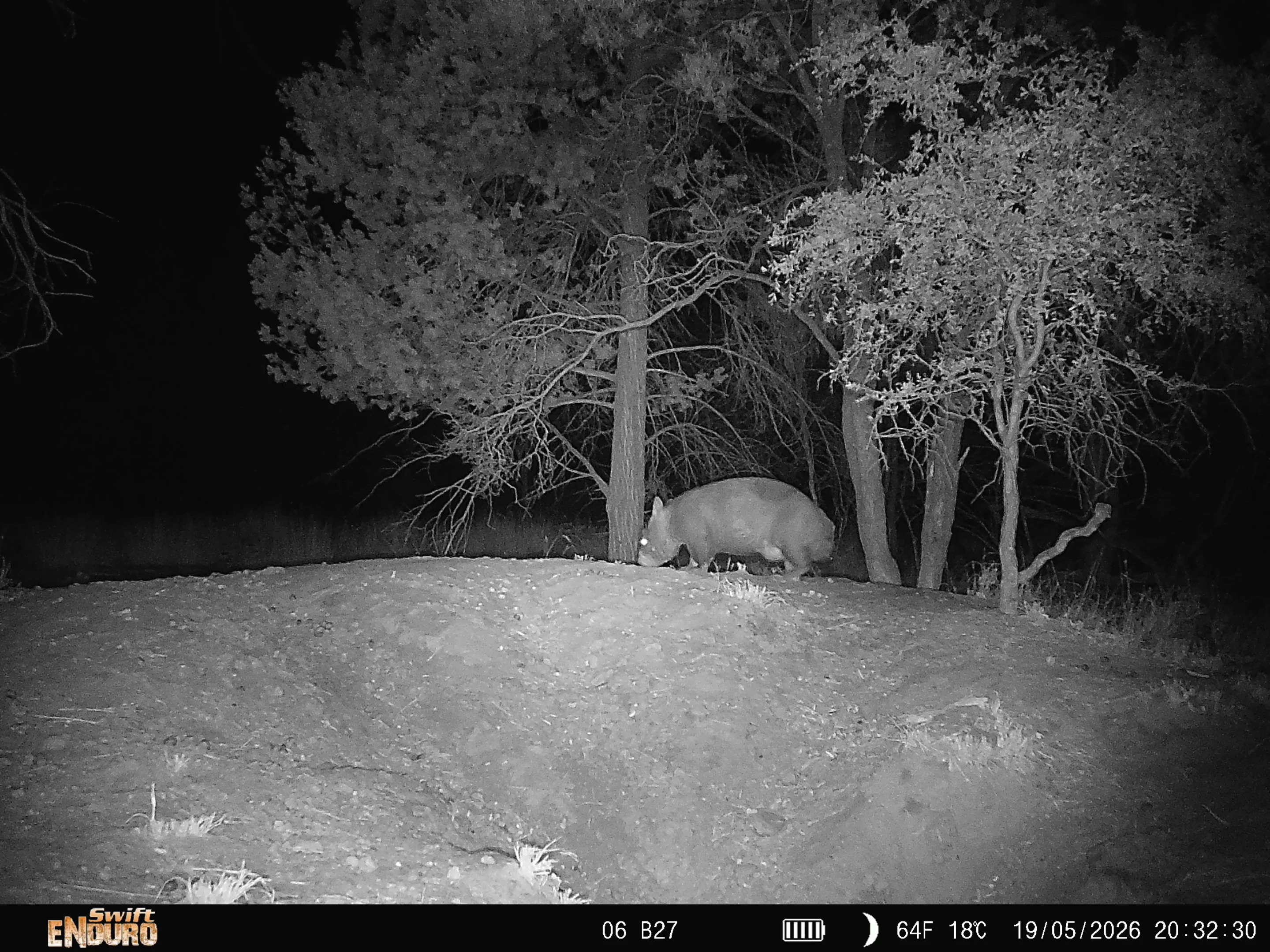
In addition to habitat research, encouraging fertility news has recently come from the RUNF ex-situ population. Researchers captured a female northern hairy-nosed wombat using an infrared automatic camera. The pouch was obviously bulging. They determined that the cub in the pouch was about four to five months old, adding new life to this small population. Ben Stepkovitch, a wildlife ecologist at the Australian Wildlife Conservation Organization, said that there are currently only about 450 northern hairy-nosed wombats left in the world. The emergence of this newborn cub means that the global population can increase by one, which is of great significance to the long-term survival of the extremely small population.
Stepkovich also said that it is very rare to record images of the pouch in its early stages so clearly, providing rare image data for studying its reproductive biology and parenting behavior. This discovery also confirms the adaptability of the ex-situ protected population in the new environment: it not only successfully excavated and maintained a complex cave system, but also completed reproduction and successfully raised its offspring.
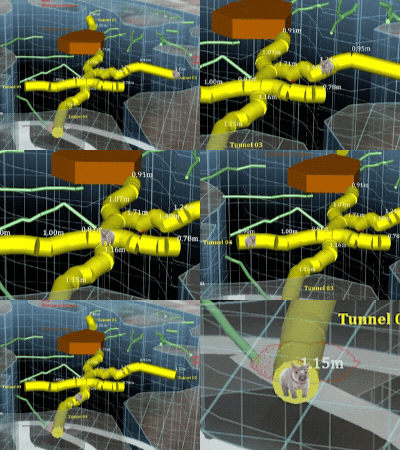
As early as 2023, researchers introduced the deployment of this ground-penetrating radar system. At that time, it was regarded as one of the key technological breakthroughs in understanding the underground lifestyle of this nocturnal, sensitive species. Compared with traditional methods that rely on ground observation or intrusive excavation of caves, radar technology can obtain a three-dimensional structural model of the cave without disturbing the animals, thereby revealing information on its habitat use, cave size and structure. This latest result once again proves that the introduction of innovative monitoring technology in the protection of critically endangered species can not only reduce interference, but also obtain key information that is difficult to obtain through traditional methods, providing a basis for formulating more scientific conservation strategies.
The northern hairy-nosed wombat is one of the most endangered marsupials in Australia. It has long faced multiple pressures such as habitat loss, predator threats and extreme climate events. The only remaining native population in the wild is Epping Forest National Park in Queensland. Through ex-situ reintroductions, close monitoring, and habitat management, scientific research and conservation agencies are working to establish relatively stable populations in multiple locations to spread the risk of extinction at a single location. This detailed description of the "underground world" of the cave and the news of the discovery of newborn cubs in the ex-situ population are regarded as important phased results in this long-term conservation project.