"Watching AI MV in KTV, I either laugh out loud or cry out of fear while singing." Friends who dare not eat Jianshouqing (a kind of porcini mushroom that may be hallucinogenic) are lucky. Now they can eat "Cyber Jianshouqing" painlessly. Taking advantage of the holiday, I went to a KTV with a few friends to sing and ordered a song called "Later". The prelude sounded, and there was no girl in white on the screen, no room without windows, but a bunch of skulls, singing as if they were surrounded by skeletons on three screens. Netizens gave this weird scene in the KTV a name: "Seeing Green in Cyberspace."
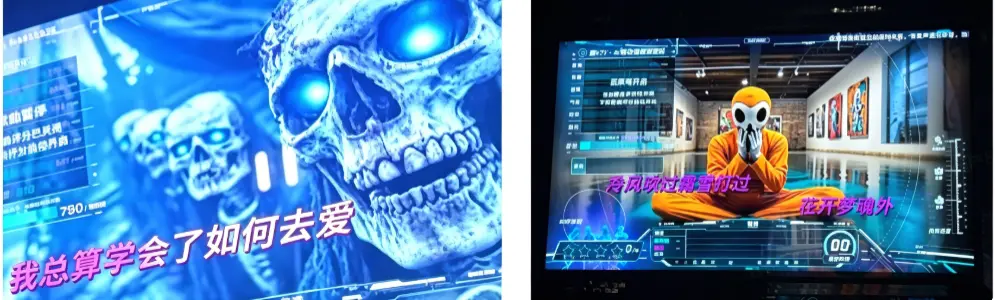
Since last year, this kind of AI MV has begun to appear. One year later, instead of restraining, it has spread in various KTVs.
Some time ago, many KTV chain brands triggered a wave of intensive discussions because of the "eye-searing" AI MV. The topic #KTV AI Horror Movie# has been discussed more than 120 million times on the short video platform; on the Black Cat complaint platform, there have been more than 1,700 questions about the AI MV.
A few days ago, Ms. Xiao from Guangdong ordered a song called "Spring Goddess" by Zhou Chuanxiong. When she sang the second verse, the picture showed a lonely figure in a clown suit, sitting alone on the wet ground, staring at the screen, her desire to sing dropped to freezing point.
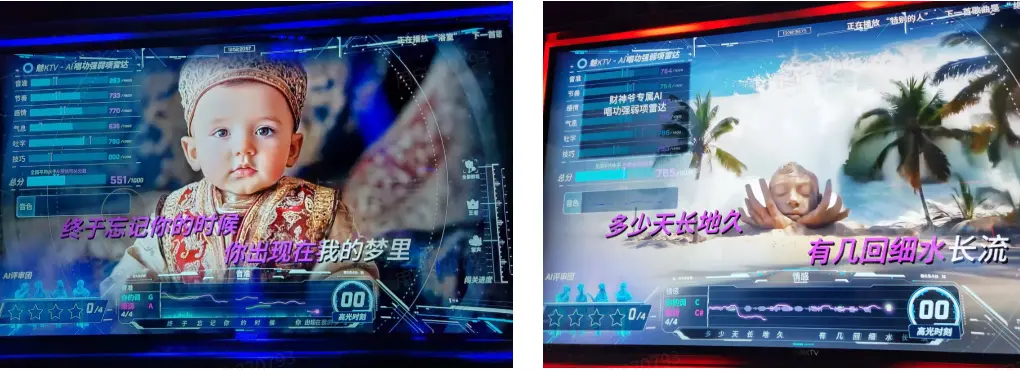
Picture source: Xiaohongshu@calm magma guava
The AI MV scenes posted by consumers are more and more outrageous: singing "At least I still have you" is accompanied by gorilla machine gun fire, clicking on "Later" makes the screen full of skulls dancing mechanically, and the Jiangnan misty rain of "Blue and White Porcelain" suddenly cuts into mechanical gears.
Faced with the overwhelming AI face-changing and weird images, opening the blind box to open the scenery material is a lucky draw.
KTV merchants are all embracing AI. The Xiaohongshu account of a charming KTV in Wuhan directly writes "One-click generation of MV" in the introduction. It seems that this has become a way to attract customers.
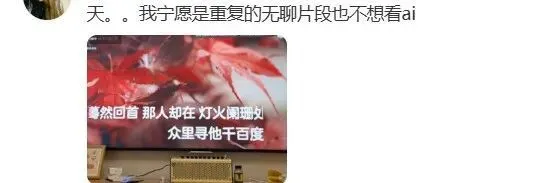

Consumers are tortured by AI MV and have little interest, but KTV is still enjoying it.
Everyone’s complaints are so loud. Are the KTV guys who are chasing after Sina Heads stubborn, or do they have their own plans?
01
To reduce costs, move AI to the big screen
"You can be shocked when you sing"
Go forward more than ten years, and the KTV boxes still have serious original MVs. At that time, I walked into a KTV. Half of it was singing, and half of it was watching the people and stories in the picture.
However, as a number of physical records such as "Qilixiang" vinyl records were announced to be permanently no longer available, those MV images that were born in the golden age of the record industry have also quietly disappeared from the song request systems of KTVs one after another.
Copyright fees continue to rise, forcing KTV operators to find other ways to distribute paintings. Unparalleled Korean drama clips, photos of beauties in swimsuits, and various fan remixes and secondary creations have all been put on the screen.
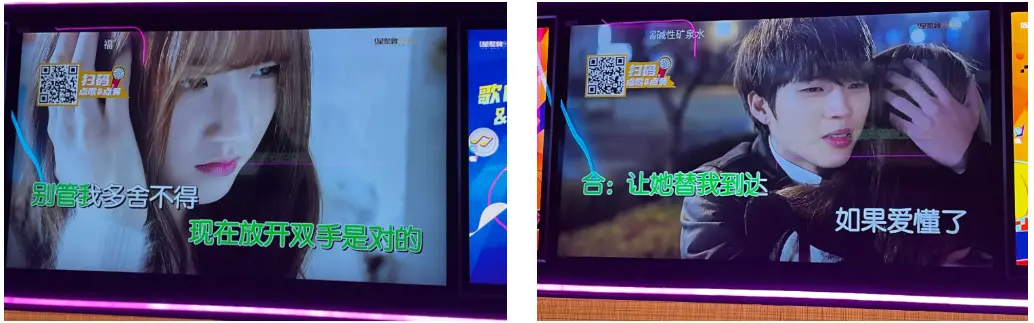
小红书@天天天
Now, AI has taken over the last leg of this "evil cultivation".
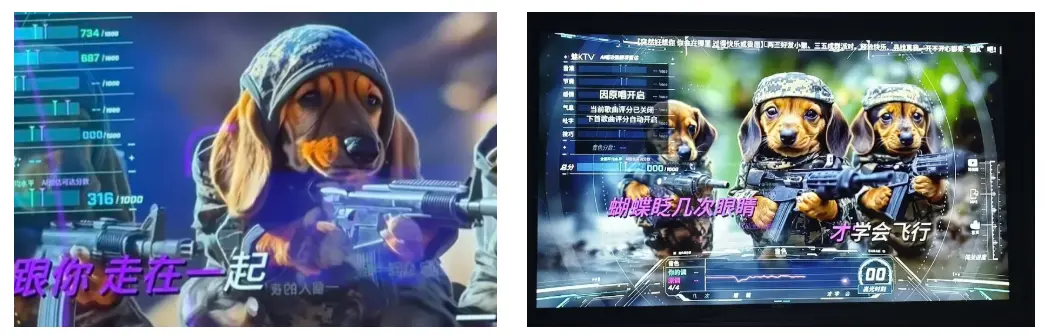
At first, it was an animal-anthropomorphic style, with no logic at all. Two different songs, the same "actor" will appear.
There is a dog that is already familiar to everyone. It is included in "Suddenly Thinking of You" and will also appear in "Things You Don't Know".
Xiaohongshu@melonbasket
Then, the AI learned to extract keywords from the lyrics, and the picture finally had something to do with the lyrics, but it was still far from "good-looking".
AI MV is not friendly to everyone’s eyes, but for small and medium-sized KTVs, saving money is a big enough driving force.
Take the AI smart KTV that has emerged in the past year as an example. The MVs in the store are almost all scenery materials or AI-generated videos, which really benefits from "hiding" copyright fees.
In the face of the huge mountain of copyright fees, AI has indeed helped small and medium-sized KTVs find a shortcut to "saving money".
For relatively large chain brands, there are other considerations when introducing AI MV.
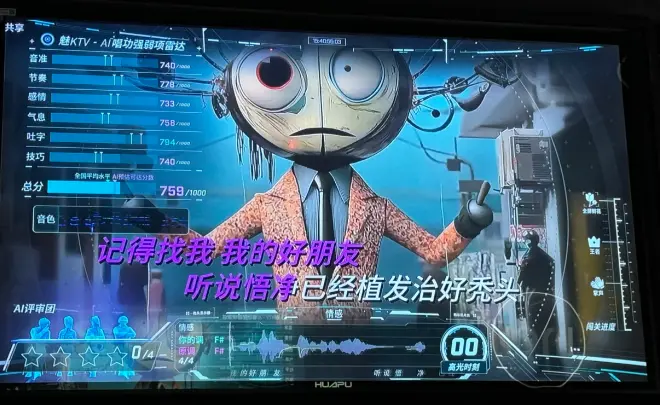
Mei KTV, a company with a large business, is one of the most criticized brands, and because its AI screen contains the brand logo, it has become the focus of public fire.
The store clerk responded that the company's main promotion of AI MVs is not without copyright, but a problem with the system settings. The company also stated that all songs in the music library are authorized with genuine MVs, and the AI content is randomly generated, and customers can switch to the original version at any time.
However, the feedback from the store clerk during the unannounced media visit that “almost all customers asked to turn off the AI video” speaks for itself.
In fact, AI MV is not the operation of a single company, but more like the tacit understanding of the entire industry.
According to China.com, KTVs across the country are embracing AI MV to varying degrees, either through centralized procurement of system platforms and unified replacement, or through independent innovation in stores to save costs. Mainstream brands such as Juhi and Xingyi have all connected to AI systems. The only difference lies in the degree and strategy.
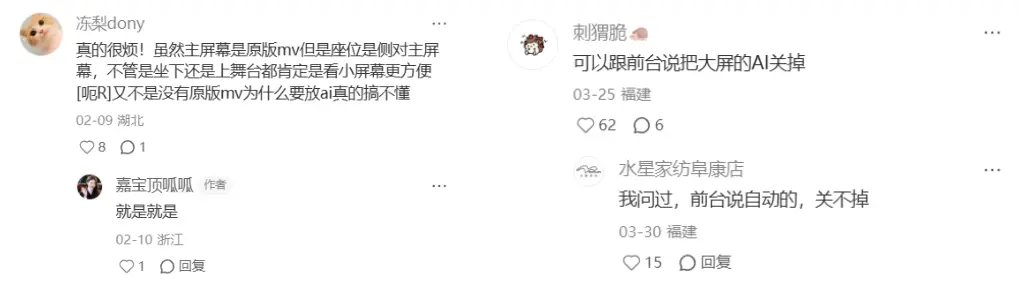
Some brands choose to "hard push" and play the AI version by default. Consumers have to actively contact the store staff to switch back to the original version;
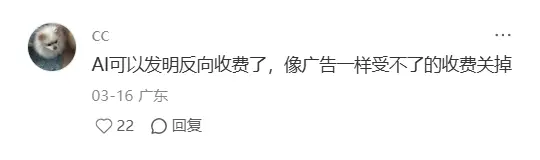
Some netizens offered suggestions for merchants to implement a reverse charging model. If they don’t want to watch AI MVs, they can pay more to turn it off. This can not only satisfy the public’s desire to watch the original version, but also maximize the value of copyright fees.
What's outrageous is that some stores actually do this. The idea of passing on costs is too obvious.
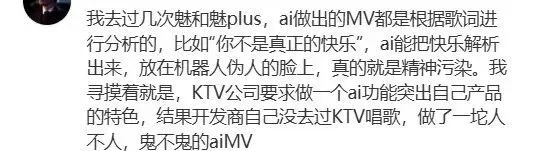
Ultimately, this is a collective gamble by the industry. The bet is that users will eventually get used to AI MV, and that they can improve the technology and complete the transformation during this painful period.
Some chain brands are trying to use AI MV to break the game, providing a sexy "AI+" concept for capital stories, and packaging themselves from a "sunset industry" into a cutting-edge technology entertainment company.
Some industry commentators believe that this has fallen into the trap of “innovation for the sake of innovation”.
Judging from the MV alone, AI has indeed dissuaded many people. Some netizens made a reasonable point: Maybe the original MV image quality was indeed low and seemed a bit backward, but wouldn’t it be better to use some of the money spent on researching AI MVs to repair the image quality?


02
“Relying on AI to modify sounds and AI to assist in singing,
Can you realize your dream of becoming a singer in KTV?”
"The low frequency is insufficient and the sound is not full. It is recommended to try to resonate with the chest." You are singing "Later" affectionately, and this line of words suddenly pops up on the screen. Before he could recover, the "judgment" in the next sentence arrived again.
This is not a final exam at a music school, this is a KTV in 2026. That’s right, KTV’s ambition in engaging in AI is not just to change the MV, but also to save face.
Since 2018, Mei KTV has quietly played a game in the field of AI, investing a total of more than 200 million yuan in research and development funds. Star Party was also not to be outdone, investing nearly 100 million yuan and developing a self-developed AI entertainment system in three years.
Spending hundreds of millions of dollars is obviously not just to put skulls on the screen.
Face is AI MV and AI face changing, responsible for attracting eyeballs; Lizi is AI sound editing and AI scoring, responsible for retaining customers.
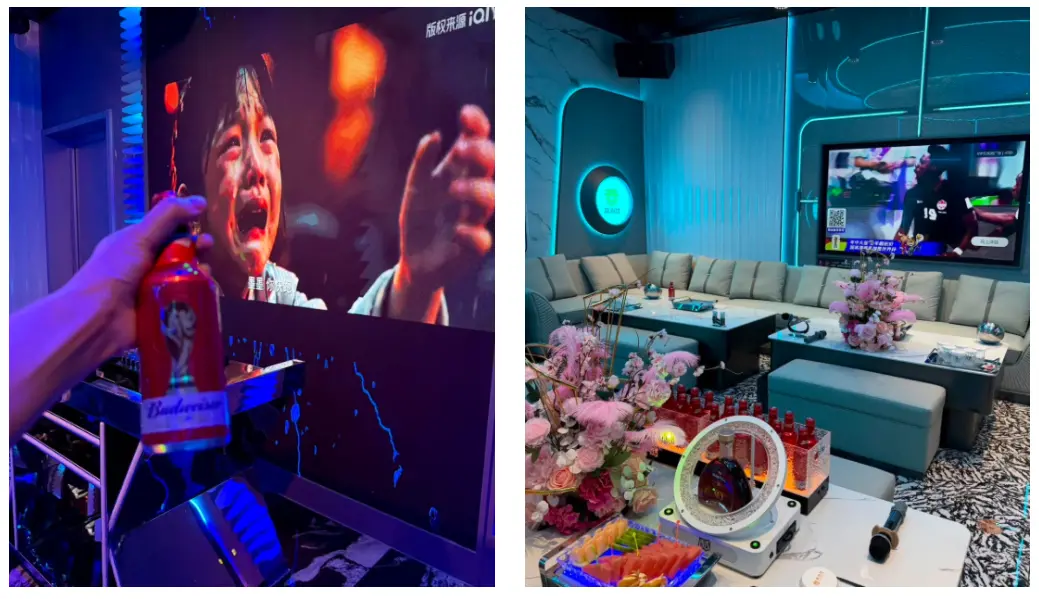
小红书@CHRISTINAjiajia
As for face, it still looks a bit rough at the moment. There is indeed something new here.
Liang Liang became a fan after experiencing Mei KTV's AI-assisted singing for the first time. He felt that black technology really has a lot of advantages. He sang from afternoon to night and didn't want to leave at all.
People with mediocre singing skills suddenly feel that they can also master that difficult song that they have never dared to touch. This experience is indeed magical.
The AI fun singing function of Star Party provides a similar tuning experience. When the tune is out of tune, the system quietly helps you lower the key. After singing, there are heart-warming and comforting words, which adds full emotional value.
Nowadays, many KTVs have labeled themselves "AI sound repair" and promise every guest: Don't be afraid of not being able to sing well, there is a way.

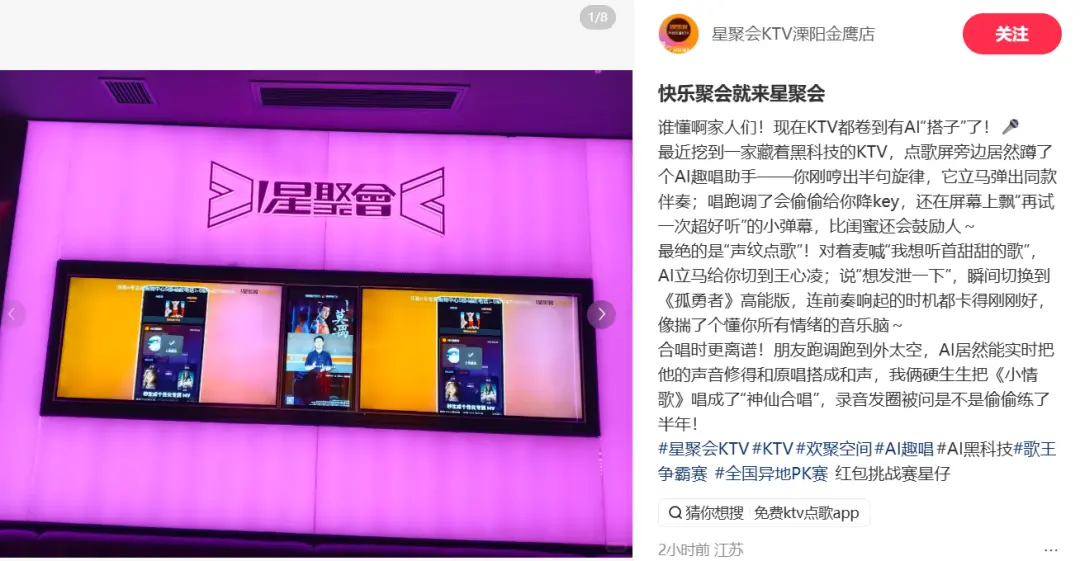
What really locks young people in the box is the sense of competition brought by AI scoring.
Click on the official website of Mei KTV. The first thing on the homepage navigation bar is not the store information, but the progress of the national karaoke competition, the list of winners and the rules of the competition.
After a song is finished, the score pops up on the screen, followed by the ranking list, and you can compete with strangers in the next box. Sansan, who went to sing on May Day, was a little excited when talking about this: "I didn't care about the score at first, but in the middle of the song, I was overtaken by the next room. In the end, only the relics were left."
According to a report by "Straits Metropolis Daily" in February 2026, the person in charge of Mei KTV Fuzhou Vientiane Jiuyicheng store said that after the AI function was launched, the store's customer traffic increased by more than 10%, and half of the customers were using it.

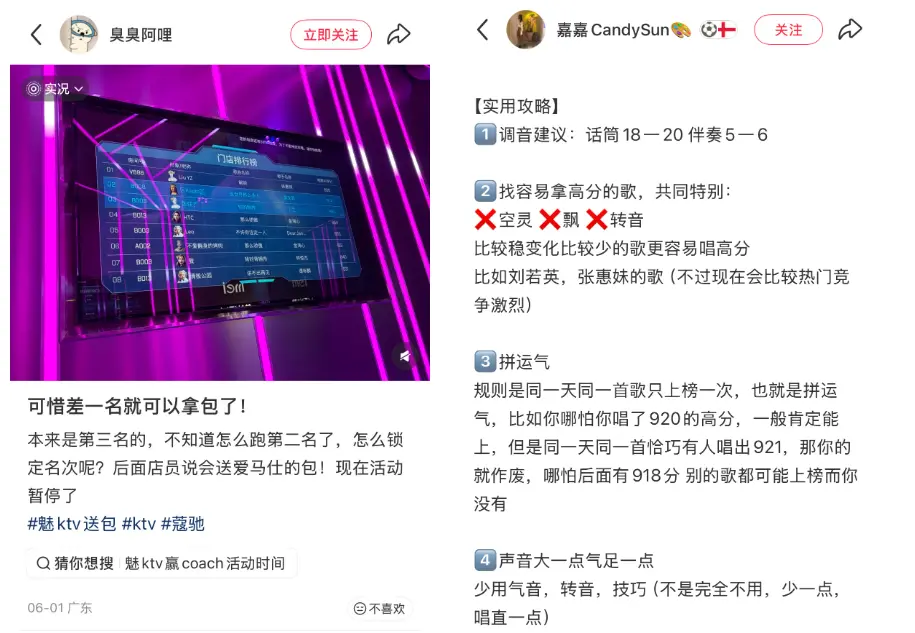
But PK is not always pleasant. Netizen Qiqi went to Star Party to try out the new activity. After experiencing it, she wrote: "Gifts actually account for 20% of the scoring criteria. Isn't this just spending money to get points?"
In her opinion, not only is the competition impure and a disguised way of encouraging people to consume, but the AI scoring standards are also unpredictable.
In an exclusive interview with The Paper in March this year, Star Party founder Weng Peimin positioned AI as a "tool to serve the main business" and emphasized that it was not intended to become a technology company.
In the face of controversy, the two leading brands did not respond directly to the question of "whether customers are adaptable to AI", and chose to show the success of their business strategies by disclosing data. Mei KTV said that customer flow has increased, and Xinghui said that 83% of its franchisees have opened a second store.
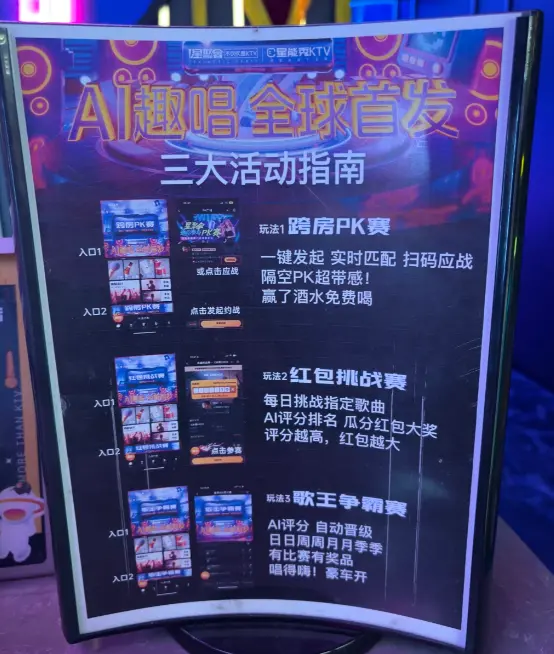
@七七
KTVs are not satisfied with just providing a single service of singing, and want to use AI to expand their business territory.
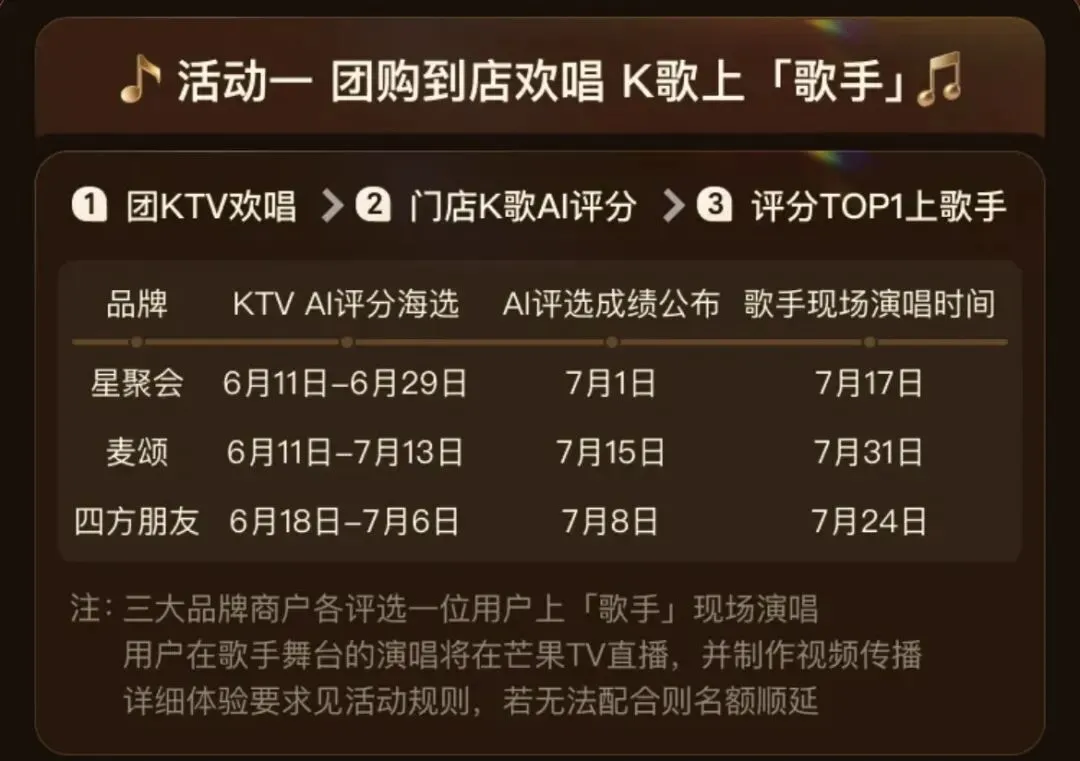
AI scoring not only supports internal store competitions, but also increases the popularity of singers’ IPs. Star Party and Mai Song teamed up with the "Singer 2026" program team to launch a KTV competition. The first place will receive a round-trip ticket to Changsha, which will lead directly to performing on stage.
KTVs that are purely about singing have almost become "tears of the times". Today's KTV seems to have followed the path of milk tea turning into "porridge". Everything can be turned into small ingredients, and singing has become the foundation, covered with hot pot, board games, script killing, business meetings, and even pet parties.
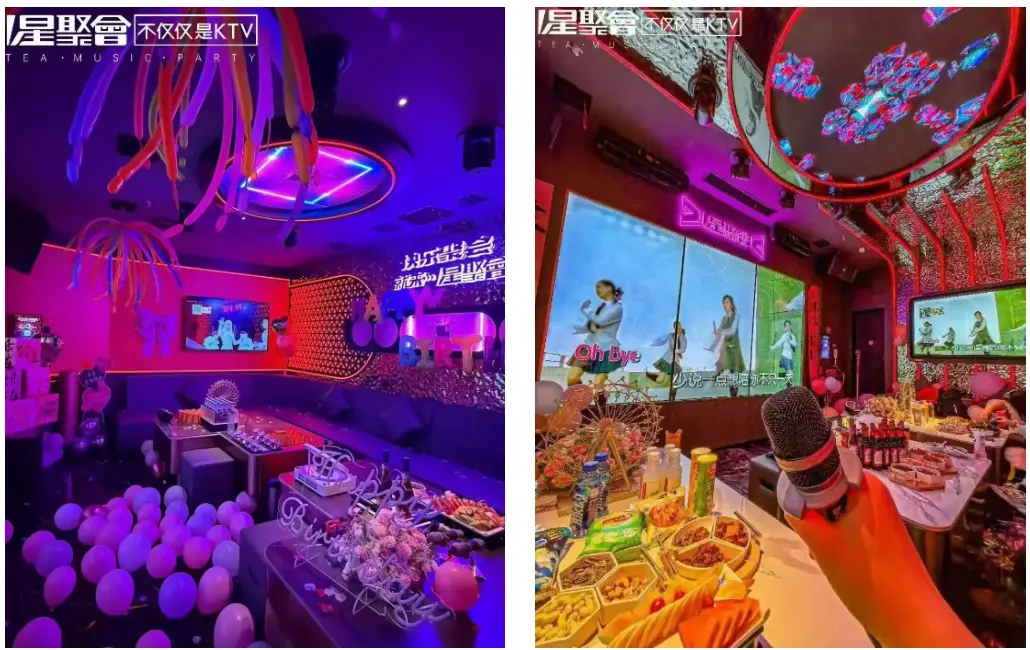
Star Party announced that it is no longer called "KTV", but a "music social space".
Every company is chasing the trend of AI, and AI has gone from being the king to being the common denominator.
And precisely because they are so common, they need to be unique, so various cross-border mashups have been derived, hoping to pack in everyone’s various entertainment methods.
03
Consumers are willing to pay
Not the AI dream of KTV
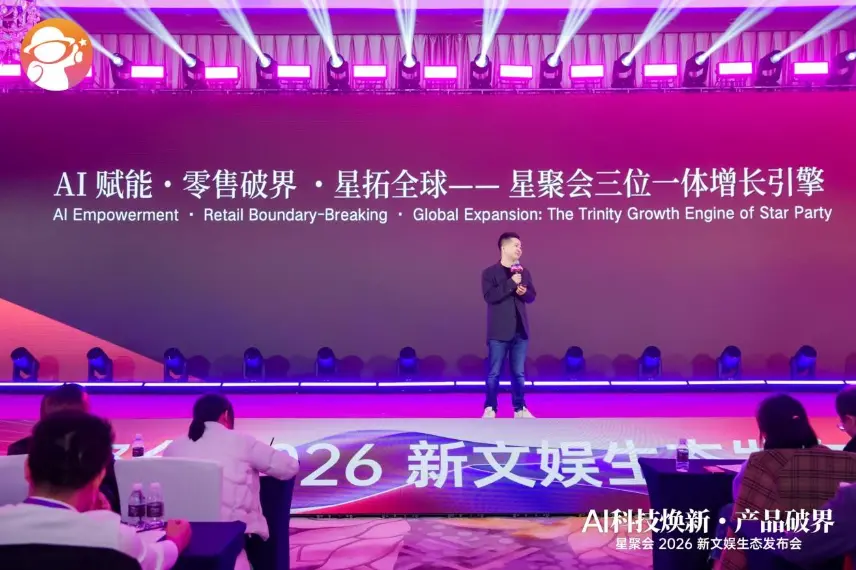
Since the beginning of 2026, Mei KTV, Xing Gathering, and Maisong KTV have held three press conferences, with almost the same lines: AI empowerment, reconstructed experience.
Mei KTV has launched more than 1,200 AI MVs, Xinghui has spent nearly 100 million yuan on research and development of AI systems, and Maisong has launched AI song writing and sound cloning based on self-developed large models. The three leading brands regard AI as the door to the future, and whoever opens it first will seize the opportunity.
The AI transformation of leading brands is like a big gamble. The bet is that the return of investment will only begin after the technology matures, and the bet is that young people are willing to pay for technological sense and social assets.
However, AI accounting is not the only algorithm.
Another path is to be prudent. In April 2026, Juhi Technology released the self-service KTV 3.0 solution, evolving from unattended to AI full-link operation.
By the end of 2025, there will be more than 2,600 self-service KTVs nationwide, and Meituan search volume has increased by 2,078% year-on-year.
Why is it so popular? The answer is simple, two words - cheap.
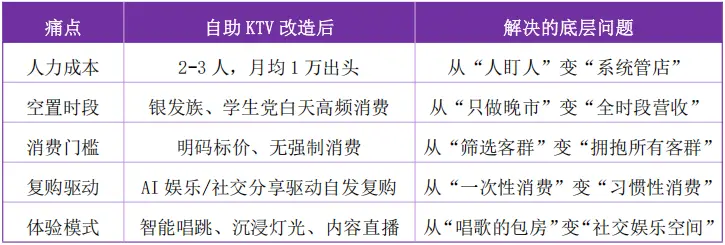
Source: Traditional KTV Transformation Self-service KTV Practical Guide White Paper
The investment in a traditional KTV store is 8 million to 12 million yuan, while the self-service model only costs 600,000 to 1.2 million yuan. The manpower is reduced from a dozen to one or two people, and the monthly rent is reduced by more than 90%. Some of the money saved by self-service has reduced private room fees, some have upgraded to better speakers, and some have allowed outside drinks.
At the Sifang Friends KTV near the school, Agui is a frequent visitor. She is usually introverted and dare not open her voice in crowded situations. She can completely relax when she is alone. "You don't have to accommodate anyone. You can sing immersed throughout the whole process. It's really a stress reliever."
49 yuan for 3 hours, you can sing for an entire afternoon for less than 30 yuan. What satisfied her most was that she was allowed to bring outside drinks and order takeout, and she could eat when she was tired of singing. The afternoon passed in a blink of an eye.

Li Zi shared that I was shopping with friends over the weekend and accidentally found an AI self-service KTV. I scanned the QR code and placed an order and went in. “The key is that it’s very cheap and there are no other bundled purchases.”
The interactive method also surprised her. She didn’t have to manually request a song, she just said into the microphone “I want to sing “Qili Xiang””.
A technical person in charge of a self-service KTV revealed that after studying tens of thousands of user recordings, the technical team found that young people did not like to speak to machines in a commanding tone at all, so the AI was trained to be a partner that can "understand human speech."
Of course there are rollovers. When Youyou went to an unmanned self-service KTV for the first time, the voice control sensitivity was average. "The music library is quite complete, but many songs do not have MVs. When I listened to the super long intro of "Fairy Tale", I felt like a fool."
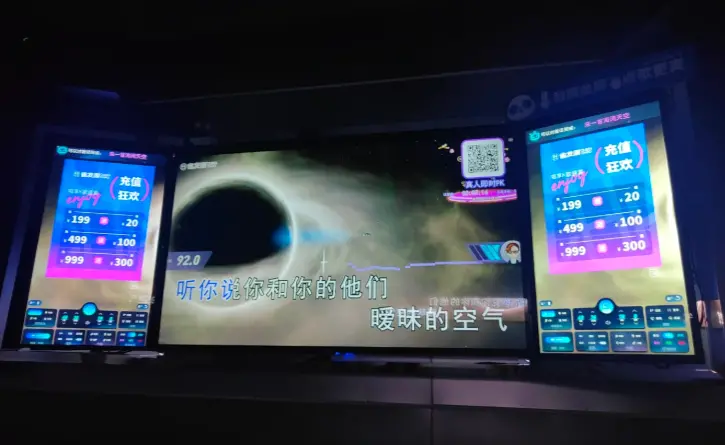
Xiaohongshu@Don’t fool me
On the one hand, there are huge bets on AI that can cost hundreds of millions, and on the other hand, there is a small business with a careful budget. The two paths run parallel and are equally hurried.
But when I returned to the box, the picture didn't match. "AI empowers new ecology" and rapidly growing store scale, it is difficult to eliminate consumers' resistance to the skull and hamster heads in the MV.
This kind of division just shows that AI itself is not the problem, but how to use it.
The "2025 Generation Z Emotional Consumption Report" shows that Generation Z pays attention to emotional value, and nearly 60% of young people are willing to pay for emotional value every month. Whether it is social desire or price sensitivity, they are essentially the pursuit of happiness, relaxation, and a sense of control.
The breakthrough of KTV is not in the technology itself, but in the issue behind the technology - what do consumers want?
AI can be a tool, but it should not be the purpose; use it to create a better experience, rather than use it to replace the experience itself.
Otherwise, when there are more skulls than people in the box, consumers will vote with their feet and choose the place that at least allows people to sing a good song.