Passing through a ramp of the Hefei Xinqiao Airport Expressway, the blurry farmland outside the speeding window was no longer visible. In the distance, a huge building announced its presence that could not be ignored. More than ten years ago, this was farmland and wasteland far away from the urban area. The arrival of a "Big Mac" company completely changed the fate of this land.
In the spring of 2026, this company suddenly surfaced: net profit in the first quarter was 33 billion yuan, net profit attributable to the parent company was 24.76 billion yuan, and revenue soared 719% year-on-year. Almost overnight, it made up for all the accumulated losses of more than 36.6 billion yuan in the past ten years. The market has pushed up its valuation expectations to 4 trillion. Calculated based on the shareholding ratio of Hefei's state-owned assets exceeding 30%, the floating profit from this investment is equivalent to Hefei's annual GDP.
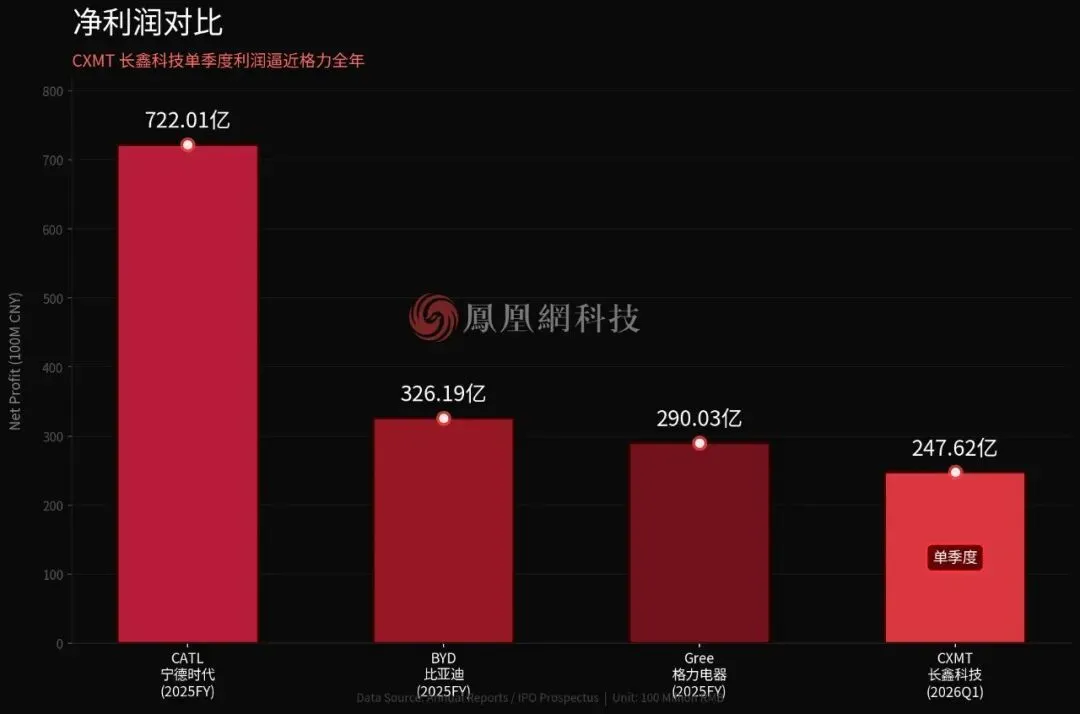
Figure | Comparison of net profit attributable to parent companies between Changxin Technology and well-known companies
However, outside the walls of this "trillion-dollar giant", the fate of tens of thousands of people is being rewoven around it: early employees holding original shares, relocated households setting up stalls late at night, production line engineers complaining that "coming in for a year is like quitting drugs", and fresh graduates who joined on the eve of the IPO to bet on their future.
Wealth, ambition, sweat and hesitation combine fiercely in this land with a radius of ten kilometers. My visit started from the unlit path leading to the factory.

Go to Changxin
Radiating from the center of Hefei, five technological innovation giants that can influence the direction of the city's industry are located around it.
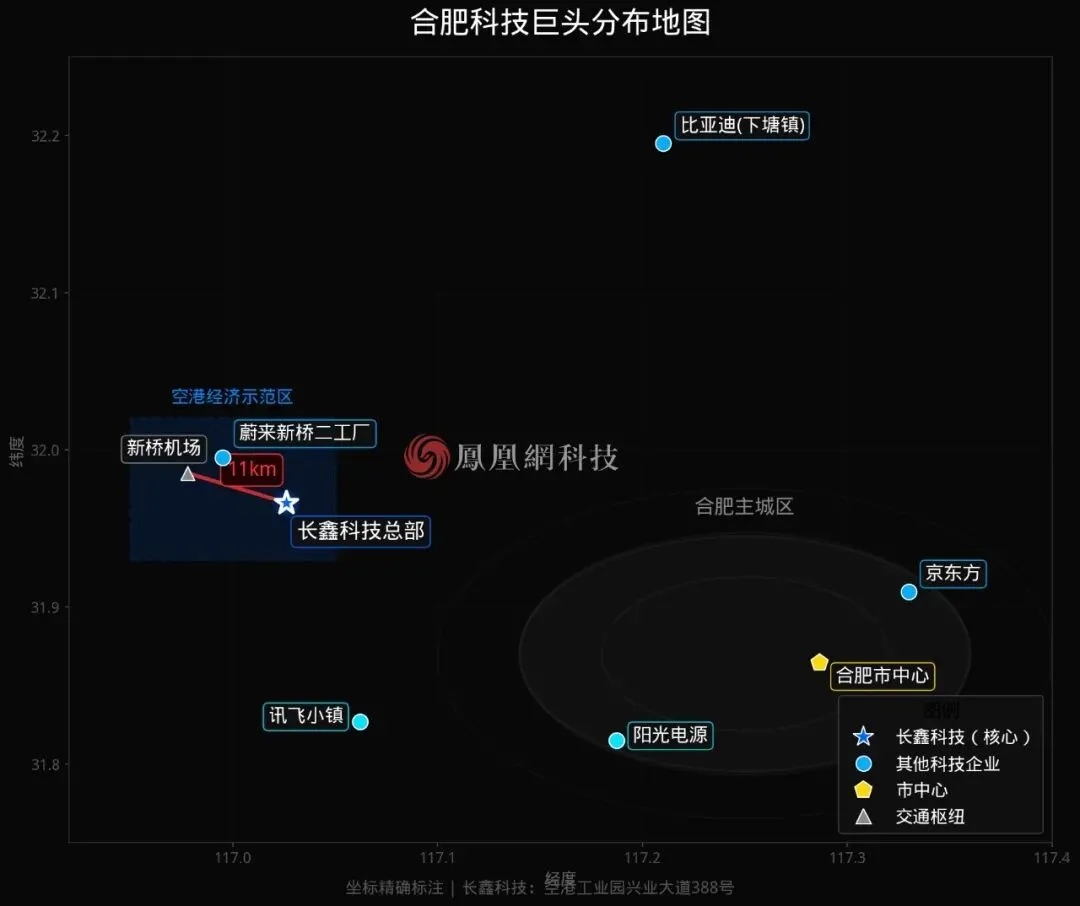
Figure | Schematic diagram of the distribution of the five major technology giants in Hefei
To the north, outside the Second Ring Road is BOE, which was the first to introduce it - Hefei even stopped the planned Metro Line 1 for this reason. Further north, BYD's vehicle manufacturing base works day and night. Across the city to the south, the NIO factory and R&D center are prominently displayed. To the west, Sungrow and iFlytek Town are located next to each other.
Only 11 kilometers away from Hefei Xinqiao International Airport is the headquarters of Changxin Storage. To get there from the city, there is only one airport expressway and a trail that locals think is "too dark to walk at night."
On the return trip from our first visit to Changxin, the navigation took us through this trail that had no street lights at all but had to pass through 17 traffic lights. "Why are these traffic lights set up in such a remote place?" I was puzzled. The driver said that it was because he would pass through villages surrounded by farmland.
A few years ago, this was a wasteland. In March 2017, the first phase of Changxin Storage officially started construction. In just 10 months, a large-scale modern factory building was built. The scale of the main factory building is among the largest in the world. It went into mass production for the first time in the third quarter of 2019, achieving a breakthrough in DRAM chips in China.
From a global industry perspective, the DRAM market has long been monopolized by three giants: Samsung, SK Hynix, and Micron, which together account for more than 95% of the market share. China spends over 100 billion US dollars importing memory chips every year. Changxin's mass production gives China a slight bargaining power in this oligopolistic market for the first time. As geopolitical frictions intensify and supply chain autonomy surges, Changxin's production capacity ramp-up has been given a strategic value that far exceeds a company's profits.
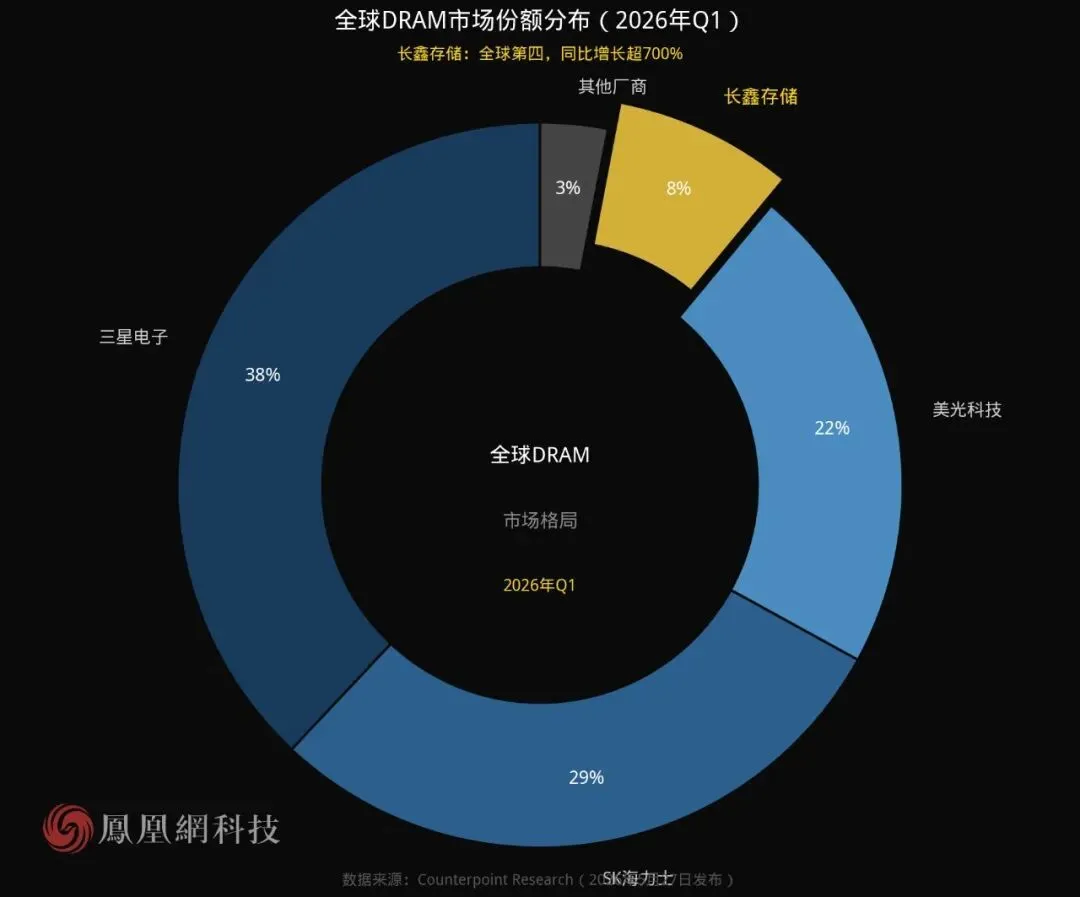
Figure | Global DRAM market share distribution (2026)
Hefei not only raised money for Changxin, but also provided "nanny-style" services such as talent introduction. At the same time, it will invest 200 billion yuan to build a storage industry cluster integrating wafer manufacturing bases, supporting industrial parks, and international towns.
This All-in boldness is called the "Hefei Model".
Hefei was once a typical example of "central collapse". It was neither an open coastal city nor a traditional industrial town. Its only outstanding endowment was scientific and educational resources. Around 2005, Hefei was determined to "establish an industrial city", but it lacked funds, projects, and supporting facilities. Under this pressure mechanism, the government began to take the initiative to act as a "venture investor", using limited financial funds as "seeds" to leverage key industries that have promise but lack capital. The core is to "exchange capital for industry", and what you earn is not financial returns, but tax, employment and technology spillovers from industries staying in the local area.
The real logic of the "Hefei model" is never to win the popularity of a project, but to use a chain owner enterprise to leverage an entire industrial chain. BOE has brought the panel industry cluster, NIO has leveraged the entire new energy vehicle chain, and Changxin has become the mothership of Hefei’s semiconductor ecosystem. Around it, Hefei has introduced and cultivated more than 200 upstream and downstream supporting enterprises.
From the perspective of industrial ecology, Changxin's value far exceeds its own profits.
A mature semiconductor IDM (Integrated Device Manufacture, vertically integrated manufacturing) manufacturer covers the entire process from chip design, manufacturing to packaging and testing, and requires top-notch technical support from hundreds of equipment, materials, and engineering companies. It can be said that the existence of Changxin provides Chinese semiconductor equipment and material manufacturers with a ticket to enter the world's top supply chain.
In 2008, Hefei invested one-third of its annual fiscal revenue (9 billion yuan) in the BOE 6th generation line and even stopped the subway, which caused huge controversy. As a result, it not only created a giant with a revenue of 100 billion, but also attracted dozens of upstream and downstream companies, making Hefei one of the global flat panel display bases. The investment in Changxin is aimed at the blank space of DRAM chips. State-owned capital contributes more than 70% and assumes huge R&D and mass production risks.
In contrast, Wuhan's Yangtze River Storage had a different fate. "Wuhan also spent a lot of money on Yangtze River Storage, but the matching rate was too low and did not drive local development." A Wuhan state-owned investment banker commented, "Changxin was the first to go public, which also put a lot of pressure on Yangtze River Storage."
Changxin’s factory is a practical training base for domestic equipment manufacturers. Core equipment manufacturers such as Northern Huachuang, China Micro, and Tuojing Technology require a large number of "on-site" installation and debugging. Material suppliers such as Yake Technology, Anji Technology, and Guangzhou Iron and Steel Gas also need to frequently dispatch technical personnel to adapt the process.
"If there are 100 vehicles in Changxin at 5:30, they can all be gone by almost 6 o'clock." The driver used an analogy to describe the huge number of suppliers.
Drivers who take orders for the "Changxin-Urban" route all year round recalled that although Changxin suffered losses in the past two years, the treatment given to suppliers was not bad. "The best one is staying at the Swan Lake Grand Hyatt, which costs over a thousand yuan a night. The worst for big suppliers is seven hundred or eight hundred." Holiday Inn Express, All Seasons Hotel, Orange Hotel... In the morning, Changxin related personnel flocked out of the hotels in the High-tech Zone. "These are all contract hotels. They don't want to live near the headquarters. It's too remote."
There are also those who provide cross-city support. "We go straight from Changxin to Hefei South Station on Friday night." However, "there have been fewer people in the past two years, and there may not be so much maintenance to do, and the equipment loss rate has become lower." Their drop-off point is often at the east gate of Changxin - "employees are not allowed here, it is only for suppliers on business trips."
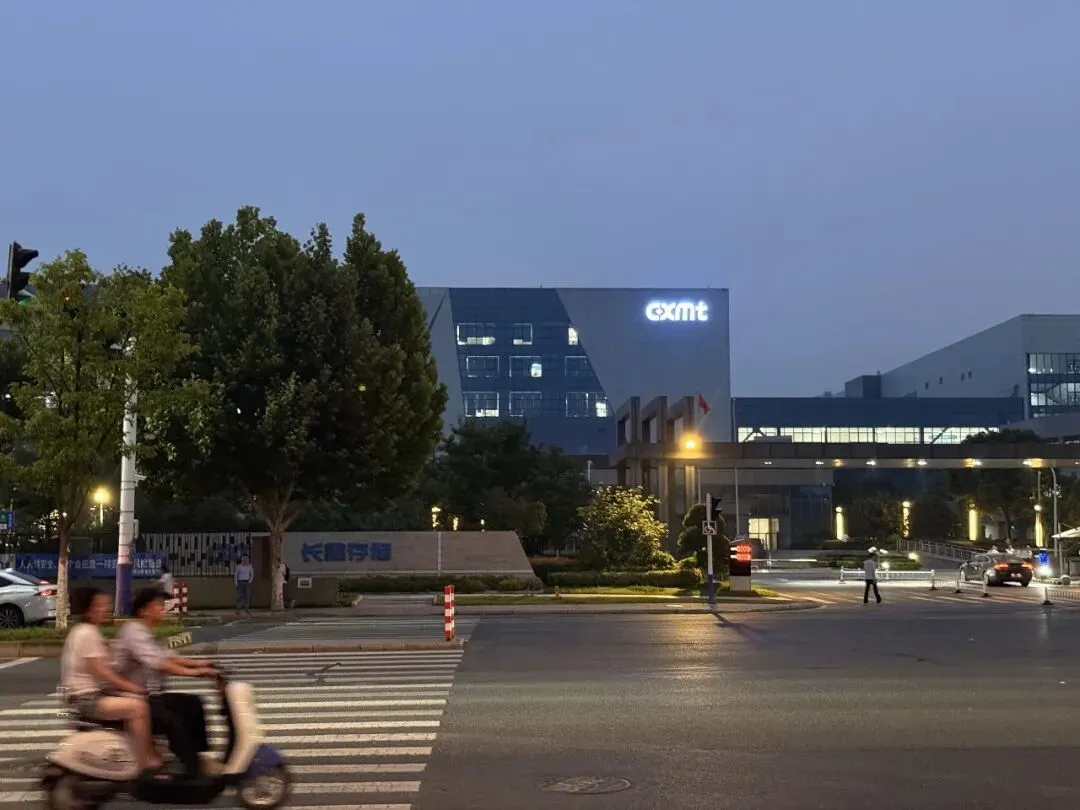
Drivers who travel to and from the city to Changxin have similar backgrounds: they run this "airport line" that does not go to the airport all year round. They are willing to take orders to and from the city. They can go back to their grandparents' house to eat and have fun. They often chat with passengers and observe a lot of "insider stories."
Although the driver calls himself a "local", he will say that he "owns a house in Hefei." These drivers, who are only in their early thirties, have all experienced an update of their ID cards, and their home address has changed from "Gaoliu Town, Feixi County" to "Shushan District". In September 2013, Gaoliu Town was entrusted to the Hefei Economic Development Zone for management under the reorganization system. It was later classified as Shushan District, and the town was removed and streets were established. Also in May of this year, the expressway connecting the urban area and Xinqiao Airport was fully opened to traffic.
The driver told us that the rent for a relocation house ten years ago was only 600 to 700 yuan, but now it has tripled to 400%. "For example, the relocation houses near BYD in Xiatang were not rented for 100 or 200 yuan at first, but now they cost 3,000 and up!" Even if it is a rough house that has just been released, people are vying for it. "Anyway, the house will definitely be rented out."
However, as rents have increased, house prices have decreased. A relocated house owner recalled that when he first took over the house, the price was 7,000 per square meter, but now it has dropped to about 5,000. “Houses in the city have become cheaper, and it’s even harder to sell them here. Even if the flat price of 125 square meters is 600,000 yuan, they can’t be sold.”
Locals also know that the rise in rents depends on the booming development of surrounding industries. When talking about the famous Hefei Venture Capital, the story that often comes up is the story of "stopping the subway and introducing BOE".
"But, the past leaders in Hefei are all good. They don't focus on short-term benefits and political achievements. They can continue to work on the ideas of the previous leader and insist on long-term investment even if they suffer losses." Before dropping me off, the driver finally concluded with a smile.
I was placed on the most "bustling" commercial street in this area. In front of me was the Hampton Inn by Hilton, opposite was the Yiting Hotel, and in the middle was what Changxin employees called "Shuofang Road." Bounded by the two hotels, to the north are Lianlian Xincun and Changxin Homeland. At the end of the road is Hefei 168 Xinqiao School - a prestigious school in Hefei. To the south are Xinqiao Homes and Shuojin Commercial Plaza. At the end of the road is the junior high school of No. 168 Xinqiao School. Further south is the Shanghai-Shaanxi Expressway.
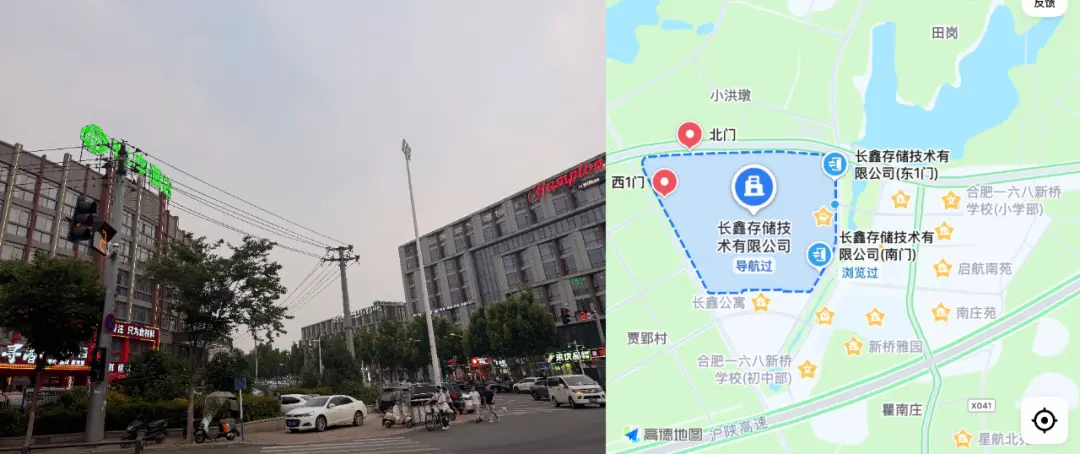
From the map, green space, reservoirs, farmland and highways form a "hypotenuse square", half of which is the living area, and the other half, which is almost the same area, is where the Changxin Storage headquarters is located. The total area of the Changxin Storage headquarters factory is approximately 1.055 million square meters, which is approximately equivalent to 148 standard football fields, and is approximately 30% larger than Tencent’s new headquarters, Penguin Island. It is undoubtedly the "Big Mac" in the manufacturing industry.

One child falls, full life
The office building of Changxin Headquarters is mushroom-shaped and has a full sense of technology in appearance.
In addition to the common card swiping machines and security guards, the sign on the exterior wall that reads "High Voltage Danger, No Climbing" is particularly strict - this is a company with strong confidentiality measures and does not accept outside visits except for essential suppliers.
It is also strict internally: you must go to designated areas when smoking, you are not allowed to look at your mobile phone when walking, and you must walk on zebra crossings; some production lines hand over their mobile phones as soon as they enter the park, and they can only use low-end Android work machines issued by the company, but the AI can be used, which is DeepSeek integrated in "Xiaoxin Classmates". However, for most employees, “it’s useless to hand them out mobile phones because they don’t have time to look at them.” In addition to working from 8 a.m. to 6 a.m., they also need to work 60 hours of overtime per month, “and even 100 hours when they are busy.”
Next to the south gate is a newly built factory that is still under renovation. At night, a young security guard wearing glasses and even looking a bit student-like was directing the bus to transport the first batch of suppliers off work to a hotel in the city.
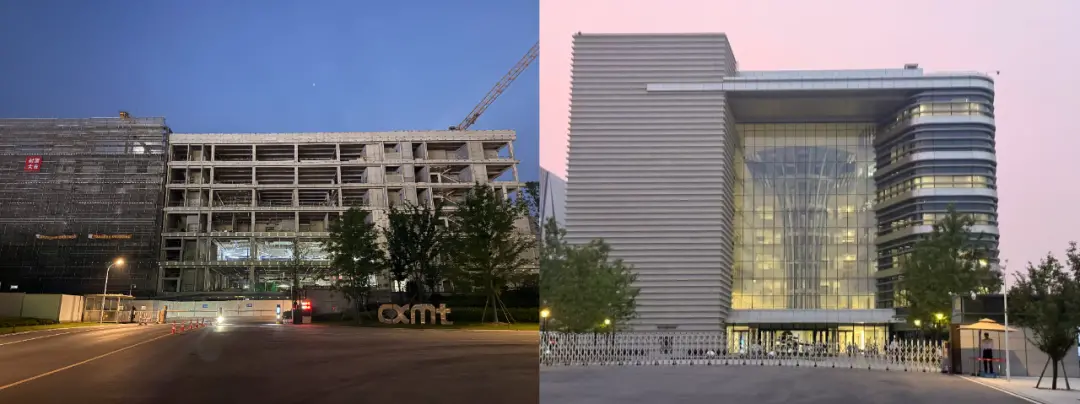
"The security requirements here are also very high." The driver who sent me here said that Changxin prefers young people, no tattoos, and good appearance. "But the salary is also high, seven to eight thousand yuan, which is higher than the price offered by Weilai next door." He has familiar friends here, but he can't use his mobile phone during normal work.
There are only two kinds of people here: local families who have benefited from house demolition and renovation and live and work in peace and contentment, and foreigners who work in "factories".
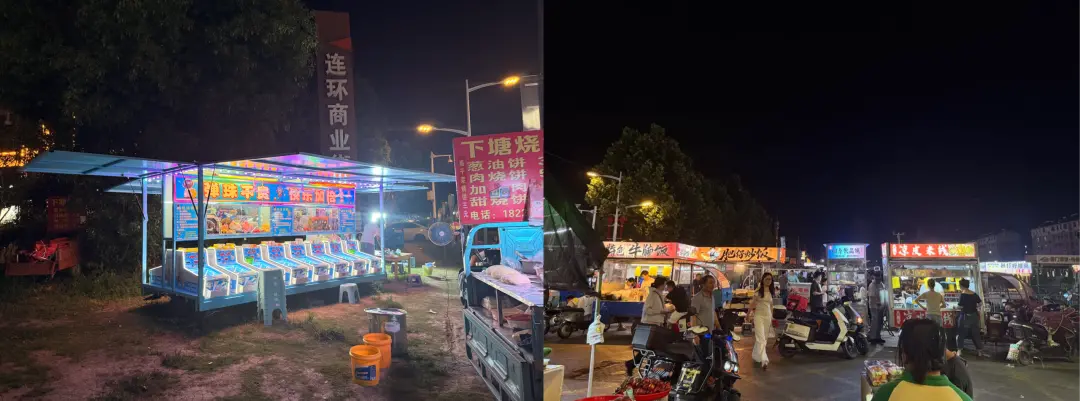
In squares and traffic light intersections, there are leisurely aunties groups playing music and dancing. The smoke of fireworks was thick, and it was nearby residents who had set up greenhouses and pushed carts to do small retail businesses. The people who looked tired and were wearing yellow and green work clothes and safety helmets were construction workers in the surrounding buildings.
Most of the young people who were in a hurry and traveling in groups were Changxin employees who had just gotten off work.
They basically only have two forms: empty hands, only their work ID hanging around their necks, and only clutching their mobile phones. Their homes are nearby and they don’t have to worry about going to work; if there is a backpack, it must be a black or gray backpack carried by men - most of them are suppliers traveling from other places.
The day of my visit happened to be Changxin’s tenth anniversary. Many employees carried blue gift boxes, which contained water bottles, cultural shirts and letters signed by CEO Zhu Yiming. "AI is starting a new round of industrial revolution, and investment in advanced manufacturing processes will only increase... In the next decade, we will let the world see our answers on our battlefields."
This letter confirms the industrial cycle that Changxin is in. The explosive growth of large AI models in the past few years has driven huge demand for HBM and server DRAM, and has also allowed Changxin to turn losses into profits on an extremely steep curve. After Changxin has established a foothold in niche products such as DDR4 and LPDDR4X, the next step is to extend to higher value-added areas such as DDR5 - this is both an opportunity and a new round of huge capital expenditures.
Their business badges have also just been "upgraded": the first generation was white with only a blue-green circuit board printed on it; the new version has corporate culture printed on it: always maintaining entrepreneurship, first, execution, and integrity.
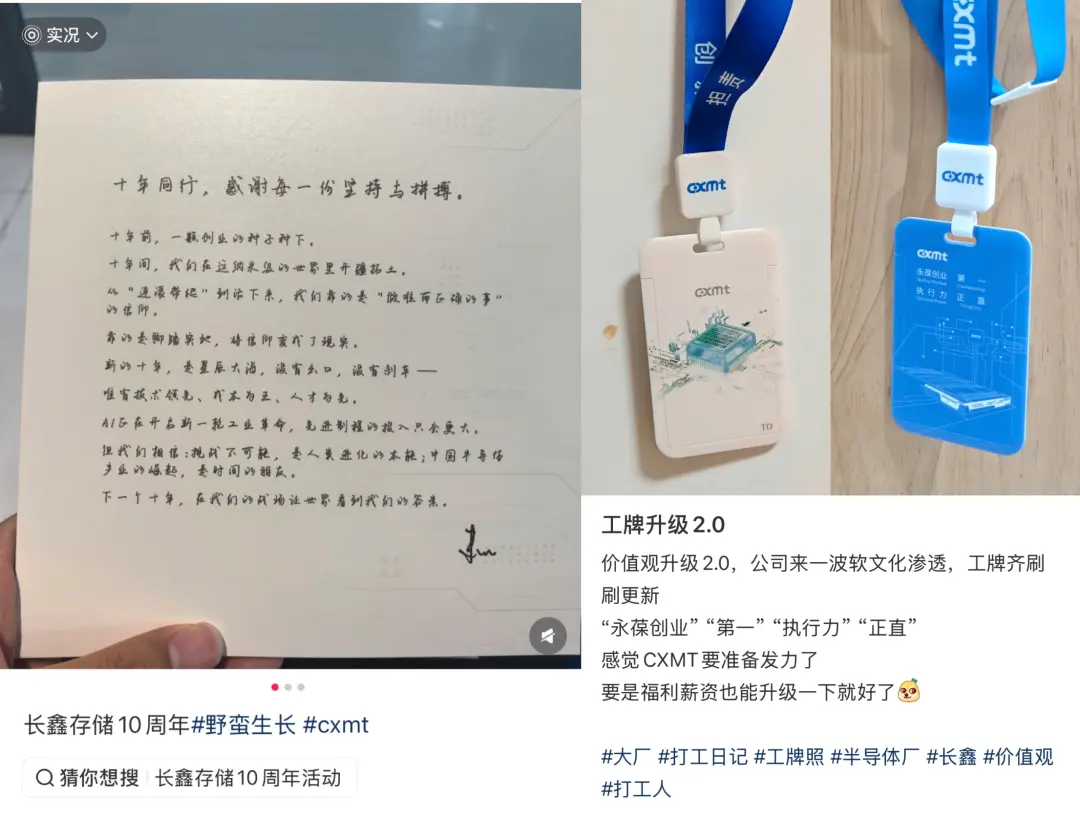
Picture source|Xiaohongshu
Because of the rich surrounding businesses, employees’ lives are almost “covered” by the company: there are canteens, gyms, and Starbucks in the park, and outside the park there are apartment buildings, basketball courts, football fields, resident activity centers, and commercial streets.
Even though most of the living areas are within walking distance, one driver told me that the nearest order he took was only 600 meters away, and he got off as soon as he got on. "The company reimburses us anyway, so those who are too lazy to walk take a taxi."
"It takes orders very quickly here. There are no buses or shared bicycles. They all take taxis." The starting price is 6 yuan, which can almost meet the daily commuting needs of most Changxin employees. Outside the Changxin Storage Gate, small electric donkeys are parked densely, and occasionally one or two electric scooters are interspersed - apart from taxis, this is the common means of transportation for employees.
Looking from outside the east gate, the familiar green mermaid logo of the Crown lights up together with the CXMt on the roof. There is a local rumor that this Starbucks near the east gate of Changxin Storage is the best-selling Starbucks in Hefei - even though it is enclosed in the park, it does not allow delivery and only serves Changxin employees.
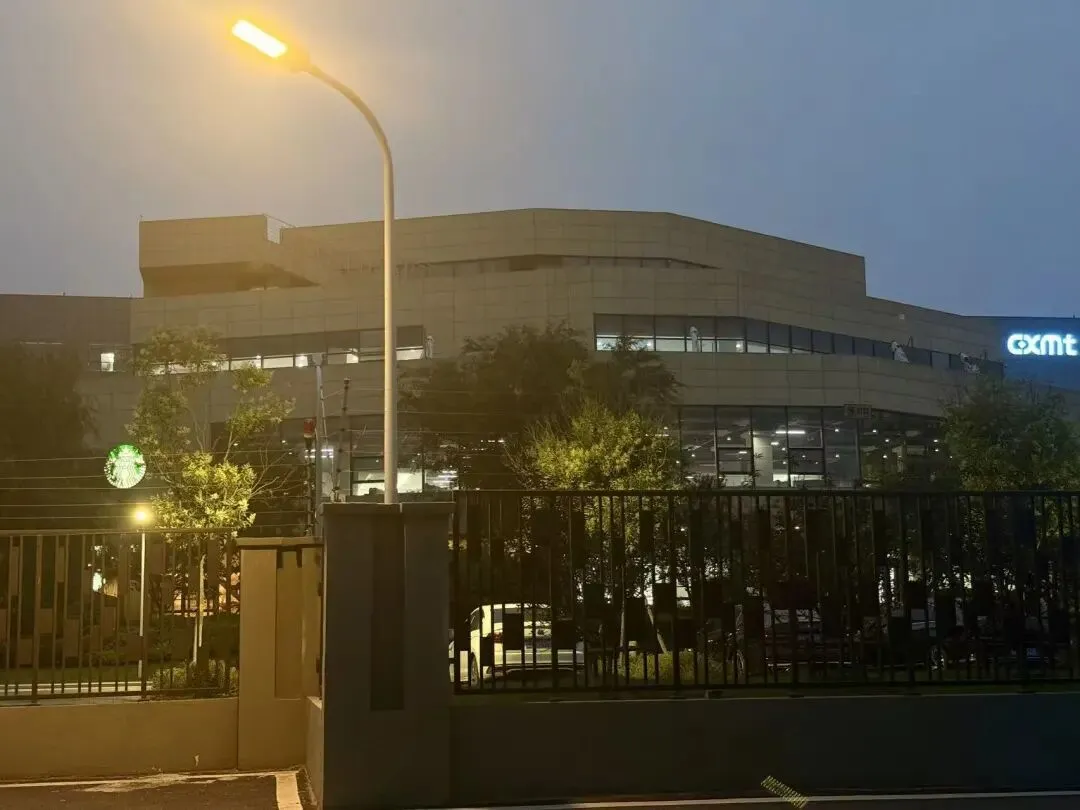
The east gate faces a T-shaped intersection, and the vertical hook of "D" is a bridge less than 200 meters long. To the right, there is the "Changxin Technology Core Source Space" which is still under construction; to the left, you can turn to the most prosperous street in this area. On the map, it's called Shushan District Shuojin Commercial Plaza. But it doesn’t take more than 15 minutes to finish shopping.
KTV, Internet cafes, pubs, clubs...all integrated in one building. Next to it are Hualian Supermarket, Luckin Coffee, Kawangka and other catering businesses. Although it is 20 kilometers away from the nearest urban edge, it has grown into a small "new city center" around Changxin.
Centered on the Changxin Storage Park, to the east is an unnamed river flowing from the upstream reservoir, and the urban green space developed by Hefei City. Entertainment facilities and fitness equipment have also been built for surrounding residents to play, relax and "walk their children".
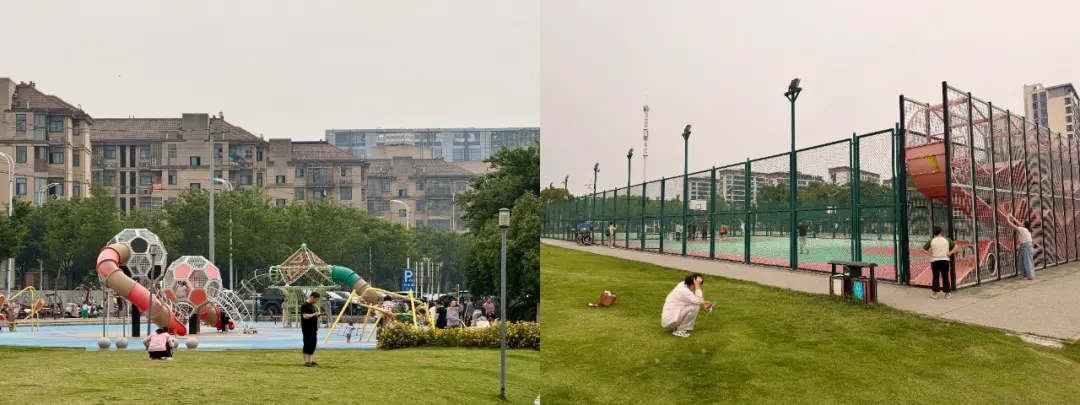
The road closest to the south gate is "Shuofang Road" - because of its remote location, this road is also nicknamed "Master's Road of Exile" by employees.
If you go out from the south gate of Changxin and walk 231 meters, you can reach Changxin Apartment in 3 minutes, which is the dormitory building built by Changxin in 2019. You also need to swipe the gate to enter the apartment. There are uniformed security guards standing guard at the door, and the same "Lightning Warning" in red letters on a yellow background is on the wall.
As the population expanded, the apartments built earlier were no longer sufficient. Looking from the east entrance of the apartment, we can see that a new dormitory building is still under construction at the end of the park - although it is for two people per room, it is particularly popular because of the subsidies (free in the first year, 300 to 400 per month in the following year).
Changxin Jiayuan at the north end will be completed in early 2023 and looks more "luxurious". There are 15 buildings, most of which are large two- and three-bedroom apartments. The service targets are senior employees with their families. The purchase qualifications are also clearly limited to "key talents and management personnel of Hefei Advanced DRAM Project".
The community is spacious and bright, equipped with a children's activity plaza, outdoor fitness area, and even a living room with a landscaped gallery. The surrounding area is also equipped with educational resources such as Hefei No. 80 Middle School, Hefei 168 Xinqiao School, and Changgang Central Kindergarten.
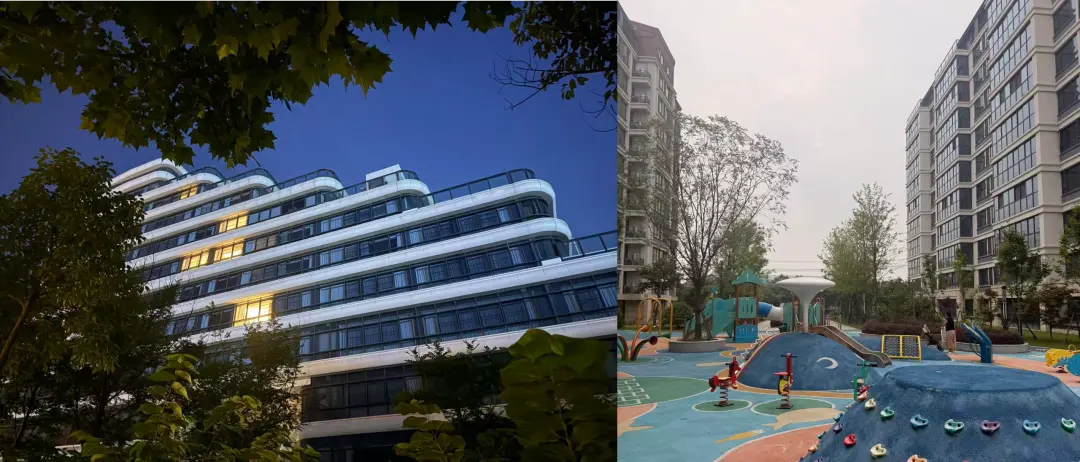
Pictured on the left|Exterior of Changxin Apartment; Pictured on the right|Interior of Changxin Jiayuan
And if they can't get into the "official dormitory", nearby relocation housing is also an option for new employees.
Xinqiao Jiayuan and Huanhuan Xincun, the two communities closest to Changxin, were the first batch of resettlement houses to be built. They have complete village history museums, kindergartens, and city library branches. During the renovation and relocation of the town, each person was compensated 75 square meters per person. It was common for a family to be assigned multiple suites. Most of the elderly people stay in the local area, and most young people work in other places or urban areas. The vacant houses are rented out to "outsiders" who work in Changxin, with annual rents of 10,000 to 20,000.
The largest group of tenants in these relocation houses are the technical experts who support the "Big Mac" Changxin. This has led to the creation of surrounding supporting living areas in this remote area with a growth structure similar to the urban-rural fringe.
In the community closest to Changxin, two rows of greenhouses were set up at the entrance of Lianlian New Village, mostly selling grilled fish and crayfish. A kilometer or two further away are the newer Qihang Nanyuan and Qihang Beiyuan, as well as the Starair South and North Garden, which was only completed at the end of 2025 - they are also where new employees will stay after the number of people is gradually expanded.

Waiting for listing
On May 27 this year, the IPO application of Changxin Technology’s Science and Technology Innovation Board was officially reviewed by the Listing Committee of the Shanghai Stock Exchange, becoming the first project to pass the meeting after the pilot IPO pre-review mechanism of the Science and Technology Innovation Board. It plans to raise 29.5 billion yuan, making it the second largest IPO in the history of the Science and Technology Innovation Board after SMIC.
"You are no longer just a click-and-deliver Xin brother." The college students lamented.
In early June, the recruitment scene at the University of Science and Technology of China was packed with people. People were standing on the steps of the large classroom. Students who had come to listen to the lecture were even squeezed out of the auditorium door.
This is Changxin’s 2027 campus recruitment in advance. The first three stops were local universities in Hefei: University of Science and Technology of China, Hefei University of Technology, and Anhui University. "Last year, the job number was 25,000, but this year it's almost 37,000." Some employees lamented the rapid expansion of recruitment.
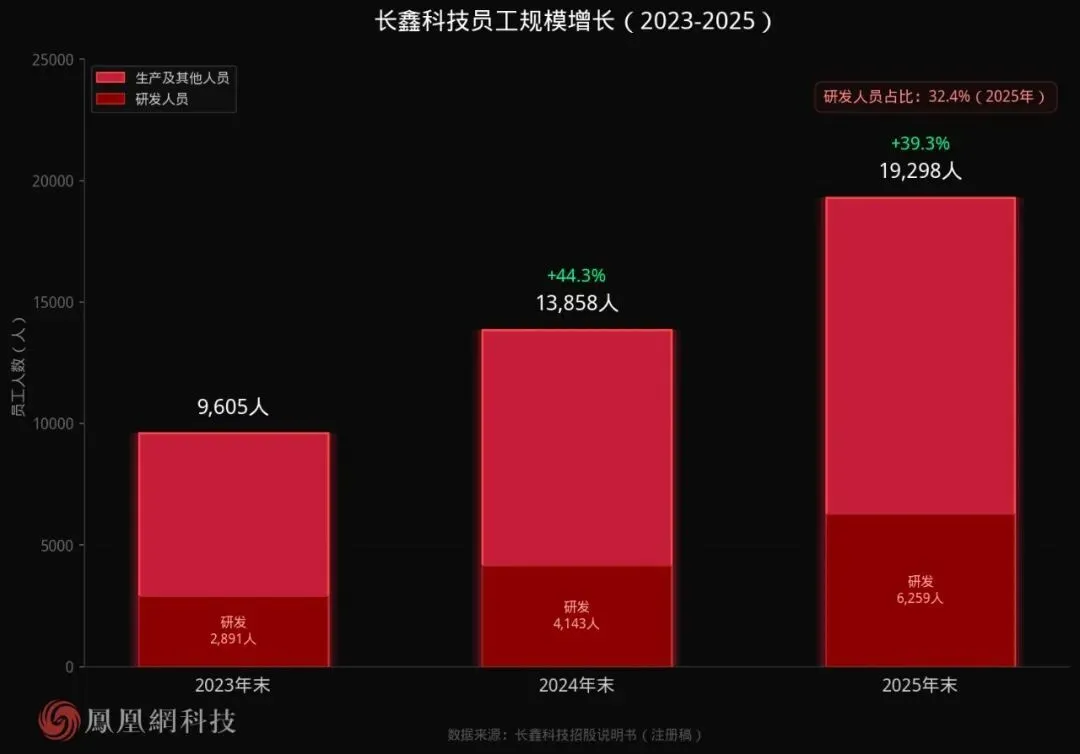
Figure|Changxin Technology’s employee base grows
This rapid expansion is a direct reflection of the strong cycle of the semiconductor industry. From 2024 to 2025, global memory chips will emerge from a deep downturn driven by AI demand, prices will rebound, and manufacturers will shift from production reduction to expansion. Changxin's Hefei base and Beijing base are simultaneously advancing the second phase of the project, and the demand for technical personnel has exploded. But anyone familiar with this industry knows that memory chips go through a "boom-recession" cycle every three to four years, and the frenzied recruitment at the moment may be foreshadowing the next round of fluctuations.
But some professionals in the storage industry chain told us that this storage cycle is different from any other period in history, because no one knows how much the demand for AI will expand.
Several fresh graduates who attended the seminar told us that the market price offered by Changxin is about 300,000 yuan for a master's degree and 400,000 to 500,000 yuan for a doctorate degree. "It's not as high as the Internet, but for our chemistry major, it's already a high salary."
At various presentations, Changxin will admit that its salary level is very high, but at the same time the intensity of work is also very high, and it is clearly mentioned that some positions require "24-hour on call (standby)".
But this did not affect the enthusiasm of the students. "There are many directions within semiconductors, such as device direction and design direction. Changxin Memory covers a wide range of directions, so it will attract many people from different directions." A 985 master's student majoring in microelectronics said that within the semiconductor industry, especially in the device direction, Changxin's salary is very high, "so many students in the device direction will want to transfer here."
When it comes to the "share split" issue that applicants are concerned about, HR will generally be dismissive: "The listing time has not yet been determined. After the listing, an incentive plan will be formulated to allocate original shares to employees. The plan has not yet been finalized, but there will definitely be one."
In the process of enrollment expansion, Changxin’s desire for talents is also particularly obvious. HR said that it involves many aspects such as chip design, research and development, manufacturing, and sales. "There is no special emphasis on professional restrictions. All majors in science and engineering are welcome."
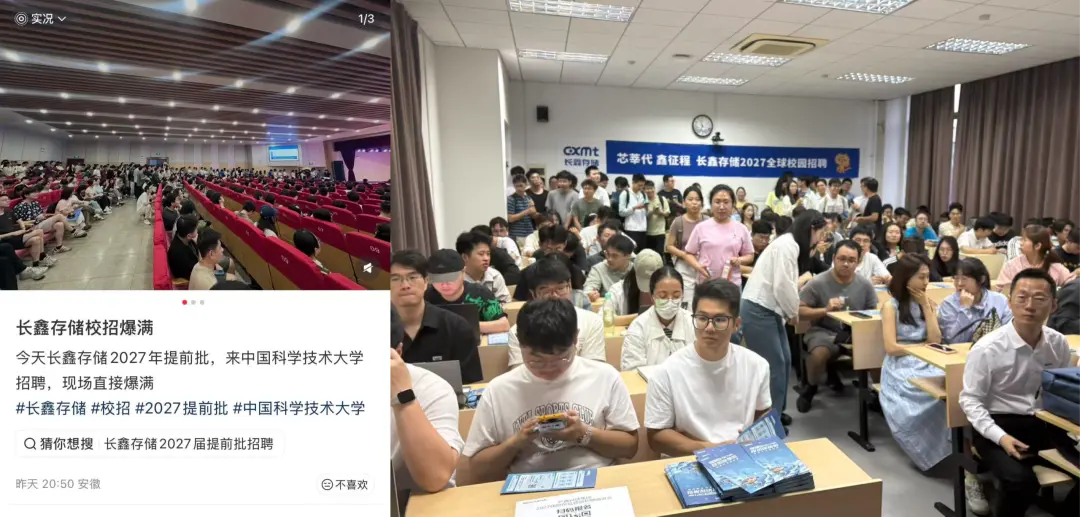
Source of left picture|Xiaohongshu; right picture taken|Fudan University briefing on June 10
"The first 100 employees are very motivated to work now." An early employee took the school recruitment contract he joined in 2017 and wandered in the comment area of Changxin-related social media to show his superior vision: "When I came for recruitment, I said I had received 30 billion U.S. dollars. How can a start-up company with this amount of investment be inferior? I didn't hesitate."
At that time, the contract was signed as "Hefei Intelligent Integrated Circuit" - it was soon renamed Ruili Integrated Circuit. Driven by founder Zhu Yiming, it received an investment of 500 million yuan from GigaDevice and was officially renamed Changxin Technology in 2023.
But this "sense of honor" can only be felt by a few early employees. In Changxin, generally speaking, only employees with level L8 or above are entitled to options, and there is a three-year sales restriction period. "No school recruit can be allocated stocks. The original stocks must be of a certain level to be eligible. They will be allocated by the end of 2024, and the number of people allocated will not exceed 6,000." An employee said so.
Ifeng.com Technology learned that Changxin’s rank is the lower the number, the higher the level. When joining the company, a master’s degree is usually L12 and a bachelor’s degree is L13. 8 is already the level of a manager. Every time you advance to a higher rank, your salary will increase for about two to three months.
Starting from 2025, when the company is preparing to go public, even high-level employees will rarely have options when they join the company. Some headhunters said, "Normally, there will be no allocation at the end of 2024, but it will be okay before October."
As early as three or four years ago, Changxin's offer was not so sweet. "As long as you are a normal person, you can get in," a former employee quoted the manager's statement. Some locals also told me, "It's not that difficult to get into, as long as there are internal referrals, it's not difficult." "The first two years of Changxin were the most critical period of rapid expansion and impact. Both the number of projects and the technical requirements were very high. So we had to meet both schedule and quality requirements. Basically, those who can stay are colleagues with better backgrounds and stronger abilities." A Changxin employee told us.
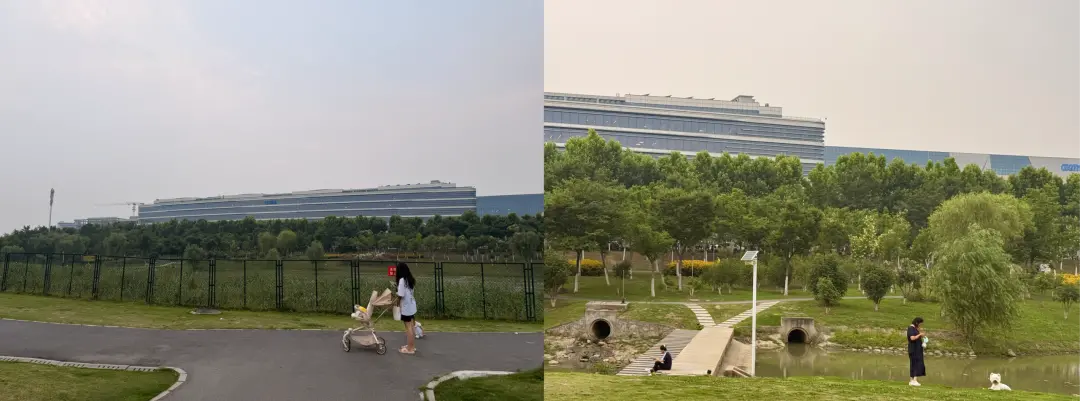
This is also the survival rule of Changxin. When breakthroughs and scientific research work are heavy, without management accumulation similar to Huawei, Changxin has to quickly replace a certain amount of new blood and then forcibly screen. Its philosophy is to recruit new people with strong abilities and adaptability at a higher salary than the market.
However, when young people enter Changxin, they rarely have mentors to guide them, and it is difficult for them to grow from ordinary projects, medium projects, to high-difficulty project echelons. "It just puts the project environment and problems in front of you, and if you find a way to integrate into that environment and work with other colleagues to better solve the problem, you will receive corresponding salary rewards," said the aforementioned employee who resigned. When he resigned, his annual salary was just over 600,000 yuan, and he was promised that he could be promoted to the L8 level in the future. "But even if he is promoted, there is a high probability that he will not get equity."
In fact, Changxin Offer has “dissuaded” many people from quitting due to geographical remoteness, semi-enclosed living, and “60-hour minimum” mandatory overtime.
During the interview, you will be warned that overtime is serious, and 60-70 hours a month is the "starting price." "Even if it is not PE (Process Engineer, process engineer), EE (Equipment Engineer, equipment engineer),
PIE (Process Integration Engineer, process integration engineer) requires rotation and late nights, and "niche" positions also require fifty or sixty hours. "Many Changxin employees said.
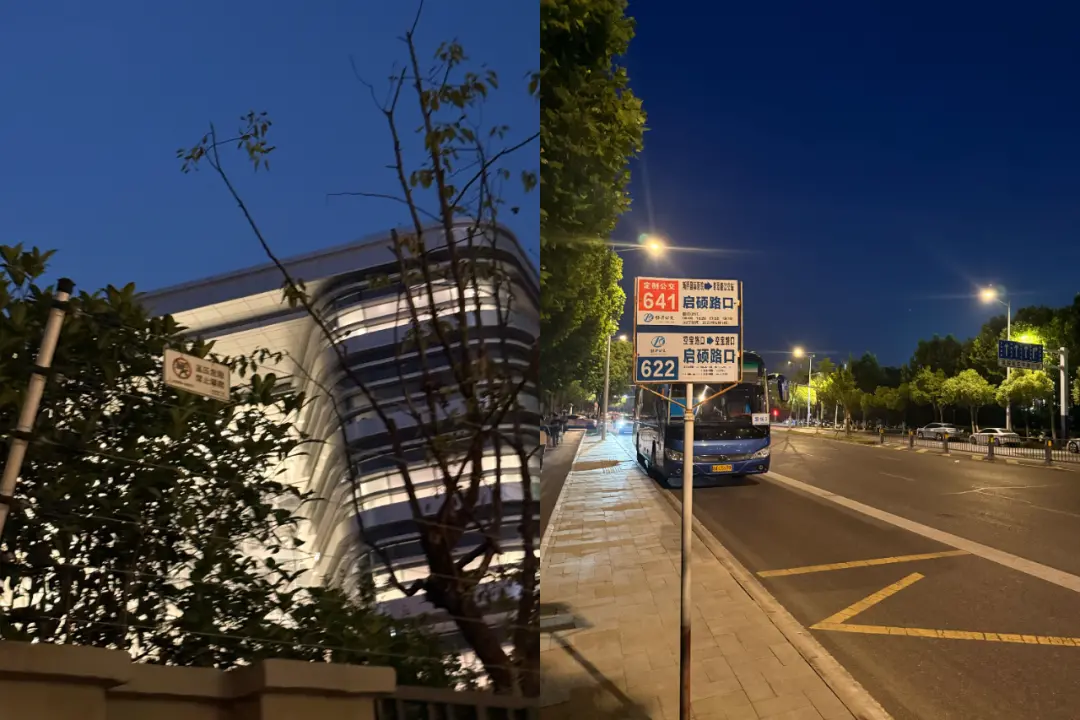
Left picture | Appearance of Changxin Storage; Right picture | Fixed bus line in front of the company
If you work in a Fab (wafer factory), you can't even use WeChat on your mobile phone, you can only make calls. "Going in for a year is like quitting drugs."
Because of the need for technical cooperation, many people cannot stand the pressure of being on call at any time and leave their jobs "just to get a full night's sleep". A school admissions student who just left his job said that he endured an extra half month for the end of the year, but he really couldn't bear the "endless forms to fill out and often answered the phone in the middle of the night." On social platforms, the "Changxin Family" is a typical group that speaks out - "After my husband went in, he didn't go back home much."
In addition to work pressure, career development is also a threshold that candidates consider. “I worked there for five years and came out for an interview, and my work experience was almost cleared with one click.” Some employees believe that, except for Changxin, their technical routes are rarely used in China and their capabilities cannot be transferred. Some employees complained to Phoenix Technology: “Is it possible to skip Samsung or Hynix?”
This concern is not unfounded. The DRAM process is highly customized, and each company has its own technical secrets and patent walls. Changxin started with Infineon (Qimonda) technology licensing and gradually evolved to its own "MX" process platform. The paths of Changxin are not completely connected with Samsung and Hynix, and there are technical barriers to the horizontal flow of talents. But on the other hand, once Changxin’s technology makes a comprehensive breakthrough, the value of talents within the system will become even more scarce.
In the eyes of current school recruiters, this is also a project worth betting on their careers: "The technical barriers to DRAM are very high, and other companies basically don't do it. There is still a bonus period for joining such a company."
"I think it is a relatively ambitious company." Another doctoral student in chemistry from a 985 university said that the day's presentation mentioned that the market share has increased from 4% to 8% in one year. "This speed is quite impressive. It develops quickly and has strong execution and strategic determination."
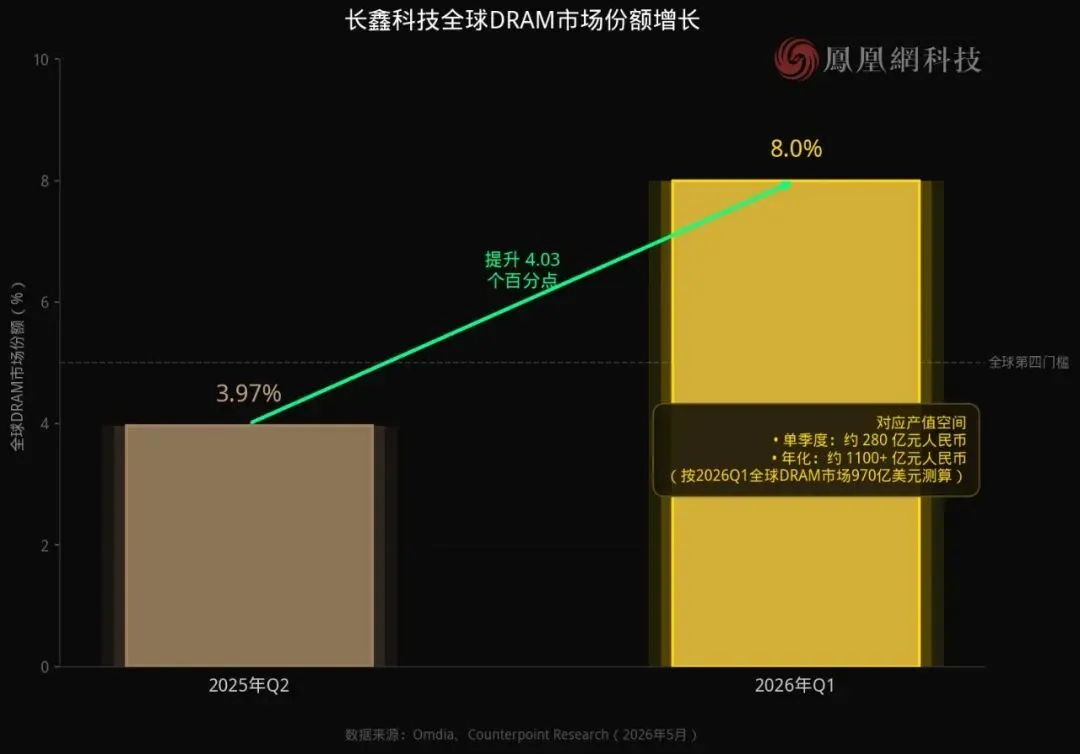
Figure | Changxin Memory’s global DRAM market share growth
In fact, with the surge in market share, Changxin has surpassed Nanya Technology and is approaching the fourth position in the world. In the winner-take-all field of semiconductors, every 1% increase in share means billions of dollars in annual revenue growth.
With the expectation of "Changxin creates wealth", more and more young people are pouring into this popular industry that is in a turbulent harvest period.
Although there are many pessimistic voices - "Stocks have a three-year lock-up period, and the storage industry is a strong cyclical industry. Performance will decline in the second half of next year. We will see how much we can achieve after the lock-up period is lifted."
Historical experience shows that memory chip prices fluctuate violently and profits are huge at the peak of the boom. However, once production capacity is overcapacity and prices collapse, the entire industry may fall into losses. In the last down cycle (2022-2023), Samsung and SK Hynix both experienced sharp declines in profits. Whether Changxin can survive the cycle depends not only on production capacity, but also on the speed of technology iteration and cost control capabilities.
But before the start of a new cycle, Changxin, which finally turned a profit and saw profits soar, continues to exude strong appeal and deterministic returns visible to the naked eye.
On the eve of Changxin's preparations for the IPO, many employees who "share weal and woe" have already received the first wave of dividends.
At a local blind date party in Hefei, a male guest reported his workplace to the audience with a smile, "I am in Changxin Storage." After a two-second pause, he proudly added, "It's very popular right now." There was a commotion in the audience. Seeing the confused look on the face of "Mr. Wang" next to him, "I work in semiconductors," he continued to explain, "Hefei...is one of the best in the country!"