The latest research believes that although it is not impossible in principle to transform Mars into an environment similar to the Earth, the required mass, heat, oxygen and energy scale are far beyond the current technological capabilities of humans, so Mars will remain uninhabitable for a long time in the future. This study published in "APS Open Science" was written by Slava Turyshev of the Jet Propulsion Laboratory in the United States. It focuses on explaining why the terraforming process of Mars is severely slowed down by real-world conditions.
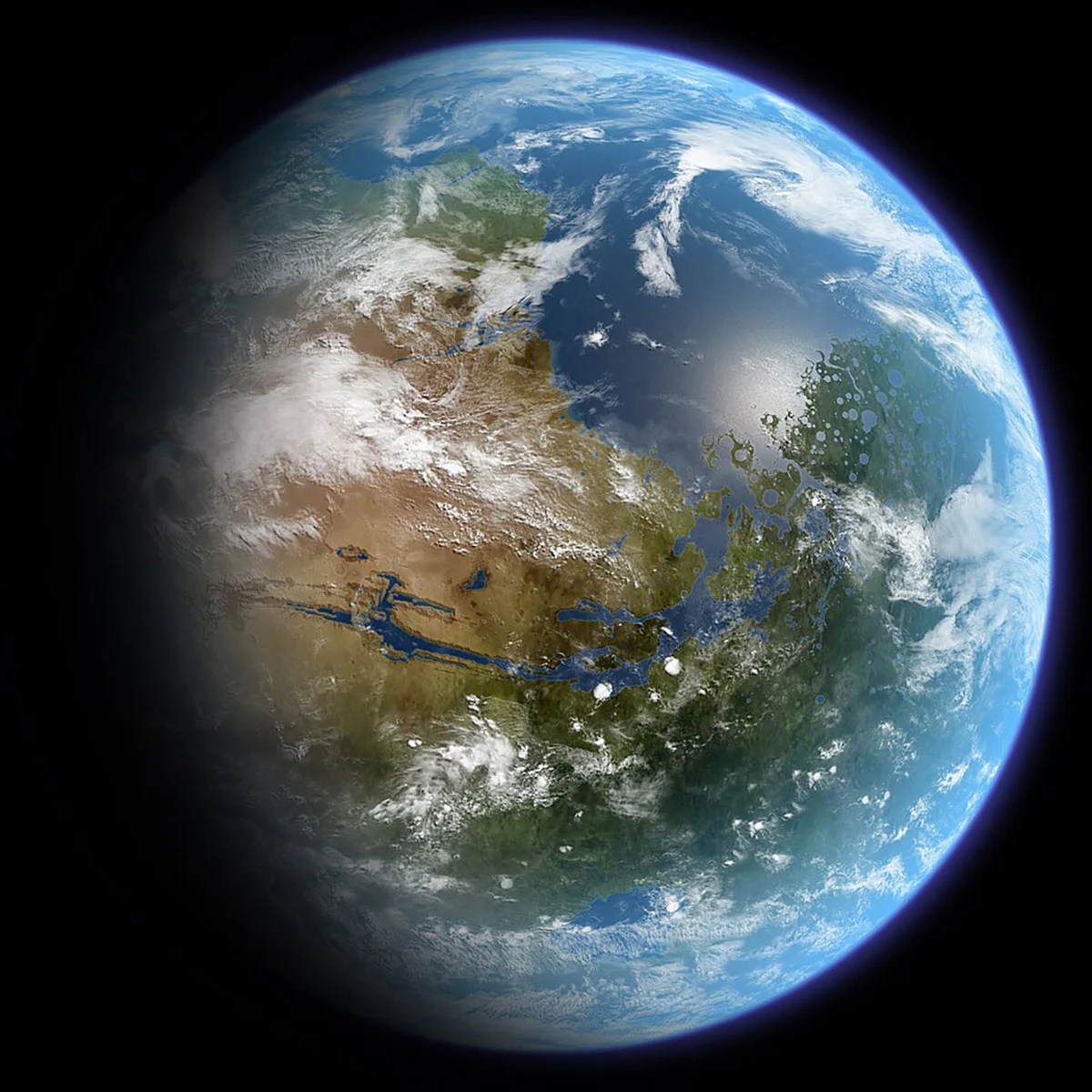
The study breaks down the process of transforming Mars into a habitable planet into several key stages. Mars is currently extremely cold and has a thin atmosphere. If humans want to survive on the surface, they must rely on complex life support systems. The next step is to get the atmospheric pressure at least briefly above water's triple point, which is about 6.1 millibars at 0 degrees Celsius, so that water can coexist as a solid, liquid and gas at the same time. Later, it is necessary to establish a "shirt-sleeve greenhouse" environment suitable for local or regional agriculture, which usually requires relying on a large-scale greenhouse structure; if this model is extended to the world, it will form a state similar to the "world greenhouse", which is called "paraterraforming" in the research.
When the atmospheric pressure continues to rise, and if the surface pressure of Mars reaches 62.7 millibars, human blood will not boil at the surface temperature because the environment is too extreme. True terraforming also requires a breathable atmosphere containing a large amount of nitrogen and about 210 millibars of oxygen, with a total air pressure of about 500 millibars. At the same time, the temperature of Mars must also be significantly higher than today's levels.
But what’s truly daunting is the physical scale behind these goals. To increase the Martian air pressure by just 1 millibar would require an increase of approximately3.89×1015 kg of gas, close to the mass of Phobos. If you want to achieve a full breathable atmosphere, you need to get close to1018 kilograms of matter, roughly equivalent in size to the mass of Saturn's irregular moon Janus. The author of the study pointed out that there are indeed many celestial bodies of similar size in the solar system, so from the perspective of "creating an atmosphere for a planet", this material does not completely exist, but the problem is that humans currently do not have the ability to complete this transfer.
Temperature is also a huge obstacle. The study estimates that for Mars to reach a global average temperature high enough for liquid water to be stable, it would have to warm overall by about 60 degrees Celsius. Various solutions can be envisaged for this, such as injecting nanoparticles that absorb short-wave radiation into the atmosphere, or releasing large amounts of carbon dioxide. There are even engineering ideas to lay giant mirrors to concentrate sunlight to heat Mars. But Turyshev's calculations show that if the mirror heating scheme is adopted, the total mirror area required will reach about 70 million square kilometers, far exceeding current industrial capabilities.
Oxygen production is another hurdle. To create a breathable atmosphere, production of approx.8.2×1017 kg of oxygen, and the most realistic way is to separate oxygen from water. This means more water is consumed because hydrogen is separated during the decomposition process. According to the researchers' estimates, this is equivalent to providing about 6 cubic meters of water per square meter of Mars' surface.
The research isn't all doom and gloom, though. The authors point out that Mars actually has enough water ice on its surface that enough water may be left to form oceans and lakes even after oxygen production needs are met. The total amount of water used to create the atmosphere is only about 20% of Mars' known and easily accessible surface ice reserves. This means that some extreme scenarios - such as constantly bombarding Mars with water-bearing comets to create oceans and gases - may not be necessary.
The real bottleneck is energy. Studies estimate that to separate enough oxygen from water, at least1.2×1025 joules of energy; even if spread over 1000 years, it requires a continuous output of about 380 terawatts of power, which is nearly 20 times the current annual global energy consumption of the earth. The study concluded that it is almost impossible to provide such an energy scale at the current level of human civilization, but future generations may not have no chance at all.
Therefore, the realistic path given by the author is not to immediately try to "transform the entire Mars into the Earth", but to first promote more feasible intermediate goals, such as building closed greenhouses and local stable living areas. Although this type of solution is still far from the actual colonization of Mars, it is at least closer to what is achievable with current technology. The overall message from the research is clear: Mars may one day become more like Earth, but that will be an extremely long and costly project that far exceeds current capabilities.