Apple shares fell after it announced price hikes for Macs, iPads, home devices and Vision Pro to offset rising costs from an unprecedented shortage of memory chips and storage. The price increase was announced on Apple's online retail store on Thursday and is effective globally. The company did not raise the prices of iPhone, Apple Watch or AirPods, but hinted that further price adjustments may be made to more products in the future.
Apple shares closed down 6.1% at $275.15, the largest one-day drop since April 4, 2025.
The starting price of MacBook Neo has increased from US$599 to US$699, while the starting price of the 13-inch MacBook Air has increased from US$1,099 to US$1,299. The starting price of the 14-inch MacBook Pro has increased from US$1,699 to US$1,999, and the starting price of the 16-inch model has increased from US$2,499 to US$2,999.
The starting price of the iMac desktop has increased from US$1,299 to US$1,499, while the starting price of the Mac Studio has increased from US$1,999 to US$2,499.
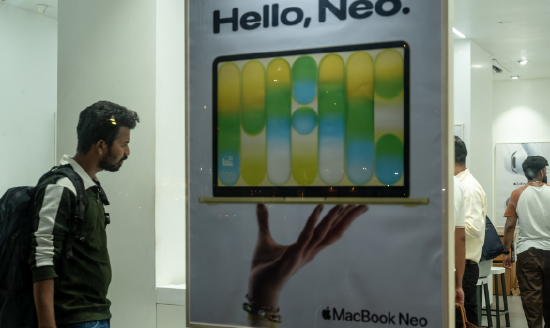
An Apple MacBook Neo advertisement displayed in a Unicorn store, an Apple distributor in Mumbai, India
An Apple spokesperson said that "the rapid expansion of AI data centers has led to an unusual surge in demand for memory chips and storage" and that the company has "never seen such a sharp increase in the price of a certain component so quickly."
Apple also said, "So far, it has been digesting the impact of these price increases for customers, but now the time has come when it must increase the prices of some products, including today's price increases for iPad and Mac."
The price increase is largely unprecedented. Never in Apple’s modern history has there been such a massive across-the-board price increase across multiple product lines. The company has raised prices on individual models before — including raising the price of the iPhone 17 Pro by $100 last year — but never across multiple product categories at once.
"We know this is not welcome news for consumers, and the company is working hard to find a solution," Apple said.
The high-end MacBook Neo with larger storage capacity and Touch ID is now priced at $799, up from the previous price of $699. The top-of-the-line 16-inch MacBook Pro with the highest memory and storage capacity is now $9,999. The 15-inch MacBook Air is now priced at $1,499, up from the previous price of $1,299.
The price of the high-end Mac mini equipped with the M4 Pro chip has risen to US$1,599, higher than the previous price of US$1,399. The price of the basic model of this product has been raised from US$599 to US$799, and the entry-level configuration has been cancelled.
The price of the 11-inch iPad Pro has increased from US$999 to US$1,199, and the price of the 13-inch model has increased from US$1,299 to US$1,499. The 11-inch iPad Air is now priced at $749, up from the previous price of $599, and the 13-inch model is now priced at $949, up from the previous price of $799. The base iPad is now priced at $449, up from the previous price of $349, and the iPad mini is now priced at $599, up from the previous price of $499.
The standard version of the HomePod speaker is now priced at US$349, up from the previous price of US$299, while the HomePod mini has increased from US$99 to US$129. The price of the Apple TV set-top box has increased from US$129 to US$199. The starting price of Apple Vision Pro is now $3,699, up from the previous price of $3,499. The 1TB version is available for $4,199.
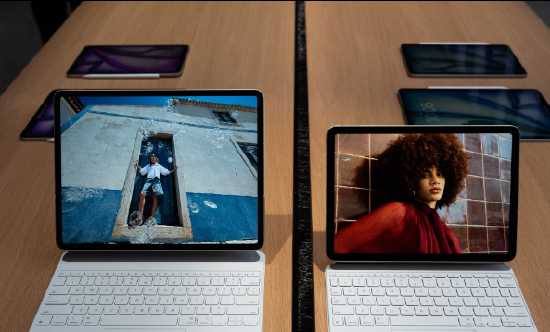
Apple's iPad Air series.
Apple executives said on the company's fiscal second-quarter earnings call that the memory shortage will become more severe during the rest of the year.
Apple CEO Tim Cook said at the time that shortages were also having an impact on supply, with many Mac computers facing longer-term restrictions and shipment delays.