The National Aeronautics and Space Administration (NASA) recently announced based on the latest observation results of the James Webb Space Telescope (JWST) that it has ruled out the possibility of the asteroid 2024 YR4 impacting the moon in December 2032, bringing an end to the potential impact event that has attracted widespread attention.
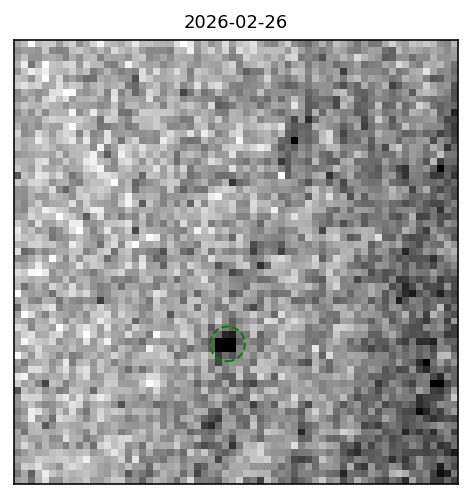
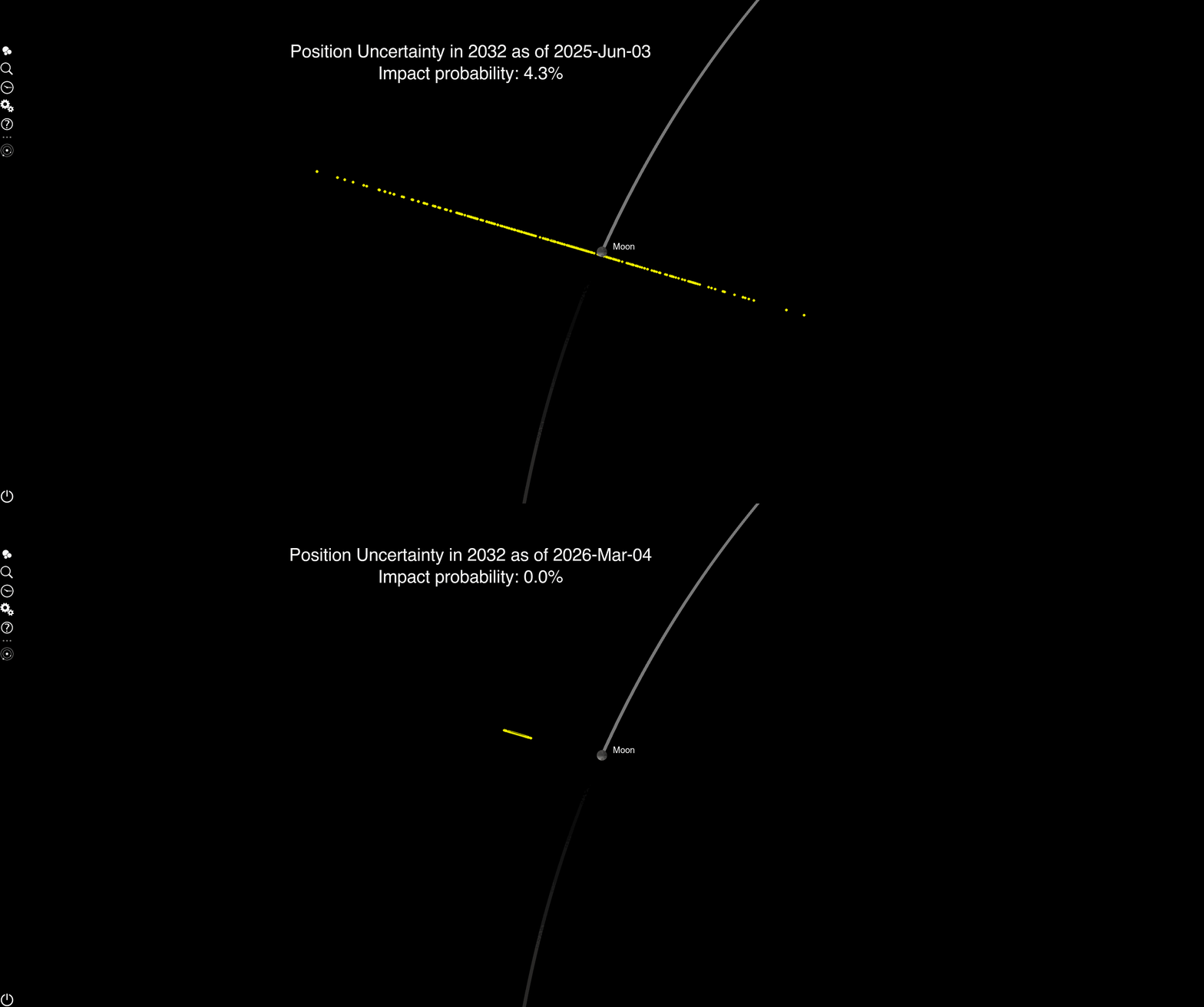
NASA said that new observational data obtained by the Webb telescope on February 18 and 26, 2026, allowed scientists to significantly improve the accuracy of determining the orbit of this near-Earth asteroid, thus "ruling out the possibility of it hitting the moon on December 22, 2032." The latest orbit calculation shows that 2024 YR4 is expected to pass the moon at a distance of about 13,200 miles (about 21,200 kilometers). This update is based on an improvement in the accuracy of orbital parameters, rather than an actual deviation of the asteroid’s orbit.
This conclusion also declares the temporary end of a representative planetary defense case. 2024 YR4 was first discovered by the ATLAS telescope in Chile on December 27, 2024. At that time, its diameter was estimated to be about 60 meters, and it was considered to have a small probability of impacting the Earth on December 22, 2032. With the accumulation of subsequent observational data, this impact probability once rose to about 3%, one of the highest values recorded for an asteroid of this size class, and then continued to decrease as the orbit solution continued to be refined. By early 2025, observations from around the world had ruled out the possibility of it posing a major threat to the Earth, but astronomers immediately discovered another scenario: 2024 YR4 still has about a 4% chance of hitting the moon in 2032.
The European Space Agency (ESA) previously pointed out in its assessment that the probability of asteroid 2024 YR4 hitting the moon on December 22, 2032 is about 4%, while "the probability of no impact is 96%." ESA also emphasized that if the impact did occur, it would be an extremely rare event with important scientific value. Richard Moissl, head of ESA's Planetary Defense Office, said that it is extremely rare for an asteroid of this size to hit the moon, and what is even rarer is that humans can know its trajectory in advance before the impact occurs. He pointed out that such an impact would most likely be directly observed from Earth, providing the scientific community with a valuable opportunity to analyze the impact process and its consequences.
Moisl said that such an impact event "will almost certainly leave a new crater on the lunar surface," but it is currently impossible to accurately predict in advance how much material will be ejected by the impact, nor can it be determined whether any material will escape into space near the Earth. Even so, scientists generally believe that the direct harm to the earth itself from such events is extremely low, and the greater significance lies in deepening the understanding of the dynamics of small celestial body impacts.
The discovery and follow-up of 2024 YR4 also exposed a "blind spot" in the current planetary defense system. Because the asteroid approaches the Earth from the sun, it has been in the background of strong sunlight for a period of time before and after its closest approach to the Earth, making it difficult to detect by ground-based optical telescopes. Moisl said that the team also used this to test the performance of Neomir, the near-Earth object monitoring mission being planned by ESA, under similar scenarios. The simulation results "surprised even ourselves." Simulations show that if Neomir is already in orbit, it can detect 2024 YR4 about a month earlier than ground-based telescopes, giving astronomers more time to determine its orbit and rule out the possibility of it hitting the Earth earlier in 2032.
Moisl also pointed out that as an infrared telescope, Neomir works similarly to the Webb telescope and can directly observe the thermal radiation of asteroids in the infrared band. This not only improves the detection of faint targets in the background near the sun, but also allows for faster and more accurate estimation of the size of asteroids, which is crucial for assessing the degree of potential damage. NASA's observation of 2024 YR4 using the Webb telescope was described as "one of the faintest observations of an asteroid ever carried out." It extended its observation arc for nearly 8 months at a stage when the target's brightness was so low that it was difficult for other telescopes to detect it. This extended observation time effectively eliminated the remaining uncertainty in its flyby trajectory in 2032, ultimately leading to the conclusion that the possibility of a lunar impact was ruled out.
From the perspective of planetary defense, the scientific community generally believes that although 2024 YR4 has been confirmed not to threaten the earth or the moon, its discovery and subsequent disposal process can be regarded as an important "practical exercise." This case shows how, under conditions with limited initial information and unclear orbits, the international community can continuously update risk assessments through continuous observation, data sharing and orbit calculations, transforming an asteroid that was once considered a potential threat into a target with a highly predictable orbit and controllable risks. Relevant agencies have also taken this opportunity to further emphasize the importance of developing space-based infrared monitoring capabilities to make up for the lack of detection of ground systems in key areas such as the direction of the sun.
The official information from NASA and ESA quoted in the article also indicates that the construction of future planetary defense systems will increasingly rely on the collaborative work of ground and space platforms. For asteroids like 2024 YR4, which are numerous and have a size of tens of meters, early detection and accurate orbit measurement are still the keys to reducing potential threats and avoiding unnecessary panic among the public. In this event, the new observations not only eliminated concerns about a possible impact in 2032, but also provided valuable experience for improving the global planetary defense system in the future.