More details of Apple’s upcoming flagship phone iPhone 18 Pro, which will be released in 2026, have recently been revealed. The relevant information comes from 630GB of confidential documents leaked after a cyber attack on the Tata Group factory, including motherboard design drawings, bill of materials, and technical documents such as A20 Pro chip and camera configuration. The latest analysis shows that Apple may adopt a mixed solution "differentiated by region" for cellular basebands. The US version will continue to rely on Qualcomm modems, while models in other regions will use Apple's self-developed C2 baseband chips.
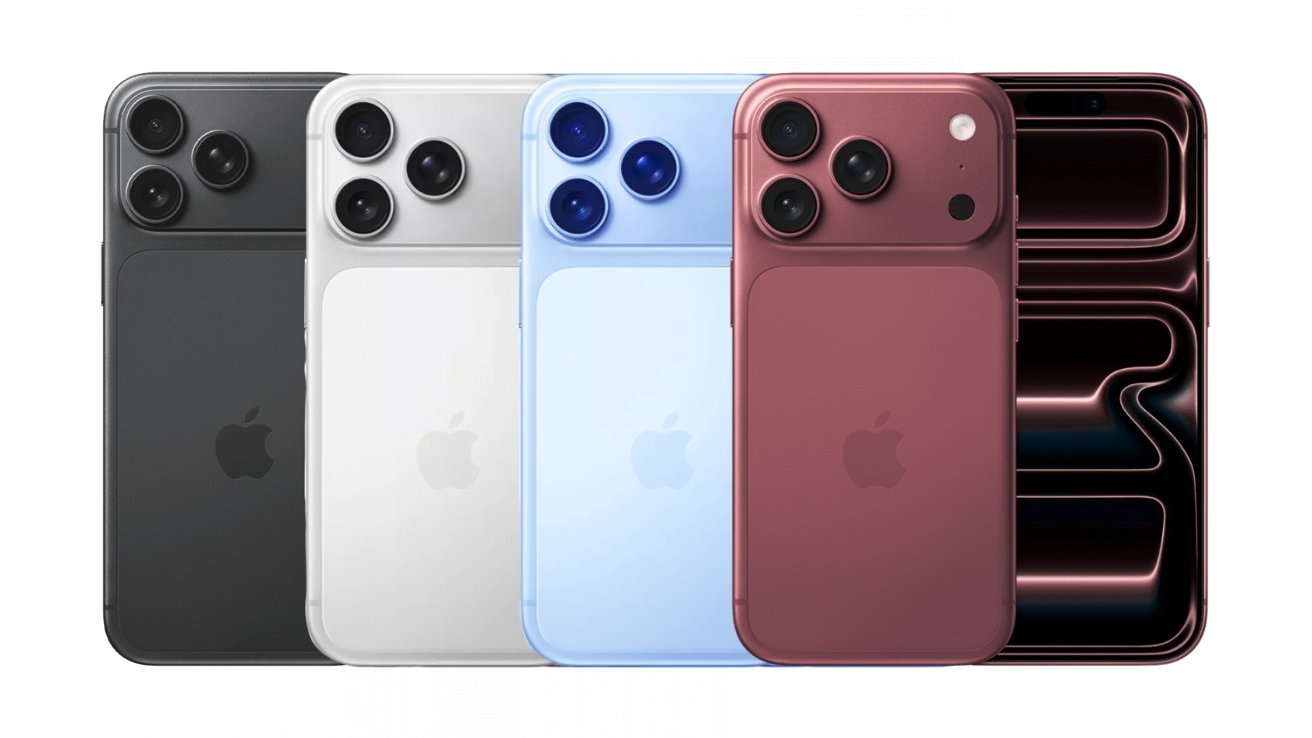
According to Apple’s internal bill of materials, the iPhone 18 Pro models in the US market will support 5G millimeter wave networks and be equipped with a variety of Qualcomm components, including SDX80M, SDR875, QDM8771, QDM8720, PMK75, PMX75 and QET7100A. The overall solution continues Qualcomm’s mature millimeter wave solutions. In contrast, the iPhone 18 series models planned to be sold in other regions are marked by documents as using Apple’s self-developed C2 modem, continuing to promote the baseband self-sufficiency layout.
Judging from the available information, Apple’s self-developed basebands C1 and C1X still do not support millimeter waves, and the C2 chip seems to have continued this limitation. This is considered to be the main reason why the US version of iPhone 18 Pro continues to rely on Qualcomm hardware. In Apple's existing iPhone 17 product line, there has been a situation where "self-developed baseband + Qualcomm baseband" coexist. Among them, iPhone Air and iPhone 17e use Apple's self-developed baseband, while iPhone 17, iPhone 17 Pro and iPhone 17 Pro Max are still equipped with Qualcomm solutions.
The leaked motherboard design also shows that the iPhone 18 Pro will be further subdivided at the hardware level: among them, the logic motherboard model number 820-04340-06 integrates millimeter wave connectors and Qualcomm modems, corresponding to models that support millimeter waves; while the logic motherboard number 820-04305-06 is a non-millimeter wave version, which is speculated to be mainly aimed at markets that do not deploy millimeter wave networks. This platform strategy of differentiating hardware “by region and network form” will allow iPhone 18 Pro to present a more complex combination of cellular connection experiences.
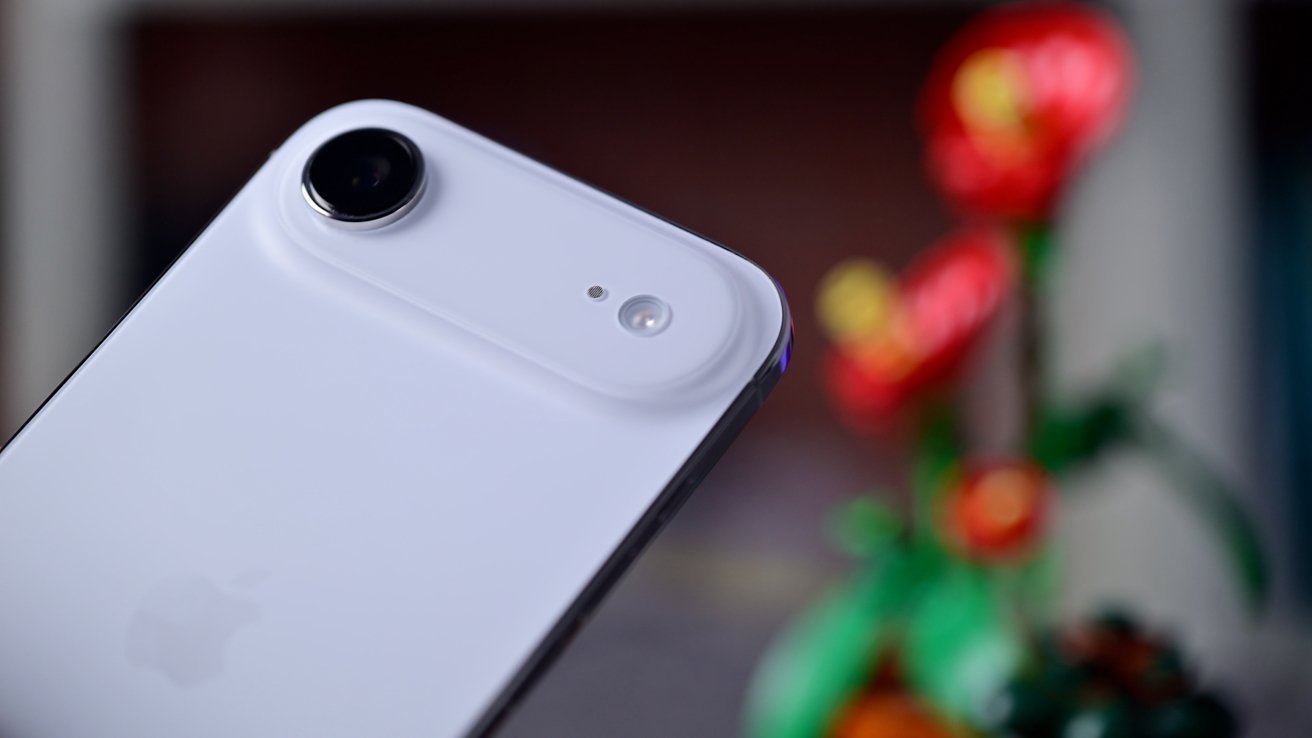
In terms of regional differences in cellular functions, changes in the Chinese mainland market are also of great concern. Among the iPhone models currently on sale, the mainland China version does not support eSIM, but mainly uses dual-entity SIM cards. However, a regional configuration list in Tata's leaked document shows that "dual-entity SIM will no longer be provided starting from the V64 P2 stage." It also clearly mentions that the "CN" configuration will support a combination of eSIM and physical SIM, which means that the future iPhone 18 Pro / Pro Max models in mainland China are expected to introduce eSIM support for the first time.
In terms of processors, the A20 Pro chip, internally codenamed "Borneo", also appeared in leaked documents. Relevant technical documents show that Apple is expected to use the WMCM packaging process on the A20 Pro instead of the currently common InFO-PoP packaging. WMCM is a wafer-level multi-chip packaging form that can place application processors and memory side by side under the same package instead of stacked packaging like InFO-PoP, bringing more flexible chip stacking and thermal design space.
In the existing InFO solution, the core logic such as CPU, GPU and neural network engine are located on the same chip, while the memory is an additional component within the package, and the overall configuration is relatively fixed. The WMCM design allows Apple to split the CPU, GPU and neural network engine into different chip dies, and then combine them through packaging interconnection. This provides the possibility to launch more differentiated chip configurations based on performance, power consumption or positioning in the future, which is conducive to opening up product gradients between different models.
The document also shows that in the dual-layer motherboard design of the iPhone 18 Pro, the A20 Pro system-on-chip will be located closer to the edge of the motherboard, while the body memory chip will be placed deeper between the two-layer motherboards. This layout adjustment is expected to have a certain impact on the heat dissipation performance and maintainability of the entire machine, but the specific extent of the impact still needs to be verified by subsequent disassembly and testing of the actual machine.
On the imaging system, diagnostic data comparison shows that the wide-angle main camera sensor ID of iPhone 18 Pro has changed from 0x903 of iPhone 17 Pro to 0x905, which means that the main camera hardware will be upgraded. It is known that the iPhone 17 Pro uses Sony's customized IMX-903 sensor, so it is widely speculated in the industry that the iPhone 18 Pro will be equipped with a new Sony IMX-905 sensor, which is a new generation of flagship image sensors customized for Apple.
Previous rumors in October 2025, February 2026 and April 2026 mentioned that the iPhone 18 Pro wide-angle main camera is expected to introduce a variable aperture design, giving users stronger depth of field control and more flexible adjustment space for the amount of light. If the above configuration is implemented, the variable aperture will reduce the reliance on computational photography to a certain extent, and the blur effect will be closer to the optical imaging performance of traditional cameras.
It should be pointed out that most of the motherboard drawings and design documents leaked this time correspond to prototype hardware that is still in different stages of development, including early versions and engineering prototypes at different stages such as Proto2. It is not yet confirmed whether these designs have been finalized. Apple may still adjust details such as modem solutions, chip packaging or camera modules before mass production. Therefore, there are still certain variables in the specific configuration of the final mass-produced iPhone 18 Pro/Pro Max.