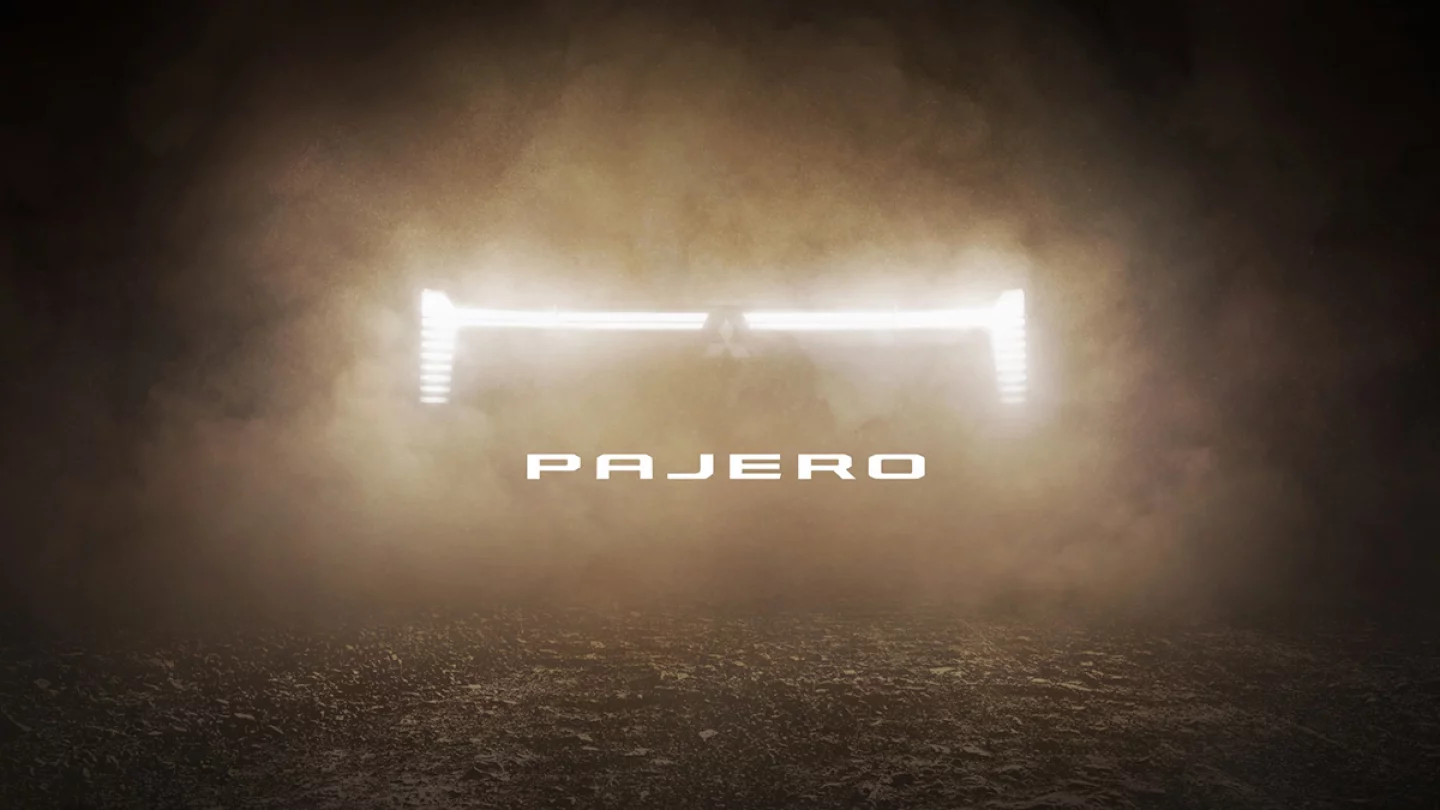
Mitsubishi Motors recently officially announced that the full-size SUV model Pajero (known as Montero in some markets), which has been famous in the global off-road circle and the Dakar Rally, will officially return in the northern hemisphere autumn this year after being discontinued for five years, and will launch a new digital "Multi Meter" multi-function off-road instrument to pay tribute to its hardcore off-road tradition.

Pajero was born in the 1980s. The early models were famous for their simple cross-country long-distance off-road performance. Later, the car series went through many evolutions. It not only launched the performance-oriented Evolution version, but also reduced the body size and became one of the smallest four-wheel drive vehicles at the time. Subsequent generations further developed in the direction of comfort and multi-functional household use. As of the suspension of production, cumulative sales of Pajero in nearly 170 countries have exceeded 3 million units. However, amid declining demand, Mitsubishi Motors announced the end of production of this car series in 2021. Since then, Mitsubishi has promoted a merger plan with Honda and Nissan, but the plan was shelved last year, leaving the brand's future trends relatively silent.

An important highlight of the new generation of Pajero is the reintroduction of classic off-road auxiliary instruments and their comprehensive digital upgrade. In previous models, a mechanical inclination angle meter and pointer instruments such as battery voltage and oil pressure were installed above the Pajero dashboard to facilitate drivers to grasp the vehicle status in complex off-road environments. The new model will integrate a digital "Multi Meter" in the central control area to display the vehicle's longitudinal pitch angle and lateral roll angle in real time. It also provides information on ambient temperature, altitude, compass orientation, and torque distribution of the left and right wheels, helping the driver to more intuitively judge the vehicle's attitude and road conditions, thus improving the confidence and safety margin when passing in unknown terrain.

Mitsubishi Motors said that this digital off-road information display system is designed to evoke off-road enthusiasts’ emotional memories of Pajero’s heritage and continue the model’s hardcore image in the electronic age. Officials predict that the new generation of Pajero will be launched in the 2027 model, with a time window roughly between September and November, and plans for multiple configuration levels and more luxurious interior options to cover the needs of both off-road players and home users.
Judging from the promotional images released so far, the new Pajero has undergone obvious style changes in appearance. Past generations of models have been known for their tough box-like lines and "box-shaped" profiles that run through the front and rear. The new model's front face adopts a narrower strip-shaped LED headlight design, and the overall shape is closer to the current mainstream urban SUV. There is a certain difference in recognition compared with the traditional hardcore image, which may trigger discussions about the design route among old car fans.
In terms of market planning, industry reports indicate that Pajero/Montero's return to the North American market may be significantly delayed. According to Motor1 citing sources from dealer channels, the model is not expected to be officially launched in the U.S. market until around 2030 at the earliest, which means that North American consumers will still miss out on the new generation of Pajero in the short term. Despite this, with its off-road pedigree, digital off-road instrumentation and global sales base, Pajero's comeback is still seen as an important signal for the Mitsubishi brand to re-emphasize its presence in the SUV and four-wheel drive fields.