Singaporean startup Acti recently released a "smart agent keyboard" application for iOS and Android, trying to directly integrate AI assistants into the interface that users use most frequently every day - smartphone keyboards. This keyboard can not only predict the next word, but also actively perform operations in various applications such as email, messaging, social media, etc., bringing a variety of AI tools directly into existing application scenarios.
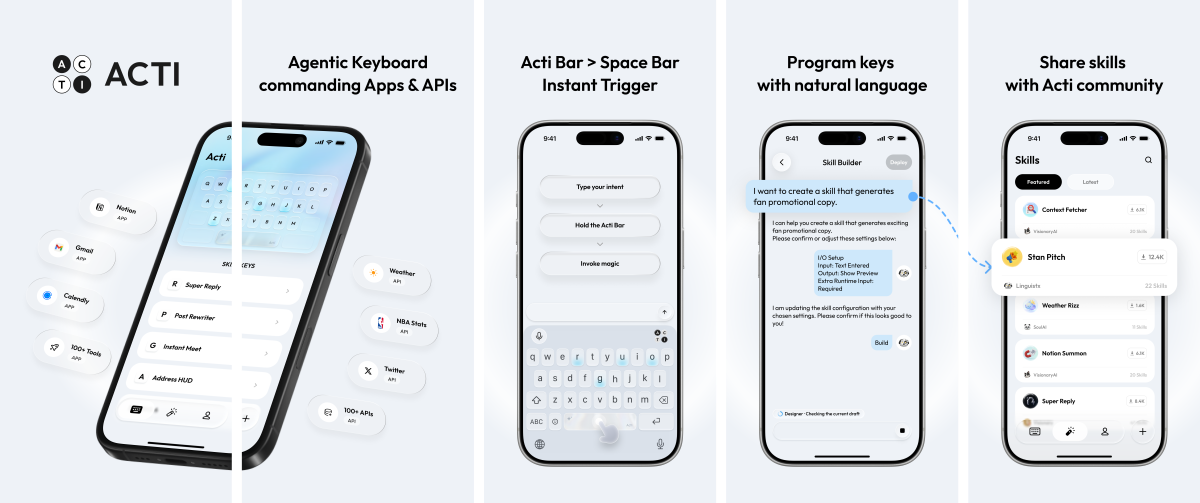
Acti founder and CEO Wang Yang said that when using AI, users often need to frequently switch between multiple applications - chatting or writing emails while opening a separate AI application for help. In his view, this fragmented experience limits the actual efficiency of the AI agent. Acti's idea is to make the keyboard "across all applications" and build a context layer that truly belongs to the user rather than the platform. This is what he believes is "the foundation of the entire AI agent era."
Unlike the traditional model that relies on independent chatbots or AI Apps, Acti demonstrates another way for users to embrace AI: deeply embedding AI into existing interfaces rather than adding a new interface. For example, when a friend asks about a nearby place to eat in a chat, Acti can call and send local recommendations directly from the keyboard; when someone mentions a stock in the conversation, the user can directly use the keyboard to share real-time stock prices without having to jump out of the chat application to search.
In terms of underlying technology, Acti is supported by Google's Gemini model. Wang Yang said that he chose this model because of its balance between intelligence level, response speed, reliability, multilingual performance and cost efficiency. Gemini is also adapted to one of Acti's core functions "Skills", which is a mechanism similar to customizing shortcut keys. Users can set multi-step tasks for a certain key, such as one-click translation of messages or one-click sharing of meeting links. The corresponding automated process can be generated through natural language description.
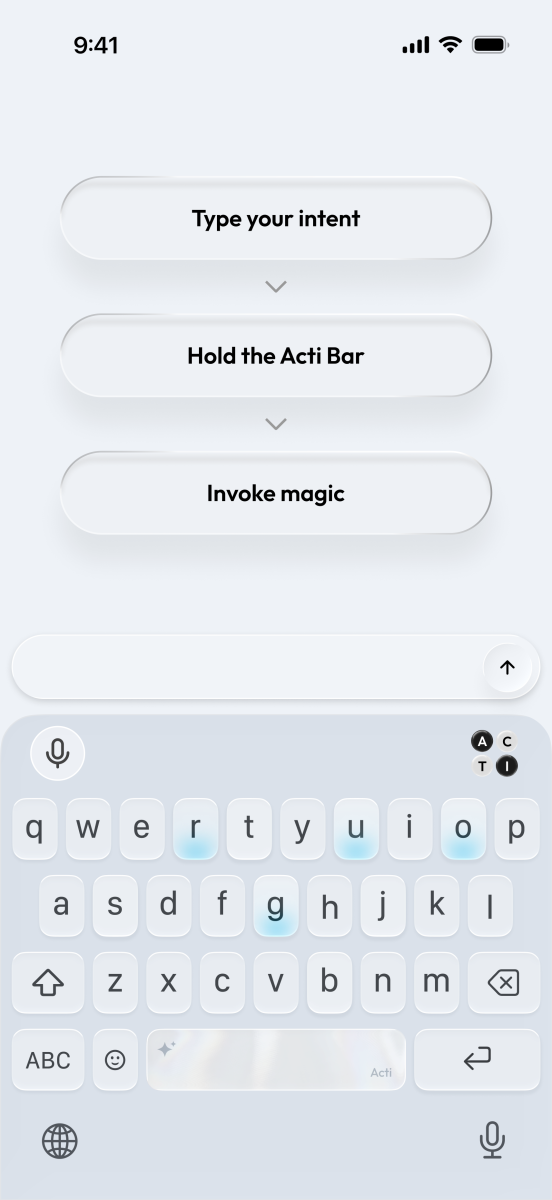
Acti emphasizes that its design follows the "local-first" principle, and the user's personal context is saved on the local device by default to protect privacy. Officials stated that the application will not access or store the user's private information, conversations or personal context, unless the user actively calls a function that requires cloud processing, at which time the relevant data will be uploaded and processed within the necessary scope.
Wang Yang previously worked at Baidu for ten years, participating in and promoting the development of Facemoji Keyboard, making its daily active users exceed 300 million. This experience also prompted him to rethink the role of the keyboard in the AI era. He believes that the emergence of large models means that "text is no longer just input content, but a carrier of intentions." In many daily scenarios, these intentions can be directly translated into actions. Therefore, it is time to "reinvent" this basic product that users around the world use every day - the keyboard.
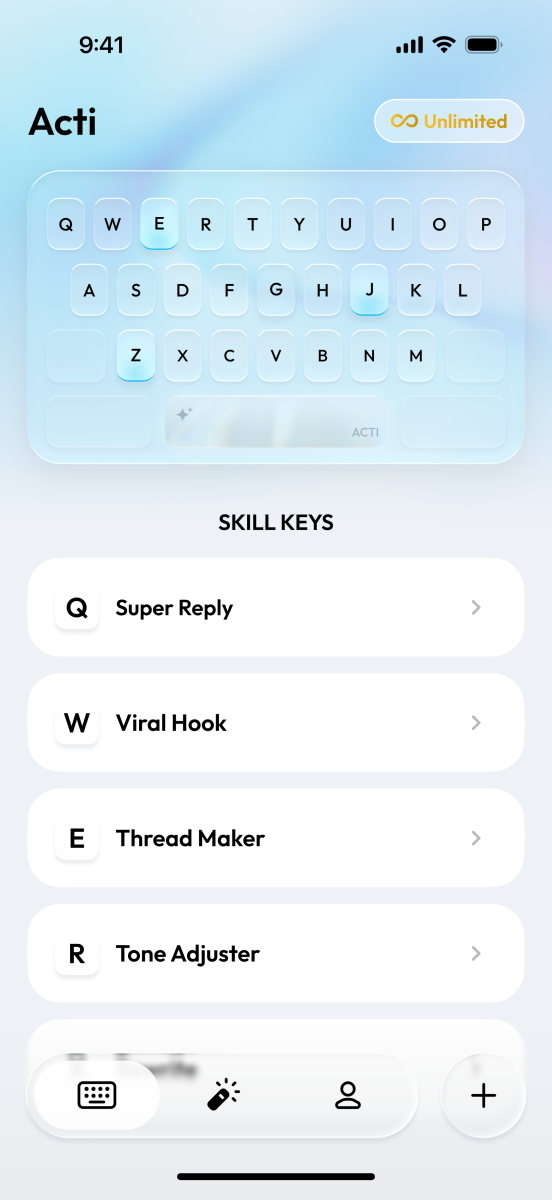
In terms of business model, Acti is still in the forming stage. The company plans to generate revenue through subscription fees and provide paying users with more powerful model support, higher daily usage limit and other advanced features. At present, some basic skills are preset in the app. For example, long pressing the letter "T" can translate the current message into another language, long pressing "C" can quickly send a meeting link, etc., which lowers the threshold for ordinary users to use complex automation functions.
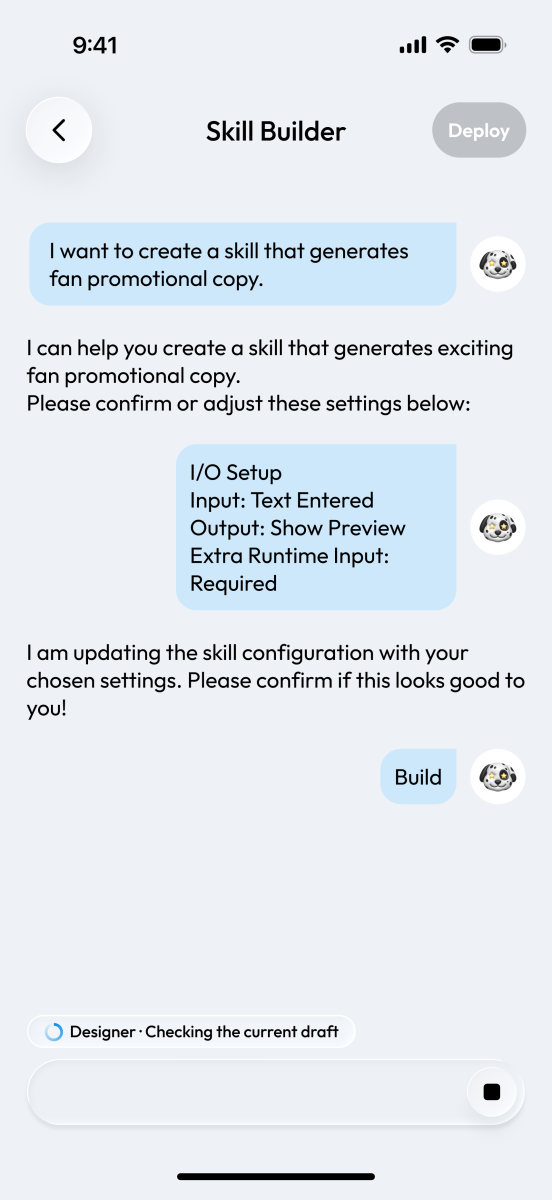
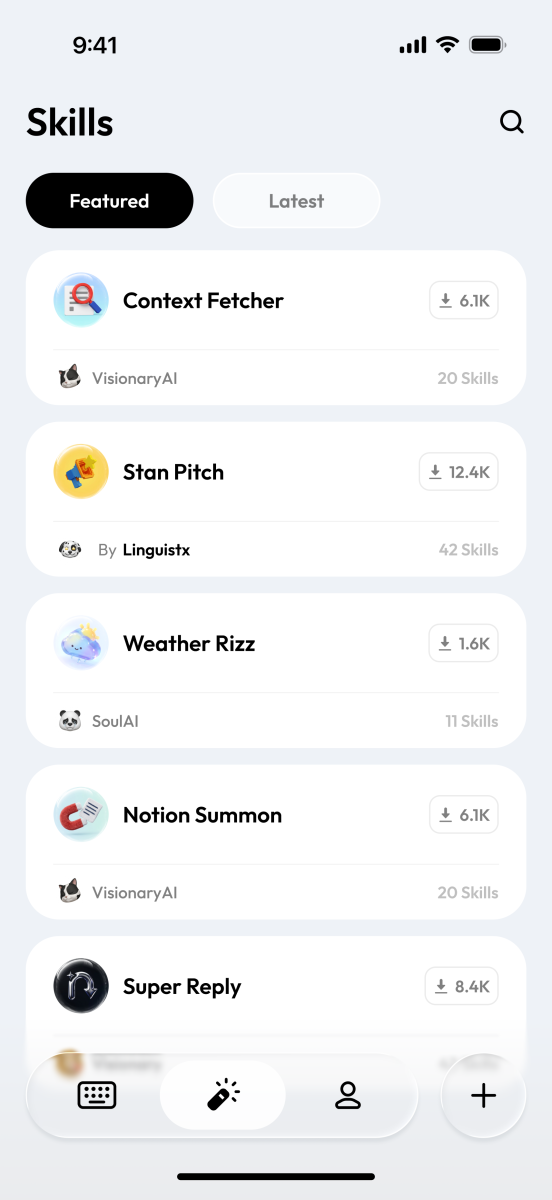
It is worth noting that users do not need to have any programming skills to create their own Skills. They only need to use natural language to describe the operations they want the keyboard to complete, and Acti can automatically build the corresponding multi-step tasks. During the closed beta phase before the official launch, early users created more than 1,000 skills in less than two weeks. These skills can be used only for personal use or can be shared publicly to Acti's Skill Market for other users to find and use, such as accessing real-time World Cup data, obtaining Polymarket links, etc.