Only five months after launching its first clothes-folding robot, the start-up technology company Weave Robotics has made another effort and recently officially released its latest generation of household robot product-Isaac 1. Compared with the previous generation of old models that could only stand in front of a table and mechanically fold clothes, this newly upgraded intelligent robot is not only more refined and friendly in appearance, but also has a major breakthrough in its core functions.
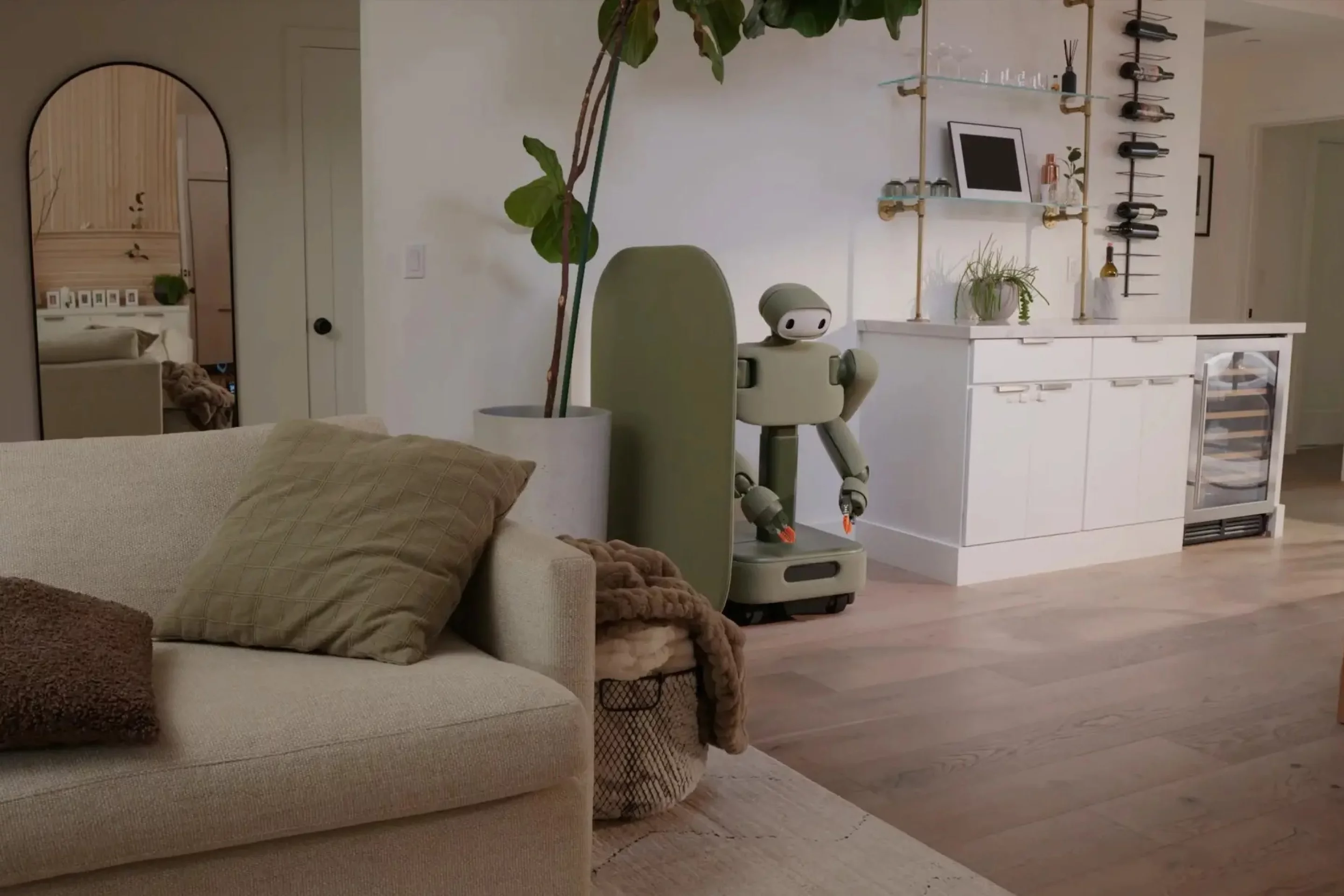
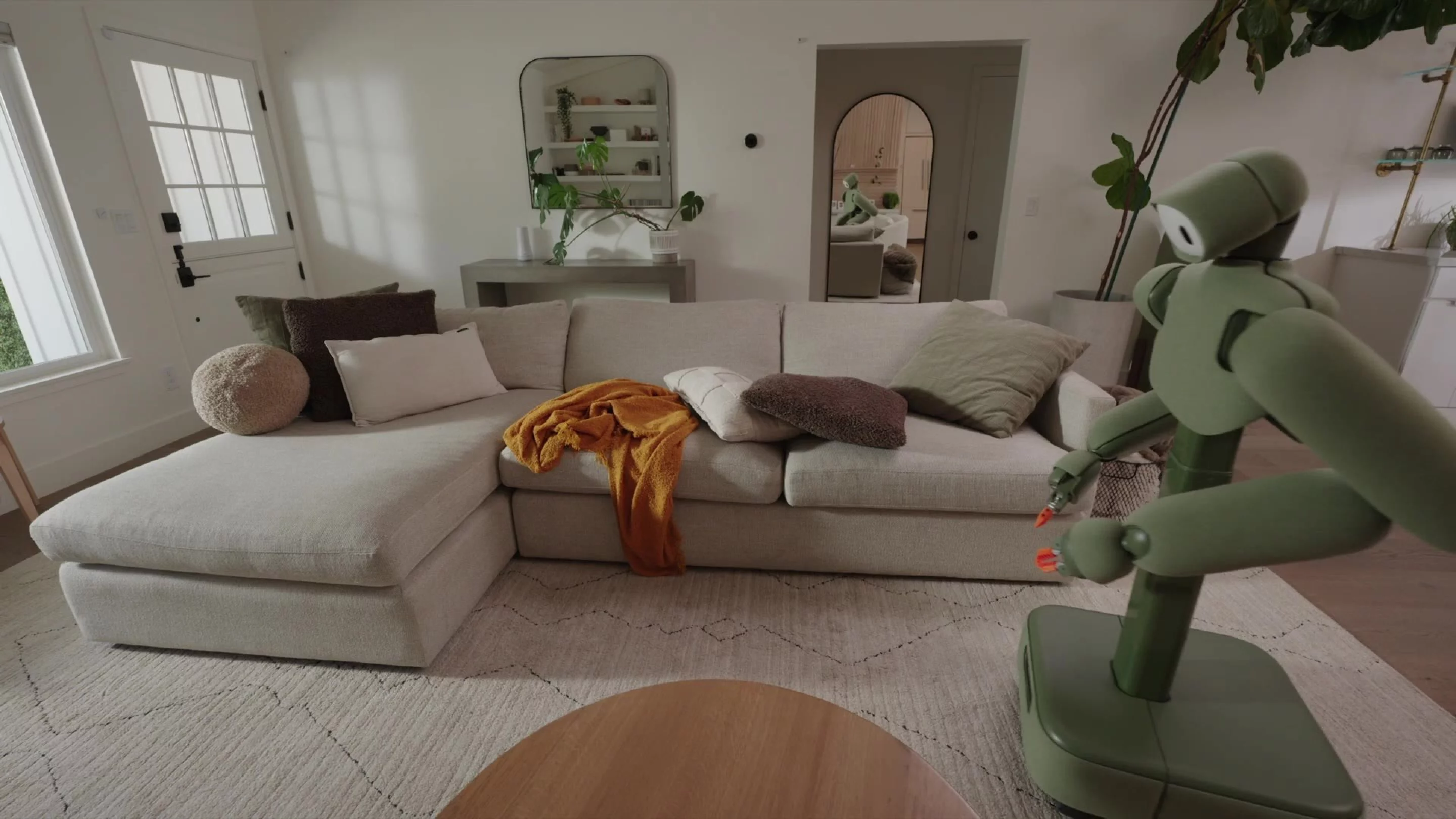
Under the user's instructions, it can now independently enter the living room and bedroom, and undertake a series of more arduous daily chores such as cleaning up clutter, arranging sofa cushions, and making beds.
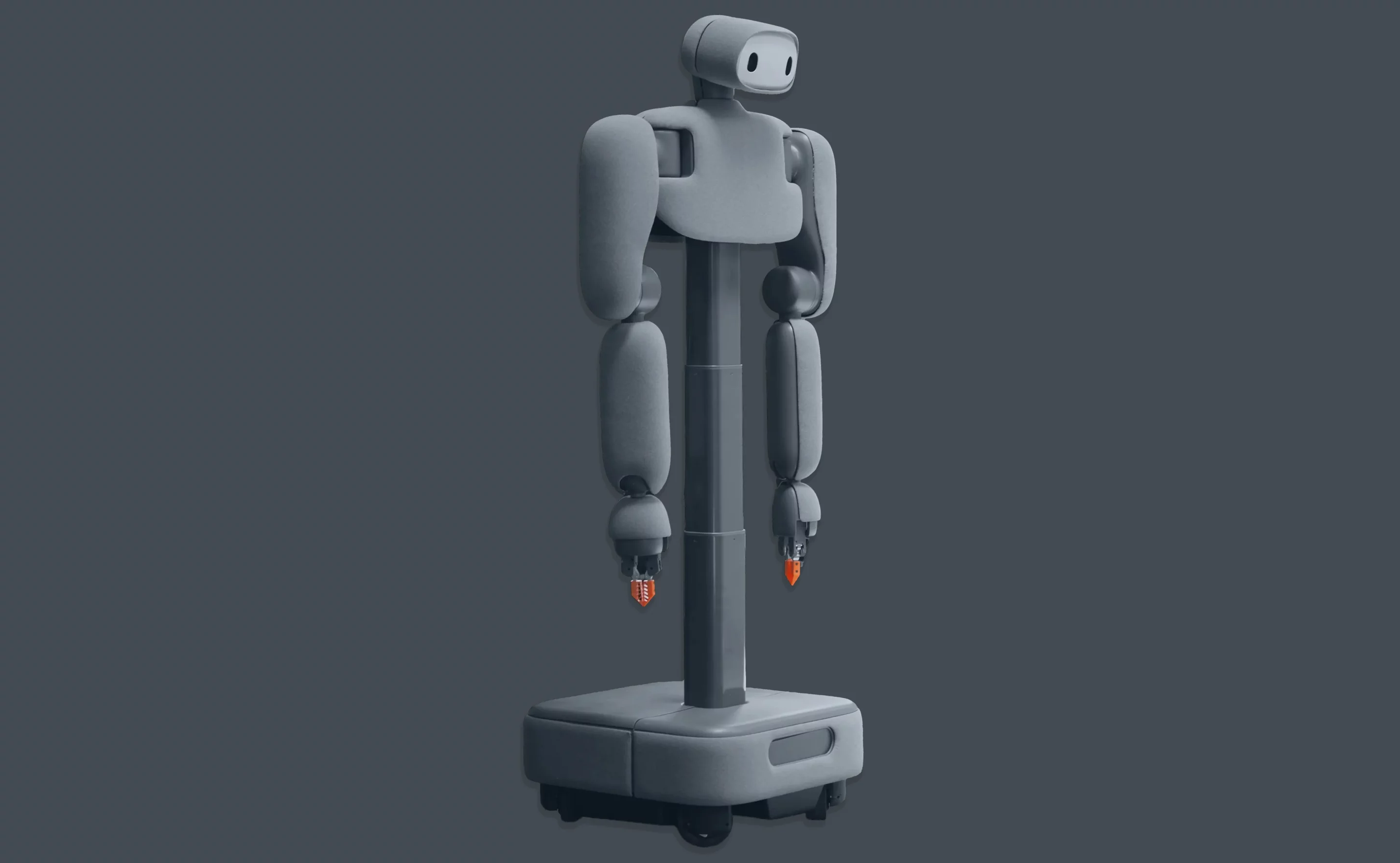
From the appearance, Isaac 1 adopts a friendly design similar to the classic animated character "Baymax", with a rounded rectangular head equipped with a pair of cute eyes. The robot's torso and arms are wrapped in a soft fabric shell, and the entire structure is mounted on a telescopic arm with a motorized base. Thanks to this unique design, Isaac 1 can move freely around the home and adjust its height from 3 feet (about 0.9 meters) to 5 feet 9 inches (about 1.75 meters) according to the needs of specific household chores. When the robot is idle after its work, it can also actively "stealth" - retracting to a height of 3 feet and physically turning off the camera on its top to maximize the user's home privacy.
However, Isaac 1 still has certain limitations in technical implementation. Although its mobility and clutter-clearing capabilities have achieved a quantum leap over the previous generation "Isaac 0", these two models are still not perfect when it comes to handling household chores completely independently. When performing certain complex tasks, robots often need to rely on "teleoperation" technology, that is, Weave Robotics' back-end human operators perform remote manual intervention and control through the camera images returned by the robot, assisting the robot in completing household chores.
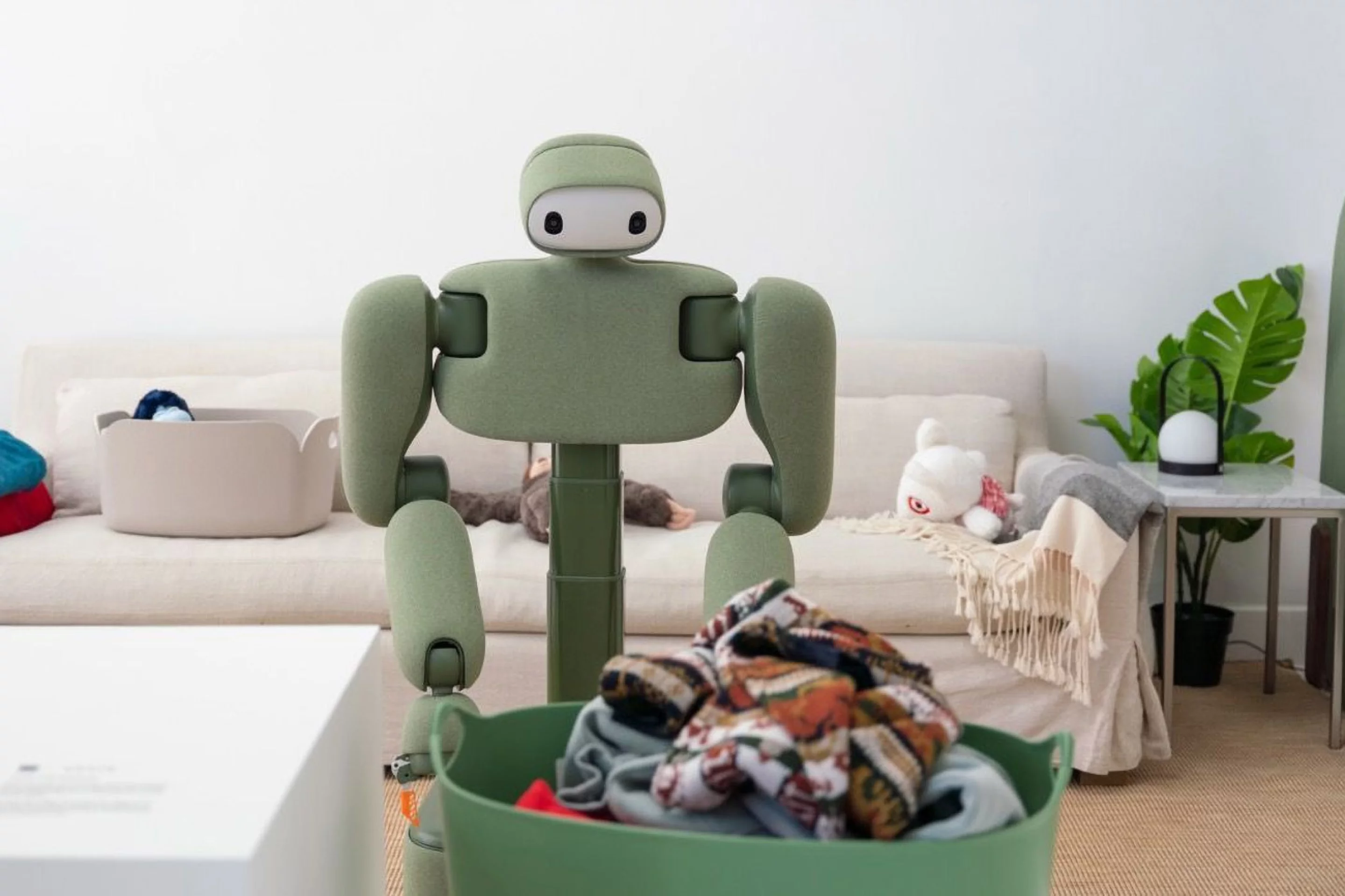
This "manual intervention" mode of operation may become a grudge in the minds of some consumers. After all, spending $8,000 to free your hands only to have the potential risk of a stranger occasionally snooping into your home privacy through a camera may not be cost-effective for some privacy-conscious buyers. However, there are also many consumers who are open and optimistic about this. The Weave team said that Isaac 1 is the dream robot they have always wanted to bring into their homes. In fact, since the Isaac 0 was launched in February of this year, the company has delivered products to numerous homes and businesses in California. According to official data, the old model has served customers for more than 2,000 hours since its release, processing more than 1,000 pounds of laundry every week. Although this indicates that the current market launch may still be limited, or that the product has just completed recent deliveries, it undoubtedly proves the urgent market demand for household robots.
Regardless of consumers' attitudes towards the concept of "remote human assistance," the launch of Isaac 1 has released two strong industry signals. First of all, while maintaining the original selling price (that is, paying $8,000 in full, or choosing a monthly subscription plan of $449), the functions of Isaac 1 have been doubled compared to the previous generation products, which fully demonstrates the amazing iteration speed of current robotics technology in commercialization. Secondly, in terms of industrial design, compared to the previous generation, which was like a prototype pieced together with common parts, Isaac 1 shows a very high degree of maturity and sophistication. A start-up company can quickly upgrade a basic proof-of-concept product into a fully designed, mass-produced product in just a few months. Its R&D and execution capabilities are impressive.
Weave Robotics stated that it will continue to optimize and enhance the functions of Isaac 1 through firmware upgrades in the future. It is generally believed in the industry that the most important upgrade direction of this product in the future will be to achieve complete autonomous operation, thereby completely getting rid of dependence on remote manual intervention. Currently, the field of automatic clothes-folding and housework robots is evolving into a hot track, and many technology companies are joining this technological competition to "help humans fold T-shirts into the wardrobe."
It is reported that Isaac 1 is currently open for pre-order in the US market, and consumers only need to pay a deposit of US$250 to lock in a spot. Weave Robotics plans to officially begin shipping this fall, with the first deliveries starting in California.