According to news on July 5, a group of high-income families in the United States are transferring their children from traditional schools to new alternative education institutions. The typical model is to use AI tutors to compress core subject learning time, and then leave more classes for entrepreneurship, product design, public expression and team projects. There is demand for this option, but there is not yet enough comparable data to prove the long-term effects of these new models.
According to the Wall Street Journal, Alpha School, which started in Texas, has expanded rapidly in recent years. It will open 8 new schools in 2025 and plans to open nearly 24 more schools this fall, including in Palo Alto, East Bay, Malibu and other places. Its tuition in San Francisco is $75,000 per year.
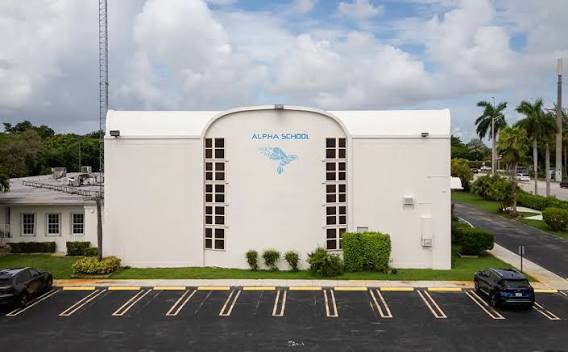
Alpha’s selling point is very straightforward: two hours of personalized AI tutoring every day, and the remaining time for project-based workshops. The school’s official website also calls this model “2 Hour Learning”, emphasizing the use of adaptive technology to provide one-on-one learning, and leaving the afternoon for real-life skills training such as leadership, finance, and entrepreneurship.
In Livingston, New Jersey, another new school, Forge Prep, has a similar slogan: Built for 2040, not 1940. It starts from grades 5 to 8 and plans to expand to grade 12 in the future. The focus of the course is not on memorization, but on allowing students to do real projects, build companies, do research, and design products. According to the Wall Street Journal, Forge Prep received 600 applications this fall and only admitted 34 students in the first four grades. Tuition fees range from US$24,000 to US$36,000 and will rise to US$60,000 next year.
In addition, Forge Prep promises that if students work full-time in the companies they start after graduation, the school will invest $200,000.
These schools capture a very specific anxiety of parents: If AI will replace a large amount of repetitive and patterned work, can the knowledge memorization and standardized tests emphasized in traditional classrooms still help children prepare for the future?
Some parents interviewed by the Wall Street Journal did not switch to the new model because their original schools were unable to meet basic needs. Some people are not originally dissatisfied with the public schools where their children attend, but they just feel that it might be more useful to train skills such as negotiation, sales, public speaking, and entrepreneurship earlier. Others no longer seriously consider standard private schools and instead believe that education will be transformed by startup companies.
Project-based learning is not new. AI tutors allow such schools to make a more commercial promise: core subjects are more personalized and efficient, and more school time is reserved for real-world skills.
The problem is, there's not equally clear evidence of the effects. The Wall Street Journal mentioned in its report that these institutions do not have to report indicators to the state government like public schools, and the relative effectiveness is difficult to assess. Caroline Hoxby, a professor of educational economics at Stanford University, also reminded that the current new education model of hybrid AI lacks sufficient scientific empirical basis, and she is not a supporter of any education model lacking empirical data.
The most affordable families in the U.S. education market are using AI as a way to bet on the future. They may not have proven that the new schools are more effective, but they are willing to pay high tuition fees to buy a childhood that is more like an entrepreneurial boot camp.
This turns AI education from a tool to “reduce costs and increase efficiency for schools” into a new class choice. For these families, AI education is not a tool to reduce costs and increase efficiency, but a new class choice: less standard classrooms and more personalized learning and entrepreneurial imagination. But what can be confirmed so far is still demand and expansion, not educational results. Whether these schools can steadily improve academic and long-term development performance requires real graduates and more transparent data to answer.